Introducing ‘Folio’, a digital storytelling project about contemporary Australian comics

Introducing ‘Folio’, a digital storytelling project about contemporary Australian comics

A lively and accessible online collection, Folio spotlights the narrative innovations in Australia’s contemporary comics culture by sharing object-based oral histories from graphic artists immersed in the comics community from the 1980s until now.

Launched via an industry webinar, Folio is the public-facing outcome of the Australian Research Council–funded Linkage Project, Contemporary Australian Comics 1980–2020: A New History.  

Chief Investigator and Associate Professor in RMIT’s School of Media & Communication, Ronnie Scott hopes the resource will be useful for: “artists, writers, teachers, students, journalists, researchers, and anyone interested in creative writing and publishing subcultures, visual and design cultures, and alternative arts scenes.” 

“There are amazing anecdotes and rare ephemera from artists, publishers, librarians, people who run zine fairs and booksellers. You can read whole interviews and essays, or sort stories by topic or theme and see what different people say about anything from motivation, horror and distribution to parenthood,” he continued.  

The website is built like an archipelago of information and topics, encouraging visitors to “roam, sift, and drift” their way through the collections, revealing the interconnected nature of comics throughout Australia's contemporary history, as told by the people who built it.

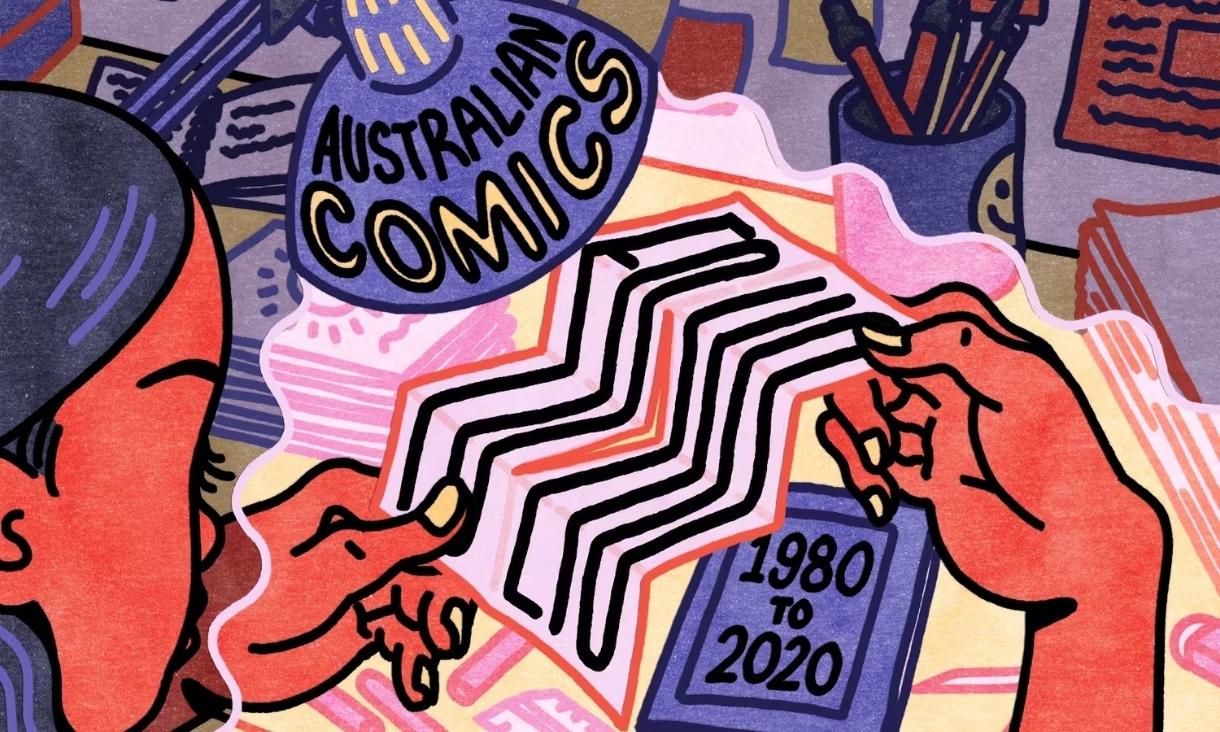
Hero Image by Claudia Chinyere Akole Hero image by Claudia Chinyere Akole

The project addresses ongoing misunderstandings and devaluation of one of Australia’s richest storytelling forms. Long before graphic novels entered mainstream bookshops, Australian comics thrived in pubs, cafés, record stores and art schools. They were often self-published, shared at zine fairs, distributed by mail or passed hand-to-hand. Artists used comics to build community beyond formal institutions, experiment with form, and tell stories that moved beyond conventional language.

Folio demonstrates comics are as rich in possibility as literature, film, visual art, theatre, and gaming. Developed in partnership with University of Melbourne, the University of Technology Sydney, Creative Australia and the National Library of Australia, Folio brings together interviews, essays and original artefact photography from the Australian comics community.

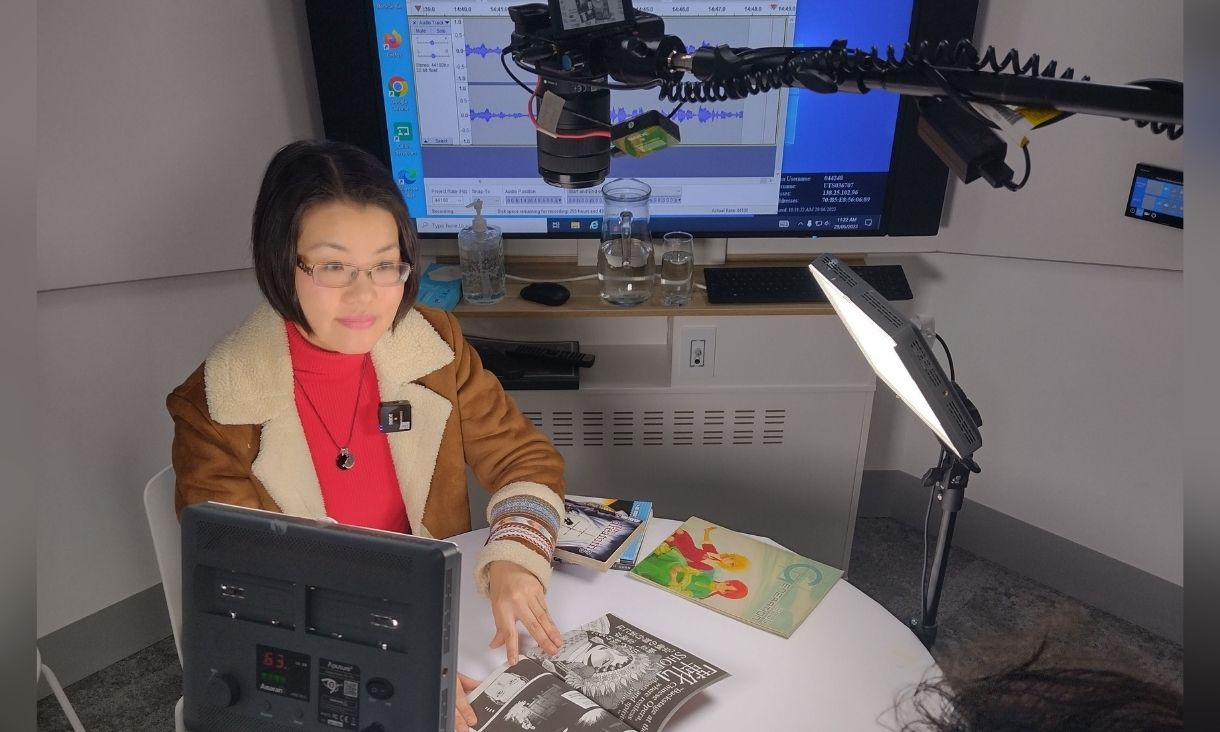
Gabe Clark, Chief Investigator, interviewing manga-style comic book writer and artist Queenie Chan Gabe Clark, Chief Investigator, interviewing manga-style comic book writer and artist Queenie Chan

Lead Researcher, Associate Professor Elizabeth MacFarlane from the University of Melbourne, said the project reveals the deeply interconnected nature of Australia’s comics community. 

“We spoke to artists, librarians, retailers, printers, publishers and festival organisers,” A/Prof MacFarlane says. “The depth of commitment and expertise within this community is extraordinary, yet it is not matched by industry support or public awareness. Australian artists are creating some of the most beautiful stories I’ve ever read in the form of comics, and more people need to be reading them.” 

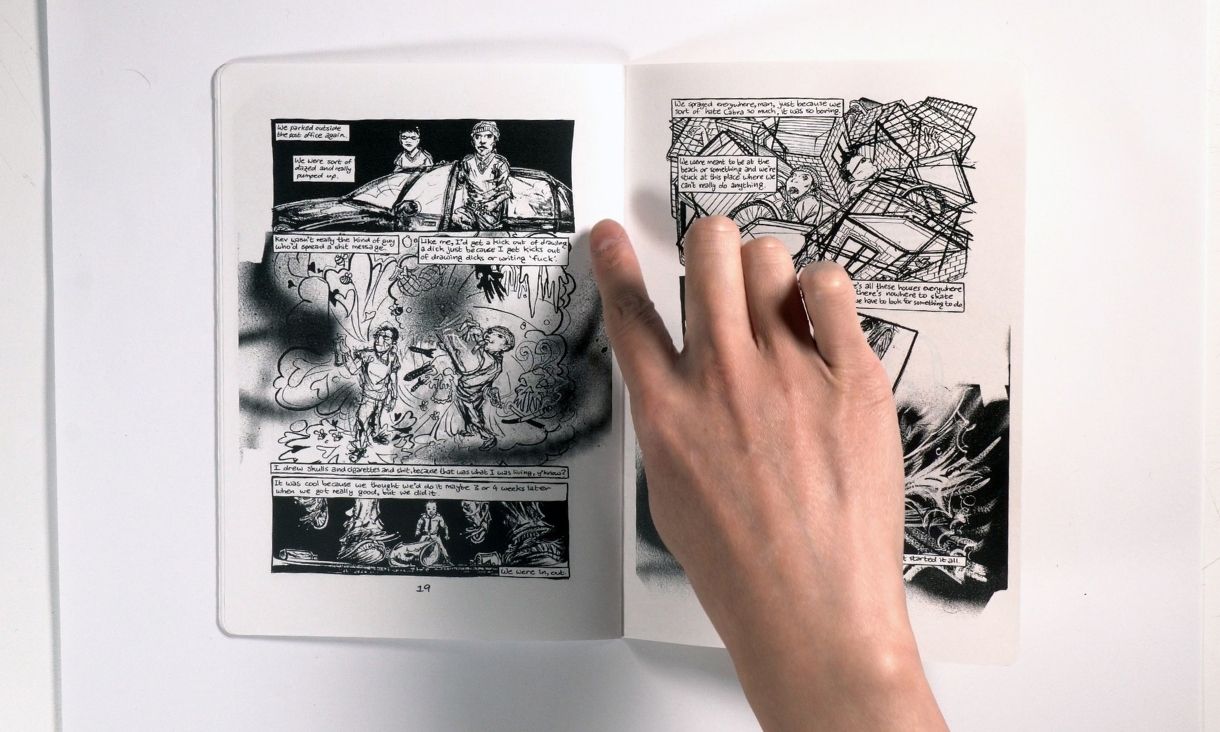
Matt Huynh, brush and ink comic artist, demonstrating one of his comics. Matt Huynh, brush and ink comic artist, demonstrating one of his comics

Ronnie Scott is also a Co-Director of RMIT’s non/fictionLab, where he’s cementing comics as a disciplinary strength within RMIT's School of Media & Communication. The non/fictionLab is a world-leading centre for creative practice research with a strong culture of creative writing, comics, and graphic storytelling.  

As well as hosting the Gutter Stars, which features interdisciplinary PhD students from across RMIT, they recently launched the inaugural Graphic Storyteller Fellowship, providing artist Soolagna Majumdar a three-week residency at McCraith House, coupled with a three-week residency at RMIT's Melbourne City Campus. 


Learn more about Media & Communication at RMIT.

06 February 2026

Share

  • Research
  • DSC Research
  • Media & Communication
  • Arts and culture
  • DSC

Related News

aboriginal flag float-start torres strait flag float-start

Acknowledgement of Country

RMIT University acknowledges the people of the Woi wurrung and Boon wurrung language groups of the eastern Kulin Nation on whose unceded lands we conduct the business of the University. RMIT University respectfully acknowledges their Ancestors and Elders, past and present. RMIT also acknowledges the Traditional Custodians and their Ancestors of the lands and waters across Australia where we conduct our business - Artwork 'Sentient' by Hollie Johnson, Gunaikurnai and Monero Ngarigo.

More information