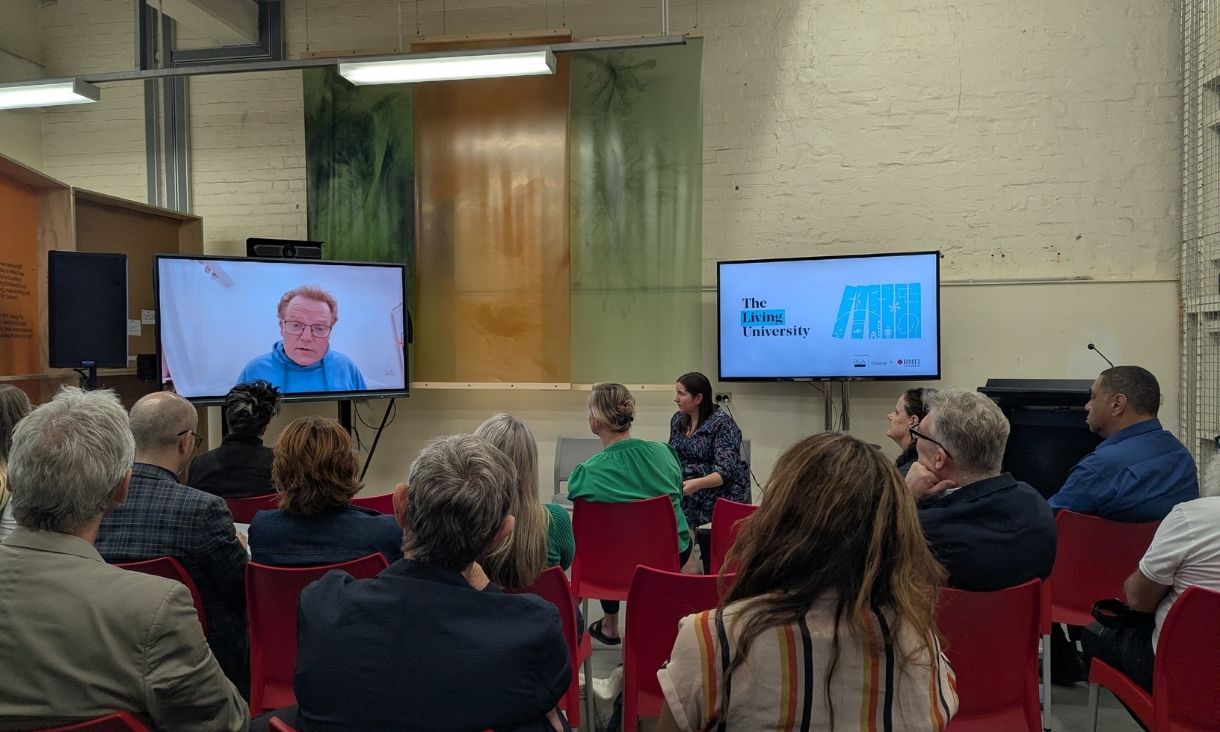
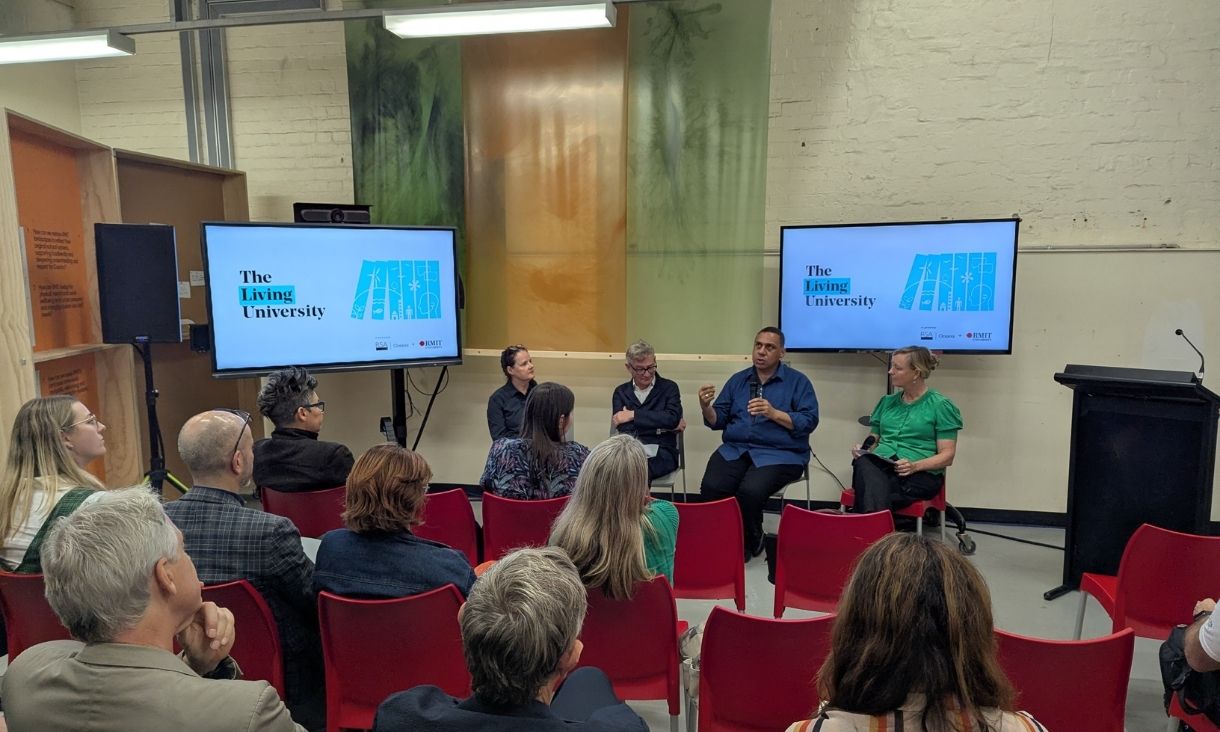
Warden referred to universities as ‘keystone species’ in an ecosystem, with a unique role in enabling and maintaining entire civic and knowledge systems to function. “If you think about what happens when a university exists in a town or a city, there are clusters of hospitals, of research, of cultural venues, cafes, startups and NGOs. People with wildly different expertise end up in the same place and bump into each other, whether that's a poet sitting next to an engineer or a musician sitting next to a biochemist. Conversations happen that nobody planned for. We shouldn't treat that as a side effect – it's actually really the point,” she said.
Reflecting on her personal journey to academia, Siodmok said that universities have offered her the so-called ‘social mobility’ that eluded her mother and grandmother, who did not attain a formal qualification. She suggested that RMIT’s 100,000+ students have their own pathway to a better future, despite facing a generational research and innovation challenge, as identified in the Federal Government’s recent Ambitious Australia: Strategic Examination of Research and Development final report.
Speed added that as actors in an ecosystem, universities are uniquely agile relative to the likes of car and clothing manufacturers. “It takes seven years to build a car. Even fast fashion takes several months. I was teaching this morning. In 15 minutes, I could co-create a new narrative of regenerative value with students and turn it on a dime.”
“I think sometimes within universities we forget that we have individual and collective agency. We are the university... human beings doing things with other human beings,” added Professor Gary Thomas, Pro Vice-Chancellor Indigenous Education, Research and Engagement, RMIT.
Their comments echoed The Living University paper, which makes the case that universities must move beyond traditional notions of sustainability and instead embrace what the authors call a 'regenerative' approach that actively restores the health of Earth's ecological and social systems rather than simply reducing harm.