Planetary Civics Inquiry

The Planetary Civics Inquiry is an alliance of researchers, educators, policymakers and designers committed to transforming how we conceive, care for and govern our entangled planet in climate change.

The Inquiry’s goal is to build understanding and civic practices that support Earth’s deeply connected planetary scale living systems, and how we need creative new ways of working together to protect and care for them. The Inquiry also promotes planetary imagination - and the vital role of the social sciences, arts and humanities in addressing planetary scale challenges.

“The environmental, societal and technological disruption we are witnessing today is inherently planetary in nature. Planetary-scale thinking is about acknowledging the mutual reliance and interdependence between humanity and the Earth’s living systems, and the artificial intelligence systems that are being rapidly developed. The Planetary Civics Inquiry is a call to action in recognition that current governance systems and policies are not sufficient for a sustainable future and require radical, yet practical, redesign to meet the scale and scope of our challenges.”  

- Professor Tim Marshall, Deputy Vice-Chancellor of RMIT’s College of Design and Social Context and RMIT Vice President.

The Inquiry’s work is rooted in the design of radical civics frameworks as well as rigorous experimentation, influencing public policy and building a planetary alliance for a new knowledge economy and more regenerative futures.

Driven by conviction and a clear vision, we envision a future governed by principles of planetary stewardship and governance. We aim to expand global thinking and governance through the lens of the planetary as an interconnected series of nested living systems.

As a collaboration between RMIT University (RMIT), Dark Matter Labs (DML) and Politics for Tomorrow (PfT) the aim of the Inquiry is to generate new forms of transdisciplinary knowledge, actionable frameworks, and transformative interventions by fusing academic rigor with real-world experimentation at the local scale.

Text And Media Video

Planetary Civics Inquiry

A snapshot of Planetary Civics Inquiry activity that has taken place with RMIT Practice Professors, workshop participants and the general public.

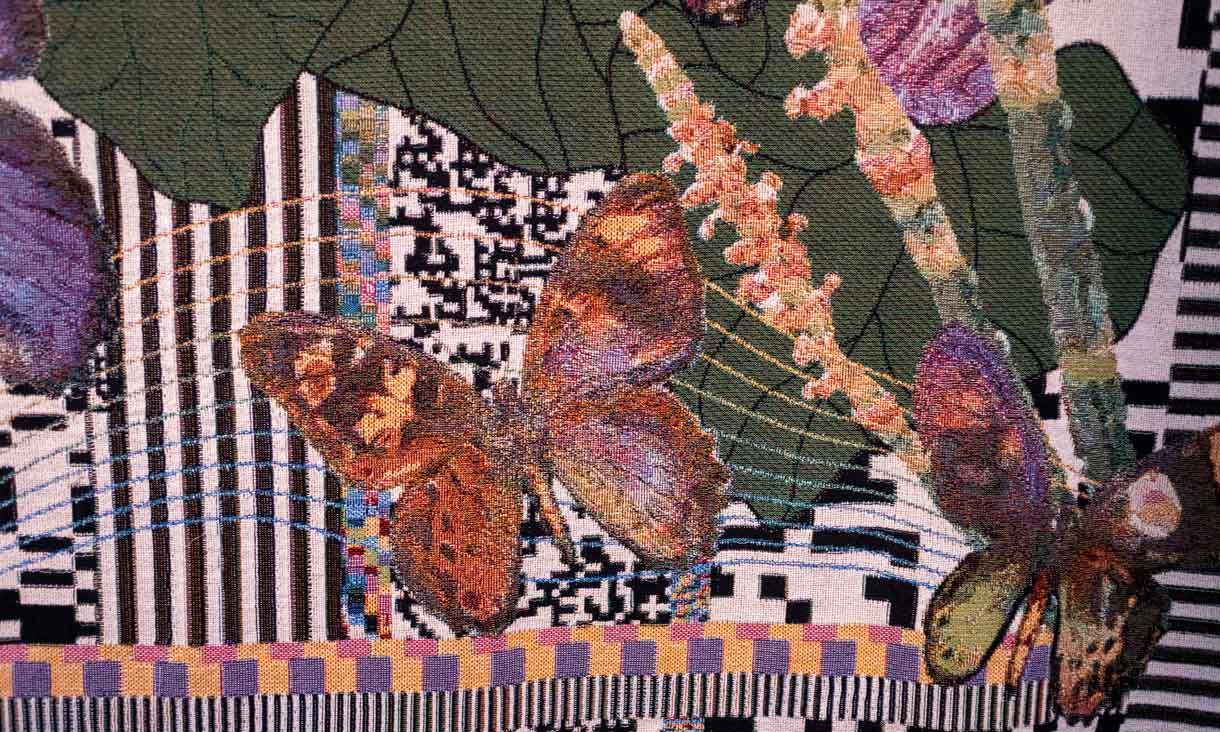
Image credit: 'Impossible Evolutions' by Kate Geck. Wild Hope Exhibition, RMIT Design Hub, 2023. Photo by Tobias Titz.

We recognise that many of the concepts that underpin the Planetary Civics Inquiry are familiar to First Nations custodians who have practised them for millennia. We pay our respect to Elders, past and present, and are committed to responsible practice: learning from, and working in partnership with, Indigenous Elders and knowledge systems.

People

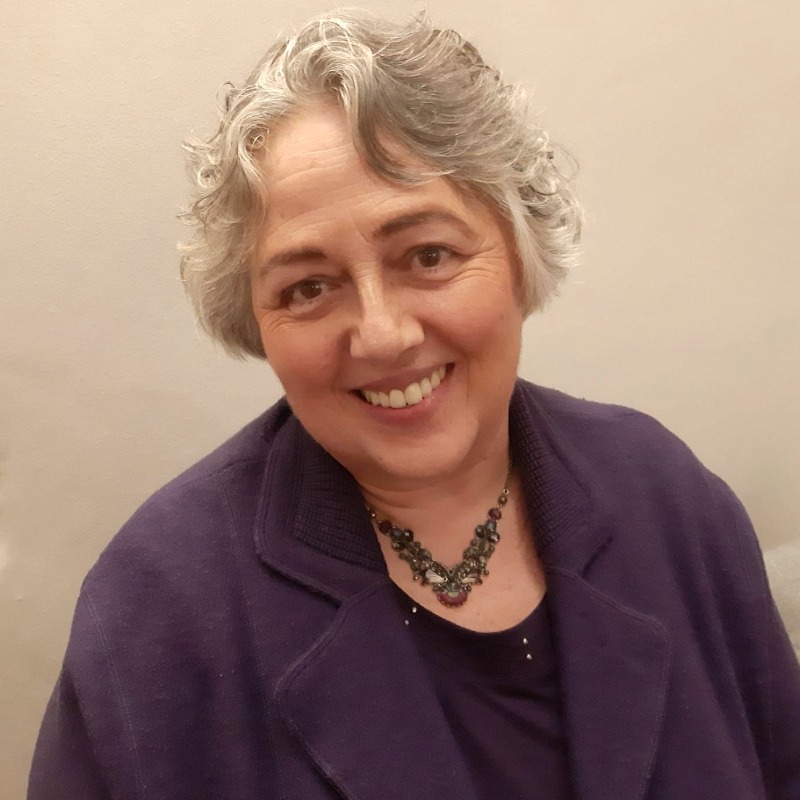
Wendy Steele, Lead, RMIT Planetary Civics Inquiry and Professor of Sustainability and Urban Governance, School of Global, Urban and Social Studies

Wendy Steele is an award-winning researcher, writer, activist and educator. She leads research on the nature of cities in climate change with a particular emphasis on regenerative futures, governing planetary commons, critical urban governance, policy and planning, climate activism, critical urban infrastructure and sustainability as a transformative agenda within higher education. Her recent books include 'Planning Wild Cities: Human–nature relationships in the urban age' (Routledge 2020), 'Quiet Activism: Climate action at the local scale' (Palgrave 2021), and 'The Sustainable Development Goals, Higher Education: A transformative agenda?' (Palgrave-Macmillan 2021) and 'Hot Cities' (Edward Elgar City Series 2023).


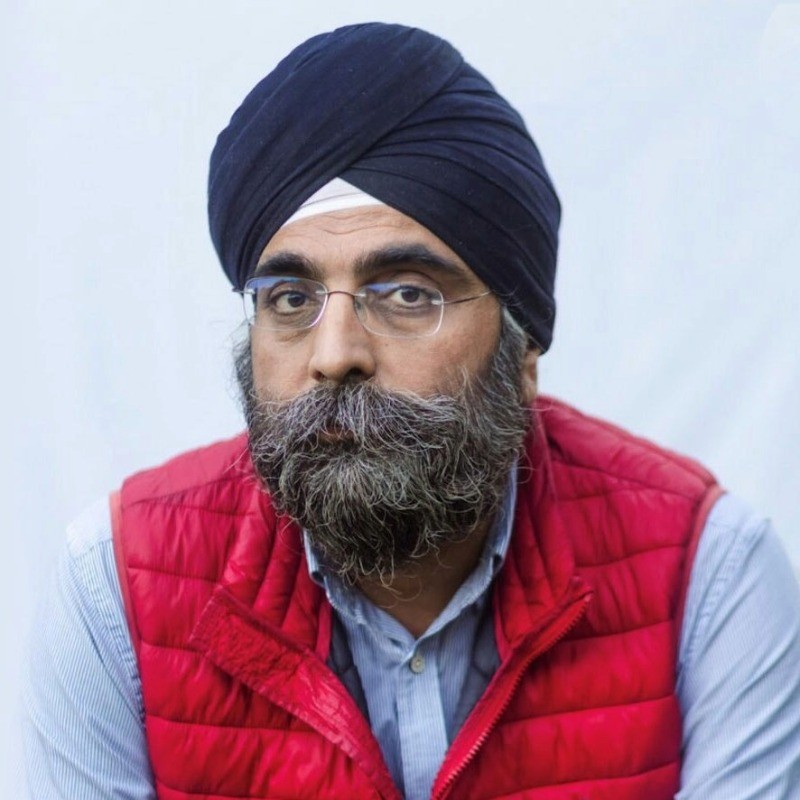
Indy Johar, Professor of Practice

London-based social entrepreneur, architect, and visionary thinker Indy Johar is a Professor of Practice at RMIT University. He is co-founder of 00 and Dark Matter, a field laboratory focused on building the institutional infrastructures for radicle civic societies, cities, regions and towns. Dark Matter works with institutions around the world, from UNDP (Global), Climate Kic, McConnell (Canada), to the Scottish Gove to Bloxhub (Copenhagen). Indy has co-founded multiple social ventures and has also co-led research projects such as The Compendium for the Civic Economy, whilst supporting several 00 explorations/experiments including the wikihouse.cc, opendesk.cc. Indy is a non-executive director of WikiHouse Foundation & Bloxhub. Indy was a Good Growth Commissioner for the RSA, RIBA Trustee and Advisor to Mayor of London on Good Growth, The Liverpool City Region Land Commissioner and The State of New Jersey - The Future of Work Task Force - amongst others. 


Rosi Braidotti, Professor of Practice

Professor Rosi Braidotti is an esteemed philosopher, writer and feminist theorist. As Practice Professor with RMIT's College of Design and Social Context, Professor Braidotti works within the Planetary Civics Inquiry and the Australian Posthuman Summer Lab with a research practice in urban futures and post-human philosophy. She holds degrees in philosophy from the Australian National University, Canberra, and Sorbonne University, Paris, and Honorary Degrees from Helsinki, (2007) and Linkoping (2013). She is an Honorary Fellow of the Australian Academy of the Humanities (FAHA) and a Member of the Academia Europaea. In 2022, she received the Humboldt Research Award for life-long contribution to scholarship in Humanities. Professor Braidotti’s written works have been translated into more than twenty languages. Her extensive research spans continental and feminist philosophy with social and political theory, cultural politics, gender, and postcolonial studies.


Patricia Piccinini, Professor of Practice

Revered Australian artist Professor Patricia Piccinini is a Professor of Practice in RMIT's College of Design and Social Context within the School of Art. With work encompassing sculpture, photography, video and drawing, Professor Piccinini examines the increasingly nebulous boundary between the artificial and the natural as it appears in contemporary culture and ideas. Among her many significant works, Professor Piccinini represented Australia at the 2003 Venice Biennale and in 2013 was commissioned by the Centenary of Canberra to create The Skywhale hot air balloon, which was joined in 2020 by Skywhalepapa. She has exhibited extensively in Australia and internationally, with recent solo exhibitions in Museum Macan (Jakarta, Indonesia), Kunsthalle Talstrasse (Halle, Germany), John Michael Kohler Arts Center (Wisconsin, USA), Tai Kwun (Hong Kong) and Kunsthal Rotterdam (Rotterdam, Netherlands). Professor Piccinini holds a Bachelor of Economic History from the Australian National University, a Bachelor of Fine Arts from the Victorian College of the Arts, and a Doctor of Visual and Performing Arts (honoris causa) from the University of Melbourne.
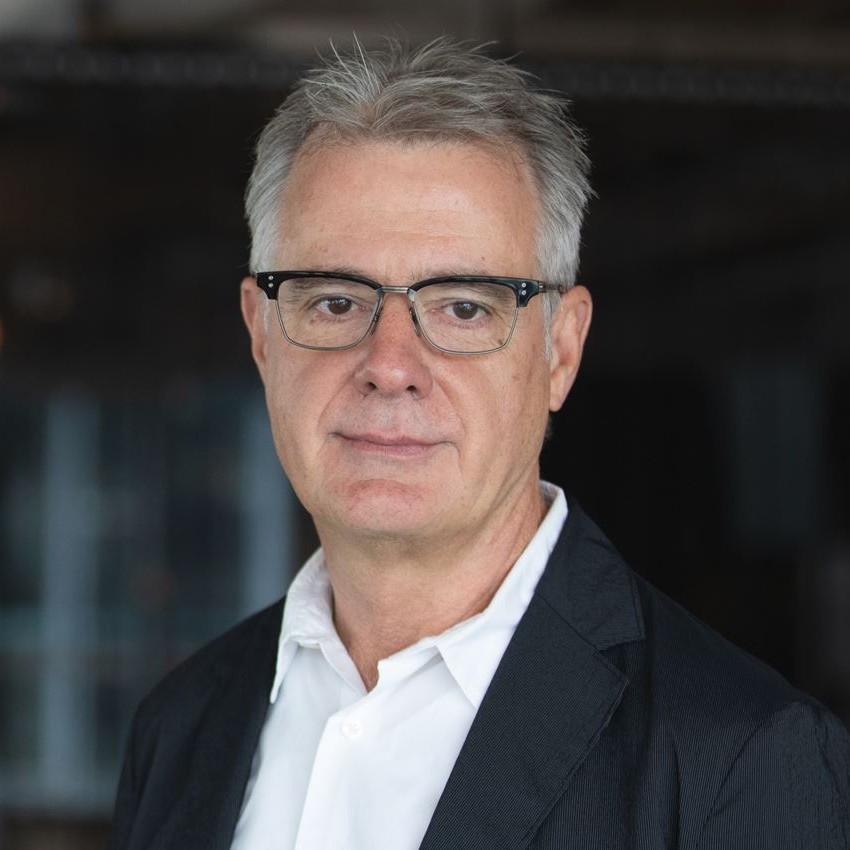
Tim Marshall, Deputy Vice-Chancellor of RMIT’s College of Design and Social Context and RMIT Vice President

Professor Tim Marshall is the Deputy Vice-Chancellor of the College of Design and Social Context and Vice-President at RMIT.  Tim is a highly regarded international leader, academic and change-maker who is passionate about inclusion, social justice and the impact of design on the human condition and human experience. Before joining RMIT in early 2021, Tim spent 17 years at The New School in New York. He began as Dean of Parsons School of Design, and then stepped into the role of Provost in 2009.  Prior to moving to the United States of America, Tim spent 10 years in academic roles at the University of Western Sydney, predominantly in the School of Design.  

Contact

Professor Wendy Steele

wendy.steele@rmit.edu.au

Connect with us

Interested in receiving updates about the Inquiry? Register and we’ll keep you informed.


Banner image credit: 'Meerreeng Karweeyn - Earth Dance 2010' by Vicki Couzens. Wild Hope Exhibition, RMIT Design Hub, 2023. Photo by Tobias Titz.

aboriginal flag float-start torres strait flag float-start

Acknowledgement of Country

RMIT University acknowledges the people of the Woi wurrung and Boon wurrung language groups of the eastern Kulin Nation on whose unceded lands we conduct the business of the University. RMIT University respectfully acknowledges their Ancestors and Elders, past and present. RMIT also acknowledges the Traditional Custodians and their Ancestors of the lands and waters across Australia where we conduct our business - Artwork 'Sentient' by Hollie Johnson, Gunaikurnai and Monero Ngarigo.

More information