
RMIT-Nexsen partnership celebrated with national award for advancing diagnostic innovation

RMIT-Nexsen partnership celebrated with national award for advancing diagnostic innovation

RMIT Distinguished Professor Vipul Bansal has been recognised with a national award for leading a long‑term partnership that is transforming how infections are diagnosed around the world.

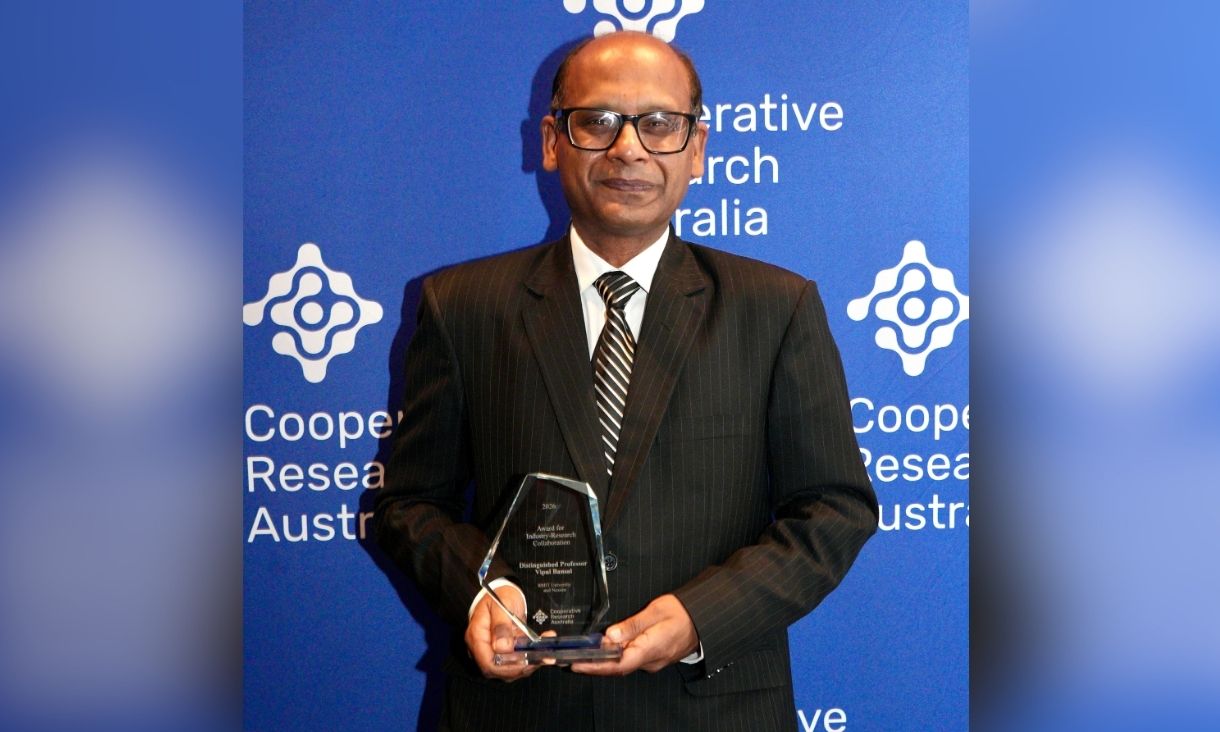
Vipaul Bansal stands with his glass award. RMIT Distinguished Professor Vipul Bansal has been nationally recognised in the 2026 Cooperative Research Australia (CRA) Awards for Excellence in Innovation. Credit: JRP Group

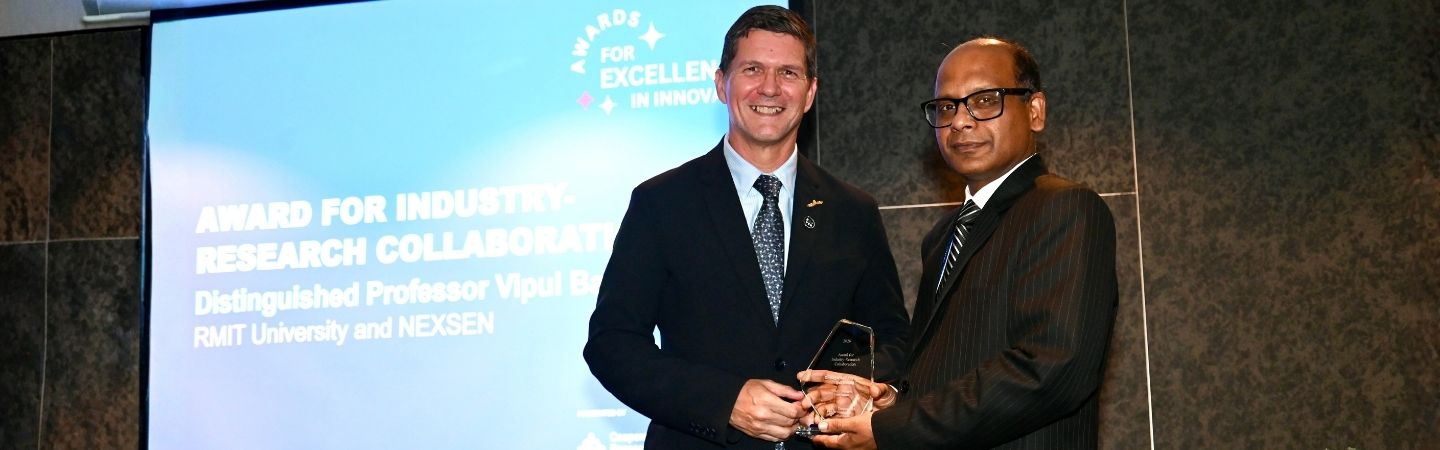
Professor Bansal and industry partner ASX-listed Nexsen Limited have received the Award for Industry‑Research Collaboration in the 2026 Cooperative Research Australia (CRA) Awards for Excellence in Innovation, announced at a gala ceremony in Perth last week. 

RMIT Deputy Vice-Chancellor Research and Innovation, Distinguished Professor Calum Drummond AO, who was at the CRA Awards ceremony, said the award recognises both individual leadership and an exemplary model of collaboration. 

“This award is a powerful recognition of Professor Bansal’s vision and leadership, and of the strength of the partnership between RMIT and Nexsen,” Professor Drummond said. 

“What began as a single diagnostic concept has become a robust enabling platform for new tests that can save lives, strengthen health systems and create new economic opportunities for Australia.” 

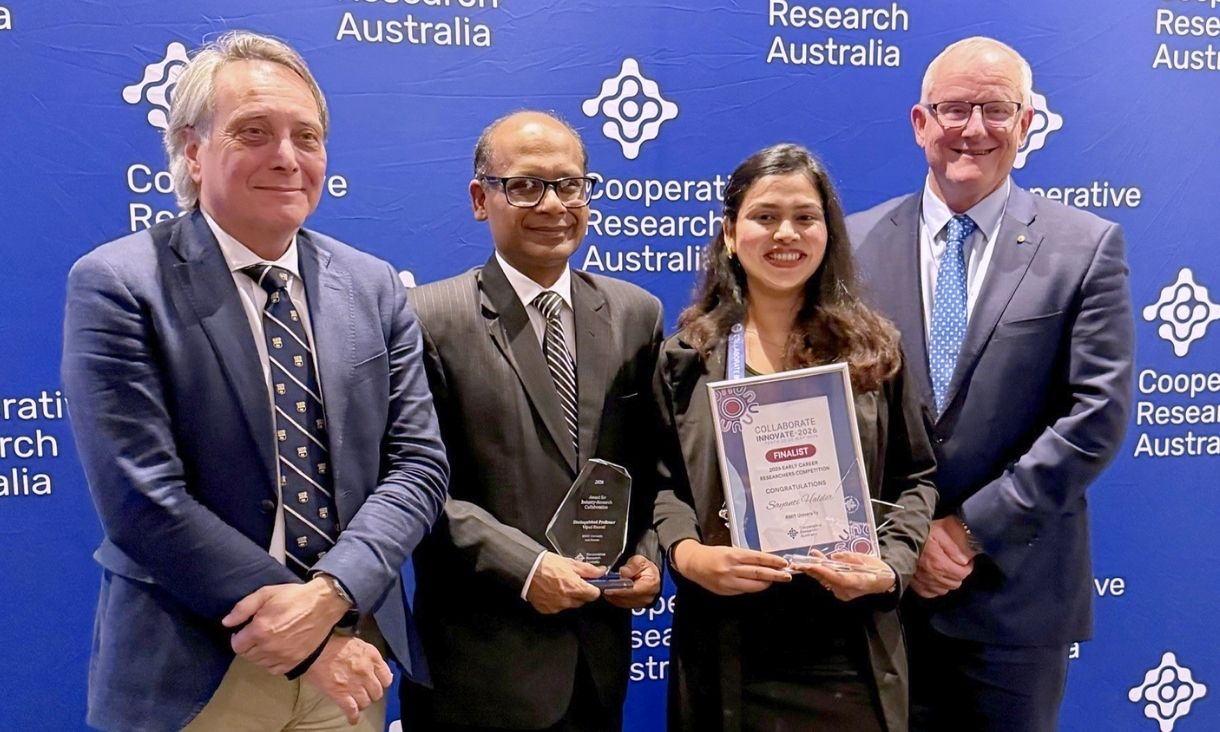
Four people pose for a photo in front of a blue photo wall.(L-R) Mr Mark Muzzin, Nexen Managing Director & Advisory Board Member, Distinguished Professor Vipul Bansal, RMIT PhD student Sayanti Halder winner of the 2026 CRA Early Career Researcher (ECR) Competition, Distinguished Professor Calum Drummond AO, Deputy Vice-Chancellor Research and Innovation and Vice-President

Established in 2018, the RMIT-Nexsen collaboration set out to turn cutting-edge nanobiotechnology research into simple, rapid diagnostic tests that could be used at the point of care, from major hospitals to clinics in low-resource settings. The partnership focuses on life‑threatening infections, with the original focus being Group B Streptococcus (GBS) in pregnant women, a leading cause of serious illness and death in newborns. 

Through close collaboration between RMIT researchers, clinicians and industry, the team aimed to deliver lab‑grade accuracy in a fast, easy‑to‑use test that could be performed during routine antenatal care. Their flagship innovation, StrepSure®, is a rapid test for GBS that has progressed from an early research concept to clinical-stage validation, with trials underway in Victoria and expansion to sites overseas. 

Distinguished Professor Vipul Bansal reflected on how the collaboration between RMIT and Nexsen was built on a shared belief that advanced diagnostic technologies should reach the clinicians and patients who need them most, instead of remaining confined to research laboratories.  

“What makes this partnership unique is the close integration of researchers, clinicians, industry and regulatory strategy from the outset, enabling us to accelerate translation from discovery to real-world healthcare impact,” he said. 

nexen-partnership-award-image3-1220x732px - 1

Professor Drummond said this integrated approach to research translation was central to the collaboration’s success. 

“This collaboration represents one of the most effective examples of a research translation pathways that I’ve seen in the Australian higher education sector,” he said. 

“By bringing clinicians, researchers and industry partners together from day one, Professor Bansal and the team have shown how universities can work with industry to drive impact faster, at scale, and on a global stage.”  

The collaboration has grown from an initial AU$400,000 industry investment into more than AU$17.5 million in combined project value, supported by the Cooperative Research Centres Projects (CRC‑P) and other Commonwealth-supported programs. It has also supported Nexsen's progression to an ASX-listed company (ASX: NXN), established ISO 13485‑aligned MedTech manufacturing capability at RMIT, and built a 40‑plus strong multidisciplinary workforce spanning academia, healthcare and industry. 

By integrating discovery research with clinical, regulatory and commercial pathways from the outset, the RMIT-Nexsen partnership has created a platform for new diagnostic products beyond GBS, including applications in neonatal sepsis, renal disease, biosecurity and agricultural health. The collaboration is now engaging with international health organisations to support global deployment, particularly in low‑ and middle‑income countries. 

Professor Drummond said the impact of the work is envisaged to be felt well beyond the life of the initial project. 

“We’re incredibly proud of Professor Bansal, the RMIT team, and our partners at Nexsen,” Professor Drummond said. 

“Their work is not only improving maternal and neonatal health outcomes but is also establishing a repeatable model for industry–research collaboration that will support future generations of Australian innovation.” 

Share

Share

  • Industry
  • Announcements
  • Awards
  • Research
  • Science and technology

Related News

aboriginal flag float-starttorres strait flag float-start

Acknowledgement of Country

RMIT University acknowledges the people of the Woi wurrung and Boon wurrung language groups of the eastern Kulin Nation on whose unceded lands we conduct the business of the University. RMIT University respectfully acknowledges their Ancestors and Elders, past and present. RMIT also acknowledges the Traditional Custodians and their Ancestors of the lands and waters across Australia where we conduct our business - Artwork 'Sentient' by Hollie Johnson, Gunaikurnai and Monero Ngarigo.

More information