Reactive disaster response not sufficient in supporting Australian farmers

Reactive disaster response not sufficient in supporting Australian farmers

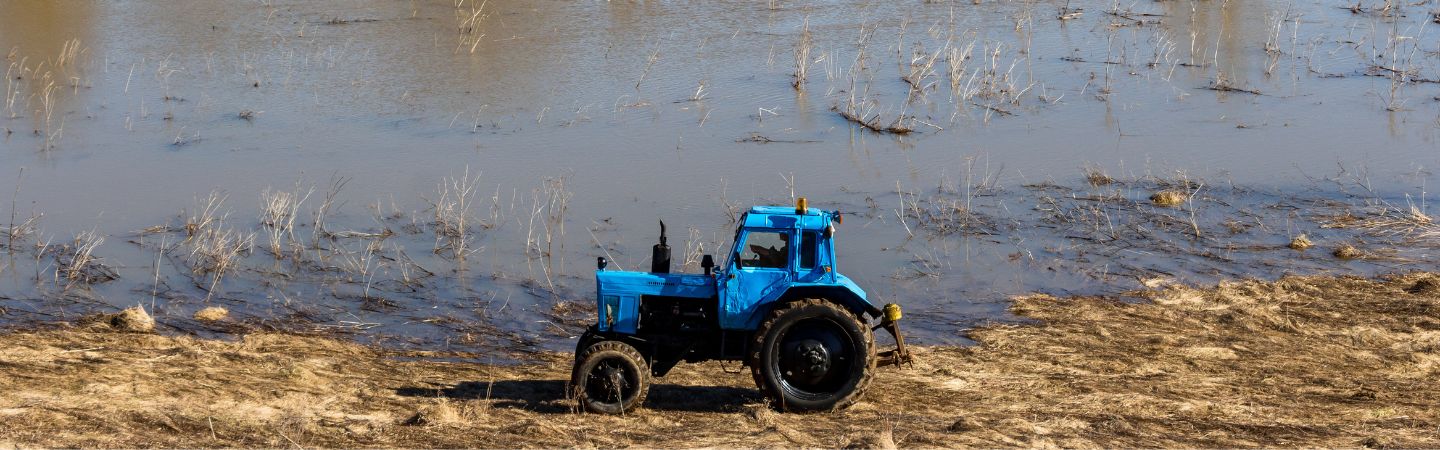
New South Wales is currently experiencing damaging winds and flash flooding during what meteorologists have called a 'bomb cyclone'. With many farms still recovering from previous severe weather events, an RMIT expert says governments should collaborate more closely with industry to futureproof Australia’s farming sector. 

Dr Martino Malerba, Senior Lecturer and Research Fellow, School of Science 

"Reactive responses to disasters are no longer enough. Australia is experiencing more frequent extreme weather events, impacting productivity, finances and mental health. Farmers are ready to adapt, but they need coordinated support and stable policy frameworks to do it effectively.

"Back-to-back disasters are making it harder for farming communities in many regions to recover before the next shock hits. 

"It is important for farmers to find ways to reduce vulnerability by adopting mitigation strategies. This could include improving dam and water management, diversifying crops and income streams, restoring native vegetation, adopting regenerative grazing, and investing in infrastructure that can withstand floods or drought. 

"To help with disaster recovery, state and federal governments need to provide farmers with clear communication, rapid damage assessment, and mental health support. Importantly, there should be coordinated funding across jurisdictions to provide farmers with the support they desperately need."

Dr Martino Malerba is a DECRA Fellow and senior lecturer at RMIT University. His laboratory studies freshwater wetlands – both natural (e.g., wetlands), and artificial (e.g., farm dams, reservoirs, wastewater lagoons).  

***

General media enquiries: RMIT External Affairs and Media, 0439 704 077 or news@rmit.edu.au

Share

Related News

aboriginal flag float-start torres strait flag float-start

Acknowledgement of Country

RMIT University acknowledges the people of the Woi wurrung and Boon wurrung language groups of the eastern Kulin Nation on whose unceded lands we conduct the business of the University. RMIT University respectfully acknowledges their Ancestors and Elders, past and present. RMIT also acknowledges the Traditional Custodians and their Ancestors of the lands and waters across Australia where we conduct our business - Artwork 'Sentient' by Hollie Johnson, Gunaikurnai and Monero Ngarigo.

More information