What does the future of arts, culture and technology hold? RMIT academics weigh in at ACMI’s FACT symposium

What does the future of arts, culture and technology hold? RMIT academics weigh in at ACMI’s FACT symposium

RMIT University academics joined artists, technologists and cultural practitioners from across the globe at ACMI's fourth annual FACT Symposium, contributing to three days of debate on the future of arts, culture and technology.

Day 1 mapped the trajectory of digital culture in the second quarter of the 21st Century, exploring how the ubiquity of social media and mobile devices have altered our lives in ways unimaginable even in the 1990s and early 2000s. 

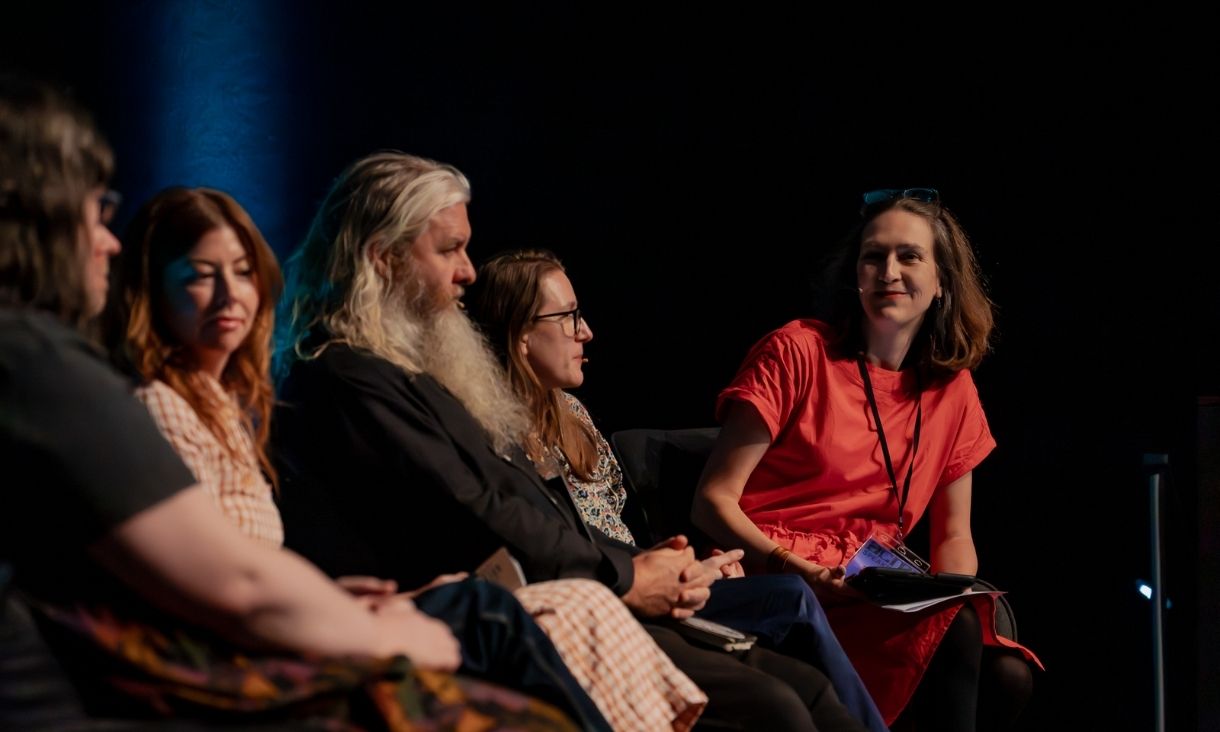
Professor Sarah Teasley (School of Design) moderated a panel on one of digital culture's most pressing challenges: how do creative practitioners preserve a record of the present when the software and platforms they work with are constantly changing? The panel canvassed why archives matter to communities (is it culturally imperative to preserve PacMan and the CD?), how people engage with them, and what’s being lost and forgotten: where the gaps in current practice lie. Teasley asked “Whose job is it to archive? Who decides, and who is resourced to do this work?” The panel observed that what and how our digital present is kept and preserved is a crucial one, in cultural as well as political terms.

Professor Sarah Teasley moderated a panel on digital culture. Credit: Matto Lucas Professor Sarah Teasley moderated a panel on digital culture. Credit: Matto Lucas

Adjunct Professor Hugh Davies (School of Design) appeared on a panel on global games cultures, contrasting perspectives from Australia, Europe and East Asia. Panelists explored how games offer rich opportunities for cross-cultural engagement, and Davies drew on his curatorial and research work in Shanghai and Hong Kong to highlight a striking difference in how games are understood across cultures. "In Australia we're looking at video games in museums, but for China there is an understanding of video games as museums. When you put Chinese civilisation or cultural cosmology in a game, it is preserving culture and it is sharing it widely," Davies commented.  

Day 2 turned to Institutional, Creative and Collective Actions, spotlighting cultural institutions and practitioners around the world, and how they’re finding new ways to navigate the uncertainties of the present moment. The framing was broadly post-digital: the foundational problems of metadata standards and collection management have largely been solved. The harder questions now are about what comes next, and how to bake accessibility into practice from the start, rather than as an afterthought.  

Two researchers, Dr Caitlin McGrane and Dr Jacina Leong, showcased findings from the ARC Linkage Project, Museum Digital Social Futures. The project is a collaboration between RMIT, AMaGA and ACMI, co-led by RMIT’s Distinguished Professor Larissa Hjorth and Professor Ingrid Richardson (School of Media & Communication). One key outcome - a free Toolkit for Digital Practice for cultural institutions to evolve their digital literacy - is launching in May 2026.  

"Cultural organisations are already collecting rich, often overlooked insights about how their audiences experience and connect with cultural spaces. Our resource helps them interpret and share that information," said Dr Leong. 

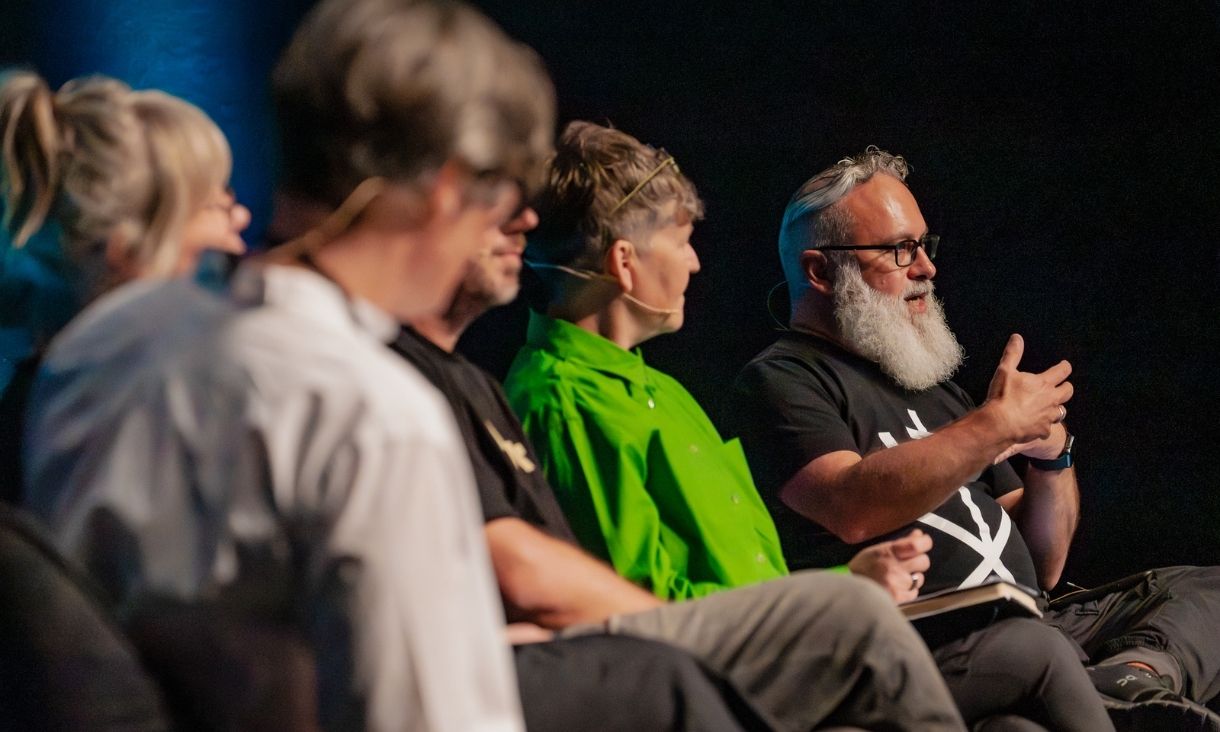
Associate Professor Troy Innocent (School of Design) - fresh from co-convening the Australian Posthuman Summer Lab, an initiative of RMIT's Planetary Civics Inquiry - contributed to a discussion on the intersection of climate, culture and technology. He mapped the spectrum of responses to the polycrisis: the entanglement of multiple, simultaneous and distinct crises playing out globally. At one end, dystopian resignation; at the other, a transhumanist faith that technology will save us. In between lies what RMIT Professor of Practice Rosi Braidotti calls ‘affirmative ethics’ - a posthuman framework built not on passive acceptance, but on active, transformative thinking: "Saying yes to the world, being worthy of it." He acknowledged that embodied ways of being and knowing are only new to Western schools of thought but have been longstanding practices for First Peoples worldwide.  
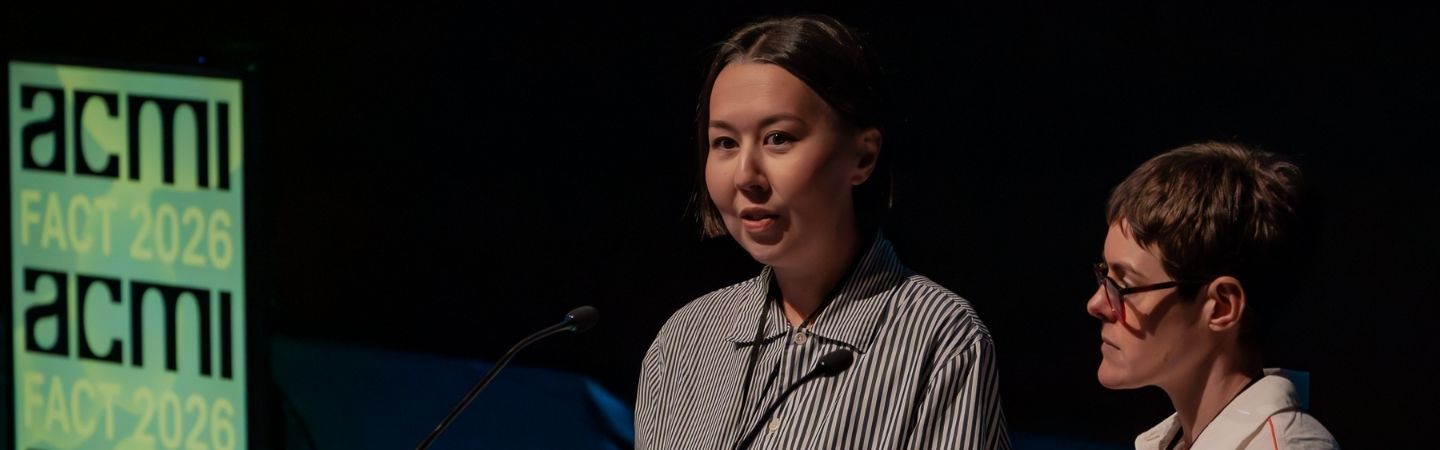
Associate Professor Troy Innocent spoke on a panel responding to climate, culture and technology. Credit: Matto Lucas Associate Professor Troy Innocent spoke on a panel responding to climate, culture and technology. Credit: Matto Lucas

Professor Chris Speed, Director of RMIT’s Regenerative Futures Institute, co-chaired No Harm Done, a groundbreaking event series exploring ethical, sustainable pathways for AI throughout thoughtful design with (and by) data. 

“As ACMI’s Major Research Partner, RMIT is proud to continue our involvement in FACT, which brings together researchers, creative practitioners, industry leaders and policy makers who are grappling with the same questions from completely different angles. That's where the most interesting thinking happens,” said Professor Naomi Stead, Associate Deputy Vice Chancellor, Engagement with RMIT’s College of Design & Social Context.  

RMIT academics also participated in a closed long table forum on Day 3 about Creative Industries and Artificial Intelligence, as part of the Victorian Government’s Creative State 2028 strategy. 

“I came away from the third day of the ACMI FACT symposium with my mind blown – it's clear that AI has the potential to change everything in the Creative Industries, both for better and otherwise. Those of us who care about the arts and creative practice – and RMIT certainly cares deeply - need to be alert to both the blessings and possible curses of this cataclysmically disruptive new technology. We should be curious, excited, skeptical and wary in equal measure, and be ready to work collectively towards policy guardrails and guidelines to protect and expand the role of humans in the AI creativity loop,” Professor Stead continued.

Other programs arising from RMIT’s relationship with ACMI as Major Research Partner include ACMI RMIT + ACMI Audience Lab, ACMI + RMIT Young Creators’ Lab, ACMI X Residency Program, ACMI + RMIT Small Research Grant, ACMI + RMIT Games Prize and more.  

Recordings of Day 1 and 2 sessions are available ACMI’s YouTube for free.

Share

  • DSC Research
  • Regenerative Futures
  • Arts and culture
  • Society
  • DSC

Related News

aboriginal flag float-start torres strait flag float-start

Acknowledgement of Country

RMIT University acknowledges the people of the Woi wurrung and Boon wurrung language groups of the eastern Kulin Nation on whose unceded lands we conduct the business of the University. RMIT University respectfully acknowledges their Ancestors and Elders, past and present. RMIT also acknowledges the Traditional Custodians and their Ancestors of the lands and waters across Australia where we conduct our business - Artwork 'Sentient' by Hollie Johnson, Gunaikurnai and Monero Ngarigo.

More information