
Housing@RMIT: Higher Degree by Research and Early Career Researchers Symposium 2025
Thursday 11 September - Free event
Thursday 11 September - Free event
Thursday 11 September - Free event
Thursday 11 September - Free event
The Housing@RMIT Network is excited to host an Early Career Researchers (ECR) and Higher Degree by Research (HDR) Symposium during Social Sciences Week at RMIT. The symposium provides opportunities for researchers from any school or college at RMIT to present their work, and to network with other academics, both senior and junior, as well as industry partners.
Professor Wendy Stone from Swinburne University will be presenting a keynote speech. Other invited guest speakers are RMIT Housing research leaders and the Urban Futures Enabling Impact Platform Director, Professor Jago Dodson.
The theme for this symposium is ‘Housing’, broad and inclusive. No matter which side you are approaching housing from—sustainability, affordability, policy, technology, community, design, construction, or beyond—you are warmly invited to participate. This aims to bring together researchers and industry to provide a channel for the exchange of information and transdisciplinary collaboration.
The symposium will be held on Thursday 11 Sep 2025, 1pm – 5pm in the Megaflex Rooms (08.04.11-13), RMIT University City Campus.
This event is supported by RMIT's Urban Futures Enabling Impact Platform and is part of Social Sciences Week 2025.

Submit your abstract of 200-250 words to the organising committee by 14 August 2025. Please download the abstract template here. The committee will assess the abstracts based on quality and will notify the candidates of the outcome by 22 August 2025. Postgraduate students at all stages of candidacy are welcome, as well as all early career researchers. Please email abstracts to: housing@rmit.edu.au
We are excited to offer prizes for presenters:
Please visit the Program and Registration tab for further details and to register for the symposium.
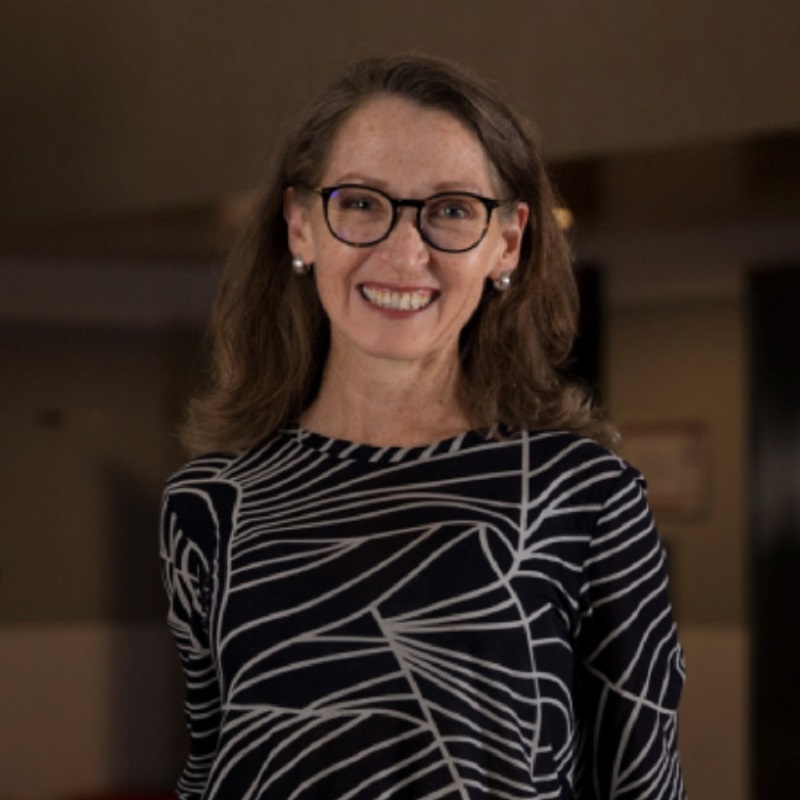
Wendy Stone is Professor of Housing and Social Policy, Director of the AHURI Swinburne Research Centre and leads HHAUS, the Housing, Homelessness and Urban Studies Research Group at Swinburne University of Technology.
Wendy's research focuses on the intersection of housing, housing innovation and technology, lifecourse research and social policy. Wendy's current research around generational and gendered housing precarity and wellbeing, innovative housing solutions, housing aspirations across generations, and citizen-engaged processes of public policy formulation, is supported through ARC Discovery, Linkage and LIEF funding, AHURI National Housing Research Program research grants and industry awards including with partners Housing for the Aged Action Group, YWCA Australia, the Brian M Davis Charitable Foundation and Kids Under Cover.
Wendy led the Australian Housing Scholars' symposium 2013-2020, publishes for academic and community audiences, is engaged in policy development, is a regular media contributor and supervises higher degree research students.
The symposium will be held on Thursday 11 September 2025, 1pm – 5pm in the Megaflex Rooms (08.04.11-13), RMIT University City Campus.
All symposium sessions are free, and HDR candidates, Early Career Academics, supervisors and all other academics are encouraged to participate.
Please join us and register! Registration is required for presenters, industry participants, and academic reviewers.
* Please note this is an indicative program and subject to change. A detailed program will be made available closer to the symposium date.
| Welcome and Housing@RMIT Network Introduction | 1pm - 1:10pm |
| EIP Urban Futures Director
Professor Jago Dodson |
1:10pm - 1:20pm |
| Keynote speaker
Professor Wendy Stone |
1:20pm - 1:50pm |
| Q&A session | 1:50pm - 2pm |
| Next steps | 2pm - 2:10pm |
| Lunch break | 2:10pm - 2.20pm |
| Name | School |
Topic |
| Session 1 (Circular Economy & Sustainable Construction) | ||
| Bimali Chathurya | School of Property, Construction and Project Management (PCPM) | Development of a Circular Economy Maturity Model for the construction industry |
| Dona Iresha Chandanie Gurusinghe | School of Property, Construction and Project Management (PCPM) | Integrating circular economy principles in the whole-life cycle of the residential sector in Australia |
| Dharanija Banala | School of Engineering | Turning Tyres into Tougher Plastics: Recovered Carbon for Real-World Use |
| Sara Pishgahi | School of Global, Urban and Social Studies (GUSS) | Circular Economy volume home building; prospects for transition |
| Moein Behzad | School of Property, Construction and Project Management (PCPM) | Public opposition management towards developing construction and demolition waste recycling facilities in the State of Victoria |
| Rahul Saha | School of Engineering | Upcycling of End-of-Life Solar Waste into Self-Cleaning Coating Compositions |
| Session 2 (Housing Policy, Design, and Resilience) | ||
| Madeline Abigail Lukito | Melbourne School of Design | Reactive to Responsive: Planning Deregulation and Planners’ Role in Australia’s Housing Crisis |
| Luis Carlos Florez Choco | School of Engineering | Seismic Protection Strategies for Historic Masonry Housing in Australia |
| Bart J.A. van Bueren | School of Management | Melbourne Afloat: floating islands to address the housing crisis. |
| Nadine Samaha | Design and Social Context | Courtyards as Biodiversity Nodes in Urban Ecosystems |
| Lucia Valentini | School of Global, Urban and Social Studies (GUSS) | Participatory Methods in Relocation Processes – The case of the Villa 20 in Buenos Aires, Argentina |
| Ransi Salika | Property, Construction and Project Management (PCPM) | Making Homes Flood-Ready: Retrofitting Existing Residential Properties in Regional Victoria |
| Session 3 (Housing Technology, Social Housing & Innovation) | ||
| Shinjita Das | School of Global, Urban and Social Studies (GUSS) | Modelling Apartment Greenery Views and Assessing Impact on Residents’ Mental Health |
| Shanika Kanchani Manamperi | School of Engineering | Multi-Agent Adaptive Learning System for Optimizing Housing Construction Productivity |
| Akvan Gajanayake | Property, Construction and Project Management (PCPM) | Meta-analysis of Public Private Partnerships in delivering social housing |
| Juveena Piyus | School of Engineering | UiO-66 based Photonic Crystal Sensor to Detect H2S for Food Freshness |
| Soheila Ghafoor | Property, Construction and Project Management (PCPM) | Scaling Australia’s social housing construction |
| Mehdi Alidadi | School of Global, Urban and Social Studies (GUSS) | The Impact of High-Density Housing on Public Transport Use |
| Tea/coffee break | 3:30pm to 3:50pm | |
| Networking Activity: Housing Beyond Walls | 3:50pm - 4:45pm |
| Prize distribution | 4:45pm - 5pm |
The symposium is an in-person event and will be held on Thursday the 11 September 2025.
|
Submit your abstract |
14 August 2025 |
|
Notification of outcome |
22 August 2025 |
|
Live symposium presentations and discussions |
11 September 2025 |
The time limit per presenter is 5 minutes.
Good academic presentations can often be ruined when too much time is spent on theory at the outset. A conference presentation, unlike a thesis, does not require a long methodological introduction/theoretical contextualization of your case study. A short paragraph on theory/research method will suffice before moving on to analyse the material you want to discuss. Lengthy quotes from well-known (or even obscure) theorists only distract; delegates want to know what you think about your topic. If your presentation is aimed at engaging in a constructive dialogue with a previous theory, you will need to expound briefly on the theory you wish to discuss and then proceed as soon as possible to articulate your own ideas on the subject. Again, delegates want to know what you think about your topic, and you have only 5 minutes to do this. Following these guidelines will ensure that your presentation will impress, engage, and make an impact on your audience.
To keep the presentation engaging and coherent slides should be used as a complement to the verbal portion of the presentation.
The key to a successful presentation is having an interesting story to tell so presenters should consider how to formulate their presentation in a manner that will have a beginning, middle and an end. Consider the coherency and the flow of the transitions between the sections. Use effective body language to keep the audience engaged with the presentation. Finally, practise delivering the presentation in front of a mirror, consider your facial expressions, voice, intonation and maybe even introducing silence for impact.
Often an abstract proposes to cover too much material for a 5-minute presentation. For the presentation itself, it is very important to concentrate on one idea/argument, illustrated by preferably one to two examples. Video or audio examples should be avoided or limited to under 1.5 minutes. Keep in mind that this is an interdisciplinary symposium and sessions will include presenters and audience members from a variety of subject backgrounds. You will need to clarify any content-specific technical terms and make sure that you explain key concepts in lay language.
Memorising the presentation and keeping eye contact with the audience is a powerful way to keep an audience engaged.
Please direct all enquiries to karien.dekker@rmit.edu.au or housing@rmit.edu.au
We look forward to seeing you at Housing@RMIT: Higher Degree by Research and Early Career Researchers Symposium 2025!
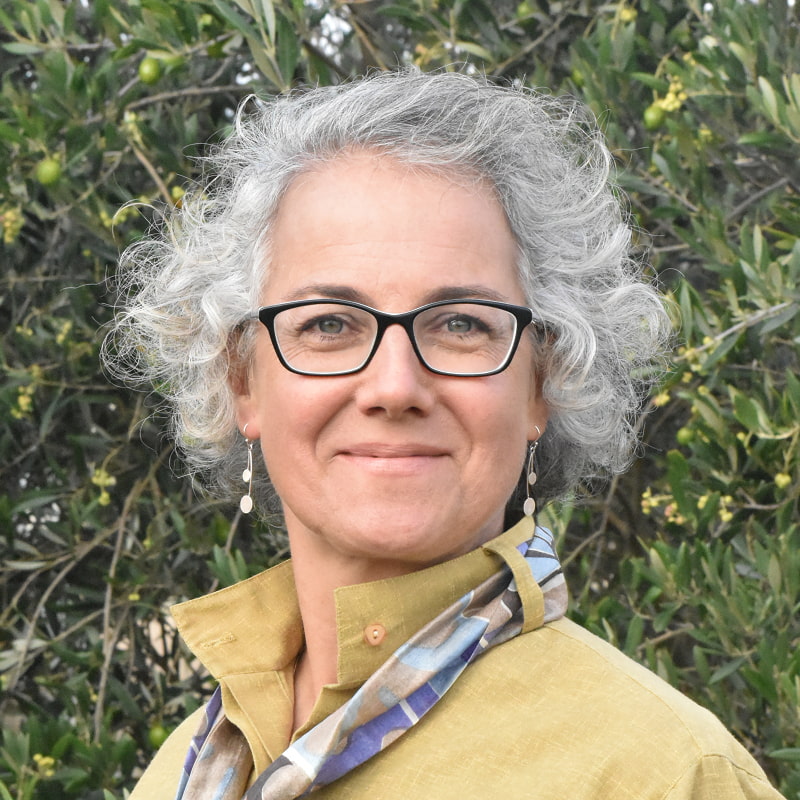
Professor Karien Dekker works at RMIT University in the School of Property, Construction and Project Management. She leads Housing@RMIT Network and mentors the ECR/HDRs for research activities. She is currently a Chief Investigator on a project on housing solutions for temporary migrants in Australia. She writes about social infrastructure and affordable housing in diverse communities.
Karien's life revolves around a greater desire to create inclusive communities in which everyone feels welcome. She is also passionate about affordable housing for all. To inform policy and public opinion, she interprets large datasets, while making sense of the findings with interviews and observations
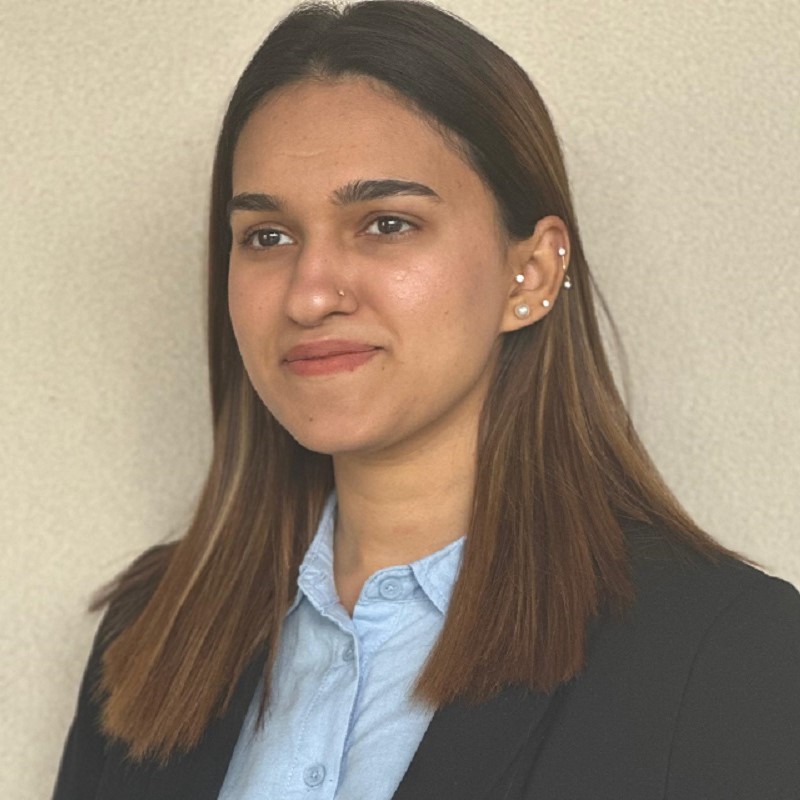
Muzna Anam is a doctoral researcher at the School of Property, Construction and Project Management.
She is a member of Housing@RMIT Network. Her research looks into the sustainable construction practices in Australia by incorporating the principles of the Circular Economy and Nature-based Solutions. She is passionate about exploring innovative solutions for sustainable construction to make the world a better place to live.
Being an HDR, Muzna welcomes all researchers affiliated with housing at any level to participate in the symposium and engage in meaningful conversations.


RMIT University acknowledges the people of the Woi wurrung and Boon wurrung language groups of the eastern Kulin Nation on whose unceded lands we conduct the business of the University. RMIT University respectfully acknowledges their Ancestors and Elders, past and present. RMIT also acknowledges the Traditional Custodians and their Ancestors of the lands and waters across Australia where we conduct our business - Artwork 'Sentient' by Hollie Johnson, Gunaikurnai and Monero Ngarigo.
Learn more about our commitment to Aboriginal and Torres Strait Islander peoples
