Everything you need to know about working as a carpenter.
Carpentry is one of those professions that everyone can picture in their head – safety glasses, someone cutting through wood, nailing lengths together, the smell of sawdust in the air… but there’s more to carpentry than what you might remember from high school woodworking.
What is a carpenter and what do they do?
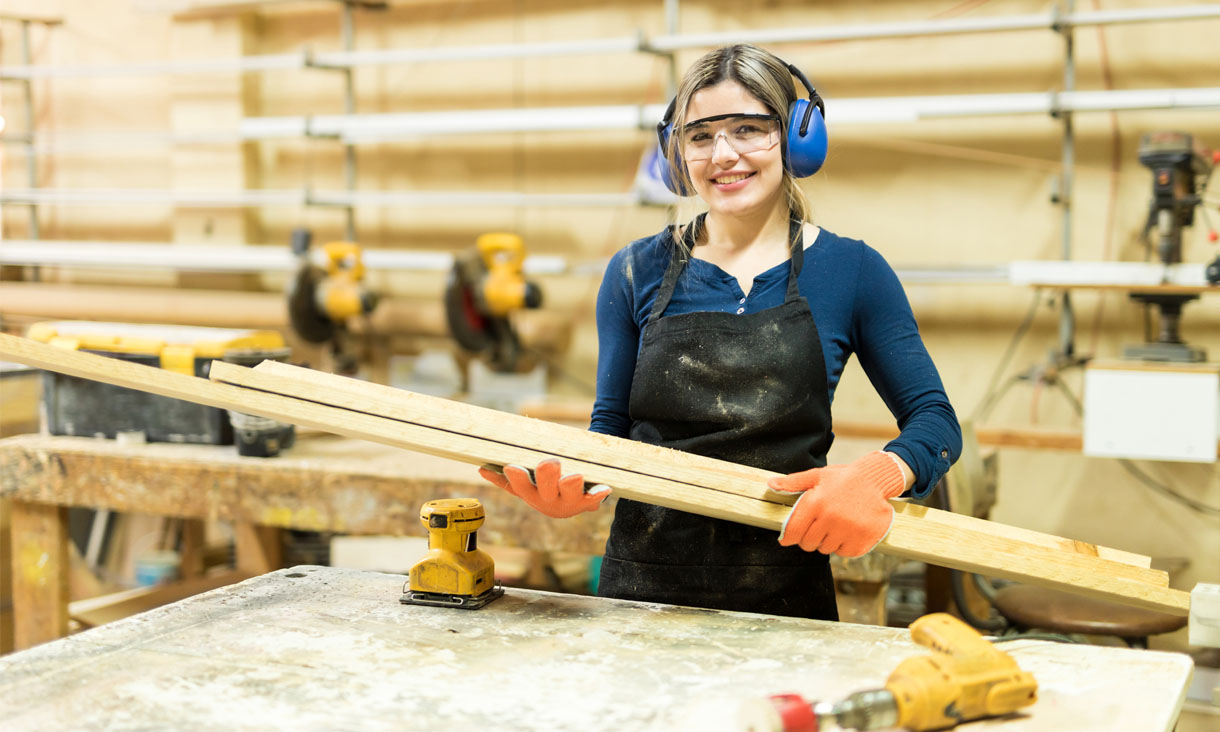
Traditionally, a carpenter is a skilled tradie who specialises in measuring, cutting, shaping and installing wood. They put up frames, install doors and windows, design and build custom furniture, and even repair antiques.
But that traditional definition is changing.
“Well, there’s steel frames,” says Donna Sullivan, Trades Innovation Centre Program Manager at RMIT. “They came in a bit more from COVID because we couldn't get timber, and some people have moved to that. You'll see a bit more steel housing getting built because the frames come pre-made. They just stand them up, so it's less labour but more material costings.”
Materials aside, the actual work hasn’t changed much. So what does a typical day in the life of a chippie look like? Let’s find out.
How do you become a carpenter?
There’s an easy answer to this one, according to Donna: enrol in a Certificate II in Building and Construction Pre-apprenticeship.
“These days they would like you to do a pre-apprenticeship in building and construction,” she reveals. “That gives the foundations of how to become a carpenter – the knowledge, basic hands-on experience with tools and equipment. Even just the names of components, OH&S. It's the skills of how to be a carpenter because you're actually working with a carpenter.
“When we run our Cert II, I try to get students to work one day a week with a carpenter. And last year, I got 10 students an apprenticeship.
“You really need to have the Cert II because when you go and work on a building site, they don’t have to stop and teach you how to use a circular saw or what a stud is. You've already learnt that skill, you know the terminology. You're going to just improve your skills with bigger and bigger stuff – measuring, marking.
“You'll get picked for work before someone else as well.”
No courses match your current filters
Try adjusting them or reset all filters to see more options

Certificate II in Building and Construction Pre-apprenticeship
 See Apply for details
 On campus
 Bundoora, Trades Innovation Centre
 Full-time 18 weeks
Certificate III in Carpentry
- See Apply for details
- On campus
- Bundoora, Trades Innovation Centre
- Full-time 4 years
Different types of carpentry
Once you’ve decided to become a carpenter, there are more decisions in your future. After completing your qualifications, you can specialise in areas like:
- Structural/framework carpentry – Building the skeleton of a structure, including floors, walls and rooves, to make sure everything stands solid and true.
- Formwork carpentry – Creating the moulds and supports that shape poured concrete until it hardens into permanent slabs, columns or beams.
- Finishing carpentry – Taking a project from rough frame to polished look by fitting skirting boards, architraves, doors and other visible details.
- Joinery – Crafting and installing fine timber features like cabinets, doors, stairs and windows, often in a workshop before fitting them on site.
- Shipbuilding carpentry – Working on the timber structures of boats and ships, shaping and fitting curved frameworks and decks built to handle the sea.
- Props and scenery carpentry – Constructing sets, stages, and props for theatre, TV and film, using the same skills in a more creative setting.
What does a typical day in the life of a chippie look like?
“We start pretty early,” says Donna. “You'd be starting on site at 6:30-7am, tools out ready to go. It’s actually enjoyable working on site because you’ve got the music pumping in the background, the bantering going… it's a little bit of fun. You have a morning tea and a lunch and that's it. We finish usually finish at 3.30pm, depending on what the project is.”
Between those hours, you might find yourself undertaking such activities as installing timber ceiling frames or supporting frameworks, measuring and cutting lumber, installing drywall, laying hardwood floors, trimming, moulding... then cleaning up the worksite and reloading the truck with tools and materials, ready for the next day.
It’s hard work, but the rewards are generally more long-lasting than, say, writing about exciting career options for a uni website.
“The thing is, I can drive past 100 houses and go, ‘I built that. It's still there since my apprenticeship.’ My husband was an electrician and he put these lights up at some park. Every time we walk past the park, he goes, ‘I put those lights up.’ But then I go, ‘That's nothing. See that house? I built that, and I built that one. And I built that one…’”
Tasks and responsibilities
In the beginning, you won’t be getting your hands dusty or working the tape measure.
“Oh, you'll be carrying things around,” Donna says. “You'll be digging holes. You'll be cleaning, getting the lunches. You really start off like a labourer. Once you can show your skills, they’ll slowly let you do more and more and more.”
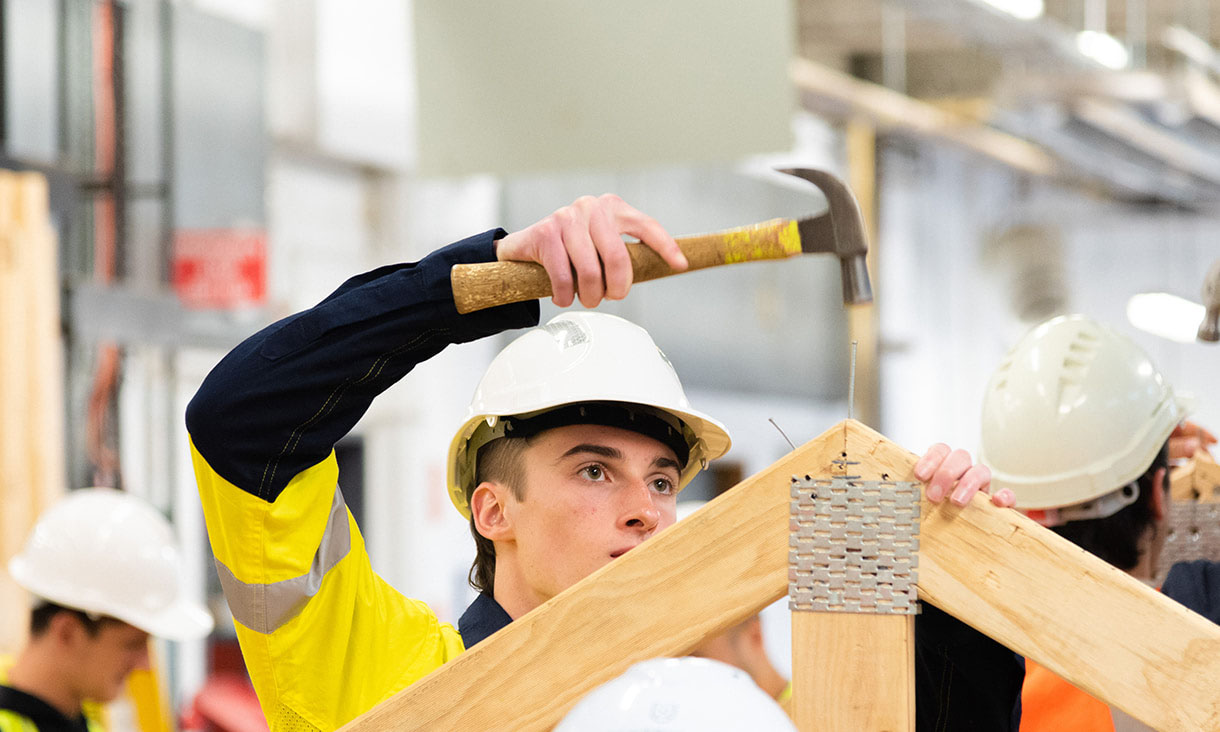
Your tasks and responsibilities (the more and more and more) might include:
- site preparation
- basic framing
- measuring, cutting and shaping materials
- general demolition of minor structures.
What skills does a successful carpenter need?
“It's pretty much teamwork,” says Donna. “You've got to work with each other, lifting material, marking out stuff, making sure you're marking on the right side. If you’re putting wallframes together, someone else is at the top, and you're at the bottom nailing, make sure you're working on the right side of the line.”
To be a successful carpenter, you’ll need technical skills such as the ability to use hand and power tools, as well as the maths skills required for precise measurement. Of course, you’ll also have to solve problems, pay attention to the details and be able to work as a team.
Donna adds, “If you’ve got a good work ethic, and you want to get your hands dirty, working hard and working long hours, in the rain, in the sun… you'll do really well.”
What's it like to be a carpenter?
“It’s a little bit quiet,” says Donna. “We had interest rates that went up to the roof, and we went into an election year, so next year it should start building up again. It did go down, but now everyone's starting to pick up. I think in the next couple of years it's going to improve even more.
Now they've got the new grant for first home buyers again. Apprentices are getting the grants as well to be a carpenter – I think it's $10,000 to start off, to help you out. So the government is trying to get it moving.”
(We checked, and according to the Australian Government’s official apprenticeship site, “The Key Apprenticeship Program offers up to $10,000 in financial support to apprentices commencing or recommencing their careers in the clean energy or housing construction sectors.” So Donna’s story checks out.)
How much do carpenters earn?

The average salary for a carpenter in Australia is $88,000 per year*.
*Source: Seek.com.au 2026
Related careers
Learn more about your carpentry studies
Whether you're a Year 12 student weighing up your options or thinking about switching careers, RMIT's building and construction courses provide a comprehensive and industry-focused education that can help you succeed as a carpenter in Australia.