
Date: Monday 4 May 2026
Time: 9am–4pm
Location: Building 16, RMIT City campus, 336–348 Swanston Street, Melbourne campus.
Catering: Lunch and light refreshments provided. Attendees will have the opportunity to network over drinks and nibbles at the end of the conference.
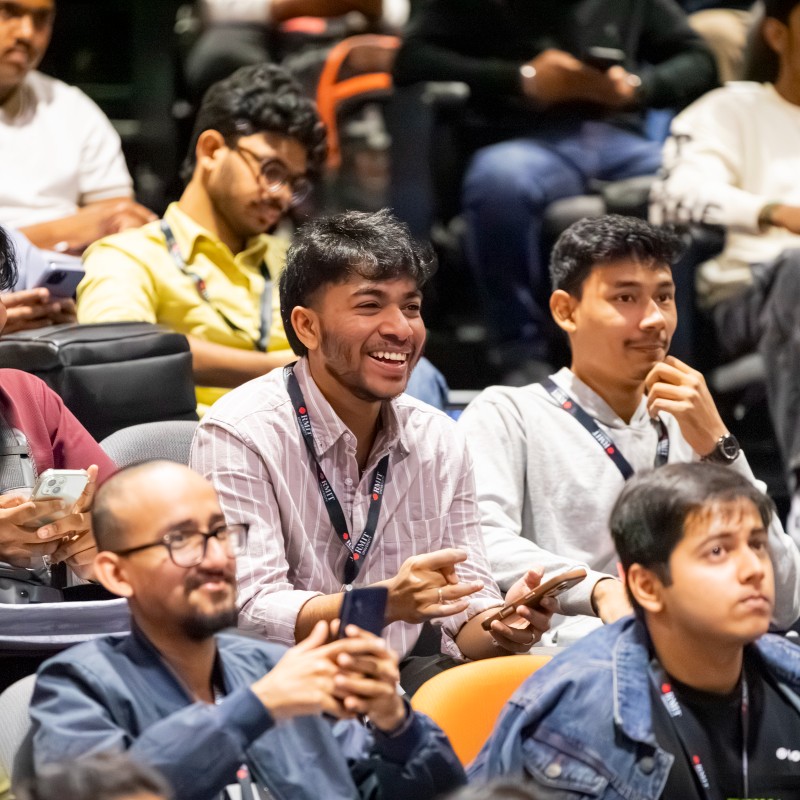
Join us on Monday May 4 for RMIT’s Generative AI Lab for Education (GAILE’s) inaugural conference: GeneratED. A one‑day, hands‑on conference for educators who want to confidently teach, design and lead in the age of AI.
Learn practical ways to integrate AI into your classroom, hear real student perspectives, and upskill in responsible and ethical use of AI — all while connecting with colleagues across the sector.
A debate exploring whether ethics are built into AI-tools or whether their morality depends entirely on how they’re used.
This panel invites a diverse group of students to candidly discuss their experience of learning alongside AI.
Explore what is gained and lost when AI becomes a co-author in this new age of human-machine collaboration.
Associate Professor Janine Arantes is an educator and researcher at Victoria University, Melbourne.
Her work examines the governance, psychosocial, and policy dimensions of emergent technologies in education, with a particular focus on labour redistribution, care work, digital safety, professional judgement, and institutional responsibility.
Her research spans initial teacher education, higher education, and workforce-facing educational contexts, and she is widely published on AI governance, synthetic media harms, academic labour and emerging technologies such as AI-enabled smart glasses.
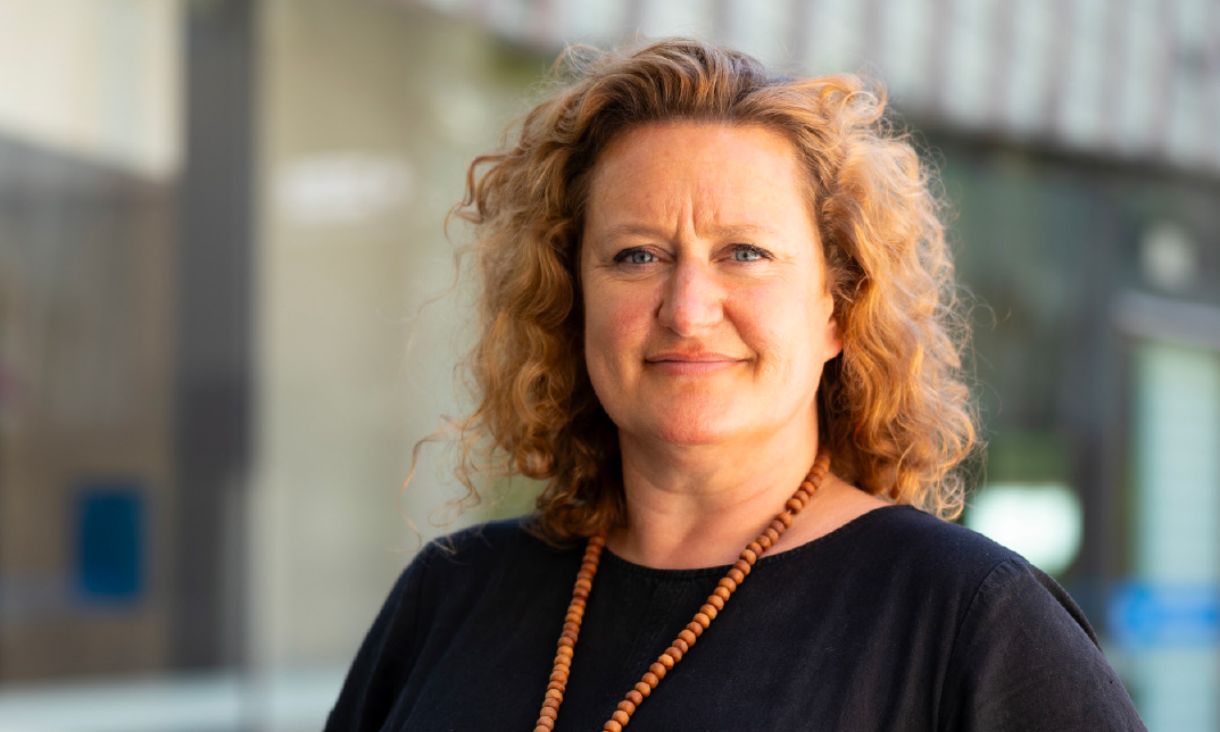
Her scholarship examines how emergent technologies have impact and hold implications for teachers’ workplace, human and consumer rights.
Arantes contributes to national and international conversations on responsible AI deployment, aligning educational innovation with workforce safety, transparency, and AI governance for Education.
Time: 9.45am–10.30am
Location: Storey Hall Auditorium
The question is not only how AI performs once embedded, but who decides it belongs there, on whose terms it operates, and how its arrival reorganises labour, care, safety, and authority. As AI shifts from novelty to everyday infrastructure, the task is no longer exploration, experimentation or rollout. It is deliberate design, centred on the human dimensions of AI.
This is a moment to make deliberate choices about how AI shows up in our classrooms and institutions. For a sector committed to real-world impact and practice-led innovation, this creates a rare opportunity. We can meaningfully refuse certain forms of AI, because human led rights such as consent, privacy, and authorship are structurally protected. We can alter our behaviours because workplace rights including psychosocial safety are part of policy and legislation. And we can protect our consumer rights because notions such as transparency and accountability can be embedded by design. If we don’t protect and safeguard ourselves, aren’t we developing human (de)centred AI?
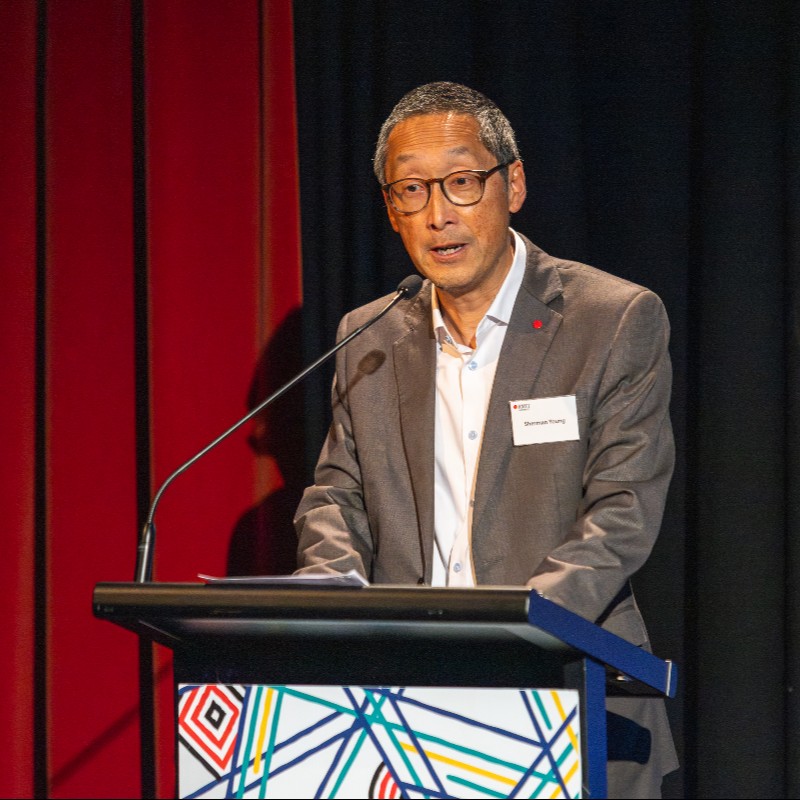
You are invited to join Associate Professor Janine Arantes, one of Australia’s leading thinkers on rights-based AI in education, at GeneratED. Her keynote resists easy solutions. It offers sharp provocations that pushes us to pause, interrogate assumptions, and reconsider what responsible AI truly demands.
Operating hours: 9am–1.30pm
Location: Storey Hall foyer
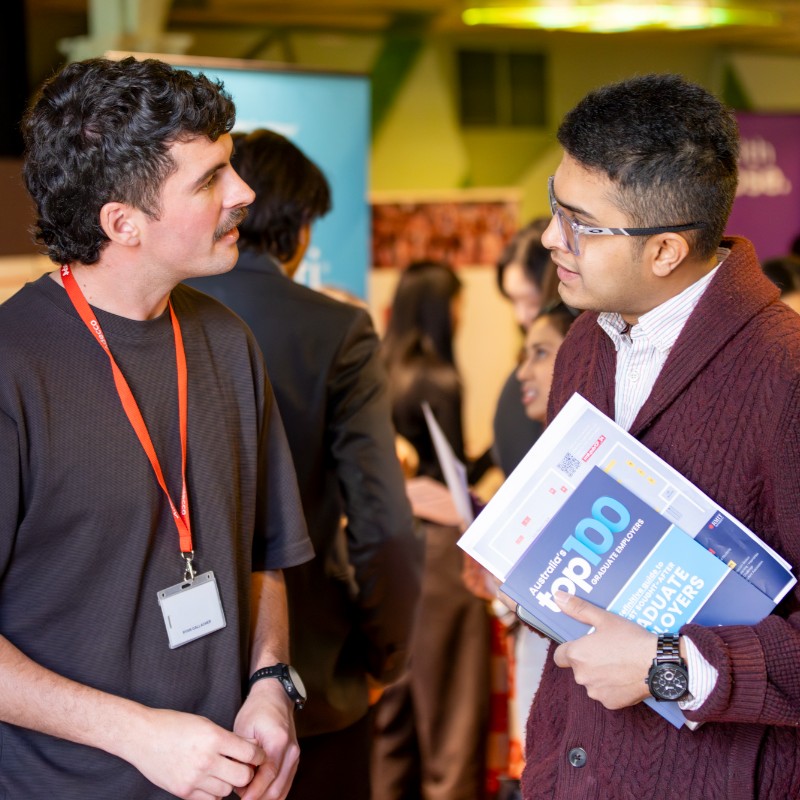
Explore interactive booths that demonstrate how AI-technology is already being applied. We invite you to wander through, chat with teams and experience how these approaches are influencing the way the sector evolves.

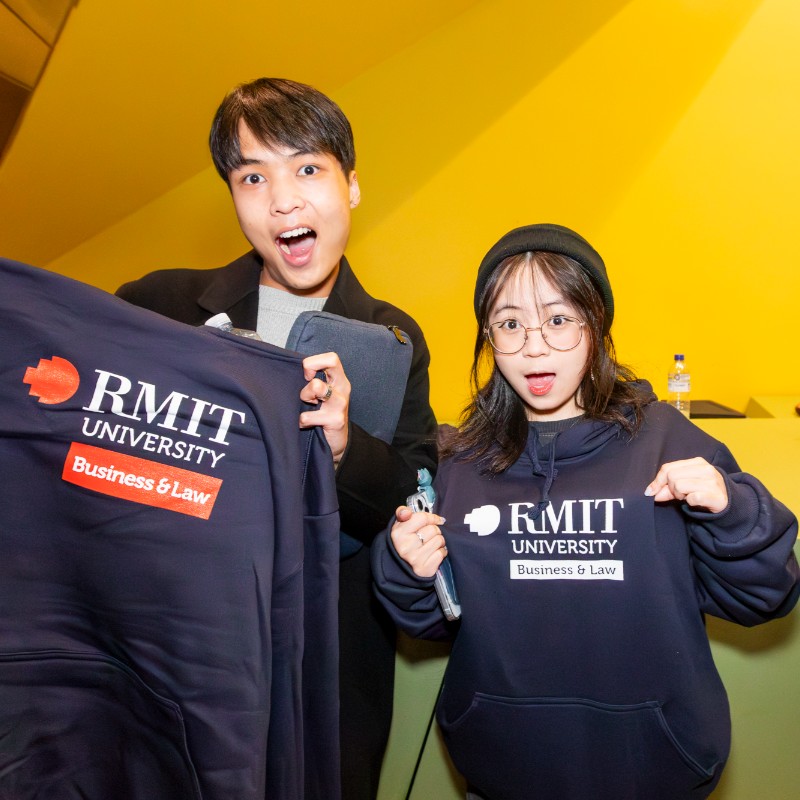
Visit our nametag desk between 9am–9.30am and 12.30pm–1.30pm and learn how to use GenAI to create a visual avatar nametag.
See tools such as Acai Coach, Engagement Assistant, and Grading Assistant and how they streamline teaching and support learning.
Explore the Writing Help and Val personas in action and learn how they were designed and tested for real teaching contexts.
Come speak with the team behind Val’s Generative AI platform. Discover how you can build and implement solutions using Val.

Learn more about GAILE’s mission, and find out how to get in touch or get involved.
To create spaces where educators prototype AI-enabled practices for immediate impact and collectively generate a shared vision of its role in human learning and connection.
A connected network of educators who move from possibility to practice; driving meaningful change and transforming ideas into classroom impact.


RMIT University acknowledges the people of the Woi wurrung and Boon wurrung language groups of the eastern Kulin Nation on whose unceded lands we conduct the business of the University. RMIT University respectfully acknowledges their Ancestors and Elders, past and present. RMIT also acknowledges the Traditional Custodians and their Ancestors of the lands and waters across Australia where we conduct our business - Artwork 'Sentient' by Hollie Johnson, Gunaikurnai and Monero Ngarigo.
Learn more about our commitment to Aboriginal and Torres Strait Islander peoples