
Creating a safe and respectful community
Creating a safe and respectful community at RMIT.
Creating a safe and respectful community at RMIT.
Creating a safe and respectful community at RMIT.
Creating a safe and respectful community at RMIT.
Gender-based violence is all too common across the Australian university sector. The extent of the problem was highlighted in the Australian Human Rights Commission’s 2017 report on sexual assault and sexual harassment at Australian universities, Change The Course.
Not everyone experiences universities as safe places and we’re working hard to change that for our university community.
We stand in solidarity with those in our community with lived experience of gender-based violence. We will support them no matter where, or when, this violence occurs.
Led by our values, we will seek to understand and dismantle the systems, structures and behaviours that lead to gender-based violence.
We will be unwavering in our effort to embed a shared understanding of respect and create a safe environment where support and response systems are trusted by those who need them most.
At RMIT University we will protect the right of every member of our community to learn, interact and participate fully in university life, confident that they are welcome, they are safe, and they belong.
Gender-based violence is a significant human rights issue occurring across all segments of society. It has profound negative impacts on safety, trust, and the lives of those who experience it.
We stand in solidarity with those in our community with lived experience of gender-based violence. We will support them, no matter where this violence occurs.
We also acknowledge the intersecting forms of inequality, discrimination, and disrespect that contribute to the experience and impacts of gender-based violence, and the many diverse communities who are disproportionately affected.
Gender-based violence in all its forms is unacceptable. We welcome the National Higher Education Code to Prevent and Respond to Gender-based Violence (National Code) as a critical step in strengthening sector-wide consistency, accountability and safety standards. As a place of learning, we are committed to being part of the solution.
Led by our values, we will seek to understand and dismantle the systems, structures and behaviours that lead to gender-based violence.
We will be unwavering in our effort to embed a shared understanding of respect and create a safe environment where support and response systems are trusted by those who need them most.
We have a deep commitment to accountability, transparency, and continuous improvement. At all times we will hold ourselves to the highest ethical standards and be unrelenting in our determination to eliminate gender-based violence impacting our community.
Through a trauma and violence-informed, person-centred and evidence-based approach, we commit to:
In this way, we will actively work to eliminate gender-based violence, taking accountability as individuals and as an institution of influence.
Since 2016, we’ve worked hard to build a culture of respect and make RMIT a safer place for everyone. We’ve put in place ongoing initiatives to reduce and prevent gender-based violence, and to support those affected by it. One incident of gender-based violence is one incident too many.
We are leading a whole-of-organisation approach across RMIT to address gender-based violence. Our prevention and response strategies need to work together along a continuum.
To do so, RMIT adopts the framework outlined in Our Watch’s Change the Story.
| Date | Milestone |
|---|---|
| 2016 |
|
|
2017
|
|
|
2018
|
|
|
2020
|
|
|
2021–22 |
|
|
2022
|
|
|
2023
|
|
|
2024
|
|
|
2025–26
|
|
As part of our commitment to reducing sexual harm, RMIT has participated in the National Student Safety Survey since it was first deployed in 2016.
The most recent survey, in 2021 saw a total of 665 RMIT higher education students completing the survey (6.6% of the 10,000 students invited to participate).
We're grateful to everyone who shared their views and we recognise the courage of those who shared experiences of harm.
While the results of the National Safety Student Survey show that some progress has been made, there is clearly still more work to be done.
Read more about RMIT’s 2021 National Student Safety Survey results and participation in the 2026 Survey.
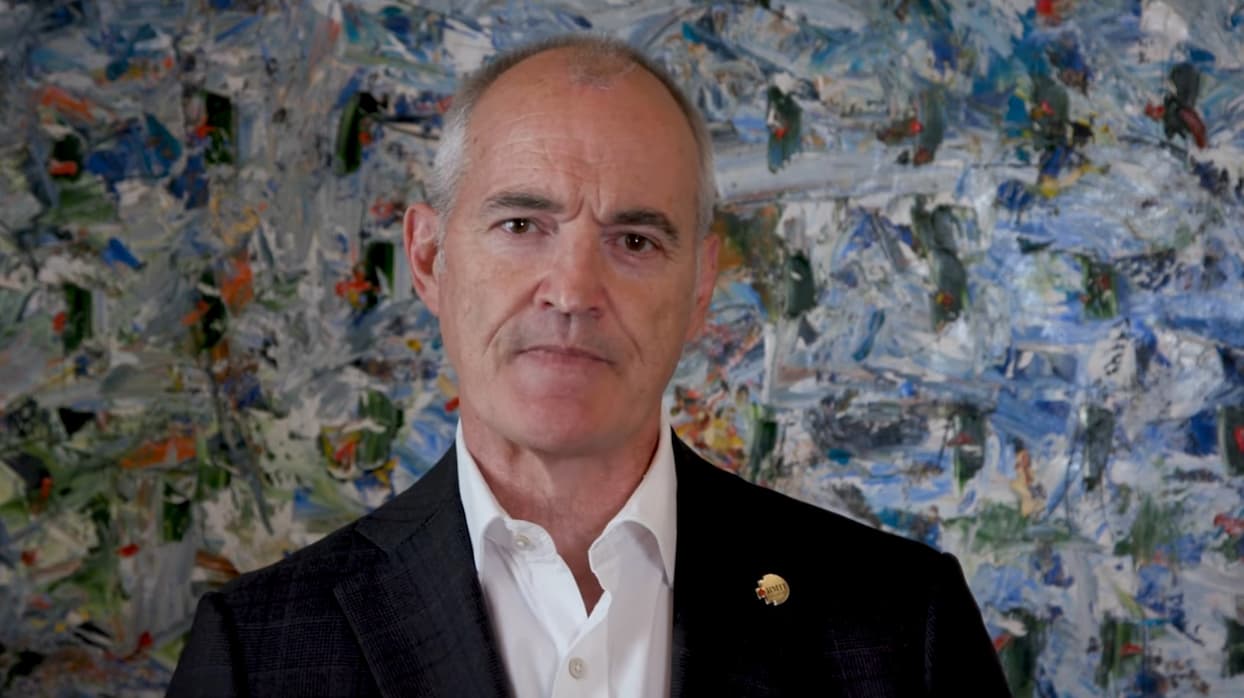
A message from Alec Cameron, Vice Chancellor at RMIT University.

If you have experienced concerning, inappropriate, threatening or uncomfortable behaviour on or off campus, support is available. Contact Safer Community to discuss your concerns and explore your options.
Students can access a range of free support at RMIT, from health, safety and wellbeing support, help with study and opportunities to make friends to specialist support, there is plenty of help available.


RMIT University acknowledges the people of the Woi wurrung and Boon wurrung language groups of the eastern Kulin Nation on whose unceded lands we conduct the business of the University. RMIT University respectfully acknowledges their Ancestors and Elders, past and present. RMIT also acknowledges the Traditional Custodians and their Ancestors of the lands and waters across Australia where we conduct our business - Artwork 'Sentient' by Hollie Johnson, Gunaikurnai and Monero Ngarigo.
Learn more about our commitment to Aboriginal and Torres Strait Islander peoples
