To read the full image descriptions, please click on the individual image above.
BAINZ JEWLZ
RMIT Gallery
19 September - 22 November 2025
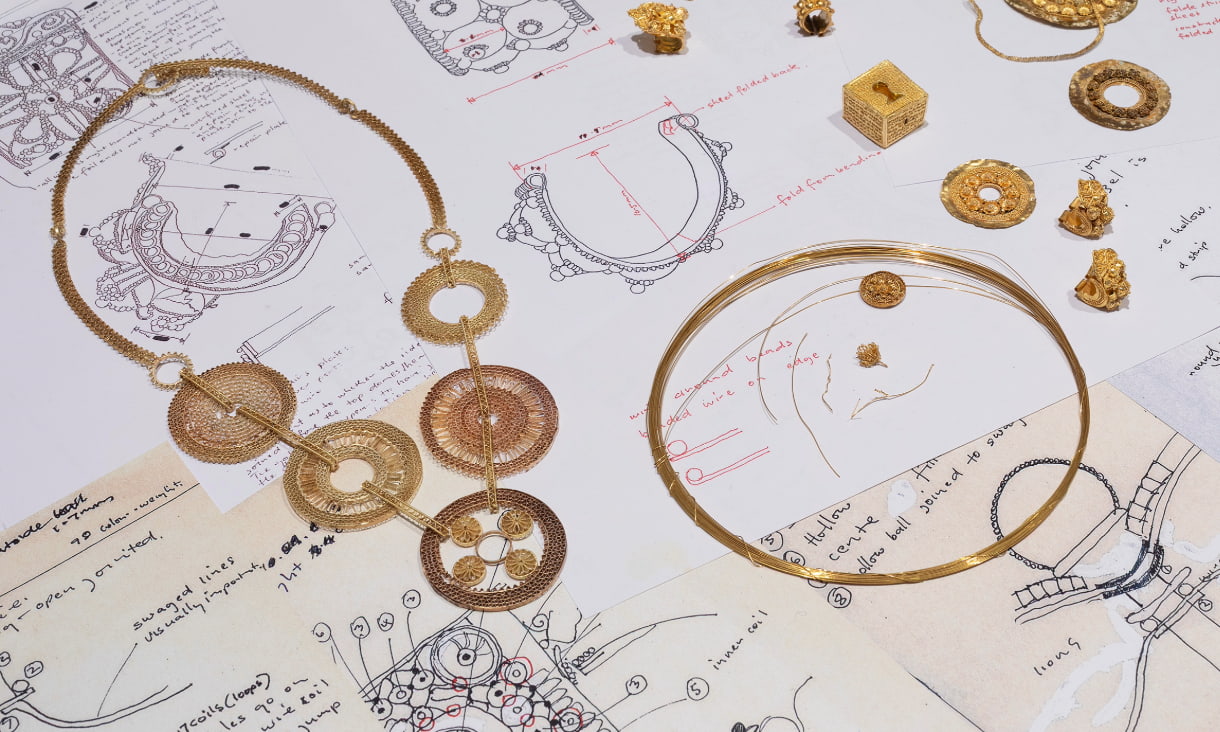
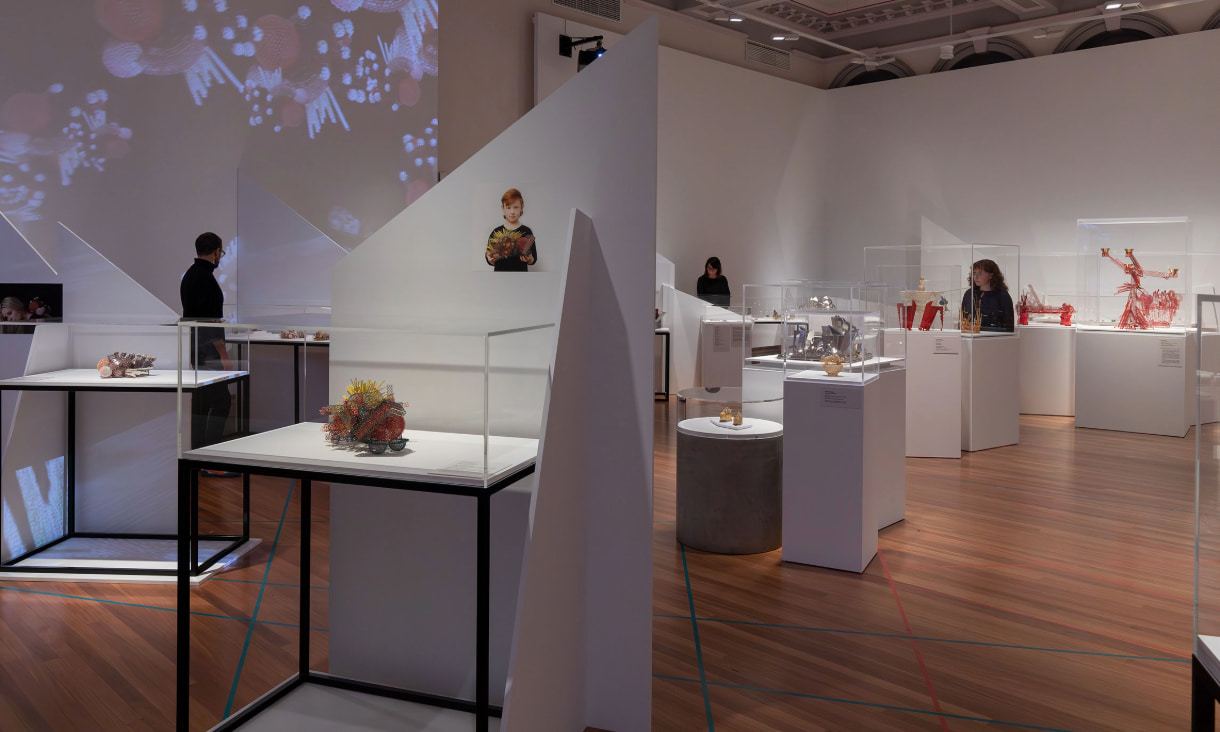
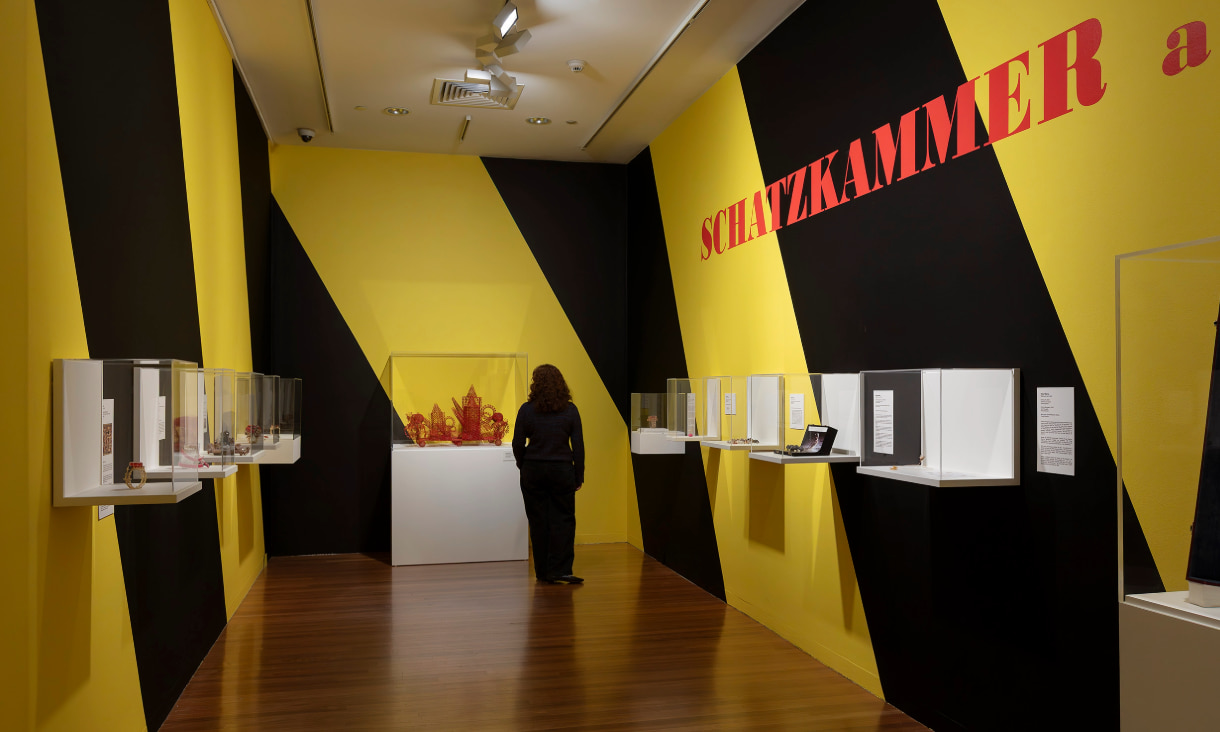
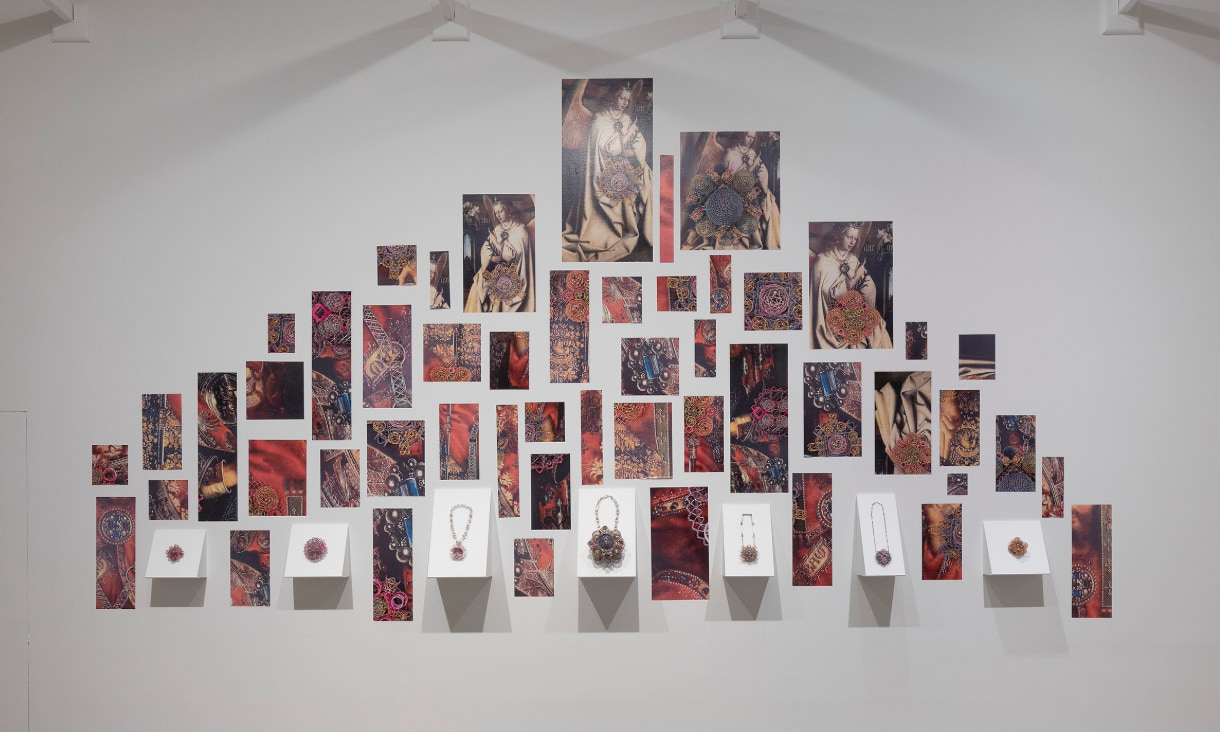
BAINZ JEWLZ is a major survey exhibition of the eminent career of Australian artist-jeweller Robert Baines.
Drawing from the philosophically rich, the blatantly pop and the historically obscure, Baines’ works are strikingly original and technically brilliant. This exhibition presents a comprehensive collection of significant works and research that showcase the diversity, depth and daring of his ground-breaking practice.
The exhibition showcases Baines’ study of archaeological gold jewellery and his internationally recognised practical research into archaeometallurgy. This scholarship grounds Baines’ own craft practice, connecting his work to ancient histories whilst also providing him a platform on which to consider and discuss contemporary issues.
Emeritus Professor Robert Baines OAM is an internationally recognised senior artist, creative researcher and a leading voice in the field of contemporary craft. His multifaceted practice encompasses his work as an artist-goldsmith, as well as his world leading scholarship in archaeometallurgy. Baines has been heralded as the foremost goldsmithing expert in Australia and in 2010, the Australian Design Centre named Robert Baines a Living Treasure: Master of Australian Craft.
To read the full image descriptions, please click on the individual image above.
The Mourning After: Grief as a Social Practice for Hopeful Futures
Design Hub Gallery
24 July - 20 September 2025
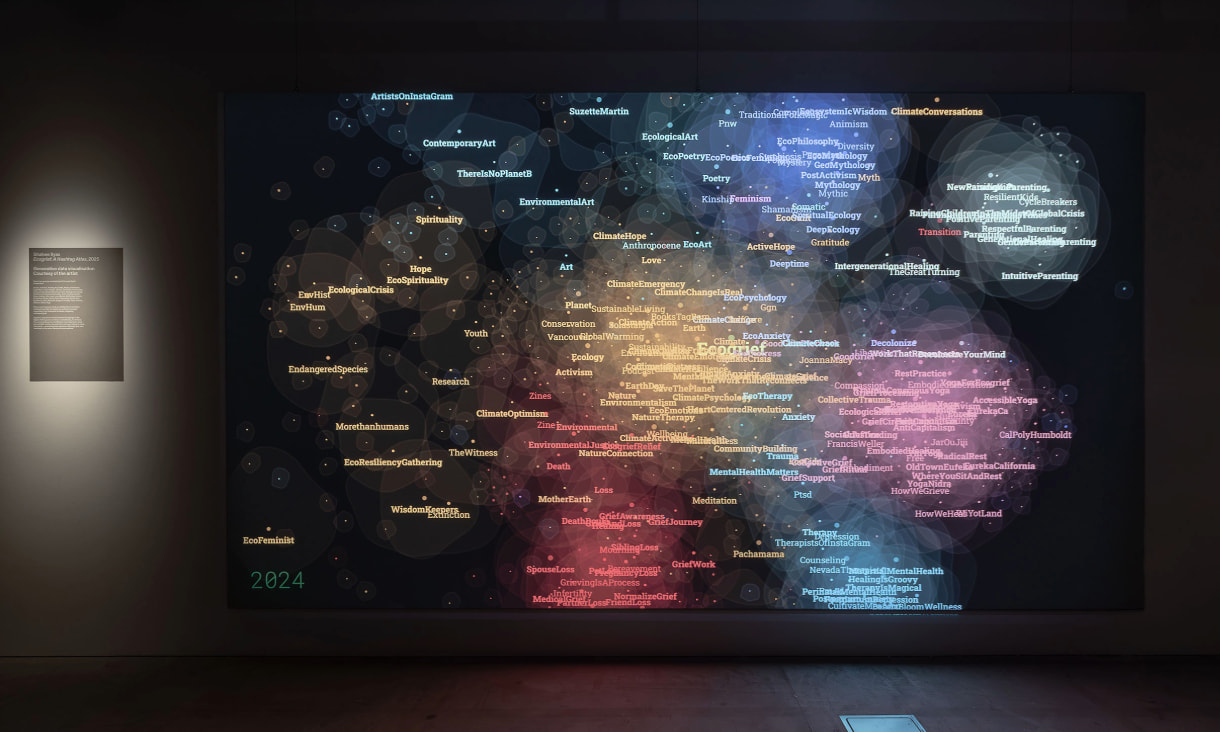
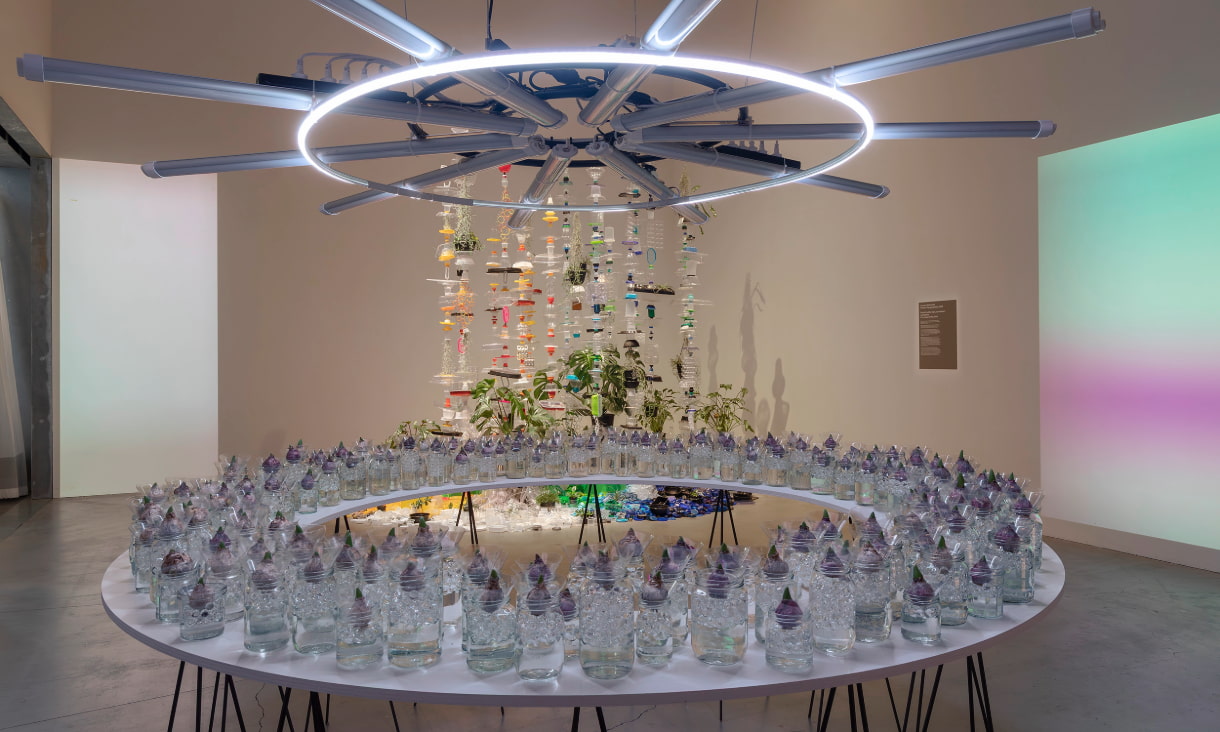
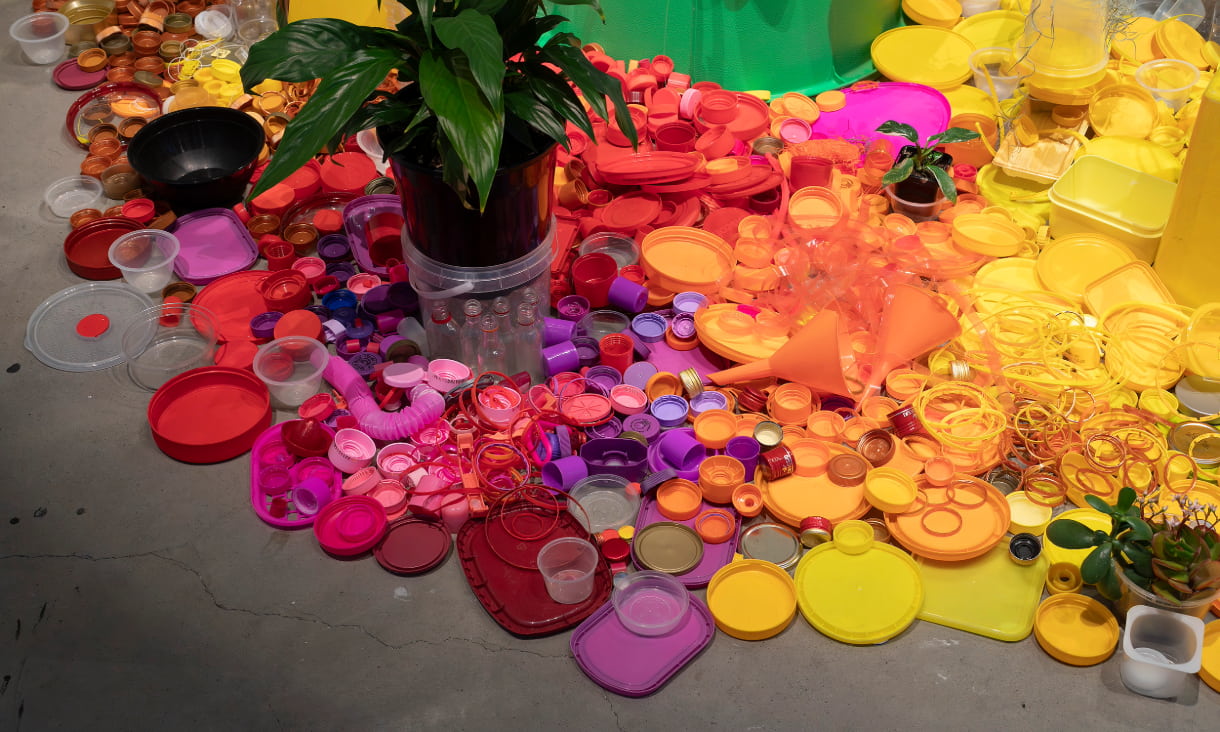
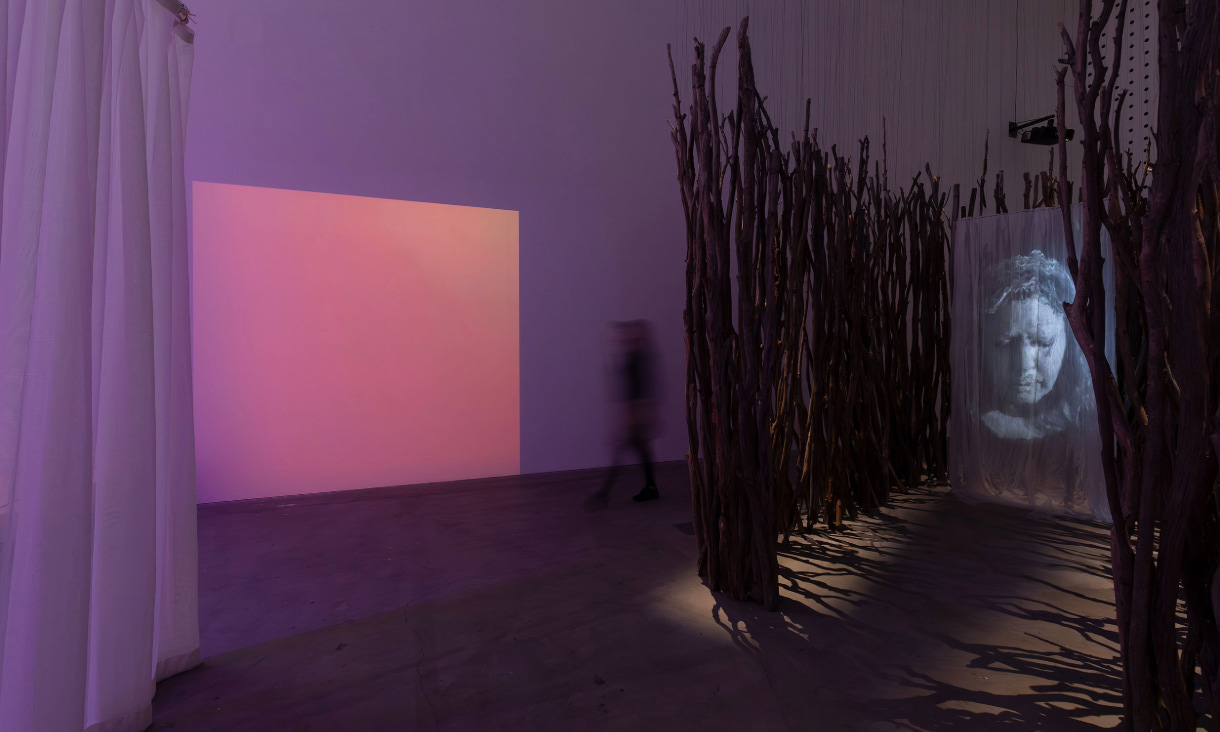
The Mourning After invites people to explore grief in all its multiple forms — as something felt, shared, and expressed through different rituals and creative practices.
The exhibition offers space for reflection, connection, and conversation, with a program of workshops that explore how creative methods can help us understand grief better. These workshops explore everything from personal experiences of loss to collective grief.
As we navigate a world in flux, reshaped by our relationship to technology and its impact on the environment, we engage with different types of grief — anticipatory, connective, ritualistic and, for some, grief as a life-long companion. Grief can be a way of meaning-making, a practice through which we navigate absence and reimagine what comes next. We invite the audience to consider ethical and creative responses to both tangible and intangible losses lived within our communities, and how these responses might help us connect to more hopeful, collective futures.
Including works by Lauren Berkowitz, Centre for Reworlding (Noongar Claire G. Coleman and Metis Jen Rae in collaboration with High Volume), Maree Clarke (Mutti Mutti/ Yorta Yorta and Boon Wurrung/ Wemba Wemba), Megan Cope (Quandamooka), Vicki Couzens (Keerray Woorroong Gunditjmara), Heather Hesterman, Shahee Ilyas, Machine Listening (Sean Dockray, James Parker, Joel Stern), Paula Mahoney, Annie Frost Nicholson, The Death Letter Project (Tina FiveAsh), and Lara Thoms (APHIDS).
Curated by Larissa Hjorth.
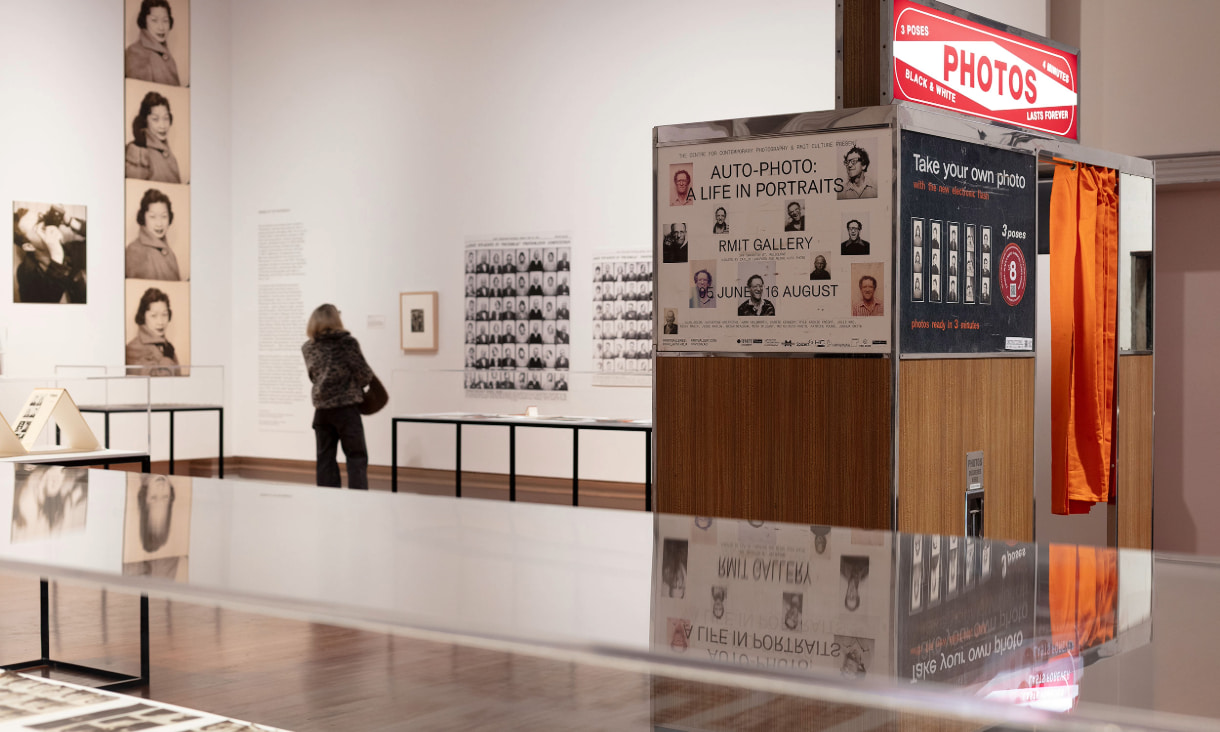
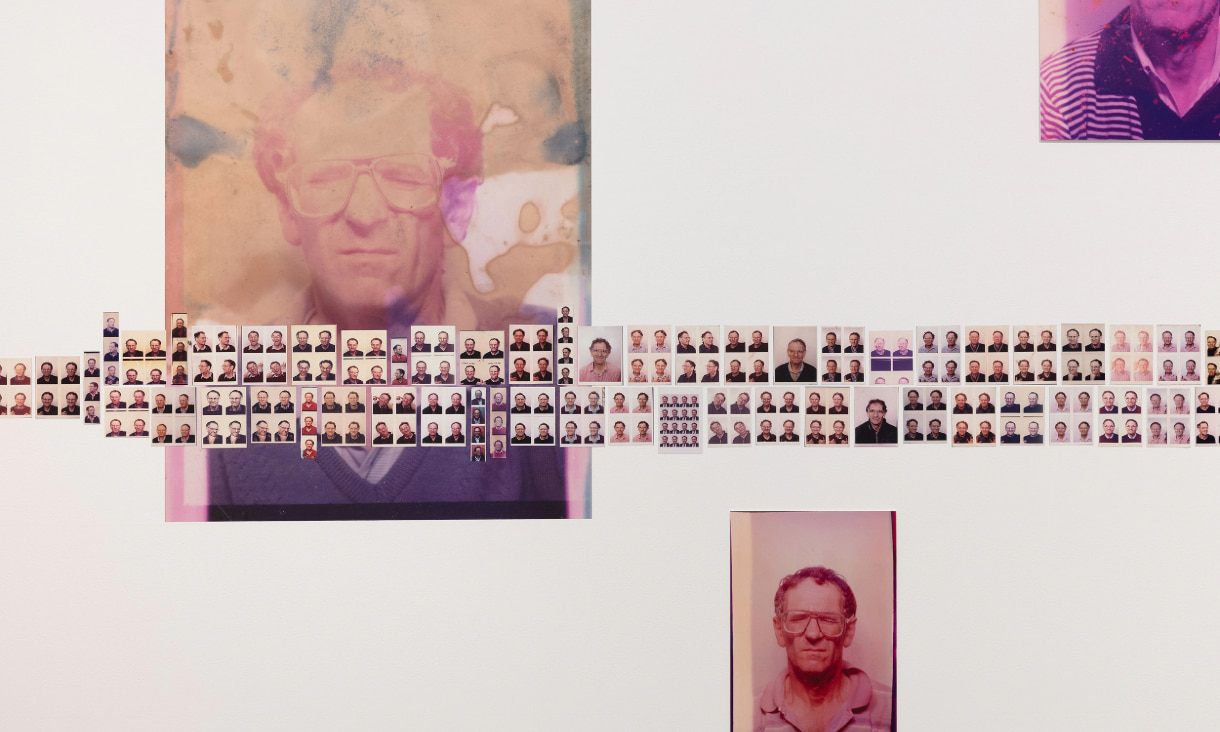
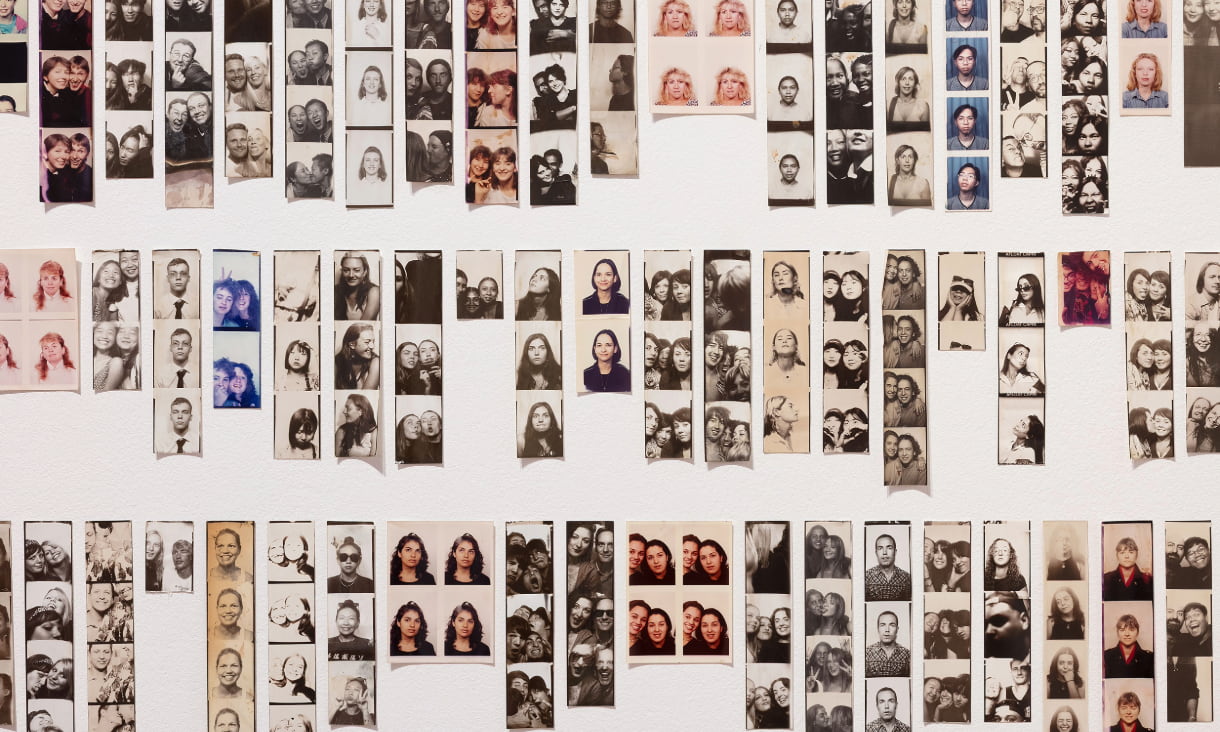
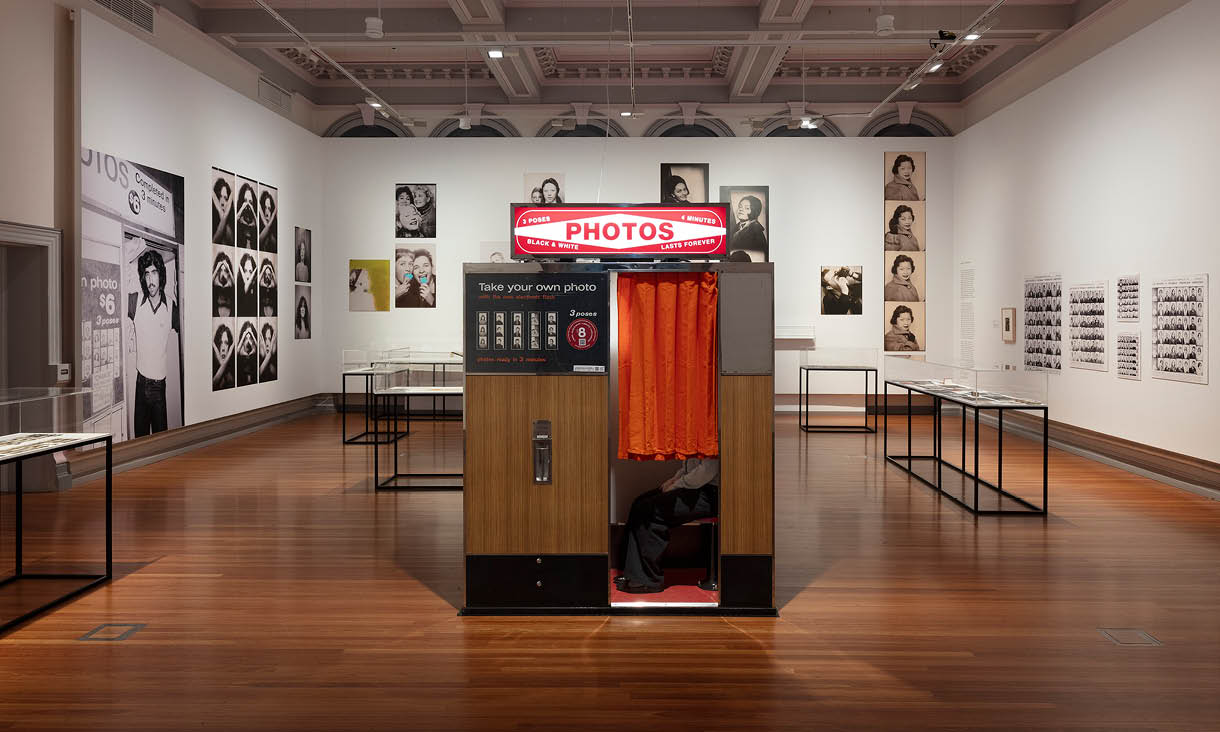
To read the full image descriptions, please click on the individual image above.
Auto-Photo: A Life in Portraits
RMIT Gallery
5 June - 16 August 2025
Auto-Photo: A Life in Portraits introduces us to Alan Adler (1932 – 2024), who while little known, was the oldest and longest serving photobooth technician in the world.
For over 50 years, Adler maintained a fleet of photobooths across Melbourne/Narrm, most notably the site at Flinders Street Station. As part of his weekly service, he would take a strip of test shots, now forming an extraordinary visual archive of over a thousand self-portraits.
Adler’s story shows a fascinating dedication to repetitious image making and is supported by the artworks of Melbourne creatives who have passionately used his photobooths.
Marking 100 years of the photobooth, Auto-Photo is one of many worldwide events that celebrate the centenary and reflect on the significance of this analogue machine.
Auto-Photo: A Life in Portraits features Adler’s extensive archive, alongside additional exhibits and works of art from the collections of Katherine Griffiths, Mark Holsworth, Kyle Archie Knight, Ruth O’Leary, Nicky Makin, Jesse Marlow, Brian Meacham, Metro Auto Photo, Patrick Pound and Joshua Smith.
Curated by Catlin Langford with Christopher Sutherland and Jessie Norman (Metro Auto Photo).
Auto-Photo: A Life in Portraits is a Centre for Contemporary Photography (CCP) exhibition, presented in partnership with RMIT Culture.
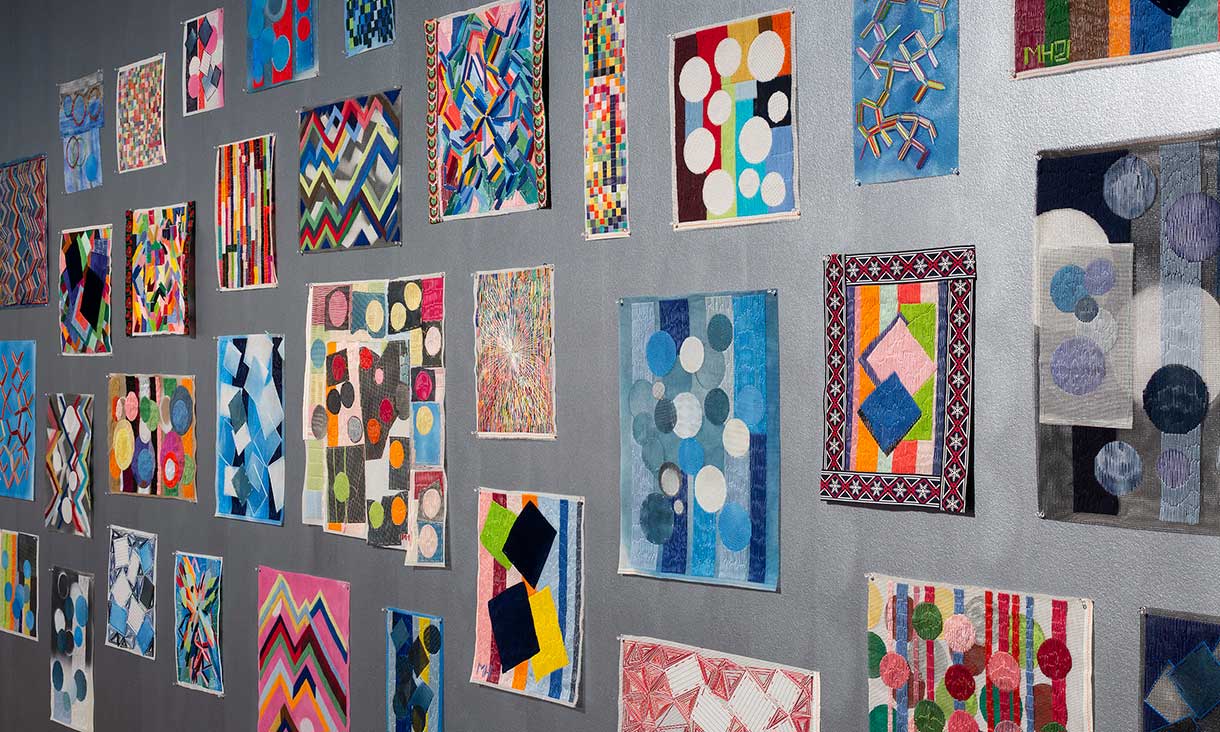
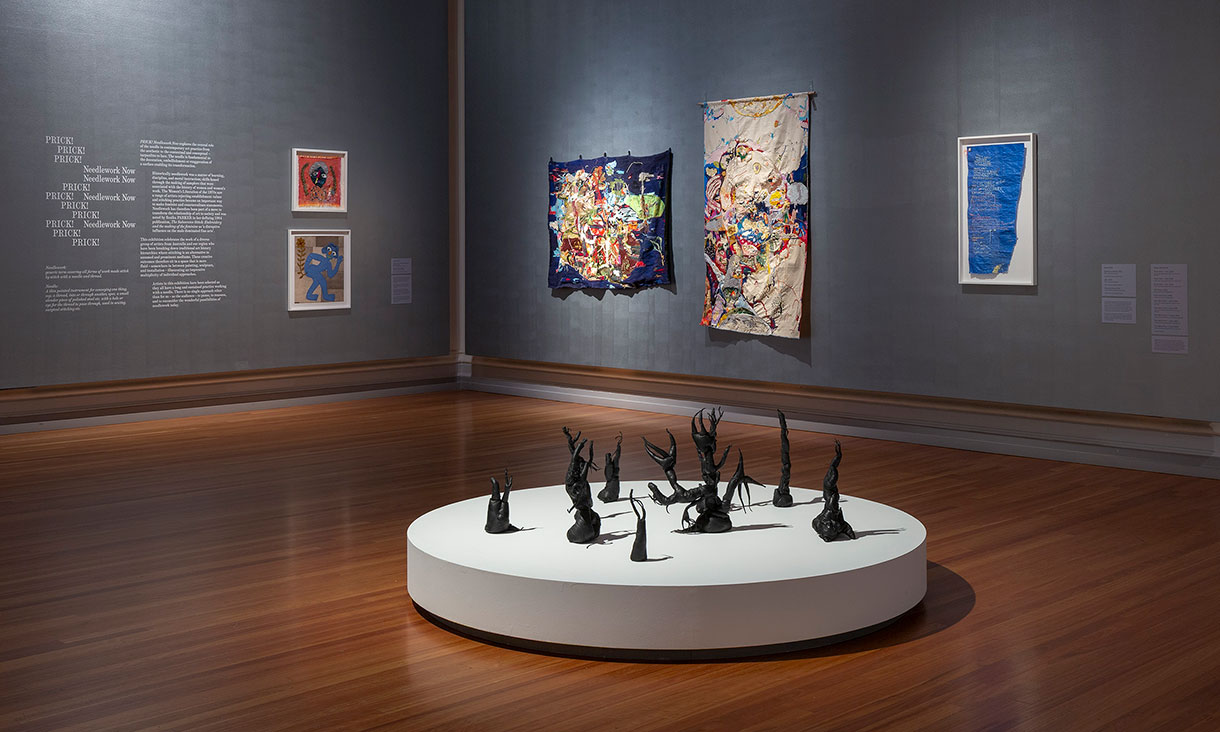
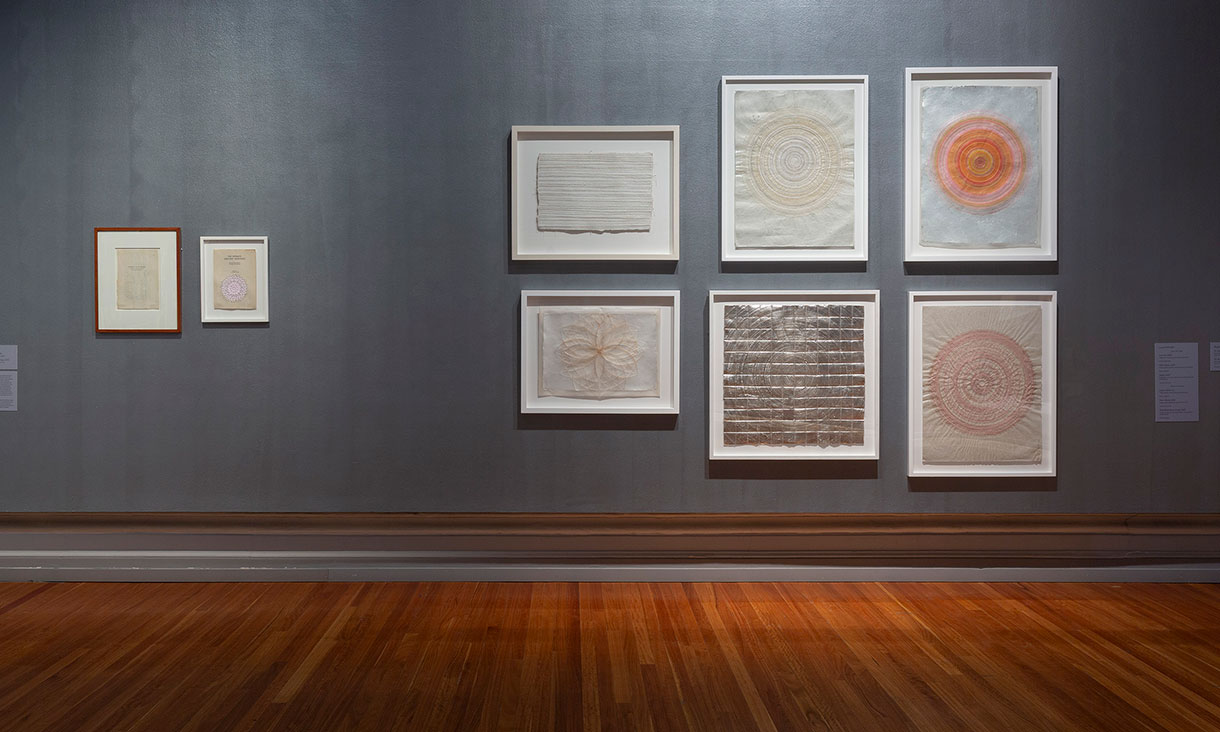
To read the full image descriptions, please click on the individual image above.
PRICK! Needlework Now
RMIT Gallery
20 February - 10 May 2025
PRICK! Needlework Now brings together works of art by Australian and international artists who use stitching as a fundamental part of their art practice. Slow and meditative, using a needle is fiddly and time-consuming work. Often overlooked in contemporary art practice, needlework has only recently received renewed critical attention. Whether the surface is textile, paper, flat or three-dimensional, pricking, piercing and puncturing take centre stage.
Needlework is fundamental to visual cultures across the globe; the materials are easy to access, are often inexpensive and the outcomes can be breathtaking. This exhibition presents the expanded ways a needle can be used as an artist’s tool. PRICK! Needlework Now includes artists from Australia, Indonesia, India, and Vietnam, celebrating each artist’s unique technique and approach to this delicate, complex and precise medium.
PRICK! includes works by Maggie Baxter, Aaron Billings, Jayeeta Chatterjee, Carly Tarkari Dodd, Melinda Harper, Michelle Hamer, Talitha Kennedy, Kate O’Boyle, Octora, Louise Rippert, Gurjeet Singh, Louise Saxton, Mien Thao Tran, Kasia Tons and Lisa Walker.
Curated by Helen Rayment.
This exhibition has been produced by RMIT Culture at RMIT Gallery. PRICK! Needlework Now has been supported by the Gordon Darling Foundation and is part of the PayPal Melbourne Fashion Festival’s Independent Programme.
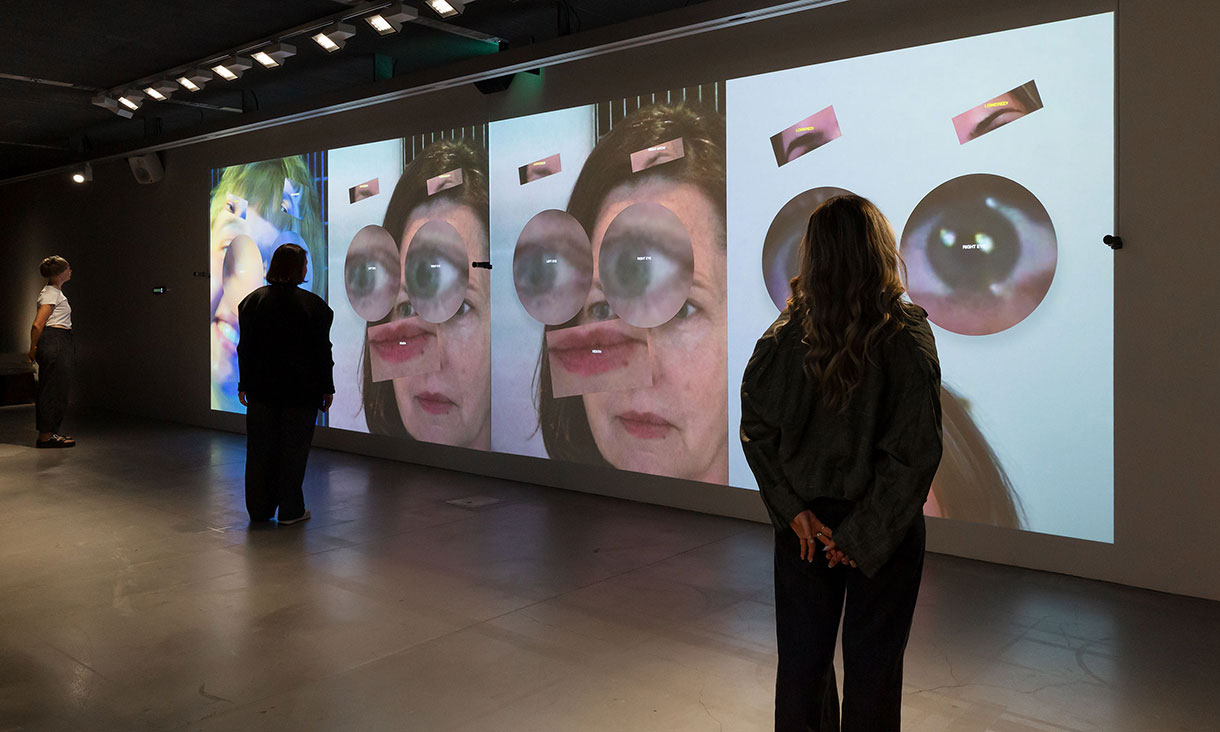
To read the full image descriptions, please click on the individual image above.
Deep Time Real Time: The 2025 Alastair Swayn Legacy Exhibition
RMIT Design Hub Gallery
10 February - 17 May 2025
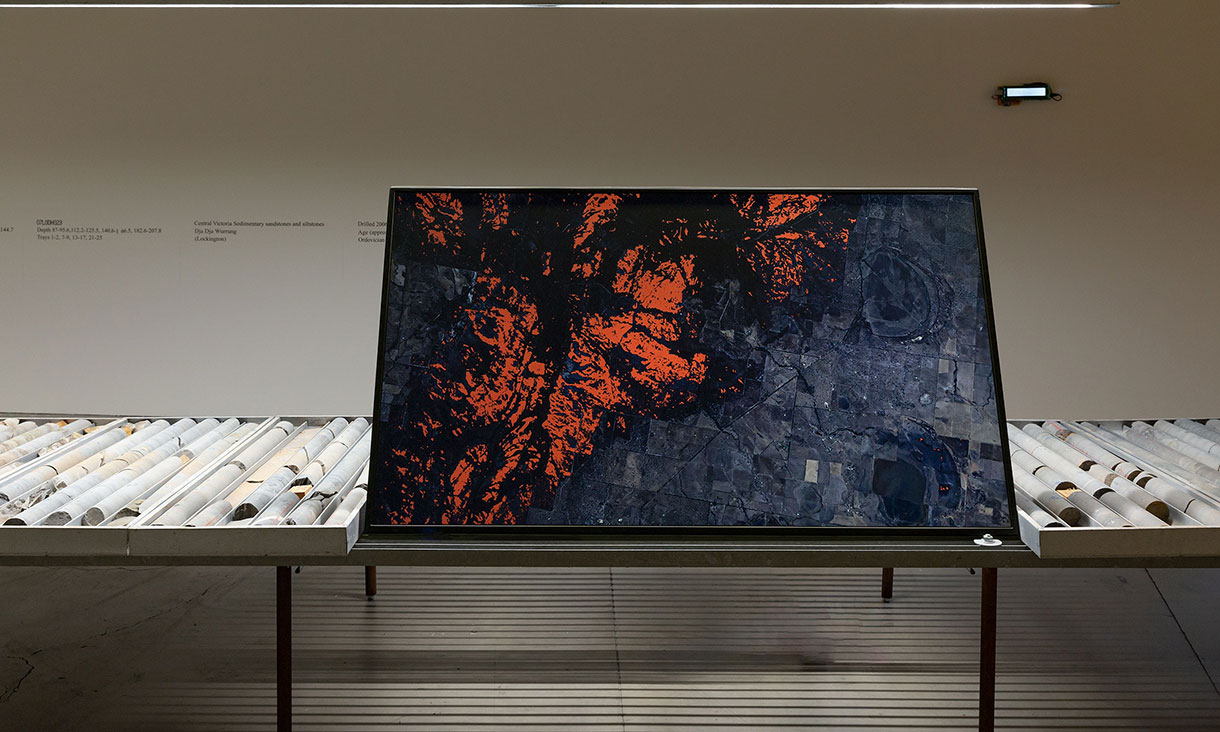
Deep Time Real Time: The 2025 Alastair Swayn Legacy Exhibition explores the relationship between design and planetary systems through two opposing temporal scales – ‘deep time’ and ‘real time’.
As global citizens, we struggle to reconcile this geological timescale with our everyday lives. This affects our time-based thinking, limiting our ability to make decisions on regenerative actions and to develop collective societal and design responses to the complex challenges of our planet.
Today, technology offers new ways of seeing and knowing information that enable us to better understand the entangled, inter-relational and hidden conditions of our world.
Technology is, however, never a neutral actor. An inherent conflict lies in the fact that many of the most innovative technologies are designed and used for military applications, or the exploration and extraction of resources. This uneasy foundation makes it imperative that we critically question how these tools and practices are utilised – and for whose benefit.
Indeed, through creative ingenuity these very same technologies are being re-designed, hacked and re-deployed to support the repair, regeneration and preservation of ecologies. These adaptive and opportunistic processes are enabling new time-based thinking and spatial practices to emerge.
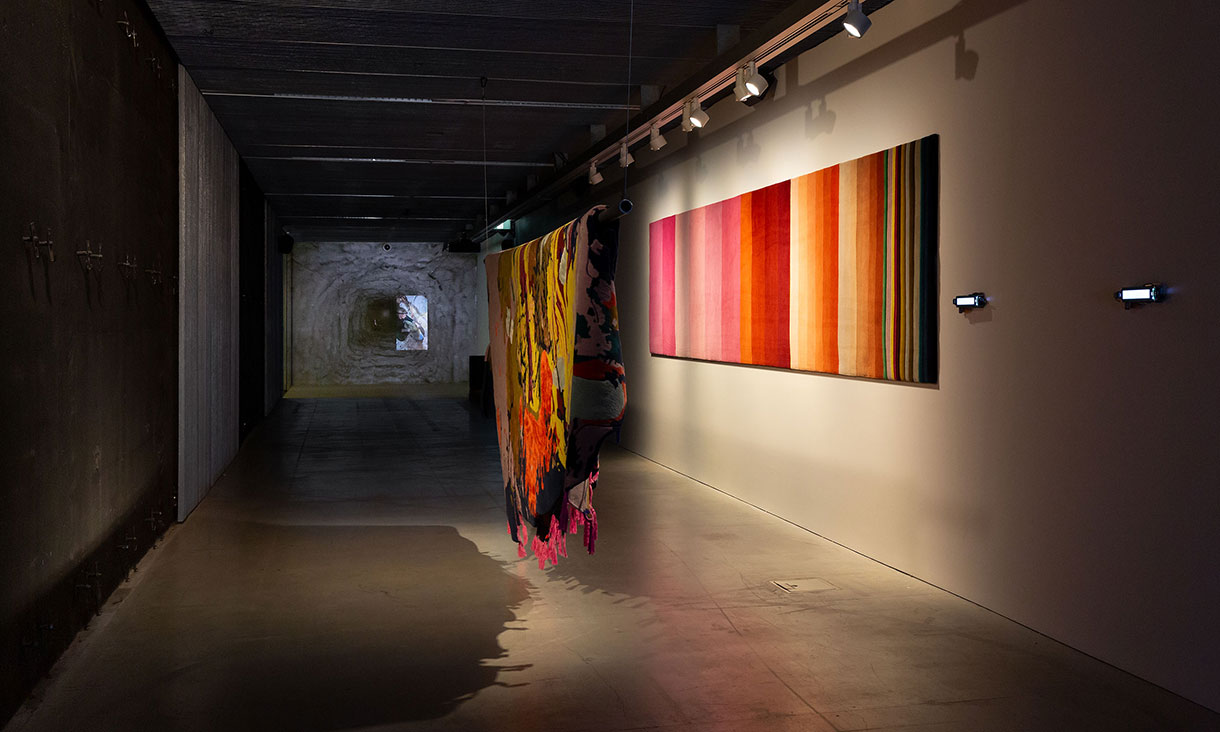
Deep Time Real Time reveals the agency of time-based thinking and foregrounds a research-led approach to design and creative practice. The exhibition is centred around a large-scale installation by architecture practice Simulaa, comprising a ‘timeline’ of digital, geological and material samples that visualises the journey of materials through time.
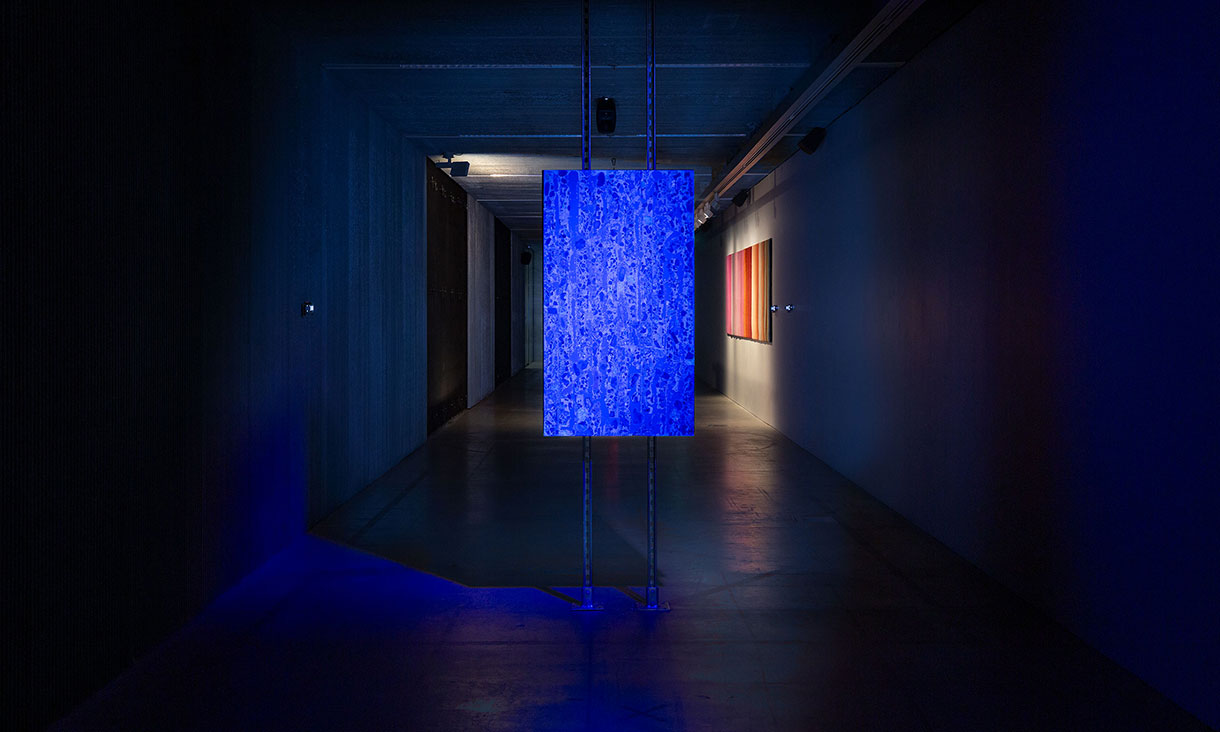
A series of architects, designers and artists have been invited to respond, creating a collection of time-based creative and research works presented through the lenses of ecology, energy and technology.
Deep Time Real Time invites visitors to consider the complexity of these intersecting concerns, and to situate themselves in relation to the distant past and the far future.
Deep Time Real Time features creative works and research from Fayen d'Evie, Stuart Geddes and Žiga Testen, Alicia Frankovich, Emma Jackson, Farzin Lotfi-Jam, Nicholas Mangan and Cameron Allan McKean, Joel Sherwood Spring and Simulaa.
Creative direction by Fleur Watson. Co-curated by André Bonnice, Anna Jankovic and Fleur Watson. Exhibition design by Simulaa. Graphic design by Stuart Geddes and Žiga Testen. Access consultancy by Access Lab & Library (ALL).
This exhibition is produced by RMIT Culture in partnership with the RMIT School of Architecture & Urban Design and with the assistance of The Swayn Gallery of Australian Design. Also supported by the Victorian Government, with core specimens supplied by the State Drill Core Library.



