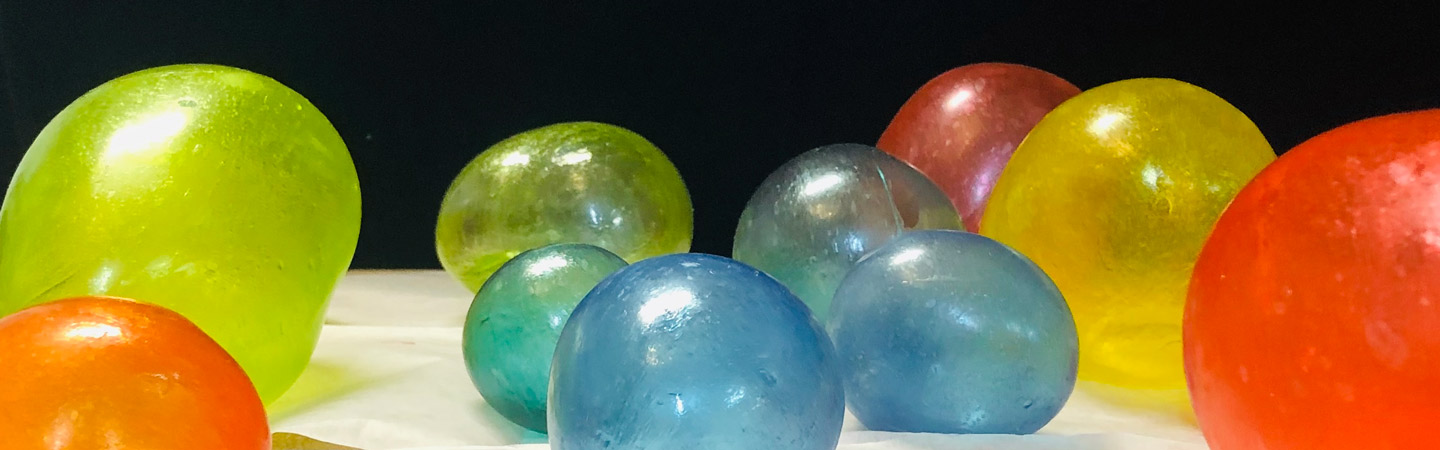
Please click on the individual image above to view it in full.
Sweet Enough (RMIT First Site Gallery, February–March 2025) was a solo exhibition by PhD candidate and artist Rose Agnew that examined sugar as both material and metaphor through a feminist lens. The project explored sugar’s entanglement with colonialism, settler identity, gendered labour, and environmental concerns, while also foregrounding its affective and transformational potential.
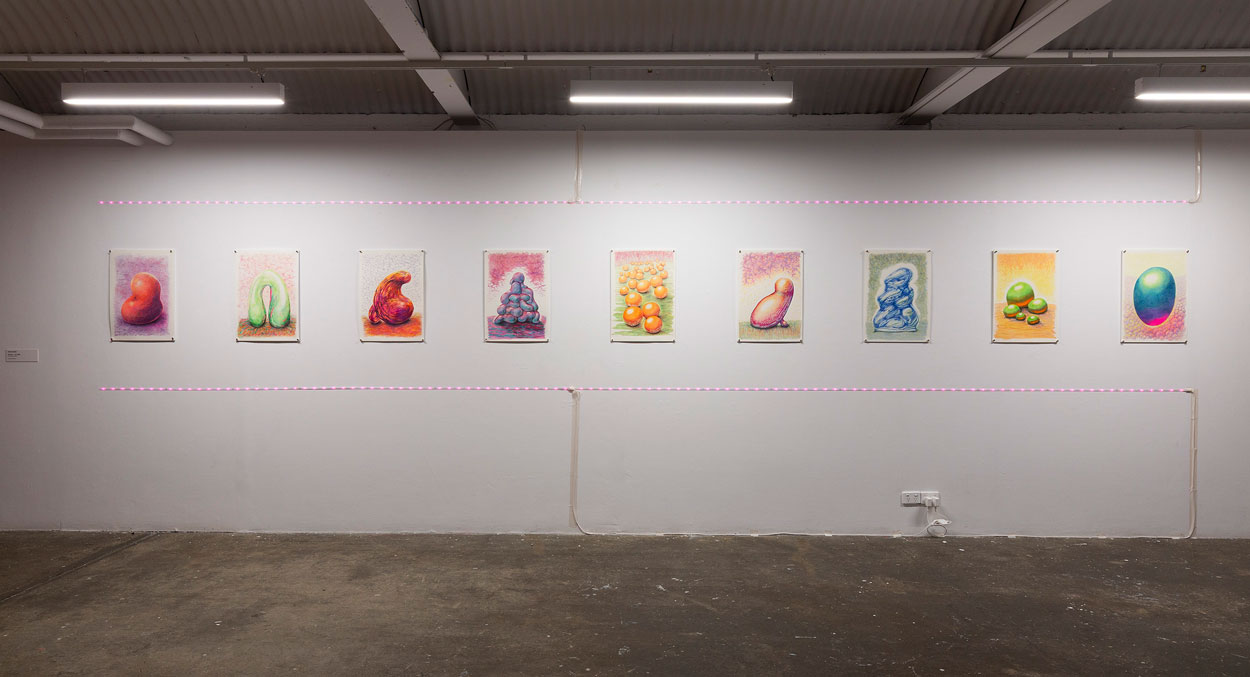
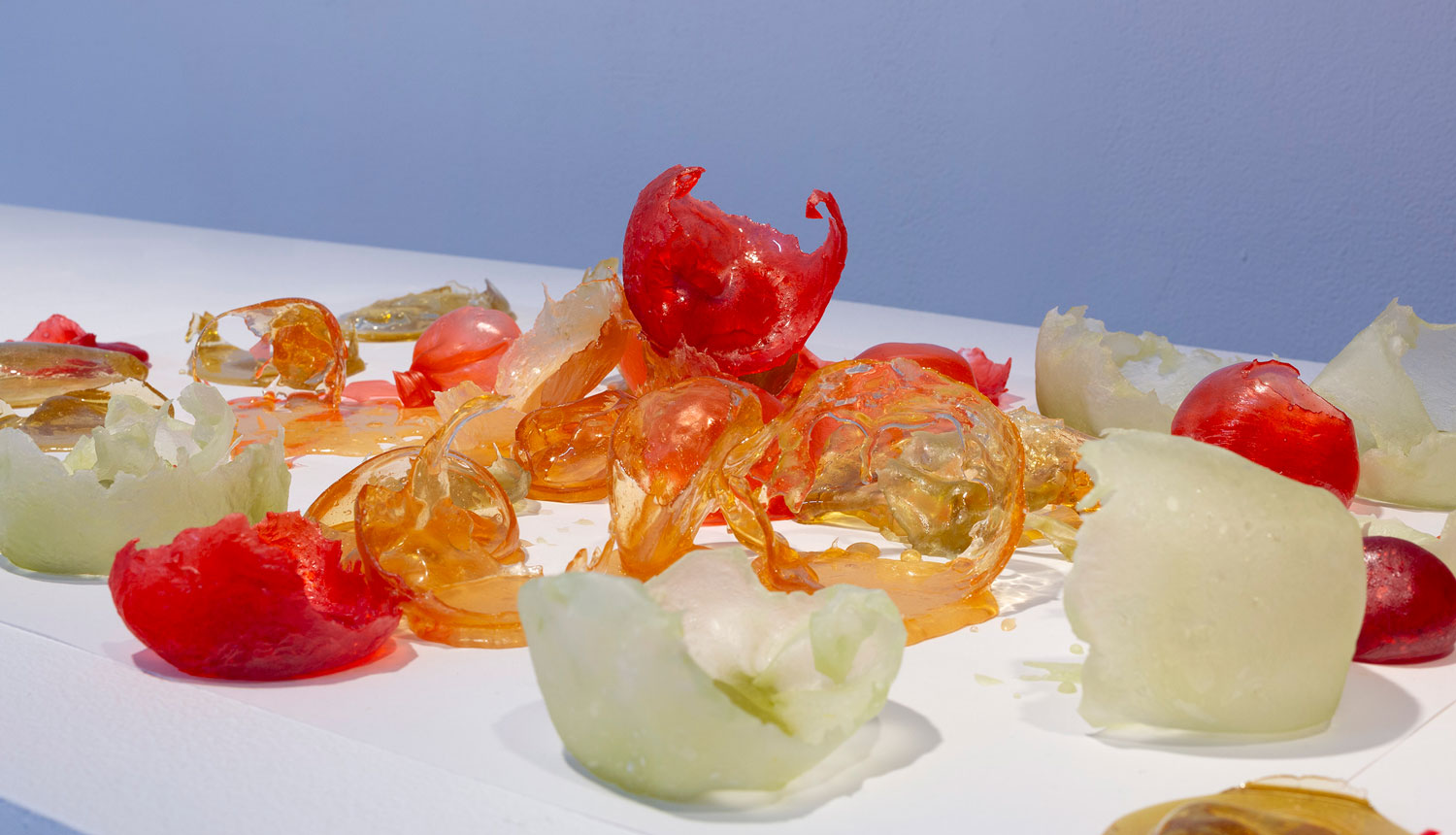
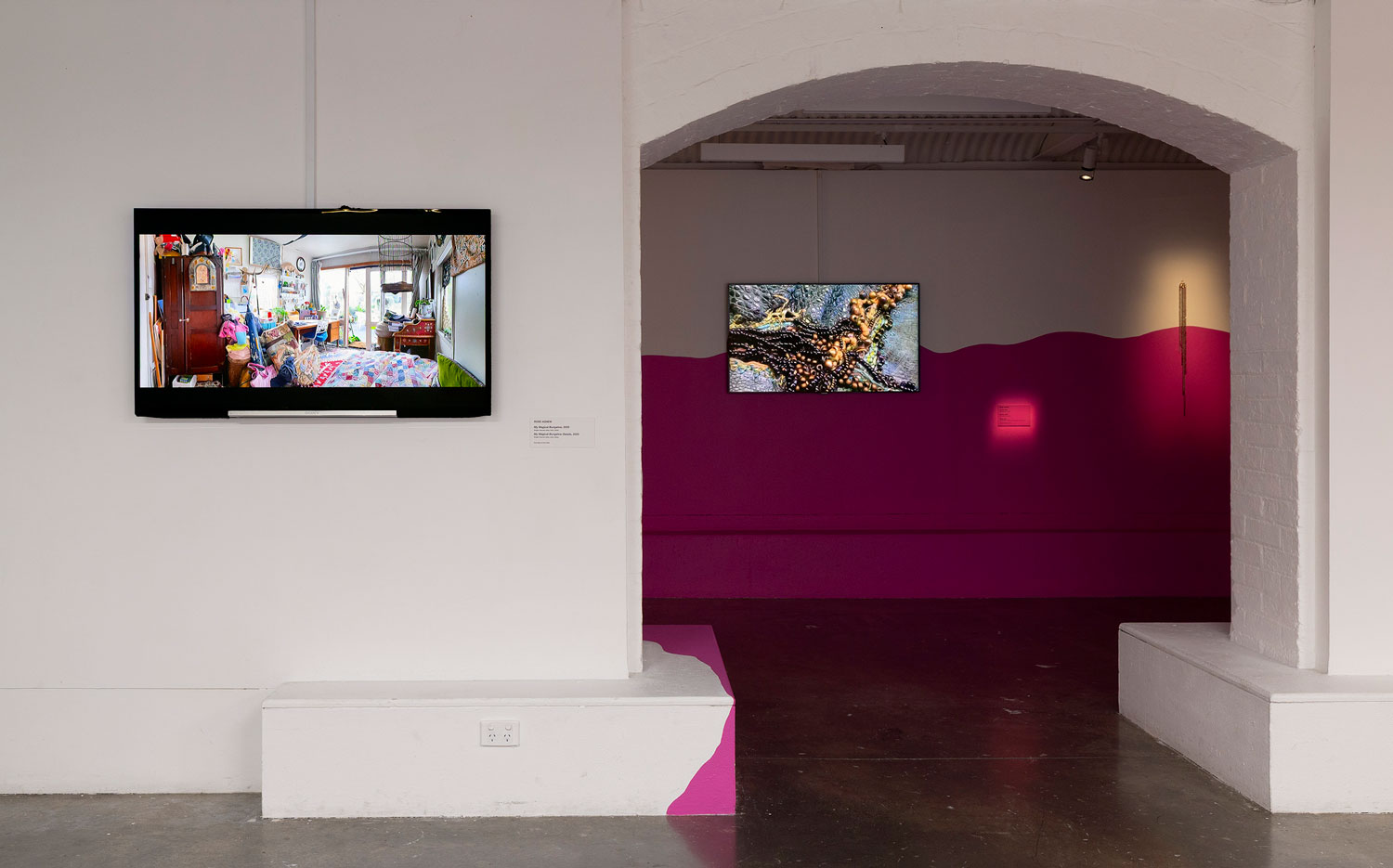
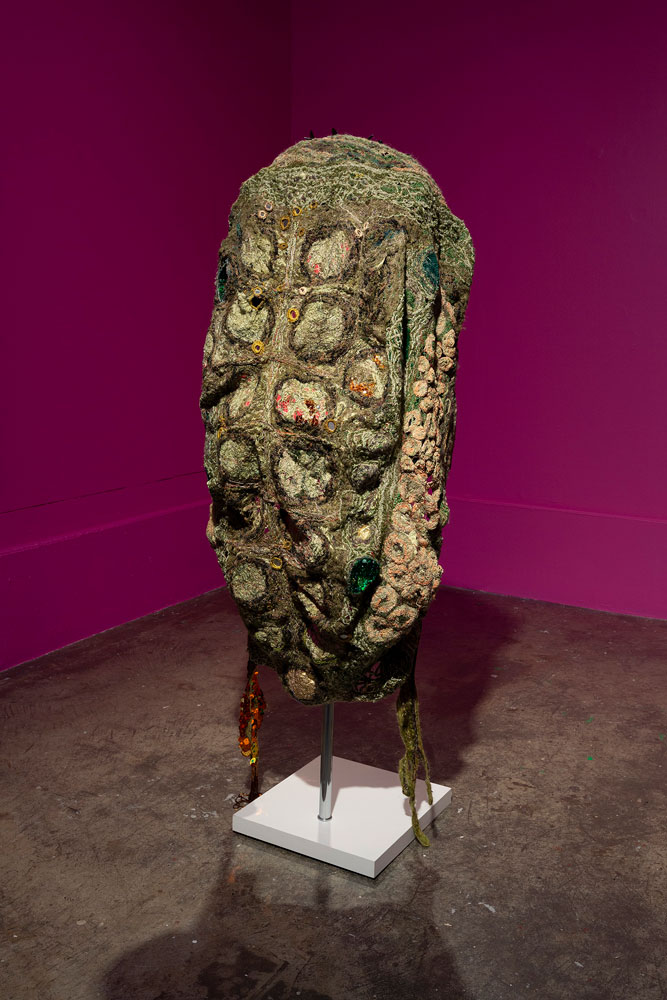
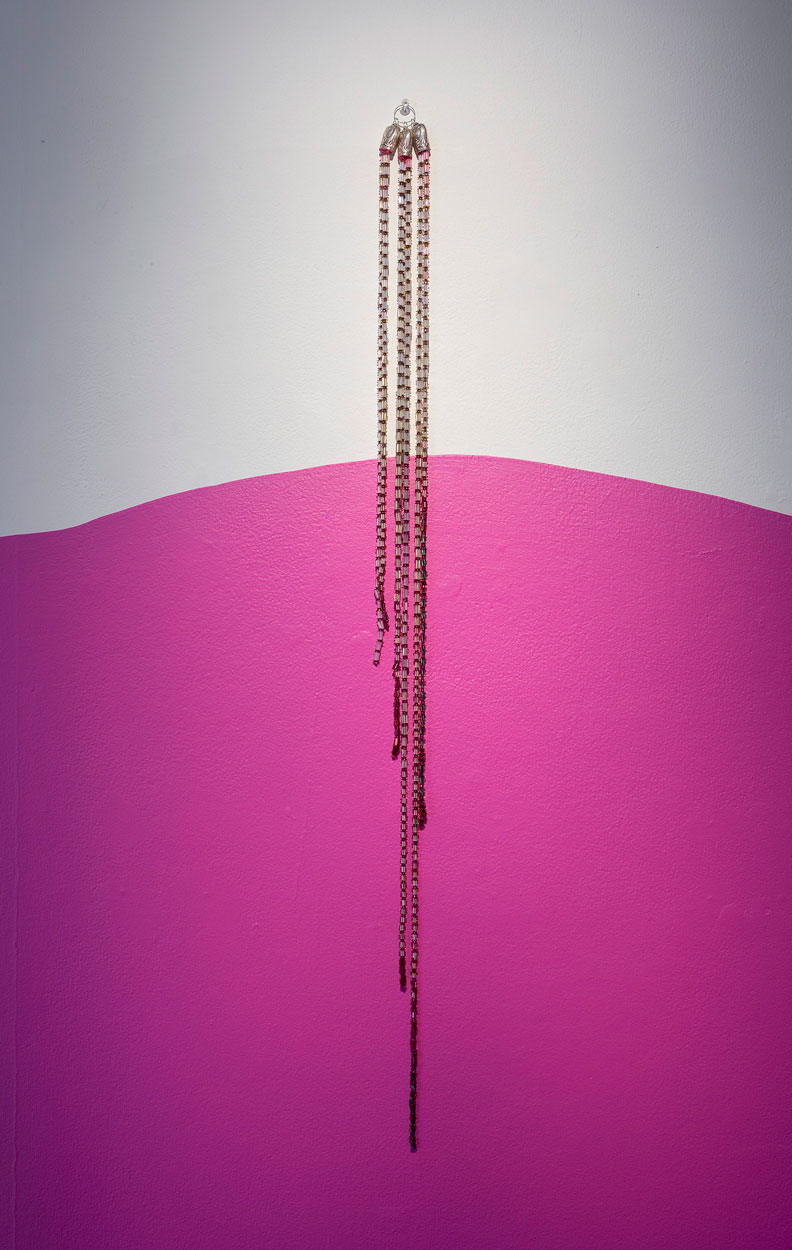
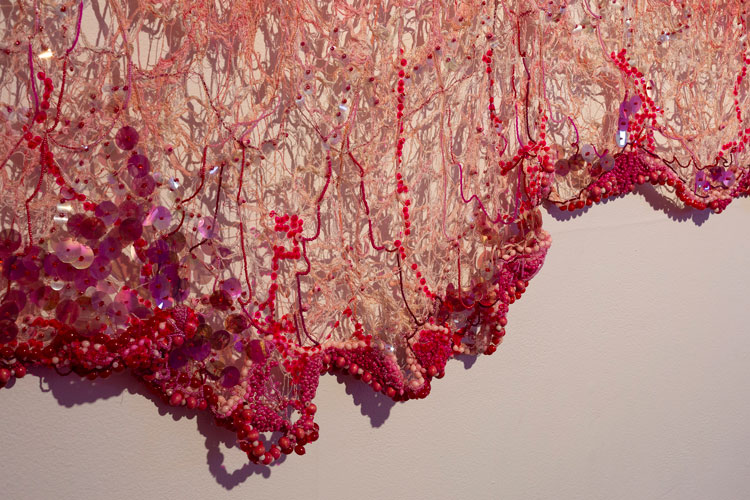
Sugar itself was the central subject, and the exhibition included the production of an ephemeral, site-specific sugar sculpture. This live act of making within the gallery space underscored sugar’s instability: it crystallises, dissolves, and reforms, never fixed but always in flux. Around this core, the exhibition unfolded across a diverse constellation of media—sculpture, richly embellished textiles, cane toad leather, drawing, video installation, and objects informed by gold- and silversmithing traditions. Some of these small-scale metal works incorporated the artist’s own hair or were made from reclaimed materials, subverting conventions of precious adornment and opening up alternative pathways of value.
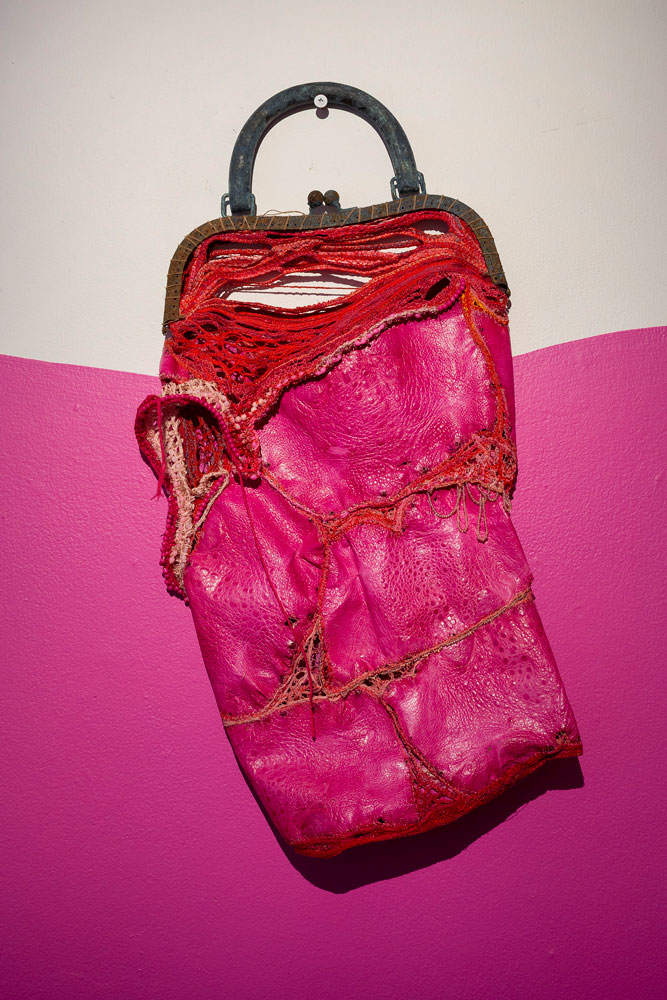
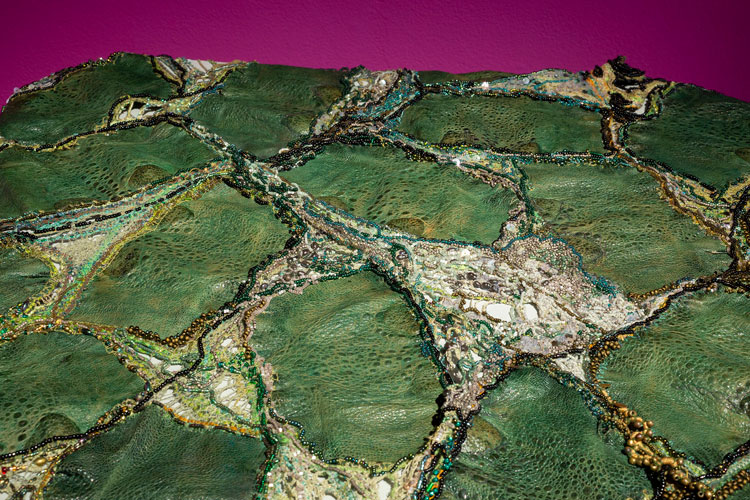
Texture and surface became one key line of inquiry, with material engagements spanning from the gloss and fragility of sugar to the dense tactility of textiles and leather. Surfaces shifted between sheen and grain, excess and erosion, drawing attention to the ways material qualities themselves could act as conceptual provocations. Materials associated with beauty and ornament were set against unsettling references to toxicity and ecological disruption. Cane toad imagery recurred across works, marking the invasive species as both contaminant and resource. By juxtaposing sugar and cane toad materials, the exhibition folded together questions of survivance, ornament, and environmental precarity.
At the heart of Sweet Enough was a commitment to feminist craft methodologies: slow practice, repetition, and labour-intensive making were framed not as marginal or secondary, but as central strategies of knowledge production. By drawing on practices often relegated to the feminised and domestic sphere—embellishment, stitching, metalwork, hand-drawing—the works unsettled entrenched hierarchies of art and craft. Cane toad leather, a material tied to ecological harm, was reclaimed and transformed into objects of care and beauty, disrupting boundaries between contamination and adornment.
The exhibition also asked audiences to sit with contradiction. Sugar is a substance at once celebrated and maligned: a source of pleasure and ornament, yet also inseparable from disease, colonial exploitation, and shame. Similarly, the cane toad represents both an ecological catastrophe and a site of creative possibility. Rather than offering resolution, the exhibition staged these tensions materially and conceptually, asking how sweetness and toxicity might be redistributed, revalued, and reclaimed.
Working in situ at First Site Gallery provided an important opportunity for audience engagement. Visitors were able to witness aspects of process, material fragility, and transformation over time. The evolving sugar sculpture became a focal point of curiosity: people lingered to observe its slow shifts, asked questions about technique and symbolism, and reflected on their own associations with sugar. Conversations unfolded in the gallery around themes of pleasure, harm, and excess, making the exhibition space itself a site of dialogue as well as display. This immediacy of process created points of connection with viewers, drawing them into the contradictions and sensual qualities of the materials.
Photographic documentation foregrounds these investigations of texture and surface, capturing the ways materials shifted between fragility and resilience, gloss and grain, excess and erosion. Video elements extended these concerns into time and rhythm, layering imagery of sweetness, dissolution, and survival. Together, the works created an immersive environment where material excess, decay, and care coexisted.
As an artist-researcher, Agnew positions sugar as more than a medium: it is a site of metaphorical expansion. In Sweet Enough, sugar’s capacity to crystallise, dissolve, and reform became a methodology for thinking through trauma, repair, and feminist futures. The project asked: what does it mean to be “sweet enough”? Who decides when sweetness tips into excess? And how can substances—so long tied to extraction and harm—be re-imagined as resources for care, desire, and survivance?
The exhibition also demonstrated how creative practice-led inquiry allows for wide-ranging exploration and development. By following the material logics of sugar and other substances, the project opened multiple lines of investigation—across history, affect, ecology, and feminist critique—without needing to reduce them to a single interpretation. This openness to experimentation and divergence was central to the project’s methodology, enabling new connections to emerge between materials, metaphors, and lived experience.
By re-staging sugar alongside invasive species and settler identity, Sweet Enough contributed to broader conversations about material politics, ecological disruption, and the role of craft in critical inquiry. It offered a space for viewers to engage with sugar not only as history, but as metaphor and method—an unstable, shimmering substance through which survivance, pleasure, and refusal could be reimagined.


RMIT University acknowledges the people of the Woi wurrung and Boon wurrung language groups of the eastern Kulin Nation on whose unceded lands we conduct the business of the University. RMIT University respectfully acknowledges their Ancestors and Elders, past and present. RMIT also acknowledges the Traditional Custodians and their Ancestors of the lands and waters across Australia where we conduct our business - Artwork 'Sentient' by Hollie Johnson, Gunaikurnai and Monero Ngarigo.
Learn more about our commitment to Aboriginal and Torres Strait Islander peoples