One hundred years on, RMIT and industry experts consider what Australian culture might look like without broadcast TV

One hundred years on, RMIT and industry experts consider what Australian culture might look like without broadcast TV

RMIT University convened Media & Communication luminaries for a ‘100 Years of Broadcast TV’ symposium to reflect on the impact of the broadcast signal in Australia and speculate about its future in the wake of major industry disruption.

Australia was a latecomer to broadcast television in 1956, 30 years after John Logie Baird's first public demonstration of a true television broadcast signal in 1926. Broadcast TV went on to disrupt existing news, media and entertainment to form a billion-dollar industry engaging and assembling audiences and reaching into every part of Australia, from cities to remote communities. 

For generations, Australians have forged a deep connection with broadcast television. It has shaped our shared culture, strengthened our sense of national identity, and projected Australian stories onto the global stage, transporting us to faraway places and inviting the world into our homes.  

But the disruptor has become disrupted. Streaming, social media and countless media convergences have irrevocably changed the broadcast TV industry. The future of television broadcasting in Australia is highly uncertain.

RMIT University's Streaming Industries and Genres Network (SIGN), supported by the Social Change Enabling Impact Platform, invited industry and academic experts in television production, news, advertising, and policy, to discuss the impact of these changes.  

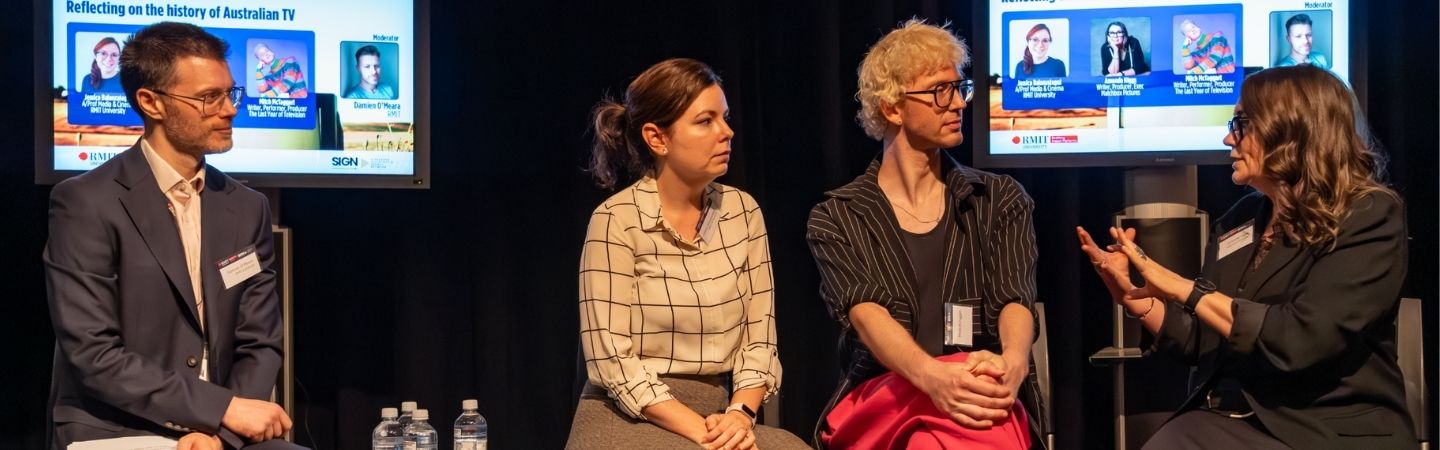
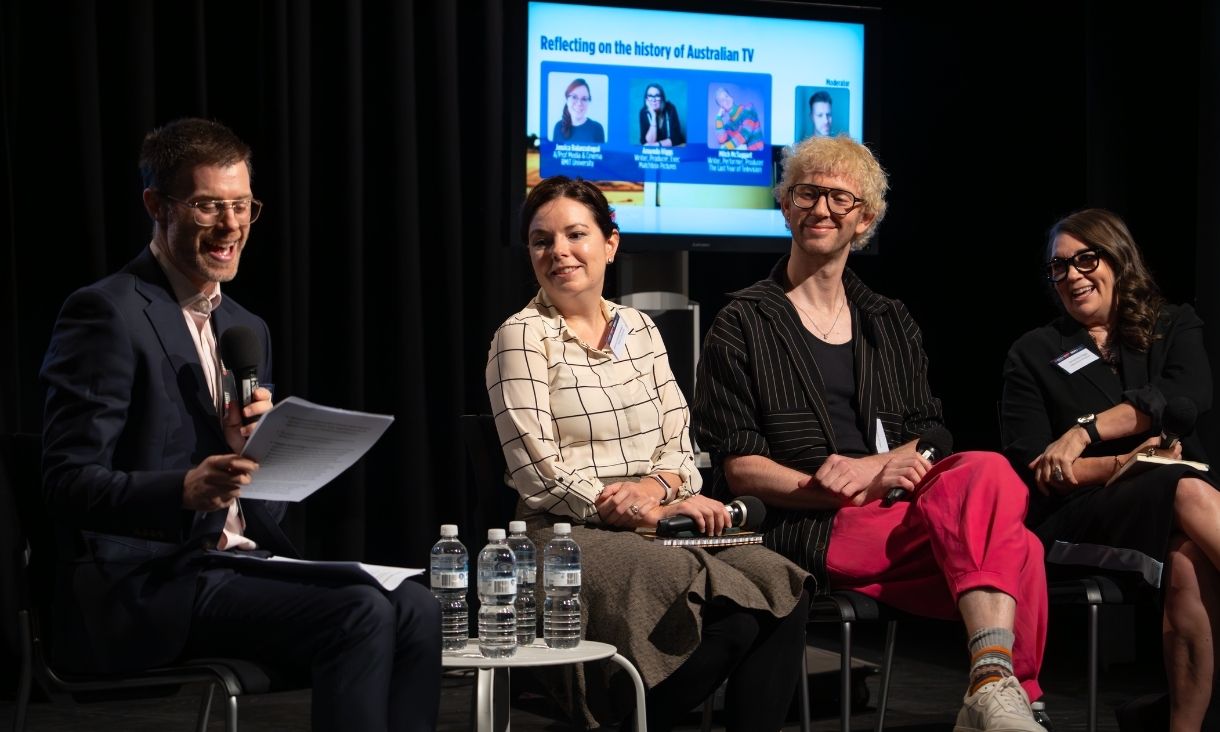
(L-R) Symposium co-convenor Dr Damien O'Meara, leading the 'History of Australian TV' panel discussion with guests Associate Professor Jessica Balanzategui, Mitch McTaggart, and Amanda Higgs. Image: Mairead Foley (L-R) Symposium co-convenor Dr Damien O'Meara, leading the 'History of Australian TV' panel discussion with guests; Associate Professor Jessica Balanzategui, Mitch McTaggart, and Amanda Higgs. Image: Mairead Foley

Special guests included Professor Jock Given from Swinburne University; Dean Dezius, General Manager of Freeview Australia; Hugh Nailon, National News Director of Nine; Justin Stevens, ABC News Director; and Jenny Buckland, CEO of the Australian Children's Television Foundation. 

Dr Damien O'Meara, Lecturer in Public Relations and symposium co-convenor, said: "Broadcast TV in Australia remains vital for reach, access and equity when it comes to news, information and entertainment."

"While we see pushes in other markets to move away from broadcast, such as the UK and Europe, Australia must think critically about what we can learn from our past and carry that into the future."

Australia once had a rich connection with television production, creating impactful moments of risk-taking and unique local content for our screens. "Early on we forged an international brand for gritty and grounded crime procedurals, must-watch drama and soaps, and children’s and youth TV that goes there, making young people around the world look to Australia to explore tough issues," Dr O’Meara said.  

Over the decades Australians have laughed together at Thank God You're Here, cried collectively at The Secret Life of Us, and gathered around for moments that defined us as a nation. Local content on broadcast TV is woven into the fabric of Australian daily life, yet as the industry panellists reflected, those risk-taking moments are now rare, and a key lesson from the past is to recognise why they worked.

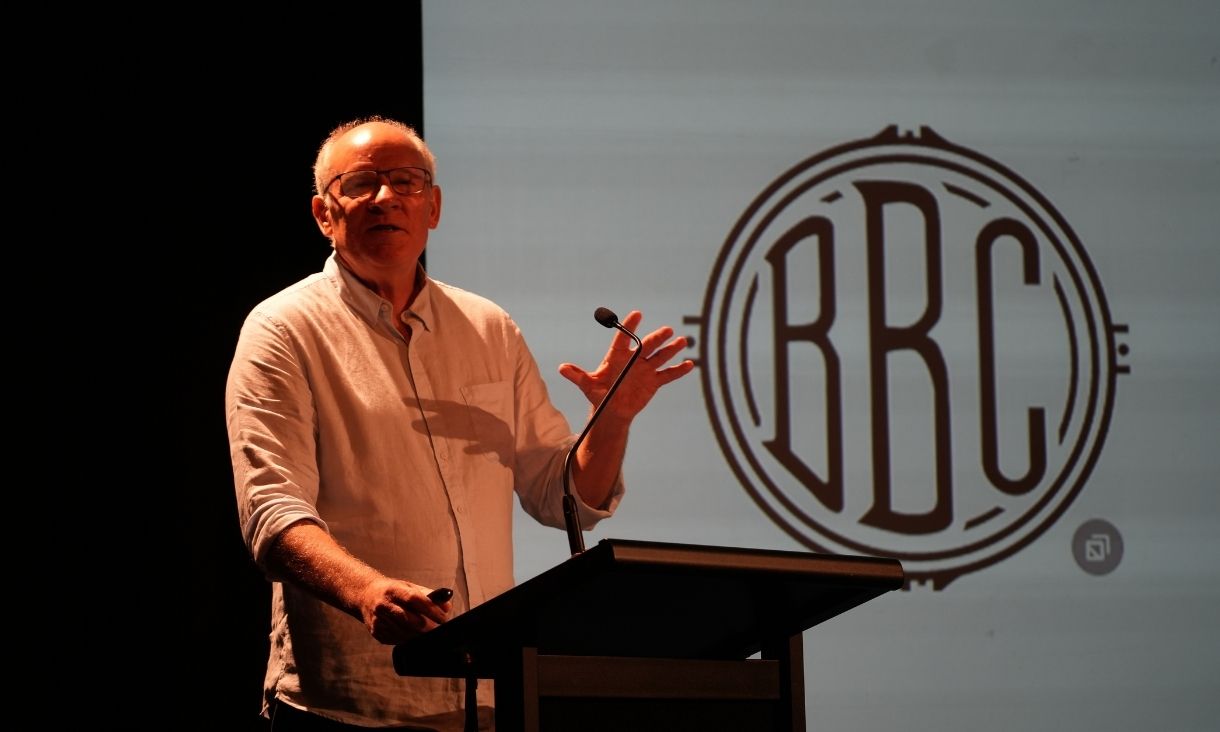
Adjunct Professor Jock Given from Swinbourne, School of Social Sciences, Media, Film and Education, gave the opening keynote for the Symposium. Image: Mairead Foley Adjunct Professor Jock Given, from Swinbourne University's School of Social Sciences, Media, Film and Education, gave the opening keynote for the Symposium. Image: Mairead Foley
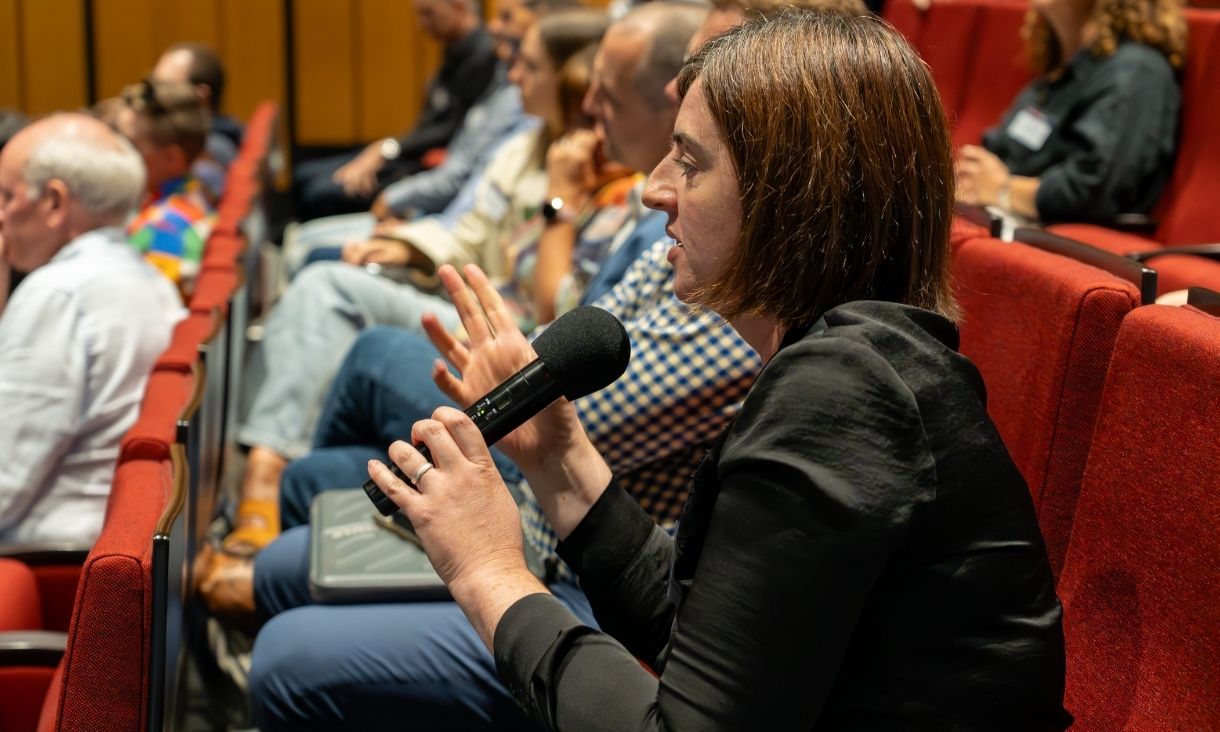
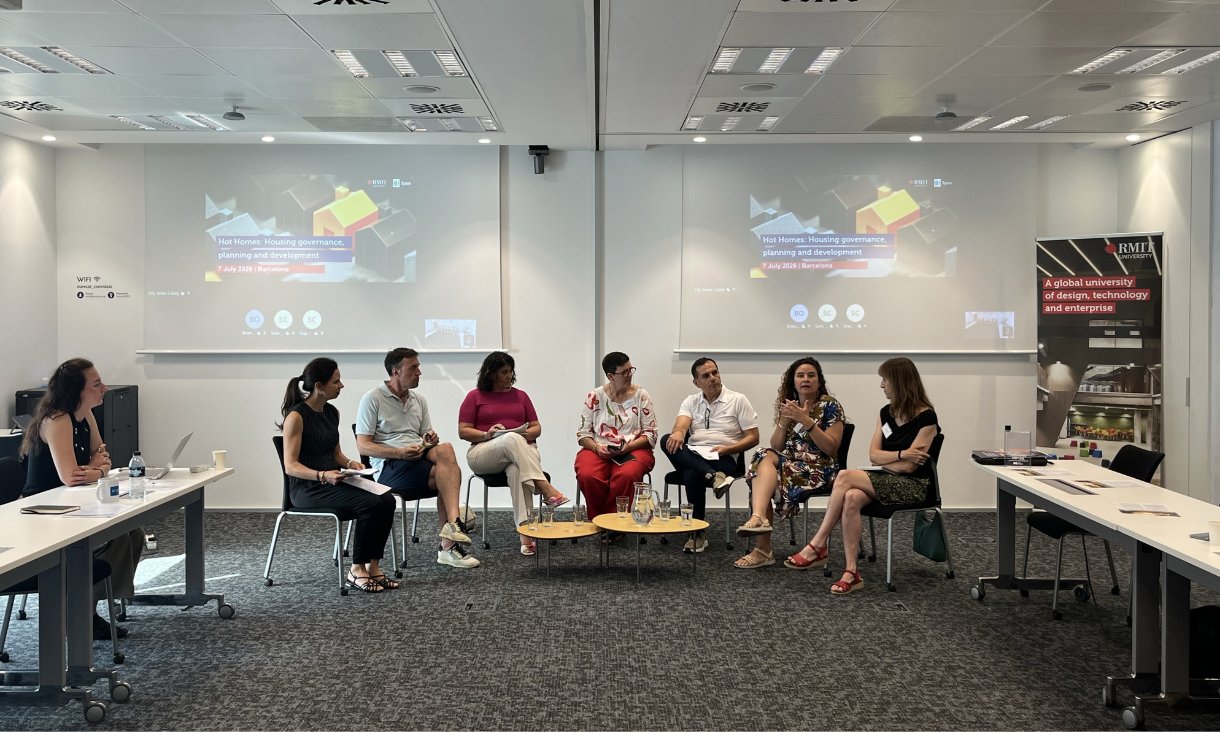
Audience members and panelists were invited to discuss topics further within the symposium. Image: Mairead Foley Audience members and panelists had open discussions following the panels. Image: Mairead Foley

"What we don’t do now is honour our legacy. What we’re missing is the gaps in the market and risk-taking," said Amanda Higgs, Executive at Matchbox Pictures.

Jenny Buckland, CEO of the Australian Children’s Television Foundation, added: "We’re never going to see another Dance Academy; to get something like that commissioned, that no one’s ever heard of – from an unknown producer, which Joanna Werner was at the time and this set her up for an amazing career – no one’s going to take a risk."

"The number one thing is, the legacy and history of Australian television, Australians want to watch themselves – they want to watch their own stories, that is the number one rule," Higgs concluded.

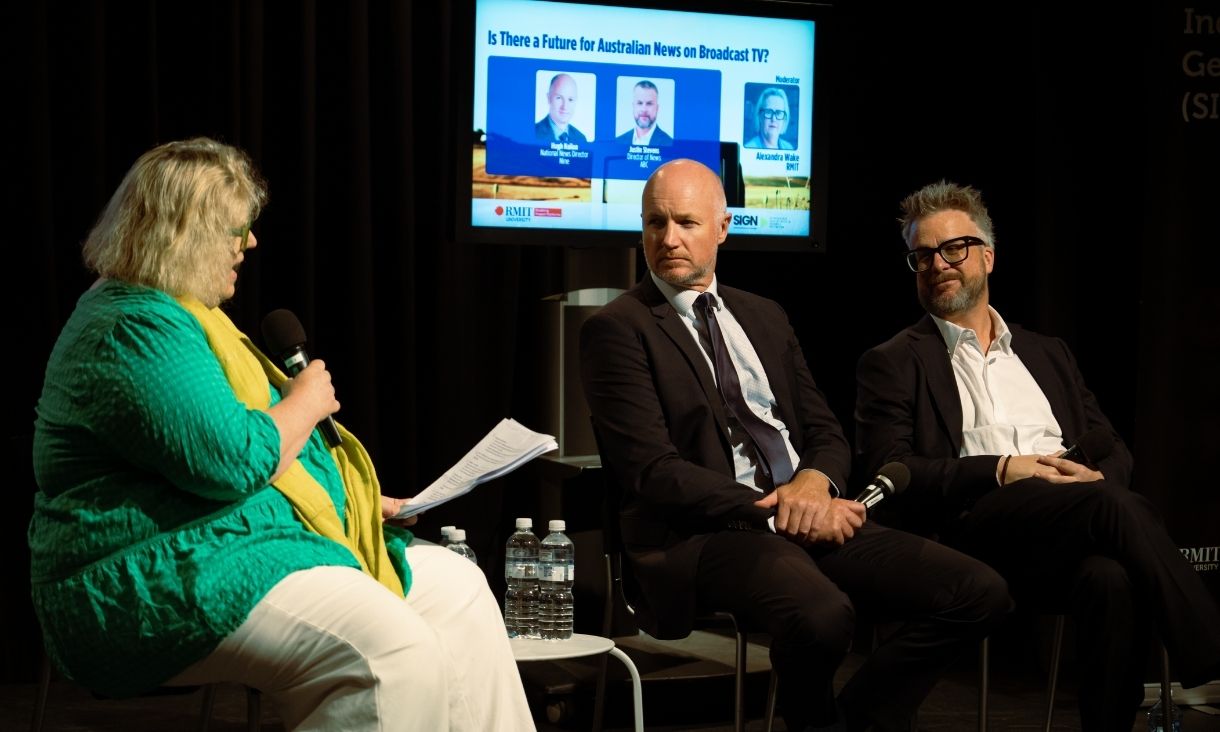
(L-R) Professor Alexandra Wake moderated the 'Future for Australian News on Broadcast TV' panel with National Nine News Director Hugh Nailon and ABC's Director of News, Justin Stevens. Image: Mairead Foley (L-R) Professor Alexandra Wake moderated the 'Future for Australian News on Broadcast TV' panel with National Nine News Director Hugh Nailon and ABC's Director of News, Justin Stevens. Image: Mairead Foley

Dr Alexa Scarlata, Lecturer in Digital Communication and symposium co-convenor, reflected that the rise of streaming platforms, social media, and countless digital channels has fundamentally transformed the Australian broadcast television industry. Local productions now face intense international competition, while streaming services offer audiences unlimited access to global content, albeit at a rising cost.

People are still watching TV but on an ecosystem of phones, laptops and other personal devices, with entertainment and news digitally broadcasted into our hands. Sport, reality shows, and news via free-to-air channels and platforms are still rating highly, and the ‘big screens’ at home are still hubs for community and family viewership of the programs that bring us together. 

"There will always be TV, but what that means and how people access it will always shift," said Dr Djoymi Baker, Senior Lecturer in Media and Cinema Studies.

RMIT's School of Media & Communication is an industry leader in creative programs, research and training in media, writing and publishing, and communication.

Learn more about the School of Media and Communication

Story: Jas McAuley

Share

  • Research
  • DSC Research
  • Media & Communication
  • Arts and culture
  • Society

Related News

aboriginal flag float-start torres strait flag float-start

Acknowledgement of Country

RMIT University acknowledges the people of the Woi wurrung and Boon wurrung language groups of the eastern Kulin Nation on whose unceded lands we conduct the business of the University. RMIT University respectfully acknowledges their Ancestors and Elders, past and present. RMIT also acknowledges the Traditional Custodians and their Ancestors of the lands and waters across Australia where we conduct our business - Artwork 'Sentient' by Hollie Johnson, Gunaikurnai and Monero Ngarigo.

More information