Primary mission demonstration objective
To establish whether ‘micro-habitat’ conditions deemed necessary for the survival of selected "biological components" can be maintained, measured and the necessary data acquired over the mission duration - including 72 hours on the lunar surface.
Funding
Lunaria One Pty Ltd, Australian Space Agency Moon-to-Mars Initiative Demonstrator Award (2022).
Delivery spacecraft
Intuitive Machines, Nova-C lunar lander (IM-3 mission, scheduled for H2 2026).
Interface constraints
- Mounted to side panel of the Nova-C Spacecraft
- Payload Mass: ~ 500 grams
- Heater Power: 10 Watts
- Avionics Power: 5 Watts
- Ethernet Interface
- Data limit 100 Mb
Payload Development and Integration
RMIT M2MIST Centre
Payload configuration
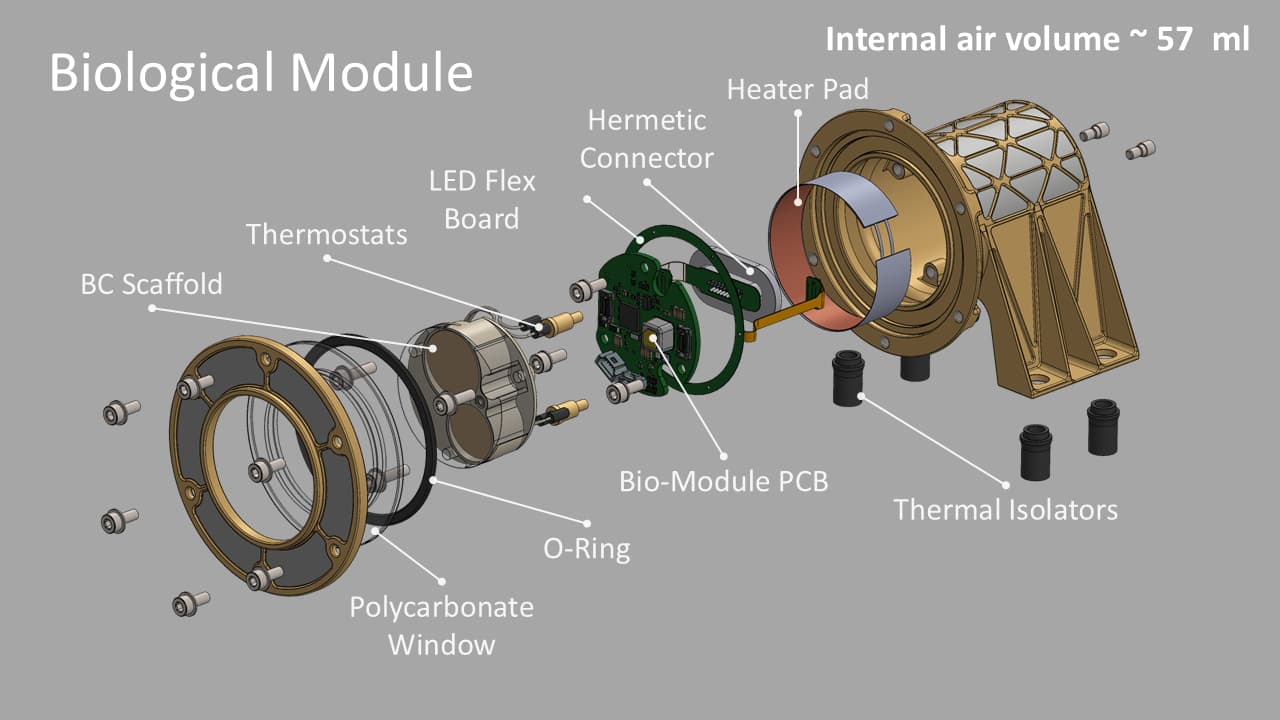
ALEPH-1 (Fig. 1) comprises of a “Control Module” (CM) linked by an umbilical harness to the hermetically sealed “Biological Module” (BM) housing biological components and sensors to measure internal air temperature and pressure (Fig. 2). It is intended that the mission data generated will be transmitted by from the CM to the Nova-C and then downloaded via the Deep Space Network. Data upload capability is also planned.
Figure 1 ALEPH-1 Architecture
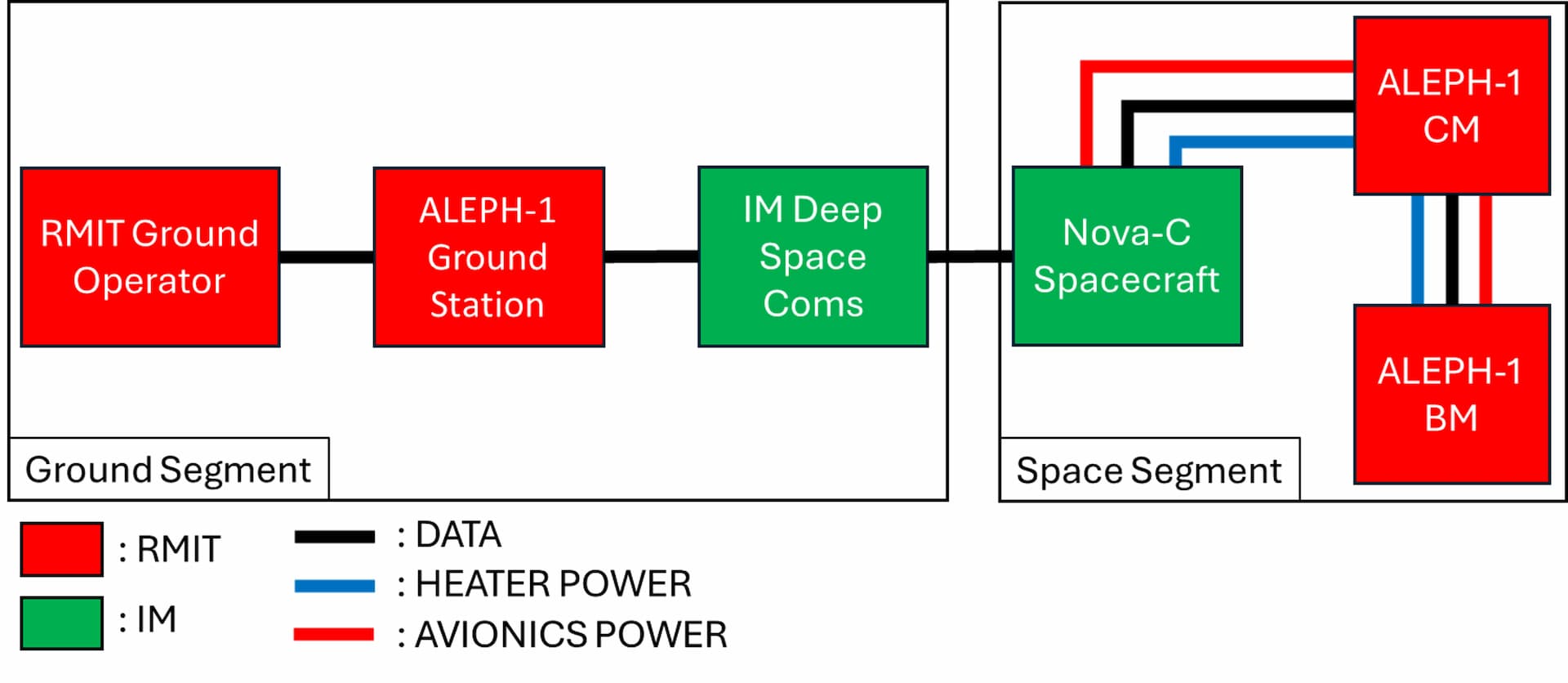
Figure 2 ALEPH-1 BM
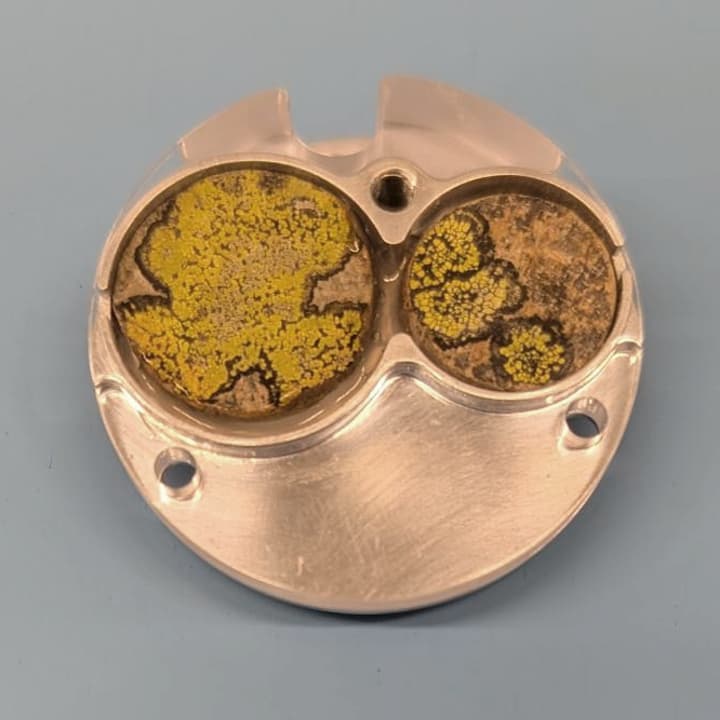
 Biological components (Fig. 3) intended to be carried on BM scaffold: two samples of crustose Map lichen (Rhizocarpon geographicum), selected for resilience to expected pre-flight storage conditions as well as the in-flight and lunar environments.
Figure 3 ALEPH-1 Bio-Scaffold (test version)
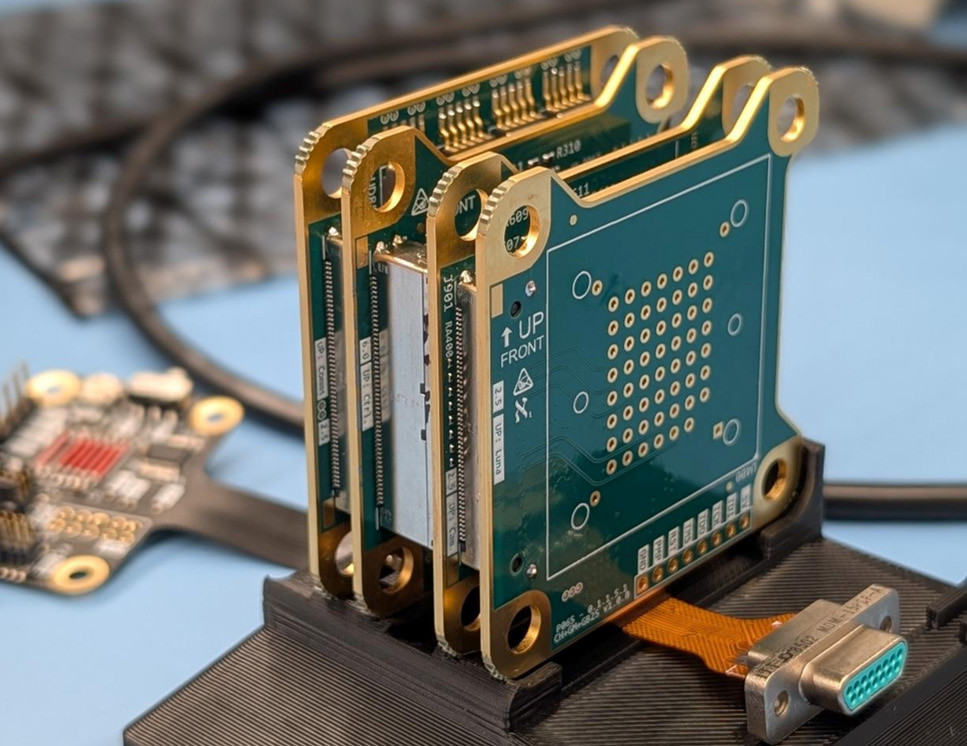
The images below (Fig. 4-6) show some aspects of the electronics assembly processes that were all performed at RMIT University.
Figure 4 Lead forming on FPGA component
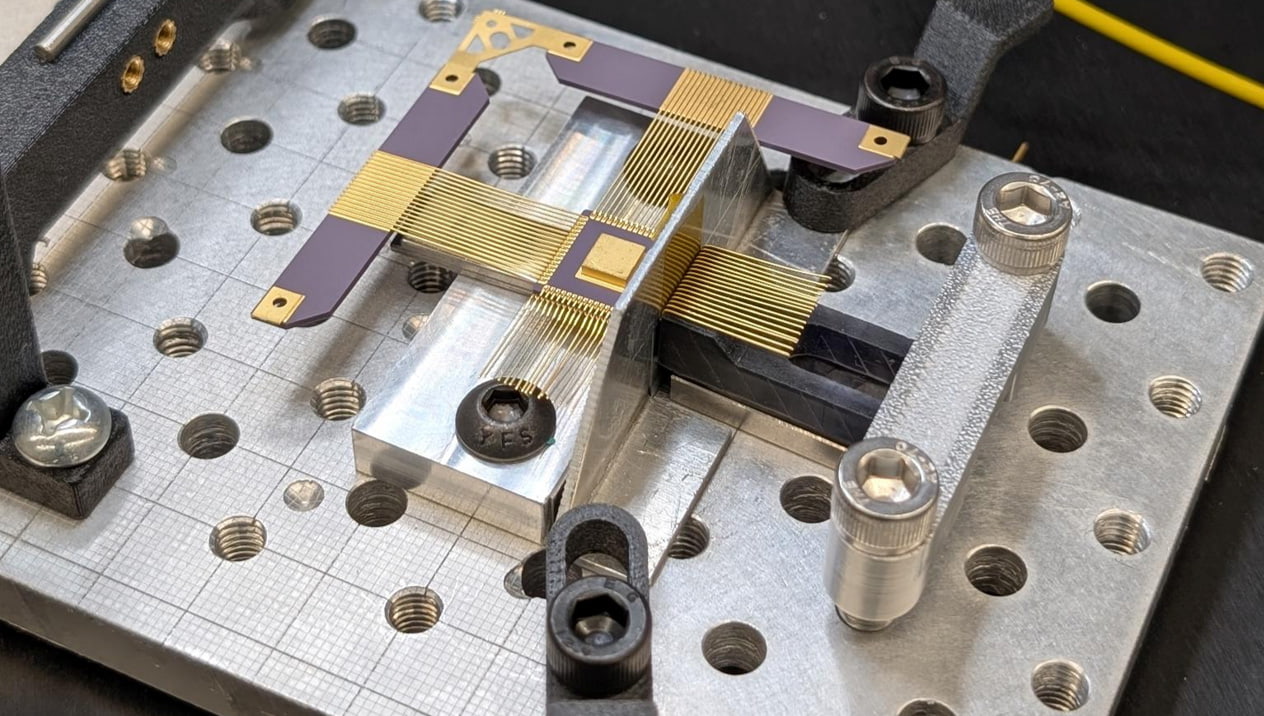
Figure 5 PCBs for the ALEPH-1 CM (engineering model)
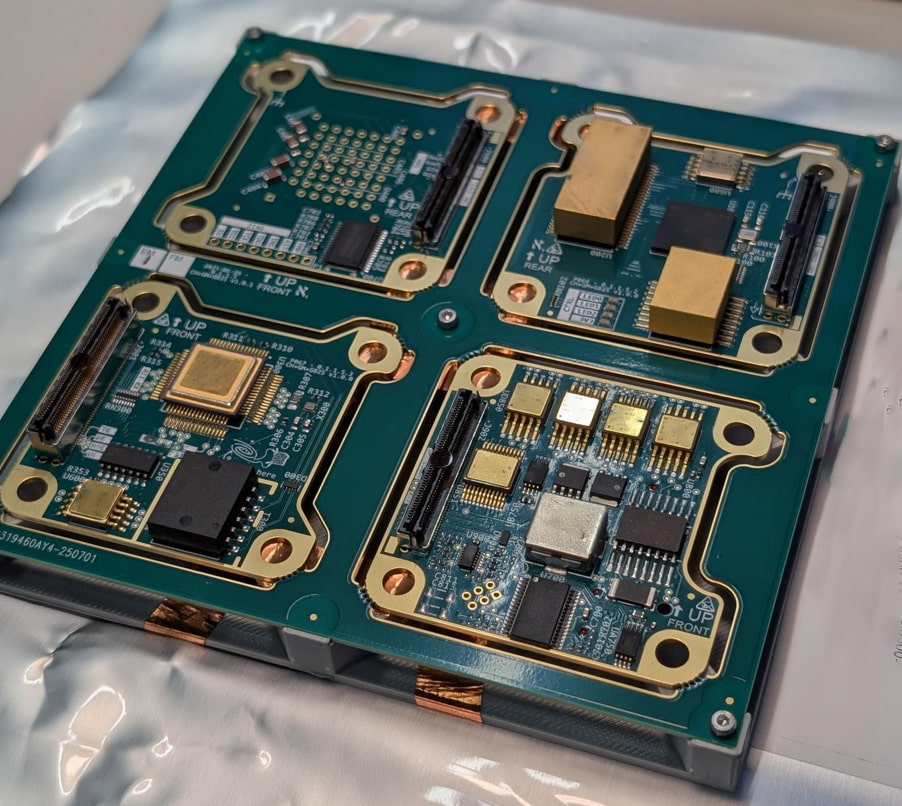
Figure 6 PCB Stack for ALEPH-1 CM (engineering model)
For more information: on the ALEPH-1, science, mission and payload, please see M2MIST publications, and/or contact graham.dorrington@rmit.edu.au
For more educational outreach aspects of the ALEPH project, please visit https://lunaria.one/aleph/



