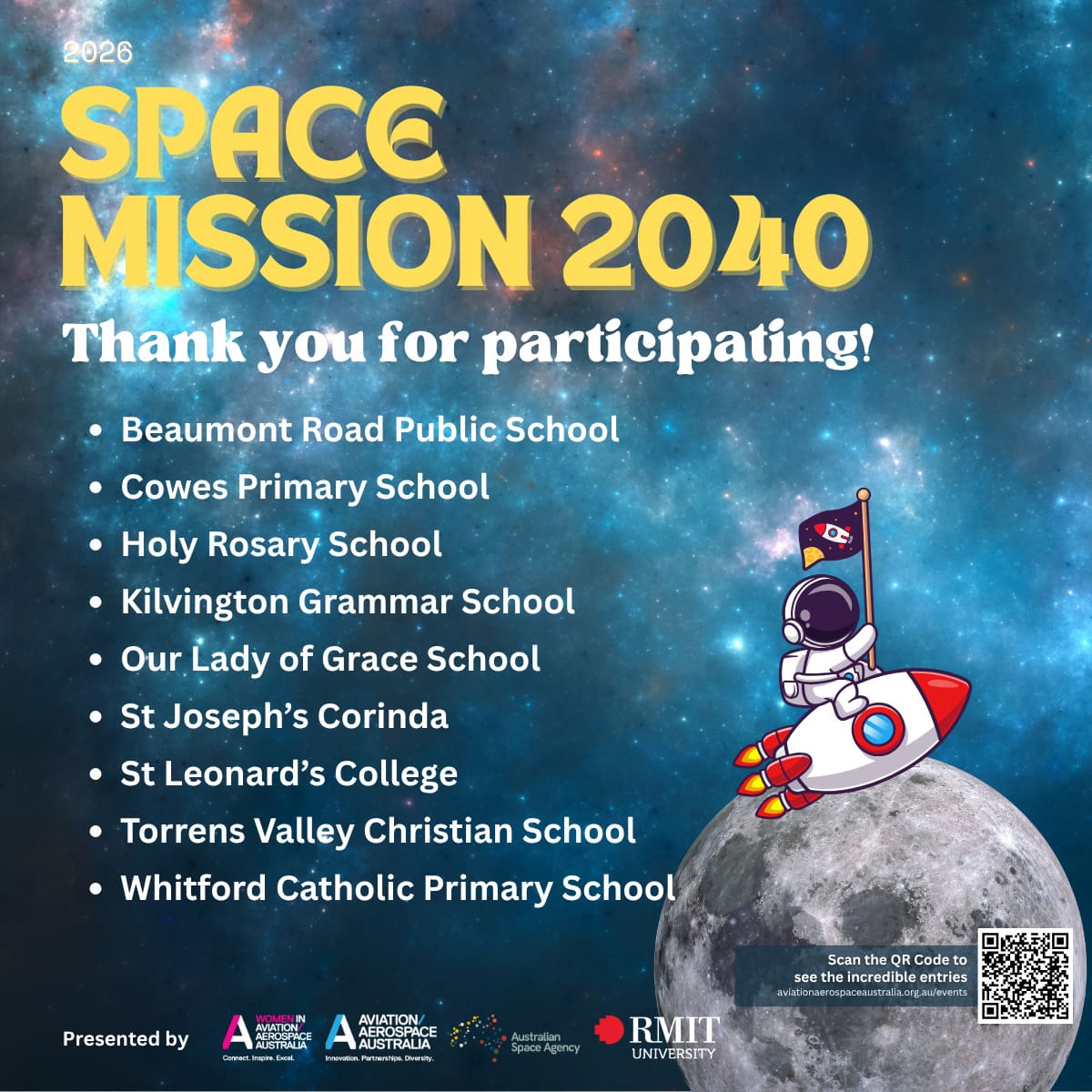
Australia’s youngest space innovators recognised in Space Mission 2040 competition.
Students from across Australia have been recognised for their creativity, problem-solving and innovation in the 2026 Space Mission 2040 competition, demonstrating that the future of Australia’s space sector may well begin in the classroom.
Led by Aviation/Aerospace Australia, Space Mission 2040 challenged primary school students to imagine and design technologies for space exploration in the year 2040.
Students in Years 1-2 designed spacesuits for lunar exploration, considering the challenges posed by extreme temperatures, low gravity and the harsh lunar environment. Students in Years 3-4 developed spacecraft concepts capable of supporting human life during a 147-day journey to Mercury.
The competition introduced participants to real scientific and engineering concepts while encouraging creativity, experimentation and communication skills. Students were invited to present their ideas through videos, models and visual designs, following a structured learning journey from concept development through to final presentation.
Winning projects will be showcased at the Australian Space Discovery Centre, providing students with a tangible connection between classroom learning and Australia's growing space sector.
Aviation/Aerospace Australia Chief Executive Officer Anntonette Dailey said the competition highlighted the importance of engaging young Australians in STEM from an early age.
"The ingenuity demonstrated by these students has been genuinely inspiring. Through Space Mission 2040, students were challenged to think like engineers, scientists and astronauts, applying their creativity to solve real-world problems associated with space exploration.
"What stands out is not only the quality of their ideas, but also their confidence in explaining and defending them. These are exactly the kinds of skills that Australia's future workforce will need.
"Programs such as Space Mission 2040 help students see themselves as future innovators and problem-solvers. By connecting classroom learning with real space challenges, we are helping build the foundations of Australia's future space capability."
The initiative was delivered in partnership with organisations including the Australian Space Agency and RMIT University, supporting national efforts to strengthen STEM engagement and develop future workforce capability for Australia's expanding space sector.
Distinguished Professor Pier Marzocca, Director of the Sir Lawrence Wackett Defence and Aerospace Centre at RMIT University and sponsor of the program, said early exposure to space challenges could help shape future innovators.
"The technologies that will define the future of space exploration will be developed by young people who are learning, questioning and experimenting today.
"What is particularly encouraging about Space Mission 2040 is that it introduces students to authentic engineering and scientific challenges in a way that is accessible, engaging and inspiring. The creativity demonstrated by participants reminds us that innovation begins with curiosity.
"Australia's future space workforce will require diverse skills and perspectives. Through our support for initiatives such as Space Mission 2040 and the Space Teams Academy, RMIT is helping young people see a pathway from early curiosity in the classroom, through deeper STEM engagement and education, and ultimately into the research, engineering and technologies that will underpin Australia's future space capability."
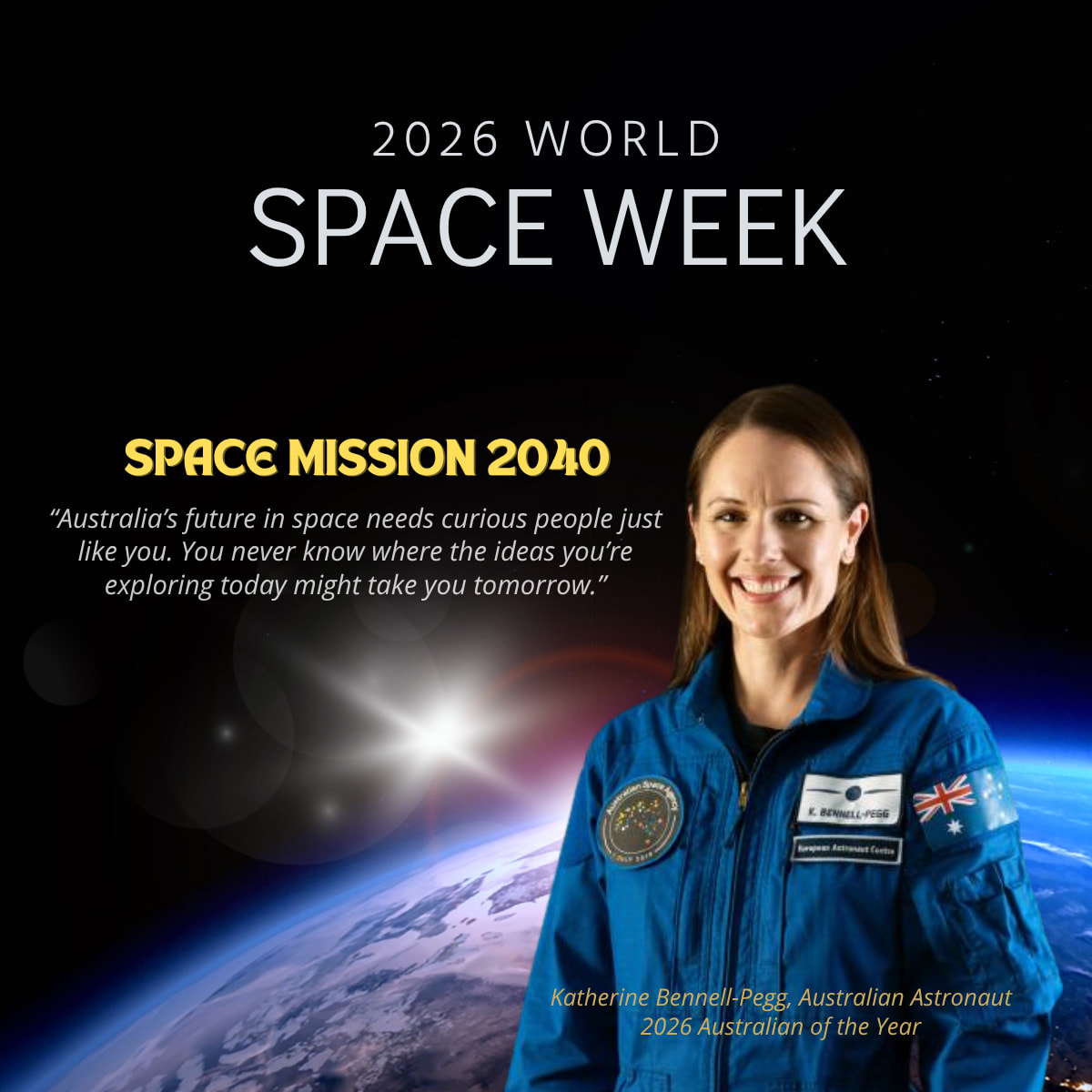
Australian astronaut Katherine Bennell-Pegg congratulated participants and encouraged students to continue exploring their interests in science and technology.
"The first person to walk on Mars is likely in primary school right now. Stay curious."
Space Mission 2040 was designed to be inclusive and accessible, with students participating individually or in small teams, and with a strong focus on encouraging diverse participation across STEM disciplines.
The competition reflects the growing importance of Australia's space sector and demonstrates how early engagement can transform complex scientific concepts into achievable and inspiring learning experiences for young Australians.