Additive Manufacturing CRC

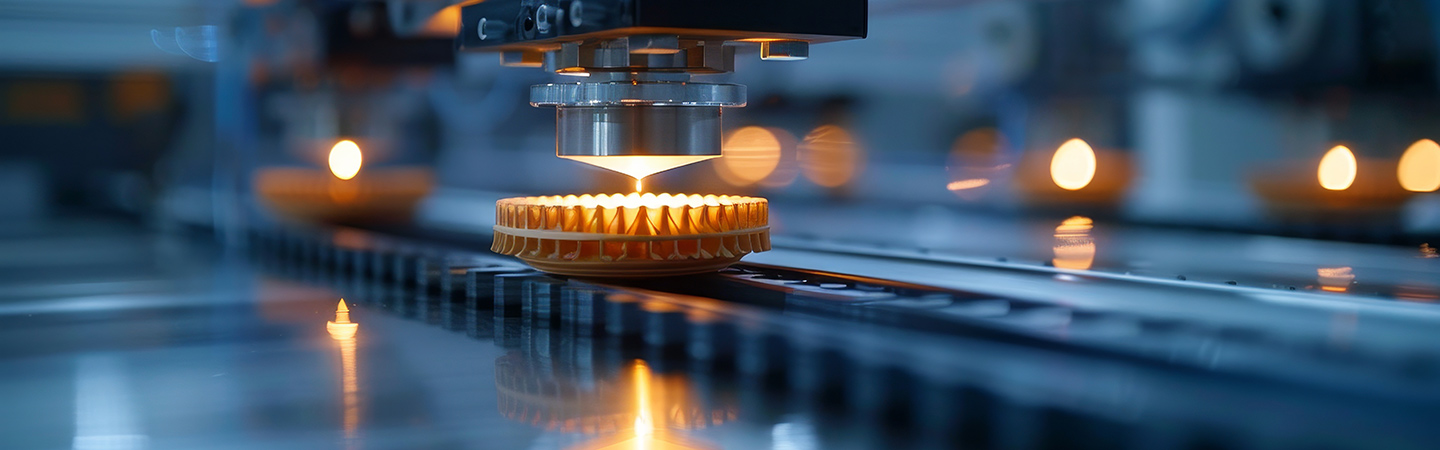
The Additive Manufacturing CRC (AMCRC) focusses on advancing Australia’s additive manufacturing sector, also known as 3D printing.

The CRC aims to establish a globally recognised additive manufacturing ecosystem that enables rapid innovation, supports the development of new business models, and drives the adoption of certified, high-performance production methods. By harnessing emerging sustainable materials and advanced technologies, the CRC will help position Australia at the forefront of AM, creating greater commercial impact, global competitiveness, and long-term industry resilience.

Our role

RMIT is a supporting partner of the Additive Manufacturing CRC and will collaborate on projects and contribute to the CRC’s five research programs.

Research Program 1

Sustainable Manufacturing

Research Program 2

Application and Materials Development

Research Program 3

Technology and Process Development

Research Program 4

Surface Technologies and Post Processing

Research Qualification Program

Education, Training and Transformation
Our people

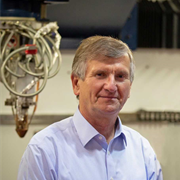
Dist. Professor Milan Brandt

Distinguished Professor

  • Location City Campus Australia
  • Department Research & Innovation
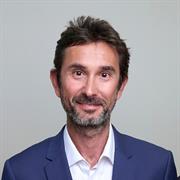
Distinguished Professor Milan Brandt is the Director of RMIT Advanced Manufacturing Precinct and the founding Director Centre for Additive Manufacturing, RMIT University which he established in 2013. Prof. Brandt is the lead Australian researcher in the area of macro machining and additive manufacturing with lasers and has conducted work in laser cladding, cutting, drilling, welding and the last 14 years additive manufacturing. The results of his research have resulted in technological achievements, patents, research papers and commercial products, which have been recognized internationally and nationally in both scientific and industrial circles. Prof. Brandt is a fellow of the Laser Institute of America, honorary fellow of Weld Australia, Professorial Fellow department of Medicine, Melbourne University and Adjunct Prof. University of Waterloo, Canada. In 2018 he was the president of the Laser Institute of America, the largest international association of researchers and industry involved with lasers and laser additive technology and in 2018 he was named the Engineers Australia Centenary Hero for his research which led to Australia’s first locally-manufactured 3D printed spinal implant that was implanted into a patient in 2016. In 2020 Prof. Brandt was the recipient of the Laser Institute of America’s highest award, Arthur. L. Schawlow (Nobel Laureate in Physics) award for his contributions to lasers and laser applications.  Accomplishments and achievements: • CAST commercialisation award for LMCut, 2011 • CAST commercialisation award for Laser-assisted joining, 2011 • WTIA – Sir William Hudson Memorial Award – Best published (Australian) research paper in 2011 by N. Alam, A. Bishop and M. Brandt • Certificate of Merit Award in World Congress on Engineering (WCE-09), London, UK for the paper on the 'Microstructural Investigation of Direct Metal Deposition of H13 Steel on High Strength Copper Substrate' (Imran, Masood and Brandt). • WTIA – Sir William Hudson Memorial Award – Best published (Australian) research paper in 2002. R.T. Deam, M. Brandt and J. Harris, 'The measurement of capillary waves on a weldpool formed by a Nd:YAG laser', Australasian Welding Journal, Vol 47, 2002, p39–47. Prize $200. • TMS magnesium technology best student paper award – M. Mandagie, M. Brandt, Y. Durandet, and M. Jahedi, 'Laser cladding AS21 magnesium alloy with AlSi and WC powders'. Prize US $500. • First Prize, TRU Energy Bright Ideas – Laser Repair of Low Pressure Turbine Rotor Blades (In-situ Repair) – 2005.

Dr. Andrey Molotnikov

Professor

  • Location City Campus Australia
  • Department School of Engineering
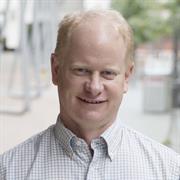
Dr Andrey Molotnikov is an Associate Professor in Additive Manufacturing and Director of the RMIT Centre for Additive Manufacturing. He is an expert in additive manufacturing and computational materials science and leads the technology theme within the RMIT Centre for Additive Manufacturing with 8 academics, several postdocs and 10PhD students. He holds several patents in the AM field and demonstrated a successful uptake of this technology by industry. Several of his recent research activities deal with 3D printing of multi-materials, high entropy alloys and the in-process monitoring and quality assurance. He has over 80 publications with an h-index = 29 (Scopus) and contributed as CI to two ARC ITRH Hubs, one LP and two LIEF applications. 

Professor Mark Easton

Associate Deputy Vice-Chancellor, Research Infrastructure

  • Location City Campus Australia
  • Department Research & Innovation Portfolio
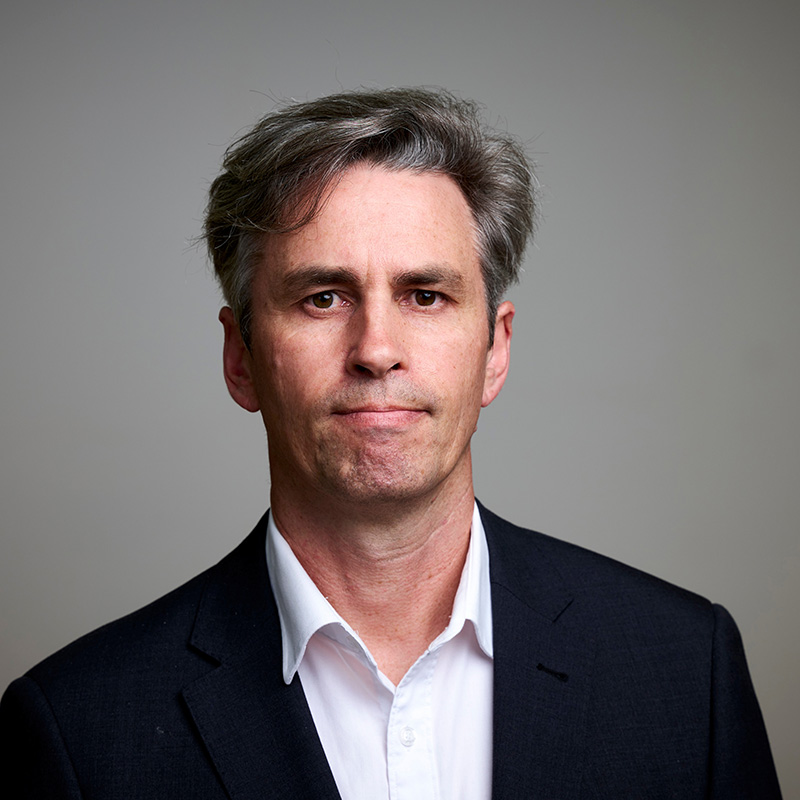
Professor Easton is currently the Associate Deputy Vice Chancellor (Research Infrastructure) and a Professor of Engineering.  Currently he leads the Research Infrastructure signature initiative as part of Horizon 2 for the Knowledge with Action strategy.  The first major initiative is the establishment of Digital Research Infrastructure.   Previously he was the Director of the Advanced Manufacturing Precinct at RMIT overseeing the key facilities within the STEM college. These facilities are able to fabricate, manufacture and characterise materials, devices and components from the nano-scale to the metre scale. Prior to this he was the Associate Dean for Manufacturing, Materials and Mechatronics within the School of Engineering. He is very interested in the intersection between industry and universities. Most of his career has been spent at either side of the intersection, working with industry focused research centres, industry which partners with universities or within universities that partner with industry. This fits very well with RMIT's culture of producing work ready graduates and focus on translational research. He has also been the Diversity and Inclusion advocate for the School of Engineering. He realises that his is very fortunate to be given the opportunities that he has had in his career and life and thinks it is important for others to have similar opportunities. One of the attractive attributes of RMIT is its focus on these issues. Awards:   2025: International Materials Society Technical Paper Award   2023: International Magnesium Award for Special Contribution on Innovation of the Year   2022-2025: Mercator Fellow, German Research Foundation 2021: Light Metals Luncheon speaker at the TMS Annual Meeting and TMS-AIME Anniversary Keynote Presentation 2020: Create the Future. Honourable Mention in Manufacturing/Robotics/Automation category. 2018: TMS Light Metals Division Magnesium Technology best student paper award (supporting author)           Outstanding Referee for Acta Materialia  2017: TMS Extraction and Processing Division Technology Award           Gifkins Lecture 2015: Outstanding Referee for Acta Materialia 2012: TMS Light Metals subject award – Warren Peterson Cast shop for Aluminium Production for the paper “Chemical additions to reduce hot tearing in the casthouse”.           Best Paper of the Billet Process and Equipment Track at the conference Extrusion Technology 2012, “The Influence of Iron Content on the Tensile Properties and Anodizing Response of AA6060 Extrusions” (ET ’12). 2011: Outstanding Referee for Acta Materialia 2010: CAST commercialisation award: for role in the commercialisation/licensing of Laser Assisted Joining 2009: GKSS Magnesium Research Award for ‘important contributions to the understanding of the relationship between nuclei and grain refinement for magnesium alloys’ (https://www.eurekalert.org/news-releases/702546) CAST commercialisation award: for role in the commercialisation/licensing of AM-EX1 2008: Honorable mention from the B-HERT awards and 50th Anniversary Vice Chancellor’s award for excellence in research from Monash University for magnesium alloy development work 2007: Edgerton Award 2006: Henry Marion Howe award: best paper in Metallurgical and Materials Transactions A            CAST commercialisation award: for his role in the commercialisation/licensing of AM-HP2 2003: Madhu Nilmani award for best paper at the Eight Australasian Conference on Casthouse Technology             Gordon Dunlop Award for Scientific Excellence leading to a Commercial Application            CAST commercialisation award: for his role in the commercialisation/licensing of AM-lite            CAST commercialisation award: for his role in the commercialisation/licensing of AM-SC1  Public and media engagements: Media release for Adding copper strengthens 3D-printed titanium, study finds (https://www.rmit.edu.au/news/all-news/2019/dec/3dprinting-titanium-copper) AIME-TMS Anniversary Keynote Presentation. Near Net Manufacturing of Light Metal Alloys. (https://www.tms.org/portal/PUBLICATIONS/Proceedings___Other_Resources/Recorded_Presentations/AIME-TMS_Anniversary_Keynote_Presentations/portal/Publications/Proceedings___Other_Resources/Presentations/AIME-TMS_keynote_presentations.aspx?hkey=66bfdb7a-f9c8-4)

Professor Martin Leary

Lead Researcher

  • Location City Campus Australia
  • Department School of Engineering
Martin Leary began his scholarly career as a postgraduate student within the Engineering Design Group at the Mechanical Engineering Department of the University of Melbourne. As a member of the RMIT School of Aerospace Mechanical and Manufacturing Engineering, he proudly continues to engage with industry and develop novel research outcomes within four research fields: - Engineering design and engineering education - Systems approaches and optimisation - Sustainable automotive system design - Renewable energy

Centre partners

The CRC is a consortium of 60+ partners comprising universities, other research organisations, and industry. Refer to Additive Manufacturing CRC’s list of partners.

Get in touch

If you would like any further information about our work or how you can be involved, please contact the Research Partnerships and Initiatives team via research.partnerships@rmit.edu.au.

aboriginal flag float-start torres strait flag float-start

Acknowledgement of Country

RMIT University acknowledges the people of the Woi wurrung and Boon wurrung language groups of the eastern Kulin Nation on whose unceded lands we conduct the business of the University. RMIT University respectfully acknowledges their Ancestors and Elders, past and present. RMIT also acknowledges the Traditional Custodians and their Ancestors of the lands and waters across Australia where we conduct our business - Artwork 'Sentient' by Hollie Johnson, Gunaikurnai and Monero Ngarigo.

Learn more about our commitment to Indigenous cultures