Key summary
Pilots plan and operate flights, monitor weather and aircraft systems, communicate with air traffic control and respond to emergencies. They can work in commercial airlines, charter and corporate aviation, defence, agriculture and specialised transport. To become a professional pilot in Australia, complete an aviation course such as RMIT’s Associate Degree in Aviation (Professional Pilots) or Bachelor of Aviation (Pilot Training), then meet CASA licensing requirements. This includes passing the Aviation English Language Proficiency test and CPL theory exams, completing at least 150 flying hours including 70 solo hours, obtaining an annual Class 1 medical certificate and passing the CPL flight test.
Soar to new heights by navigating the skies and ensuring safe, efficient air travel.
Pilots play a crucial role in connecting people and places, ensuring safe and efficient air travel. Whether it's transporting passengers, delivering cargo, or conducting aerial surveys, pilots are at the forefront of aviation, combining technical skill with a passion for flight. If you have a fascination with flying, a keen sense of adventure, and a desire to see the world from above, then becoming a pilot might be the perfect career for you.
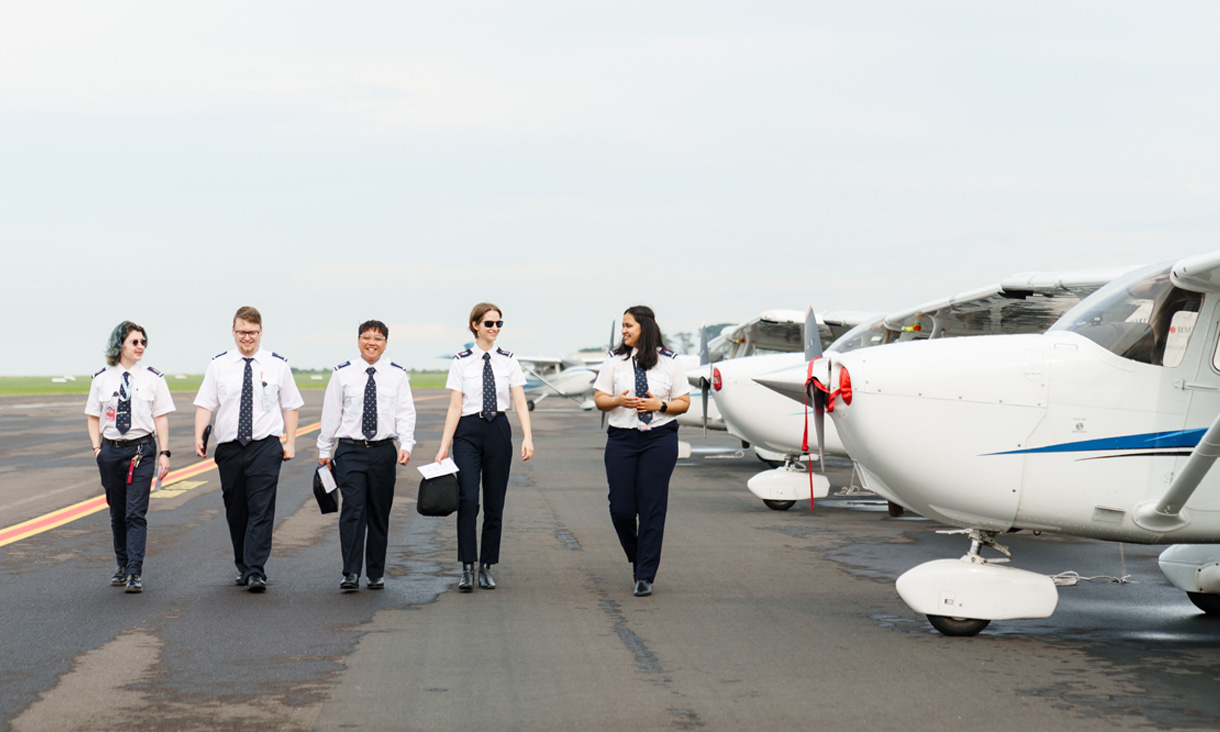
Becoming a pilot
To become a professional pilot in Australia you must get your commercial pilot license accredited by the Civil Aviation Safety Authority (CASA). At RMIT, your flight training includes a Recreational (RPL), Private (PPL), and Commercial (CPL) pilot CASA licence.

Step 1. Apply to an aviation course
No courses match your current filters
Try adjusting them or reset all filters to see more options

Associate Degree in Aviation (Professional Pilots)
 February, July
 On campus
 Point Cook, Bendigo
 Full-time 2 years
Bachelor of Aviation (Pilot Training)
- February
- On campus
- Melbourne City, Bendigo, Point Cook
- Full-time 3 years

Step 2. Pass the Aviation English Language Proficiency (AELP) test
The AELP evaluates your proficiency in English and aviation terminology, essential for using an aeronautical radio. You will receive a score between 1 and 6, with a minimum score of 4 required to meet the language requirements. If you score a 4, you will need to be reassessed every 3 years. A score of 5 requires reassessment every 6 years. If you achieve a score of 6, your AELP certification does not expire.

Step 3. Pass the CPL theory exam
To test your theory on aeroplanes (CPLA), you will take 7 exams on different subjects:
- Human factors (CHUF)
- Navigation (CNAV)
- Meteorology (CMET)
- Aerodynamics (aeroplane) (CADA)
- Flight rules and air law (aeroplane) (CLWA)
- Performance and flight planning (aeroplane) (CFPA)
- General knowledge (aeroplane) (CSYA)
You must pass all the exams within one window. For example, you have 2 years to pass all 7 subjects, starting on the date of your first CPL subject pass.

Step 4. Complete minimum flying experience hours
You are required to complete a total of 150 hours of flying with 70 flown solo as a legal minimum.

Step 5. Hold a class 1 medical certificate
To be eligible to fly commercially, you must have a class 1 medical certificate, which is renewed every year. To qualify for the certificate, you must undergo basic medical and ancillary tests, such as an audiogram, ECG, blood tests for glucose and lipids. You will also have your eyesight tested by an ophthalmologist.

Step 6. Pass the CPL flight test
After you’ve passed the CPL exams, AELT test, and hold a class 1 medical certificate you can undertake the CPL flight test. Conducted by a CASA-approved testing officer, you'll showcase everything you've learned in your flight training. If they are satisfied with your knowledge and skills, you'll earn your Commercial Pilot License.
What does a pilot do?
A pilot is responsible for operating aircraft, ensuring the safe and efficient transportation of passengers and cargo. Their duties begin long before take-off, involving meticulous flight planning, checking weather conditions, and conducting thorough pre-flight inspections. During the flight, pilots navigate the aircraft, monitor instruments, and communicate with air traffic control to maintain a safe flight path. They must be prepared to handle any in-flight emergencies and make quick, informed decisions. Upon landing, pilots complete post-flight reports and ensure the aircraft is ready for its next journey. Beyond technical skills, a pilot must have strong situational awareness, excellent communication abilities, and a commitment to safety.
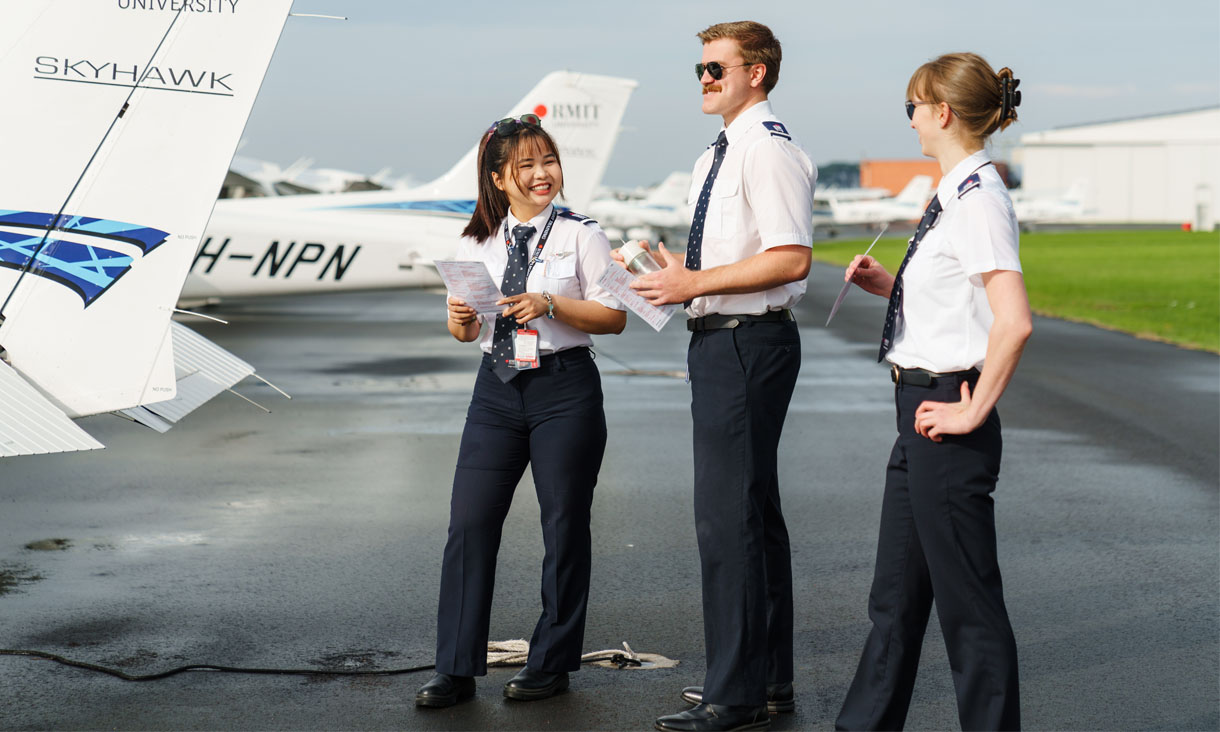
Where do pilots work?
Most pilots operate commercial airlines to transport passengers and cargo across domestic and international routes. They also fly corporate jets for business executives or private individuals. Military pilots operate aircraft for defence and tactical missions, while charter service pilots fly on-demand for tourism, medical emergencies, or specialised transport. Additionally, some pilots work in agriculture, using crop dusters to distribute pesticides and fertilisers.
How much do pilots earn?

The average salary for a pilot in Australia is $105,000 per year*.
*Source: Seek.com.au 2026
Learn more about your aviation study options
Whether you're a Year 12 student weighing up your options or thinking about switching careers, RMIT's aviation courses provide a comprehensive and industry-focused education that can help you succeed as a pilot in Australia.