[Additional information] Upbeat music plays intermittently between people speaking.
Duration: 4:03 mins
[Opening title] RMIT English Worldwide
Screen title: So you want to teach English? then try... the Certificate in Teaching English to Speakers of Other Languages (CELTA)
Effie Pathimos: I decided to do the course because I had heard so much good feedback.
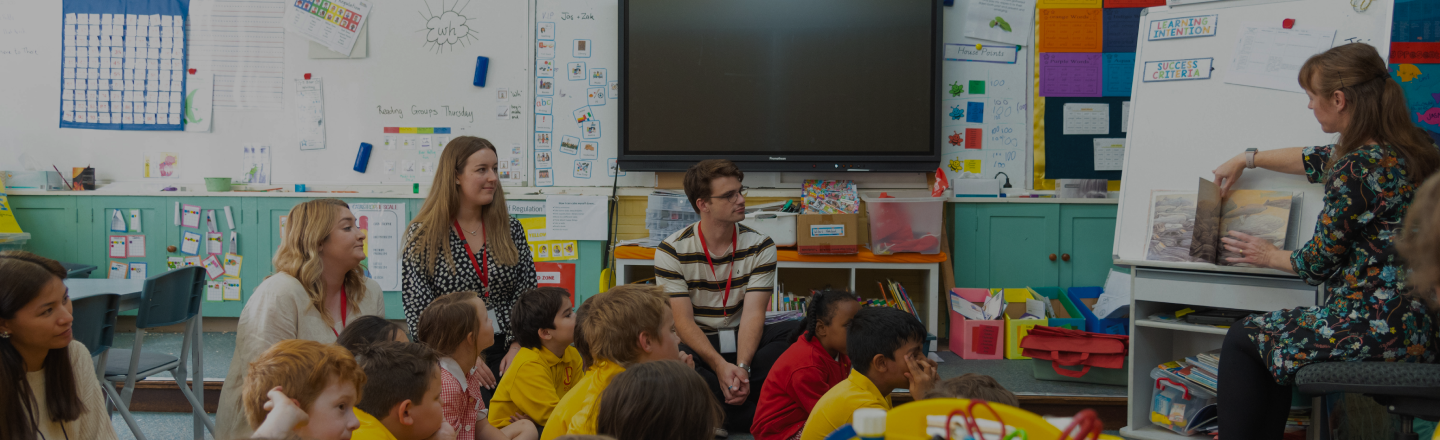
Visual: Effie stands at the front of a classroom addressing the class, no audio while she voices over the video. Cut to David Threadgold against a wall in an office setting.
Screen title: David Threadgold, CELTA Tutor, RMIT English Worldwide
David: It's a internationally recognized qualification that's accepted worldwide.
Visual: Four adults sit around a table of paper and pens discussing one person's work.
David: And during the course, we get assessed ourselves. They come and they assess the course and make sure we're doing everything correctly and dotting our Is and crossing our Ts as the course goes. So it's a very standardized course across the world.
Visual: Effie addresses a classroom of students
Effie: Anything else? Was there something wrong with the roof?
Student: Oh, yes.
Effie: And the roof needed to?
Student: (speaks indistinctly)
Effie: Be mended.
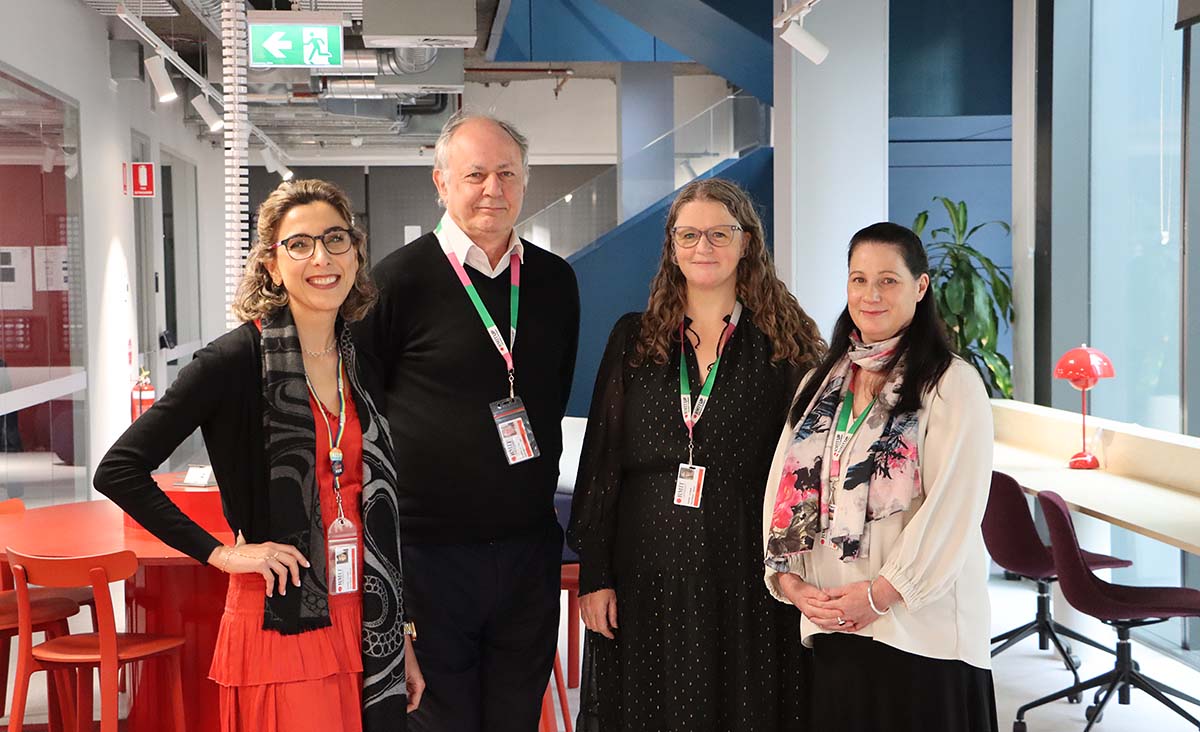
Visual: Effie stands against a wall in an office setting and talks directly to the camera.
Effie: It's a very challenging course.
Screen title: Effie Pathimos, CELTA Trainee, RMIT English Worldwide
Effie: It tries all your current knowledge, provides a lot of additional knowledge and skills, and gives you the opportunity to test them, both theoretically and practically, on an everyday basis.
Visual: Effie addresses the classroom in front of a board of images of cleaning tasks including ironing and washing the car..
Effie: What else can we clean?
Student: Kitchen.
Effie: Kitchen, yes.
Visual: Cut back and forth between the tutorial setting with students around a small table discussing their work and to David addressing camera.
David: The trainees mostly come from Australia but we do get the odd occasional trainee from places like Russia, some from Britain. We've had trainees from China before. So they all come with a good standard of English and a basic knowledge of how English works.
The course is between four weeks if it's done full-time and 15 weeks if it's done part-time.
Visual: Effie roams the classroom helping students with their work at their desks. Students talk to each other, Effie writes on the whiteboard. Students work sheets on tables show activities with images and words to complete.
David: Well, big part of the course is teaching practice. So during the course, the trainees will take part in nine teaching practices where, basically, they have to teach a group of foreign students and they will be assessed as they go.
So one of the teacher trainers will sit in and observe them and give them feedback on their class and focus on areas that they need to improve and also focus on the positives and the good bits of their classes.
David: Addresses the camera in an office setting.
David: Basically, because the trainees are teachers in training, we don't charge the students to come to the courses, and they come because they've really got some kind of motivation to learn English, and they do come from all over the world. I mean, just today, for example, we had students from Hungary, France, from Korea.
Visual: Effie addresses the classroom
Effie: Instead of to think, I think it is too cold, is there another word I can use instead of I think?
Visual: Effie addressed the camera in office setting.
Effie: I've been working with them for almost two weeks now and even within those two weeks, I can notice a change in the students. One girl in particular who I have personally interviewed, her ability to speak and write has improved within these past two weeks.
Visual: Effie and student working on world map on whiteboard.
David: They learn the basic skills of how to do things like give instructions how to teach grammar, how to teach vocabulary.
Visual: David is in tutorial tutorial setting speaking to a small group of students about their work
David (in tutorial): I mean, if you really want to break it up, you could get....
David (voiceover): Well, in general, what normally happens is in the morning they have their input sessions. So that's when they do theory and that's when they learn about how to teach. Then in the afternoon, they teach the students. Now, they wouldn't necessarily teach every day but every two to three days they'd be in front of the class.
Visual: Effie and students working in classroom.
Effie: If you're interested in teaching international students how to speak English and helping them in those early stages of them coming to Australia and early stages of their education, this course will more than prepare you.
The staff are very skilled and very committed and can guide you at a very, very rapid speed to improve your skills and to gain the knowledge you require.
Screen title: Thanks to David Threadgold, CELTA Tutor, RMIT English Worldwide
Effie Parthimos, CELTA Trainee, RMIT English Worldwide
And the participants of the General English Class
Produced by the Educational Technology Advancement Group (EduTAG) for RMIT English Worldwide
[Closing credits]
RMIT English Worldwide logo