Advanced Diploma of Conveyancing
Quick facts
Student type:
Quick facts
-
Entry score
Not applicable
-
Duration
Part-time 1.5 years -
Location
Melbourne City -
Fees
Next intake
February, JulyEntry score
Not applicable
Duration
Not applicable
Location
Not applicable
Fees
Not applicable
Next intake
Not applicable
Overview
RMIT produces highly sought after graduates who will perform the role of conveyancers with distinction.
You will gain specialised technical knowledge and skills in property transactions, learn about the operation of our legal system and develop the necessary technical, team leadership and practice management skills as you prepare for professional practice as a conveyancer.
Leading conveyancing industry specialists will guide you through regular, face-to-face, evening workshops and online instruction, using real-world scenarios and authentic documentation in a rich and unique learning experience.
Our program is highly recommended by the Australian Institute of Conveyancers (Victorian Division), the peak professional industry body for conveyancers in Australia and is the product of outstanding relationships between RMIT and industry partners.
Whether you are already working in the industry or are looking to have a career change, the conveyancing program is tailored to your needs.
Choose RMIT, the leader in training for conveyancers!
Details
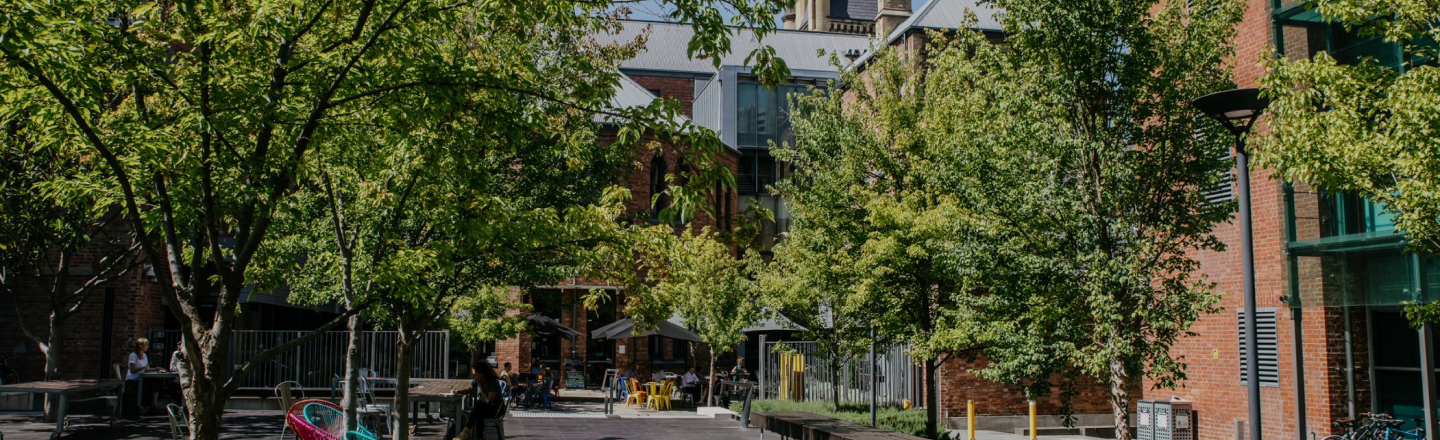
Most of your classes will be held in RMIT's Swanston Academic Building which features innovative learning spaces interspersed with retail and social spaces resulting in a stimulating environment for students.
Your on-campus workshops are generally held in the evening. Through RMIT University’s online learning portal, myRMIT, you will be able to access online learning resources, collaborate with teachers and fellow students, and access your student email account.
Educational software, the Learning Hub, resources and printers are accessible on campus via the RMIT wireless network using your own laptop, tablet or smart phone or via computer facilities on-campus. You will be able to access the same software from home using myDesktop.
Ongoing assessment throughout the semester includes supervised tests, reports, oral presentations, group projects, and practical assignments.
RMIT offers a variety of learning and teaching approaches including lectures, seminars, workshops, presentations and group discussions.
Find out more about student computing at RMIT.
RMIT University is committed to providing you with an education that strongly links formal learning with professional or vocational practice.
In addition to industry events, Industry guest speakers are invited to speak about current conveyancing issues and will provide you with an experienced perspective on study topics and work-simulated scenarios. Conveyancing practitioners provide direct feedback to prepare you for the workplace.
The Conveyancing Program Advisory Committee consists of representatives of professional associations including the Australian Institute of Conveyancing (Vic Division) as well as high-profile industry practitioners.
You will begin by studying core courses to develop an understanding of the legal system as it relates to conveyancing.
Your courses will focus on:
- decision-making in a legal context
- conveyancing and property law concepts and transactions
- preparing legal documentation
- estates and trusts
- dispute resolution and settlements
- legal documentation and research
- the principles of land sale contracts and sale of business contracts .
As your studies progress, you will extend your knowledge, reaching an understanding of the duties of care of a conveyancer, mortgage transactions, land registry requirements and council procedures, office practices and management strategies.
You can apply for recognition of prior learning (RPL) for some core business competencies.
Choose a program structure
| Title | Location | Duration | Plan code | CRICOS | ||
|---|---|---|---|---|---|---|
| Advanced Diploma of Conveyancing | City Campus |
18 months part time study
|
C6164 |
Choose a program structure
Program code: C6164
National curriculum code: BSB61115
Career
Conveyancers do work associated with the transfer of ownership of land and related property transactions.
Graduates may be self-employed or employed by:
- conveyancing firms
- solicitors
- law firms
- real estate offices
- property departments of financial institutions
- large companies
- government departments.
Employment for conveyancers to November 2020 is expected to grow.
Graduates will have met the educational requirements for licensing as a conveyancer in the State of Victoria. Please note that there are other requirements for licensing as a conveyance in Victoria and further information in relation to these requirements should be directed to the Business Licensing Authority, Consumer Affairs Victoria.
Source: Department of Employment, Canberra.
Admissions
Successful completion of Australian Year 12 or equivalent
OR
Completion of Post Secondary Studies (including Certificate III)
OR
Successful completion of the Australian Senior VCAL Certificate
OR
At least 6 months’ work experience
Entry requirements
To study this program you will need to complete one of the following English proficiency tests:
- IELTS (Academic): minimum overall band of 5.5 (with no individual band below 5.0)
- TOEFL (Paper Based Test): minimum score of 530 (TWE 3.5)
- TOEFL (Internet Based Test - IBT): minimum overall score of 71 (with minimum of 17 in all sections)
- Pearson Test of English (Academic) (PTE (A)): minimum score of 42 (with no communication band less than 36)
- Cambridge English: Advanced (CAE): minimum of 162 with no less than 154 in any component
For detailed information on English language requirements and other proficiency tests recognised by RMIT, visit English language requirements and equivalency information.
Don't meet the English language test scores? Complete an Upper Intermediate Certificate at RMIT English Worldwide.
Pathways
Fees
The tuition fees you will pay for this program will depend on whether you are offered a Victorian Government subsidised place or a full-fee place. To find out if you are eligible for a government subsidised place, follow the steps at How to check if you are eligible.
- 2019 government subsidised place: AU$4,000* per annum
- 2019 full-fee place: AU$5,000* per annum
*Fees shown are indicative only and subject to change given individual circumstances at the time of enrolment.
Use our fee finder to get an estimate of your fees for this program.
VET Student Loans
The Australian Government provides financial assistance via the VET Student Loans scheme (VSL), which allows eligible students in eligible programs to defer payment of their tuition fees, up to the maximum loan amount for their program.
How does a VET Student Loan work?
If your VSL application is successful, the Australian Government will pay RMIT your tuition fees on your behalf, up to the maximum loan amount for your program.
If your program is eligible for the VSL scheme and has a loan cap that doesn’t cover the total amount of the tuition fees for your program, then you’ll need to pay RMIT the difference once you exceed the cap.
Your VET Student Loan becomes part of your Higher Education Loan Program (HELP) debt. You will start repaying your accumulated HELP debt to the Australian Government once you earn above the minimum income threshold for repayment, which is adjusted each year (this also applies if you are still studying).
The Australian Taxation Office (ATO) will calculate your compulsory repayment for the year and include this on your income tax notice.
For more information see VET Student Loans or Study Assist.
In addition to tuition fees, you will be charged an annual student services and amenities fee (SSAF), which is used to maintain and enhance services and amenities that improve your experience as an RMIT student.
The SSAF is calculated based on your enrolment load and the maximum fee for 2019 is $303.
For more information about calculating your actual SSAF see Paying SSAF.
You may also be required to purchase other items related to your program, including field trips, textbooks and equipment. These additional fees and expenses vary from program to program.
The annual tuition fee for 2019 is AU$XXXX.
The total indicative tuition fee for 2019 commencement is AU$XXXX.
In addition to tuition fees you also need to pay for:
- Student services and amenities fee (SSAF) in each calendar year.
- Overseas Student Health Cover (OSHC) - Student visa holders must have cover for the total duration of their visa.
- Some programs incur additional expenses.
You also need to account for your living expenses. Estimate the cost of living in Melbourne.