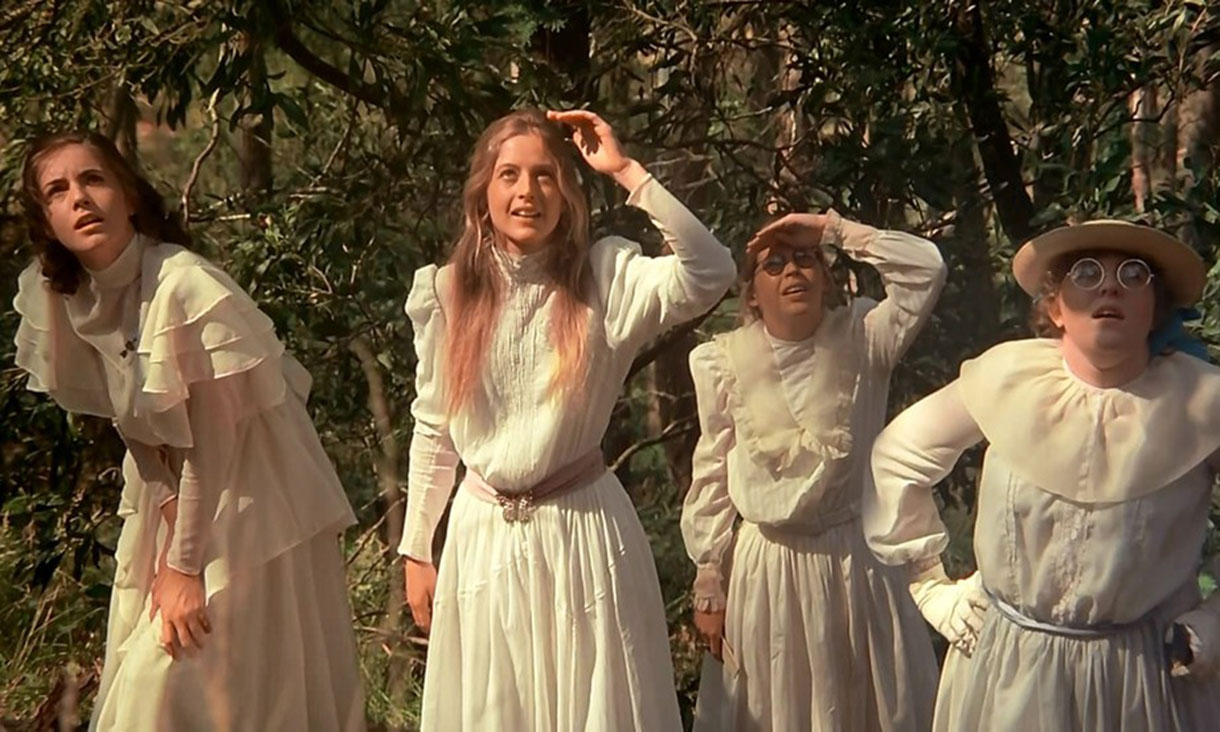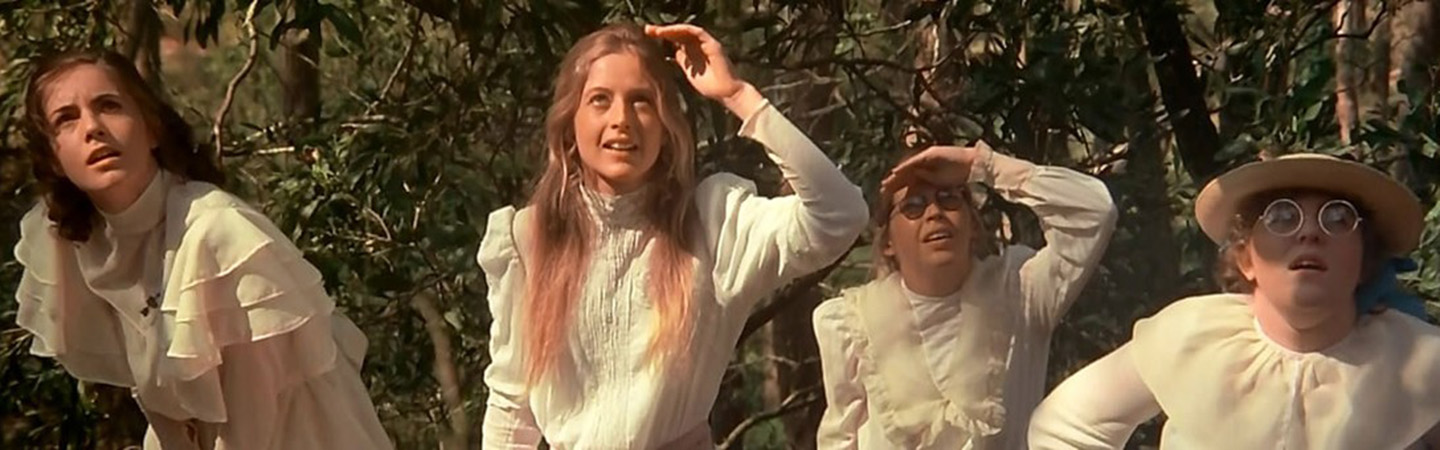
Alongside a DCP presentation of the 4K restoration of Picnic at Hanging Rock (which was produced by Second Sight Films from a scan of the original 35mm camera negative held in the NFSA and supervised by Peter Weir himself), the event will also feature the opening of a special exhibition of historical materials from RMIT ASRC, and the launch of a new limited-edition volume of critical zine 'Uncontrolled Excess', edited by Ellie Dean.
Picnic at Hanging Rock (1975), directed by Peter Weir and based on Joan Lindsay’s novel, is an Australian mystery-drama about the unexplained disappearance of three students and a teacher during a school picnic at Hanging Rock in Victoria on St Valentine’s Day, 1900. The students of Appleyard College explore the rock’s strange and imposing landscape. Miranda, Irma and Marion disappear, along with their mathematics teacher, Miss McCraw. Irma is later found alive but has no memory of what happened, while the others remain missing.
The mystery gradually affects the school, its students and the surrounding community, exposing tensions beneath the college’s strict Victorian respectability. Rather than offering a definite explanation, the film builds its power through ambiguity, dreamlike imagery and an increasingly unsettling atmosphere. It explores repression, sexuality, social control, colonial identity and the contrast between European order and the mysterious Australian landscape.
The film was highly acclaimed, particularly at the Australian Film Institute Awards, where it won major prizes including: Best Film; Best Director – Peter Weir; Best Screenplay; Best Cinematography – Russell Boyd; Best Editing; Best Sound. It also received international recognition, including BAFTA Award nominations for cinematography, costume design and sound. The film’s critical reputation has continued to grow, and it is now widely regarded as one of the most important and influential films of the Australian New Wave.