Scaffolds and Simulations: A Practical Guide to AI in Teaching

Scaffolds and Simulations: A Practical Guide to AI in Teaching

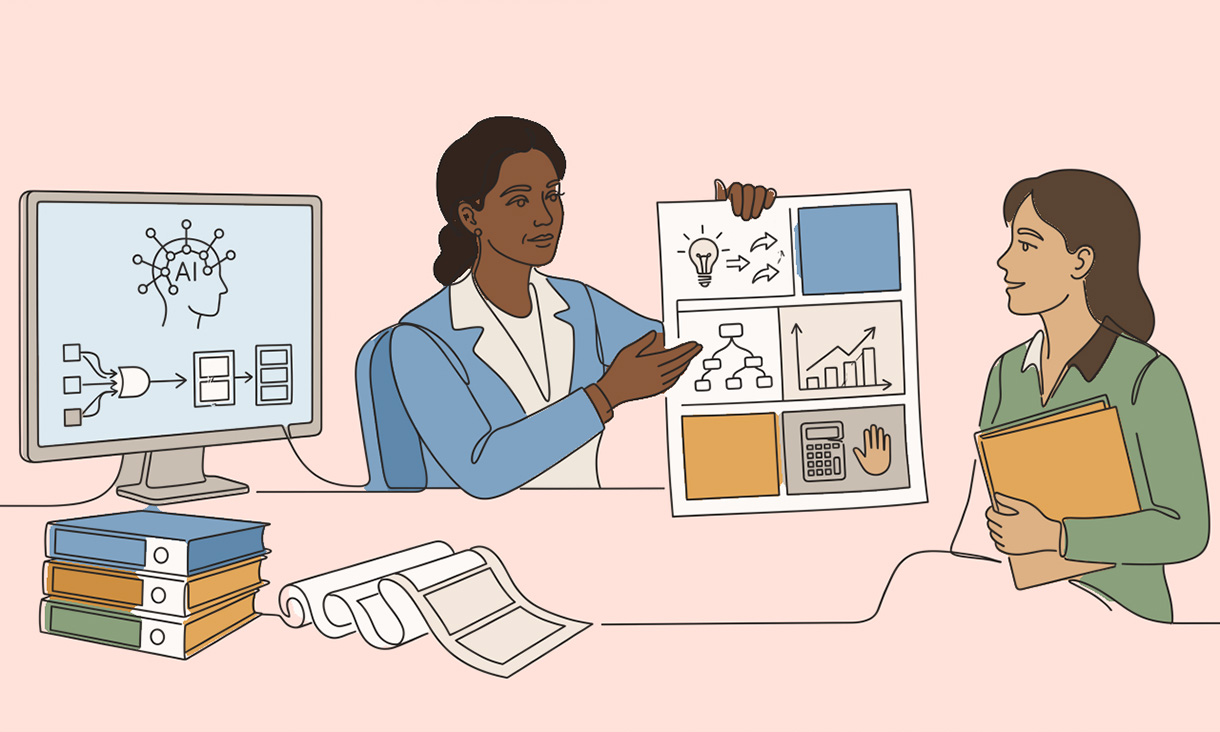
Two strategies to help you get started with generative AI in your teaching practice are using AI to generate lesson plans and learning activities, and using AI to create role plays and simulations.

I've lost count of the number of conversations I've had with educators who want to use generative AI in their teaching but aren't sure where to start. Not because they're resistant, actually the opposite. They've had a play, they're interested, but the gap between "I asked ChatGPT to write a quiz" and "I'm using AI strategically in my curriculum" feels enormous.

So here are two strategies to get you started with using Gen AI in your teaching practice. 

Using AI to generate lesson plans and learning activities

For most educators, lesson planning and designing learning activities is where AI feels most immediately useful — and for good reason. The blank page problem is real. But the challenge isn't just getting something down on paper. Designing an effective learning experience involves holding a lot of considerations at once: Does this task work towards the intended learning outcomes? Is it scaffolding skill development progressively? Am I giving students the opportunity to apply concepts to real-world problems, or to test assumptions in a safe space? Have I catered for a diversity of abilities, learning styles, and perspectives? Is this genuinely inclusive?

These are not small questions. They are the hallmark of thoughtful, professional teaching practice and they are exactly where AI can help.

Start by giving AI your topic, your learning outcomes, and your student context — who they are, what they already know, what they're working towards. It will generate a structured starting point: a draft plan, a sequence of activities, a set of ideas organised around your objectives. That first draft gives you something concrete to react to, rather than starting from nothing.

But the real value of working with AI goes beyond the initial draft. Once you have something on the page, you can use AI as a thinking partner. Ask it to review your plan against your learning outcomes. Prompt it to suggest ways to make the activity more inclusive, or to offer alternative tasks for different modes of learning. Ask whether the activity provides adequate scaffolding, or how it might be adapted for students who are either struggling or ready to go deeper. AI won't know your students the way you do, but it can surface considerations you might have missed, offer fresh perspectives, and help you stress-test your design before you take it into the room.

There is, however, an important caveat. Research by Chen and colleagues found that when you prompt a base model with something as simple as "generate a lesson plan on X," you tend to get back teacher-centred activities, lots of "the educator presents" and "students listen and discuss," with little room for student agency or meaningful dialogue. This isn't a flaw so much as a reflection of what the model has learned from: its training data skews toward traditional, teacher-led instruction, and without clear direction, that is the pattern it defaults to (Chen et al., 2025).

The fix is in your prompt. To get back something that reflects your actual pedagogical values, you need to be explicit about them. If you want activities that centre student inquiry, say so. If you want students working at higher levels of thinking — analysing, evaluating, creating — use the verbs that signal that intent: compare, critique, justify, break down, synthesise. Frameworks like Bloom's Taxonomy or the SOLO Taxonomy are useful for designing learning and are powerful prompting tools that help you communicate the kind of thinking you want AI to design for.

This is where your professional expertise becomes more important, not less. AI does not know your learners. It does not understand the ways of knowing that are particular to your discipline, or the nuances of what it means to think like a nurse, an engineer, a historian, or a designer. You do. The quality of what AI produces is directly proportional to the quality of the thinking you bring to the prompt. Used well, these tools do not replace pedagogical expertise; they demand it.

The key distinction throughout is this: you are not outsourcing the design. You are using AI to accelerate the first draft, sharpen your thinking, and ensure that the plan you walk away with is more considered, more inclusive, and more fit for purpose than if you had worked alone.

Using AI to create role plays and simulations

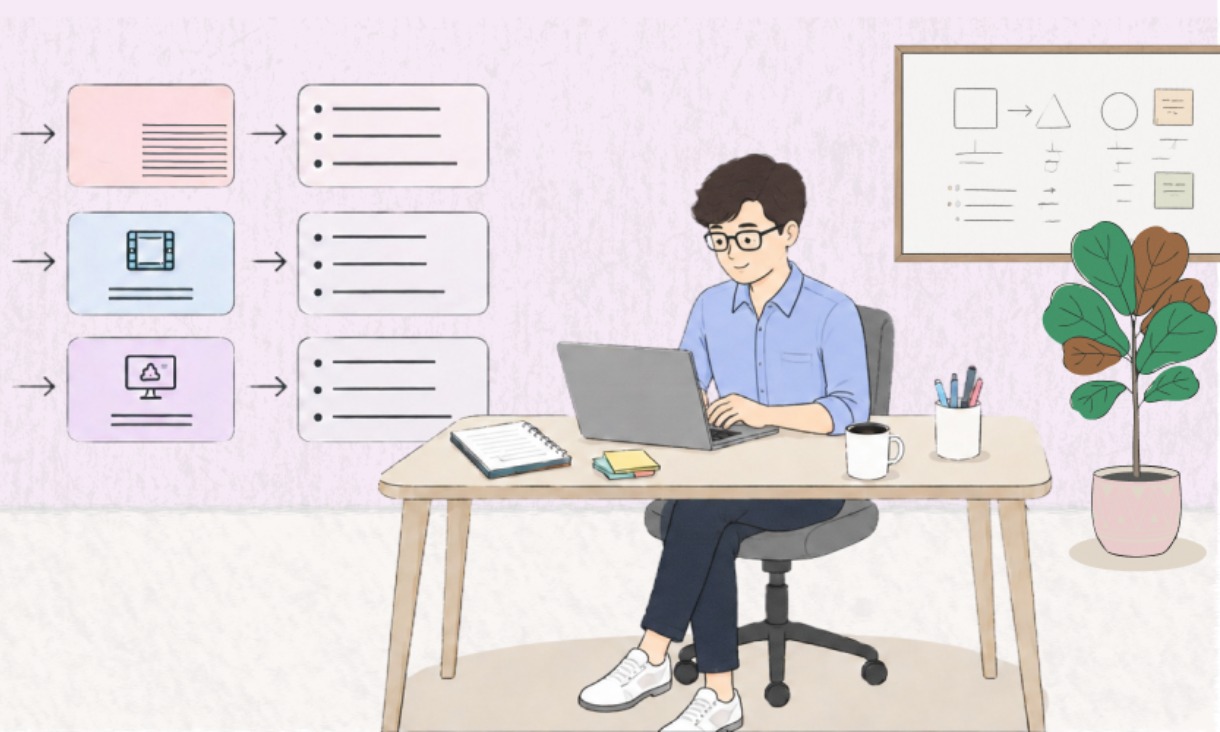
Role play and simulation have always been among the most powerful tools in an educator's repertoire. Practising a difficult conversation, navigating a clinical scenario, defending a design decision under pressure; these are the kinds of experiences that develop the capabilities that matter most in professional life. The problem has always been scale. Coordinating actors, arranging standardised patients, or simply getting students to engage seriously when they are paired with a classmate takes significant time, resources, and logistical effort that many educators cannot reliably access.

AI changes the equation. A well-configured chatbot can take on the role of a patient, a client, a colleague, or a stakeholder — whatever the scenario demands — and students can practise as many times as they need, whenever they need to, without any of the coordination overhead. Some platforms have already developed purpose-built personas for exactly this kind of learning, with characters designed to simulate specific professional interactions.

The benefits, however, only materialise if the experience is well designed. Research by Maurya found that outcomes were significantly better when educators used an explicit instructional sequence: first modelling the AI interaction themselves, then facilitating a shared experience where a small group of students engage in the role play while the rest of the class observes, before releasing students to practise independently. Simply handing students access to a chatbot and asking them to get on with it produced far weaker results. The structure around the experience matters as much as the experience itself.

Central to that structure is the debrief. The role play is not the learning. The observation, the reflection, and the conversation that follows is where meaning is made. Building in dedicated time for students to surface what they noticed, what felt difficult, what they would do differently, and why is not optional — it is the pedagogical core of the whole activity.

There are also limits to what AI simulation can offer, and students need to understand them. A chatbot can replicate the structure of a professional conversation, but it cannot replicate the full weight of a human one. It will not give you the awkward silence, the patient who becomes distressed for reasons unrelated to the clinical question, or the client whose body language tells a different story to their words. The emotional complexity and unpredictability of real human interaction is not something AI currently replicates well.

That is not a reason to avoid AI role play. It is a reason to frame it honestly. Position it with students as deliberate practice in a lower-stakes environment, not as a substitute for the real thing. Used well, it builds the foundational confidence and fluency that makes the eventual human interaction richer, not redundant.

The thread that connects both

Whether you're generating a lesson plan or building a role play, the same principle holds: AI is strongest when you bring the pedagogy. The tool doesn't know what good teaching looks like in your context. It doesn't know that your first-year students need more scaffolding than your third-years. You know that. The AI just makes it faster to act on what you know.

Ready to try this in your Practice

For more information about using these strategies in your practice, see the following guides: 

27 March 2026


More GAILE blogs

aboriginal flag float-starttorres strait flag float-start

Acknowledgement of Country

RMIT University acknowledges the people of the Woi wurrung and Boon wurrung language groups of the eastern Kulin Nation on whose unceded lands we conduct the business of the University. RMIT University respectfully acknowledges their Ancestors and Elders, past and present. RMIT also acknowledges the Traditional Custodians and their Ancestors of the lands and waters across Australia where we conduct our business - Artwork 'Sentient' by Hollie Johnson, Gunaikurnai and Monero Ngarigo.

Learn more about our commitment to Indigenous cultures