
 Professor Kate Fox
Welcome to the fascinating world of Biomedical Engineering in the School of Engineering at RMIT. As a hub for interdisciplinary innovation, our department of biomedical engineering blends engineering principles with biological science to transform medical technology. Our comprehensive curriculum spans undergraduate teaching and postgraduate research, ensuring students gain insights and hands-on experience with diverse technologies such as point of care devices, rehabilitation, biomechanics, lab-on-a-chip technologies, digital design, implant engineering, biomaterials, electronics, signals and image processing, and tissue engineering. Collaborating directly with industry partners, we offer opportunities to work on real-world challenges, fostering innovative and practical solutions.
The Department of Biomedical Engineering has a long-standing international research reputation with existing industry partnerships. With strong emphasis in biofabrication and biomaterial research, particularly in creating complex implants and devices through advanced manufacturing techniques such as 3D printing, the Department works closely with leading RMIT facilities such as the Advanced Manufacturing Precinct, the MicroNanoResearch Facility and the Aikenhead Centre for Medical Discovery. Researchers are at the forefront of organ-on-chip technology, creating models for spinal disc, brain, skin and muscle diseases. This includes pioneering the first intervertebral disc-on-a-chip model and using hydrogels and 3D printing to enhance tissue engineering and disease modelling. Research includes implants, surgical tools and point-of-care technologies, incorporating advances in electronics and optoelectronics. Efforts include developing neural interface technologies, bionic microdevices and rapid electrochemical sensors for unprocessed blood biomarker detection. Further, the department uses computational methods to analyse neural data and model brain function, enhancing diagnostics with tools such as NeuroDiag for Parkinson’s Disease. AI, mobile diagnostics and digital twins are integrated to improve accessibility and understanding of neurological disorders.
Join us in engaging in cutting-edge courses designed to empower the next generation of leaders in biomedical technology. Embark on a journey where science meets humanity, enhancing lives through engineering excellence.
Professor Kate Fox
Head of Department, Biomedical Engineering

Deputy Dean, Research and Innovation Engineering

Deputy Head (L&T) Biomedical Engineering
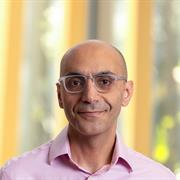
Deputy Head (R&I) Biomedical Engineering


RMIT University acknowledges the people of the Woi wurrung and Boon wurrung language groups of the eastern Kulin Nation on whose unceded lands we conduct the business of the University. RMIT University respectfully acknowledges their Ancestors and Elders, past and present. RMIT also acknowledges the Traditional Custodians and their Ancestors of the lands and waters across Australia where we conduct our business - Artwork 'Sentient' by Hollie Johnson, Gunaikurnai and Monero Ngarigo.
Learn more about our commitment to Aboriginal and Torres Strait Islander peoples
