People

The School of Media and Communication at RMIT University is home to a vibrant community of renowned practitioners, thinkers, theorists and digital communication specialists.

Emeritus Professor Linda Brennan

Emeritus Professor Linda Brennan

    Linda Brennan is a Professor in the School of Media and Communication at RMIT University. Her research interests are the use and abuse of advertising and social marketing for social change.
    Professor Rob Cover

    Professor Rob Cover

    Director, Digital Ethnography Research Centre (DERC)

    • Location City Campus Australia
    • Department School - Media & Communication
    Rob Cover is Professor of Digital Communication and Director of the RMIT Digital Ethnography Research Centre.  He leads a number of major funded research projects on digital harms, young people and wellbeing, and gender/sexuality diversity in screen contexts. The author of around one hundred journal articles and chapters, he publishes widely on topics related to digital cultures in the context of social identities, young people, suicide prevention and resilience.  His recent books include: Queer Youth Suicide, Culture and Identity: Unliveable Lives? (Routledge 2012) Vulnerability and Exposure: Footballer Scandals, Masculinity and Ethics (UWAP Scholarly 2015) Digital Identities: Creating and Communicating the Online Self (Elsevier 2016) Emergent Identities: New Sexualities, Gender and Relationships in a Digital Era (Routledge, 2019) Flirting in the Era of #MeToo: Negotiating Intimacies (with A Bartlett and K Clarke; Palgrave 2019) Population, Mobility and Belonging: Understanding Population Concepts in Media, Culture and Society (Routledge 2020), Fake News in Digital Cultures (with A Haw and JD Thompson, Emerald 2022) Identity and Digital Communication: Concepts, Theories, Practices (Routledge 2023) Identity in the COVID-19 Years: Communication, Crisis, and Ethics (Bloomsbury 2024) Queer Memory and Storytelling: Gender and Sexually-Diverse Identities and Trans-Media Narrative (with R Prosser, Routledge 2024).  Australian Queer Screens: Diversity and Social Change in Film and TV (with W Monaghan, S Richards, S McKinnon, T Pym, Bloomsbury 2026). He is a co-editor of the following anthologies and encylopedias: Youth, Sexuality and Sexual Citizenship (Routledge 2019), Queer Studies and Education: An International Reader (Oxford University Press, 2024) The Routledge Handbook of Sexuality, Gender, Health and Rights (Routledge 2024). The Elgar Encyclopedia of Queer Studies (Elgar 2025). His industry experience includes as a Communication strategist for the Queensland Government (2006-2007), regular consultancy work with the Western Australian, Victorian and Commonwealth Governments in Australia, and with the Hong Kong Council of Social Services, among others.
    Professor Robert Crawford

    Professor Robert Crawford

    Professor

    • Location City Campus Australia
    • Department School - Media & Communication
    Robert Crawford is Professor of Advertising in the School of Media and Communication at RMIT University and is currently Director of Higher Degrees by Research for the College of Design and Social Context. His research focuses on the growth and historical development of the advertising, marketing, and public relations industries nationally and internationally. Professor Crawford's most recent publication is "The Routledge Companion to the History of Advertising" (2026 - co-edited with Jackie Dickenson), a comprehensive source of current scholarship and debate on the history of advertising across the globe.   Professor Crawford has published widely on advertising and marketing history. His books also include "A Good Yarn: An Entwined History of Bendigo Woollen Mills" (2024), “Oral History and Business: Disruption and Continuity” (2023 – co-authored with Matthew Bailey), “More than a Glass and a Half: A History of Cadbury in Australia” (2022), “Digital Dawn in Adland: Transforming Australian Agencies” (2021), "Behind Glass Doors: The World of Australian Advertising Agencies 1959-89" (2016 – co-authored with Jackie Dickenson) and "But Wait There's More…: A History of Australian Advertising, 1900-2000" (2008). In addition, he has edited various collections, including "Decoding Coca-Cola: A Biography of a Global Brand" (2021, co-edited with Linda Brennan and Susie Khamis), "Global Advertising Practice in a Borderless World" (2017 – co-edited with Linda Brennan and Lukas Parker), "Consumer Australia: Historical Perspectives" (2010 – co-edited with Judith Smart & Kim Humphery). Professor Crawford is also a co-author of the second and third Australasian edition of the textbook "Advertising Principles and Practices" (2011, 2014). He is also the author of over 80 book chapters, journal articles, and encyclopaedia entries for national and international publications. From 2017 to 2024, Professor Crawford served as the Associate Dean of Research & Innovation in the School of Media & Communication. Prior to arriving at RMIT University, Professor Crawford lectured in the Public Communication program at the University of Technology Sydney, where he also served as Head of School. Professor Crawford has held research and teaching positions at the Menzies Centre at King's College, London and the National Centre for Australian Studies at Monash University.  Professor Crawford has taken up visiting fellowships at various universities (including La Sabana University, Colombia; Brown University, USA; Macquarie University, Australia) and institutions (State Library of NSW; National Museum of Australia; Museum of Applied Arts and Sciences). Professor Crawford’s research on the history of communication and marketing is recognised for its innovative approaches as well as its capacity to connect the past with the present.  His current project, Shop Talk: Department Stores, Shoppers and Consumer Capitalism, 1945-2025, is supported by the Australian Research Council’s Discovery scheme (DP220100943). Professor Crawford also works closely with industry and businesses on marketing history matters. He has recently completed projects for Cadbury, Griffiths Bros, Claude Neon, Bendigo Woollen Mills, and the Real Estate Institute of Australia, and is currently working with Hoyts and the Outdoor Media Association.
    Dr. Glen Donnar

    Dr. Glen Donnar

    Senior Lecturer

    • Location City Campus Australia
    • Department School - Media & Communication
    Dr Glen Donnar is a researcher on screen representations of men and masculinities, stardom and celebrity, and lectures in Popular Culture and Asian Media & Culture. Dr Donnar is a Senior Lecturer in the School of Media and Communication. His research on popular cultural and screen representations of men and masculinities, stardom and celebrity sits at the intersection of cultural and cinema studies. Dr Donnar’s first book, Troubling Masculinities: Terror, Gender, and Monstrous Others in American Film Post-9/11 (UP Mississippi 2020) is the first multi-genre study of representations of masculinity following the emergence of violent terror in post-9/11 American cinema. The book demonstrates that the reassertion of masculinity and American national identity in post-9/11 cinema repeatedly unravels across subgenres including disaster melodrama, monster movies, postapocalyptic science fiction, discovered footage and home invasion horror, action-thrillers, and frontier westerns. The book is endorsed by Professor Sean Redmond as “a must-have addition to the literature on 9/11 cinema”. The book has been widely recognised as a theoretically “innovative” (Men & Masculinities) and “meticulous examination” (New Review of Film and Television Studies) that“challeng[es] the reader to hereafter interpret this often-encountered cinematic genre in an entirely new light” (CHOICE). Dr Donnar is completing a book on Ageing Masculinity in Hollywood Action Film (BFI) and a co-edited volume on Asian Celebrity and Digital Media (Hong Kong UP). He is a member of the editorial board for the Asian Celebrity and Fandom Studies series for Bloomsbury (Asian Studies) and an inaugural member of the Performance and Stardom Scholarly Interest Group in the Society for Cinema and Media Studies (SCMS). Dr Donnar also routinely comments on gender, celebrity and popular culture in the media, including for ABC online, Radio National, New Scientist, Cosmopolitan and The Conversation. Dr Donnar’s applied research on men and masculinities for the interdisciplinary Healthier Masculinities project is informing government, university and industry initiatives to define and promote healthy masculinities. The project includes numerous student-led co-designed proposals for partners such as The Man Cave, Respect RMIT and Safer Community (RMIT). The project team’s multidisciplinary research (Routledge, 2018) also informed the Victorian Government’s 2016-17 water safety campaign targeting older males (with the Royal Life Saving Society). Dr Donnar is a highly accomplished educator with extensive international experience developed over two decades. He has extensive teaching experience and a demonstrated commitment to enhancing the student experience at both undergraduate and postgraduate level. Dr Donnar’s innovations in assessment design that incorporate student-centred and team-based learning are highly valued by students. He was a featured subject in the Australian Learning and Teaching Council (ALTC) funded project, Finding common ground: Enhancing interaction between domestic & international students (2008-2010). He currently teaches into the Contextual Studies minors in Approaches to Popular Culture and Asian Media & Culture. He has also taught into Cinema Studies and Literary Studies. Glen is a registered research supervisor who is able to supervise students at MA and PhD levels. Industry experience: Dr Donnar is a member of the Australian Film Critics Association (affiliated member of FIPRESCI), the Society for Cinema and Media Studies, the Australia and New Zealand American Studies Association, and the Popular Culture Association/American Culture Association. Awards: 2023: Dean’s Award for Leadership   2022: Recognition of Outstanding Contribution, School of Media & Communication   2017-2019: Horizon 2020 Marie Sklodowska-Curie Actions Individual Fellowship Seal of Excellence, European Commission 2009: Nominee for Australian Learning & Teaching Council (ALTC) Award for Teaching Excellence, Early Career Academic 2008: RMIT Teaching Award (Outstanding Sessional Teacher), RMIT University Other: -Early Career Development Fellowship, RMIT University, Glen Donnar, 2013-15 -RMIT PhD Scholarship, RMIT University, 2009-2012
    Dr. David Fouvy

    Dr. David Fouvy

    Lecturer

    • Location City Campus Australia
    • Department School - Media & Communication
    David Fouvy is a lecturer, academic advisor and early career researcher in the School of Media and Communication. Dr David Fouvy is a lecturer at RMIT university and an early career researcher. . David's research interests include the impact of communication on consumer behaviour and the drivers of future consumption. His recently completed PhD investigated the impact of motives, attachments and the game experience on sports fans future consumption. The investigation used data collected from over 700 season ticket holders of a Melbourne based AFL club. David developed a new sports fan model using SPSS and AMOS to quantify the key drivers of future behaviour. David's industry background includes more than a decade at Cricket Australia (CA) as head of Marketing. His responsibilities at CA included major sponsor acquisition, staging cricket events and working with host broadcasters as well as international media outlets. His industry background includes marketing roles at FMCG companies (Rosella a division of UniLever and Carnation) and marketing and sales roles at Adidas Australia. David has over two decades of industry experience working with a wide range of stakeholders and partners. David has also worked as a consultant for Sport Organisations such as Bowls Australia and Netball Victoria. He has also served as a Director on the Ski Australia Board. David's current research projects include a qualitative study using case analysis for AFL sport fans. David is an academic advisor, course co-ordinator and lecturer in the school of Media and Communication. David leads the advertising strategy courses for both the Undergraduate and Masters Advertising programs. He also leads Client Management courses in both Melbourne and Singapore. David is currently working on a number of research projects including a VicSport funded project, Game Ready; Exploring food choices and consumption practices in the context of community sport as well as creating articles from his PhD thesis: "Sustaining the Golden Goose and Gander: an investigation into AFL season ticket holders motivation and attachment and their satisfaction with the service experience." David is able to supervise higher degree research students. He specialises in the impact of communication on consumer behaviour. David is currently supervising a research project that investigates the use of Facebook by a major political party during the 2019 Federal election. The thesis is titled: The HaHaHa effect of political communication: a comparison of the effectiveness of official and unofficial Facebook pages. Industry experience: - Cricket Australia: General Manager; Marketing and Commercial Operations - adidas Australia: National Sales Manager - Carnation Australia: Product Manager - Rosella (Unilever): Senior Brand Manager
    Associate Professor Cathy Greenfield

    Associate Professor Cathy Greenfield

    Associate Professor, Communication

    • Location City Campus Australia
    • Department School - Media & Communication
    Cathy teaches and researches in Communication & Media Studies with an interdisciplinary focus incorporating political studies, political economy and cultural economy. Cathy is a teacher–researcher and teaches in the undergraduate contextual stream 'Contemporary Politics & Communication'.  Cathy was long-term general editor of the interdisciplinary refereed journal Communication, Politics & Culture and her teaching and research continues this interdisciplinary theme. Cathy has authored and co-authored a wide range of articles, notably on pedagogy as a formative cultural technology, planetary pedagogies, financialisation and media, political economic literacy, media populism, and communication and sustainability; and the monographs How We Are Governed: Investigations of Communication, Media and Democracy (2014) and Media & the Government of Populations (2018).   She was a CI on the ARC funded Large Grant 'Finance Market Economists', and a CI on the ARC Linkage project 'Talking Country: Sharing Indigenous Stories of Place through Mobile Media' exploring the role of media technologies in cross-cultural engagement between Indigenous and non-Indigenous people.
    Professor Anna Hickey-Moody

    Professor Anna Hickey-Moody

    Professor

    • Location City Campus Australia
    • Department School - Media & Communication
    Anna Hickey-Moody is on career development leave for 3 years and during this period she is expanding her research leadership skills as the Director of the Arts and Humanities Research Institute at Maynooth University in Kildare, Ireland. You can read more about the Institute and its programs here: https://www.maynoothuniversity.ie/arts-and-humanities-institute Each year, the AHI runs a competitive fellowship scheme offering research time and resources to academics. Anna maintains strong research connections with RMIT's School of Media and Communications through her continued involvement with two grants funded by the Australian Research Council. The first of these is an industry linkage project that is building micro-credentials which recognise the employable skills young people develop through the arts. You can read more about this project here: https://vital-arts.org/ We welcome new partners in this network. Contact Dr Tammy Hulbert for further information: Tammy.Hulbert@rmit.edu.au The second research project that Anna supports at RMIT examines queer religious young people's experiences, with a focus on how they navigate discourses that are often conflicting. This grant also focuses on recognizing youth voice and experience, through employing digital research methods that Anna has developed specifically to engage young people. You can read more about this project here: https://www.youthreligionsexuality.com/ If you would like to learn more about the project, contact A/Prof Joel Windle: joel.windle@unisa.edu.au Before moving to Maynooth in mid 2023, Anna was a Professor of Media and Communication at RMIT University, where she taught media studies and cultural studies. Anna was an Australian Research Council Future Fellow between 2017–2021 and an RMIT University Vice-Chancellor's Senior Research Fellow. Anna was based in the Digital Ethnography Research Centre where she lead the 'Creative Research Interventions in Methods and Practice' (CRIMP) feminist research collective. She supervised 5 PhD students to completion during this period and held honorary appointments at Goldsmiths, London and Manchester Metropolitan University. You can read more about her ARC Future Fellowship here: https://www.interfaithchildhoods.com/. Anna is known for her theoretical and empirical work with socially marginalised young people. She is internationally acclaimed for her methodological expertise with arts practice and ethnography as ways of approaching difficult subjects through 'doing' rather than just talking. Her books include "Faith Stories" (MUP, 2023), "Childhood, Citizenship + the Anthropocene" (Rowman + Littlefield, 2022), "Deleuze and Masculinity" (Palgrave, 2019), "Imagining University Education: Making Educational Futures" (Routledge, 2016), "Youth, Arts and Education" (Routledge, 2013), "Unimaginable Bodies" (Brill/Sense Publishers, 2009) and "Masculinity Beyond the Metropolis" (Palgrave, 2006). Showing leadership in the fields across which she works, Anna has also edited 8 collections of essays. This includes co-edited collections on "Deleuze and Childhood" (EUP, 2019), "Youth, Technology, Governance and Experience" (Routledge, 2018), and a co-edited themed edition of the journal "Review of Education, Pedagogy and Cultural Studies," 2016, 38(1). She teaches and supervises in the areas of media studies, youth, disability, masculinity, and cultural studies. Industry experience: Arts industry, dance, disability arts, community arts, social practice.
    Dr. Chengju Huang

    Dr. Chengju Huang

    Senior Lecturer

    • Location City Campus Australia
    • Department School - Media & Communication
    Dr Chengju Huang is a journalism and media studies expert, focusing on social-journalistic transition in Asia. Dr Chengju Huang is a senior lecturer in the School of Media and Communication at RMIT University. He is an Asian journalism and media studies expert with extensive industrial, teaching, and research experience in this area. Dr Huang has taught into a wide range of media and communication courses. He currently teaches COMM2878 Contemporary Asian Modernities and COMM2871 Asian Mass and Communication. In research, he investigates the political economy of journalism and media, media representation, media propaganda, tabloid journalism, and digital transition of traditional (print) media. More specifically, his research focuses on Asian journalism and media, particularly Chinese journalism and media; international communication; and comparative media systems. His work has appeared in leading international journals such as Journal of Communication, Journalism: Theory, Practice and Criticism, Journalism Studies, The International Communication Gazette, and Global Media Journal. Dr Huang supervises honours and postgraduate projects in his main research areas as mentioned above. Dr Huang has worked as an academic and media practitioner for more than 30 years. Before joining RMIT University, he worked with Sichuan University, China and a couple of Chinese media companies; University of Queensland; and Central Queensland University. He maintains close professional relationships with many researchers and media organisations and professional bodies in the Asian region. He is an editorial board member of Asian Journal of Communication and a reviewer for a number of international academic journals. Guest Editorship: - The International Communication Gazette, Vol. 69, No. 5, 2007. Theme: From Control to negotiation: Chinese media in the 2000s.
    Dr. Michaela Jackson

    Dr. Michaela Jackson

    Honorary Fellow

    • Location City Campus Australia
    • Department School - Media & Communication
    Dr Michaela Jackson is a communication and engagement professional and academic. Michaela combines full-time employment in stakeholder engagement with her honorary academic role.    In 2022 Michaela was appointed as Honorary Principal Research Fellow with RMIT University’s School if Media and Communication. Her work has been published extensively, in leading international journals and as invited book chapters. Across both professional and academic domains Michaela continues to be drawn to communication about and for complex social issues. Areas of interest include health communication, communication ethics, and communication that is controversial in its form or application. She remains active in academic research and publishing, and HDR candidate supervision.     Professionally, Michaela has more than 15 years of experience in communication-related roles across private and public sectors, in industries including energy, education and health. She remains passionate about forging closer connections between professional and academic domains.  
    Dr. Michaela Jackson

    Dr. Michaela Jackson

    Honorary Fellow

    • Location City Campus Australia
    • Department School - Media & Communication
    Dr Michaela Jackson is a communication and engagement professional and academic. Michaela combines full-time employment in stakeholder engagement with her honorary academic role.    In 2022 Michaela was appointed as Honorary Principal Research Fellow with RMIT University’s School if Media and Communication. Her work has been published extensively, in leading international journals and as invited book chapters. Across both professional and academic domains Michaela continues to be drawn to communication about and for complex social issues. Areas of interest include health communication, communication ethics, and communication that is controversial in its form or application. She remains active in academic research and publishing, and HDR candidate supervision.     Professionally, Michaela has more than 15 years of experience in communication-related roles across private and public sectors, in industries including energy, education and health. She remains passionate about forging closer connections between professional and academic domains.  
    Dr. Leah Li

    Dr. Leah Li

    Senior Lecturer

    • Location City Campus Australia
    • Department School - Media & Communication
    Dr. Leah Li, also known as Xiufang (Leah) Li, is an active and innovative scholar in communication and media. She has extensive international experience in research, PhD supervision, and teaching across disciplines at universities in Australia, China, and Singapore. Leah has received prestigious awards in both global and Australian communication fields, including the ICA Top Faculty Paper Award in the Public Relations Division and the PRIA (now CPRA) Golden Target Award, Researcher of the Year (Gold Prize). The ICA (International Communication Association) is the premier global academic association for communication scholars, and the PRIA (now CPRA) Golden Target Awards are Australia's most esteemed industry awards for communication and public relations professionals.         Leah’s research focuses on the intersection of public relations and digital communication, examining how organisations co-create values and meanings with diverse stakeholders through technology-aided strategic communication. Her work covers contexts such as sports, health, and place branding, featuring publications in prestigious journals - European Journal of Cultural Studies, PLOS ONE, Media International Australia, Global Media and China, and Public Relations Review, the highest-ranking journal in public relations and among the top six Q1 journals in communication. Leah actively collaborates with professional bodies, with a successful track record in leading research project design, securing competitive grants, and executing projects to completion. She serves on the editorial board of Public Relations Review and the Education and Community Committee of CPRA, extending her services to a wider community.         Leah holds a PhD in International Communication and Media from Macquarie University. Before joining RMIT University, she taught at Macquarie University, the Sydney Institute of Business and Technology, and worked as an Associate Professor in Digital Media and Communication at universities in China, including Guangzhou University. She also served as Program Manager for the former Bachelor of Communication (Public Relations) program at RMIT University. Her goal is to leverage her ongoing commitment to excellent research and teaching to support communities in achieving an inclusive and sustainable future. In her spare time, she enjoys playing sports. Industry experience: In the early years of Leah’s career, she worked in the media and corporate sectors in the areas of business analysis, media production, market research, brand and reputation management, and user behaviours. Awarded grants and projects: As Chief/Principal Investigator Building Trust: Exploring AI and Ethical Practices in the Property Profession. The APREF Research Grants. Digital Forums for Older Australians: Engaging Virtual Communities for Social Support and Digital Health Literacy. auDA Community Grant. Communicating to CALD Communities: Best Practice Engagement to Connect with Digitally Excluded Groups. AusNet Vulnerability Research Grant. Building Digital Health Networks: Virtual Communities in Offering Social Support. RMIT EIP Platform Activity Funding. Perceived and Be Perceived: Examining the City Branding of Qingdao and Melbourne through a Security Paradigm in the Context of the Rocky Chinese Australian Relations. The ASSA-CASS Joint Action Program Research Grant. Disaster and Emergency Management in the Mobile Age. Humanities and Social Science Research Ministry of Education of China. Mobile Technology and Social Media in National Disaster Management. Guangdong Academy of Humanities and Social Sciences. Online Mortgage Loan Analysis and Mobile Marketing Strategies. CoreLogic RP Data. User Behaviours and Online and Offline TV Program Development at the Guangdong Broadcasting Corporation (GBC). The GBC. Branding Guangzhou Overseas in the New Media Landscape. Guangzhou Academy of Humanities and Social Sciences. Internet and New Media Research Methods. Guangzhou University. Program of Introducing Talents of Disciplines Overseas to the University. Guangzhou University. Use of Social Media in Communicating Mining Disasters to the Public. Scientific Research Foundation for Returned Scholars. Public Opinion towards China in Australia. The Centre for International Communication Study in Beijing. Macquarie University Postgraduate Research Fund.   As Co-Investigator: Building Research Capability through Design Thinking Pedagogy. RMIT EIP Platform Activity Funding. Communication Design Using Algorithm, Automated Bot, and Platforms in Nation Branding. The National Social Science Fund of China. Communicating President Xi’s Socialist Core Values in the Digital Space. Ministry of Publicity Guangdong. Enhancement of Journalism’s Degree Program in the New Media Age. Guangdong Academy of Education. Production of a TV Show Based on Linda Thomson’s Harry the Hypno-potamus. Guangzhou University. Internet Use and Addiction among the Youth in Guangzhou and Hong Kong. Guangdong Academy of Humanities and Social Sciences. Public Opinion towards China in We Media. Shanghai Academy of Humanities and Social Sciences. The Pacific Media Assistance Scheme at the Australian Broadcasting Corporation (ABC). The ABC.   ORCID: https://orcid.org/0000-0002-6404-5916 Linkedin: https://www.linkedin.com/in/xiufang-leah-li-b2aa2517b/?originalSubdomain=au Google Scholar: https://scholar.google.com/citations?user=H4MBnC0AAAAJ&hl=en
    Associate Professor James Meese

    Associate Professor James Meese

    Associate Professor

    • Location City Campus Australia
    • Department School - Media & Communication
    James studies how media institutions adapt to digital infrastructures, with a focus on personalisation, recommendation, and the public value of news. He works at the intersection of media and telecommunications policy and journalism studies, combining conceptual development with empirical research on news recommendation, regulatory reform, and digital infrastructure.   James holds an ARC Future Fellowship investigating the implications of personalised news distribution. James has published over 45 journal articles, book chapters and reports on the above topics and continues to regularly publish work in leading media and communication journals. His most recent book is Digital Platforms and the Press (Intellect). His research has been supported by the Australian Research Council, Meta, the International Association of Privacy Professionals, and the Australian Communications Consumer Action Network.
    Dr. Dooyeon Park

    Dr. Dooyeon Park

    Lecturer, Advertising

    • Location City Campus Australia
    • Department School - Media & Communication
    Dr. Dooyeon Park is a Lecturer in Advertising in the School of Media and Communication at RMIT University. Her research examines how consumers engage with persuasive communication in digital environments, with a focus on the role of persuasion knowledge, and the cognitive, affective, and behavioural mechanisms through which individuals respond and adapt within dynamic media contexts. Her current research explores the effects of digital advertising directed at children, as well as consumers’ understanding of and behavioural responses to data privacy in digital media communication.
    Professor Lukas Parker

    Professor Lukas Parker

    Professor

    • Location City Campus Australia
    • Department School - Media & Communication
    Professor Lukas Parker is a leading communication for social change scholar, whose research sits at the nexus of behaviour change, communicating health and digital communication. Leading teams of researchers, his research addresses pressing social problems related to health and sustainability. He has over one hundred peer-reviewed publications including influential co-authored books Social Marketing and Advertising in the Age of Social Media (2020) and Social Marketing and Behaviour Change: Models, theory and applications (2014) which guide social marketing practitioners and scholars.   Professor Parker leads 3C (Communication and Change Co-lab) that undertakes projects that create change through communication - whether that be social, behavioural, or cultural. He also co-leads Co-Lab. His highly applied research has informed and assessed social and behaviour change communication campaigns and government policy. His recent government and industry partners include AusNet, Australian Red Cross Lifeblood, Department of Families, Fairness and Housing, eSafety Commisioner, VicHealth, Football Victoria, Sustainability Victoria, Woolworths and the Australian Securities and Investments Commission (ASIC). Professor Parker is a highly accomplished educator with extensive international experience over two decades, in Australia, South Korea and Vietnam. He currently teaches into the Master of Advertising and Bachelor of Professional Communication degree programs. His teaching intersects with his research and is focused on social change and engaging with industry, government and community. An example of this is his popular course, Wicked Problems: Innovative Solutions, which challenges multidisciplinary teams of undergraduate and master's students through an intensive series of workshops that tackle complex wicked problems with no clearly identifiable solutions. It employs a design thinking process in which students consider problems through co-creation with those most connected to the problem (target audience, experts in the field, stakeholders, organisations) to challenge assumptions and create positive, participant-focused solutions. Professor Parker is on the management committee of the Australian Association of Social Marketing (AASM) and a member of the Australia-New Zealand Marketing Academy (ANZMAC) and the International Social Marketing Association (ISMA). Awards: Industry Media Star 2025 (RMIT University, 2025) Award for Research Engagement and Impact (College of Design and Social Context, 2025) Dean’s Executive Commendation for Outstanding Contribution (School of Media and Communication, 2025) Food Waste Action Research Award Finalist (End Food Waste Australia, 2024) Dean’s Award for Integrated Scholarship/Praxis (2021 and 2022) ​Dean’s Award for Indigenous Engagement (2019 and 2020) Dean’s Award: Ed Montano Award for Industry Engagement (2018)  ​Emerald Literati Network Award for Excellence (2016)
    Professor Ellie Rennie

    Professor Ellie Rennie

    Professor

    • Location City Campus Australia
    • Department School - Media & Communication
    Professor Ellie Rennie is part-time in the School of Media and Communication. She is also an Associate Investigator of the ARC Centre of Excellence for Automated Decision-Making and Society, including the Platform Economies Research Network.   Her research is examining permissionless systems and on-chain communities using ethnographic methods, including stablecoins, validator governance, contribution systems and infrastructures for the collective governance of knowledge. She previously worked on the topic of digital inclusion in remote Indigenous communities and media access. Ellie is currently a Research Director within the international research network Metagov. Her book publications include: Wi-Fi (Polity, with Julian Thomas and Rowan Wilken); Using Media for Social Innovation (Intellect, with Aneta Podkalicka, 2018). Internet on the Outstation: The digital divide and remote Aboriginal communities (multi-authored, Institute for Network Cultures, 2016), Life of SYN: A Story of the Digital Generation (Monash University Press, 2011); Community Media: A Global Introduction (Rowan & Littlefield, 2006).
    Professor Ingrid Richardson

    Professor Ingrid Richardson

    Associate Dean, Research & Innovation

    • Location City Campus Australia
    • Department School - Media & Communication
    Ingrid is Professor of Digital Media, School of Media and Communication, RMIT University. She has been teaching, supervising and researching in the fields of digital media, mobile media and games for over twenty years. She has a broad interest in the human–technology relation and has published widely on the phenomenology of games and mobile media; digital ethnography and innovative research methods; the relation between technology use and well-being; and the cultural effects of urban screens, wearable technologies, virtual and augmented reality, remix culture and web-based content creation and distribution. Ingrid has led or co-led fourteen funded research projects, the most recent being an ARC Discovery Project, Games of Being Mobile, with Larissa Hjorth. Ingrid is contributing co-editor of Studying Mobile Media (Routledge, 2011) and co-author of Gaming in Social, Locative and Mobile Media (Palgrave, 2014), Ambient Play (MIT, 2020), Understanding Games and Game Cultures (Sage, 2020), Exploring Minecraft: Ethnographies of Play and Creativity (Palgrave, forthcoming), and Mobile Media and the Urban Night (Palgrave, forthcoming). Over the past ten years, Ingrid has actively championed and supported practice-led postgraduate research, and over the past five years she has also developed a passion for teaching critical web literacy skills to undergraduate students across all disciplines. Industry experience Ingrid has led or co-led seven projects in collaboration with industry partners and not-for-profit organisations, including the Telstra Foundation, Starlight Foundation, Inspire Foundation, Youth Focus (Australia), Basic Needs (Kenya), ABC TV, Nickelodeon, STREAT and Google Australia. She has also worked as a consultant for the Raising Children Network and Volunteering WA. Ingrid's work with industry has primarily focused on intergenerational media practices and young people's wellbeing in relation to technology use, and how technologies and new media interfaces can potentially improve the lives of at-risk sectors of the community.
    Dr. Jenny Robinson

    Dr. Jenny Robinson

    Senior Lecturer

    • Location City Campus Australia
    • Department School - Media & Communication
    Dr Jenny Robinson is an expert in audience research and engagement, risk communication, and understanding how strategic communication and media technologies facilitate engaged communities.   A Senior Lecturer in the School of Media and Communication at RMIT, her research is in stakeholder/audience engagement, messaging and science/risk communication with a focus on youth, seniors and technological affordances. Her current research focuses on social listening, public participation and concepts of shared responsibility for addressing complex social issues, especially around digital transformation, public health and techliteracy. She has co-authored publications in the Journal of Public Relations Research, Biological Conservation, Journal of Interactive Marketing, and BMC Public Health among others. She has also authored and co-authored over 30 industry reports. An advocate for ethical governance, Jenny is a Non-Executive Director of Saints Care Ltd.   Research Projects. Jenny brings her strategic communication and media effects expertise to many different collaborative research settings, especially where related to community engagement, health and science communication areas. A brief listing of some major current and past projects are included here as indicative of her research interests.   STAIRS (2024, funded; $50,000). Developing a city-wide survey to measure Social Transitions and Adaptations for Inclusive, Resilient and Sustainable Futures. STAIRS will establish a benchmark for how residents are engaging with the city along with how they feel about the future and develop an infrastructure to support ongoing adaptation and relevance for future iterations. Funding: Lord Mayor’s Charitable Fund. Podcast Plus for Healthy Ageing (2022-2025, funded; $74.500). Initially developing prototypes for trusted research for seniors, the project has now developed into a community-based participatory research phase exploring capacity building as well as health and tech-literacy. Partners: U3A Victoria, U3A Online, Hands on Health. Funding: auDA Community Grant ($40,000); RMIT Enabling Innovation Platform strategic capability development fund ($37,500). TuneChair (2018-2024, funded; $34,700). This research is evaluating the mental wellbeing potential of a vibro-acoustic music experience for seniors with and without dementia using both a living lab experience and an experimental design. Partners: TLC Aged Care, University of Queensland’s Brain Institute. Funding: Dementia Australia Decoding Dementia Award. Technologies for Supportive Communities Project, Young and Well CRC (2011-2016, funded; $1,106,768). One of twelve major projects within the Young and Well CRC, the Technologies for Supportive Communities project sought to comprehensively understand vulnerable young people’s conceptions of community in order to leverage technology to foster socially inclusive communities. Funding: Young and Well Cooperative Research Centre (CRC).   https://www.tech4community.org/ Eye-tracking and Moving Image (2013-2017). A multi-institutional collaboration exploring the contribution of eye-tracking to understanding cinema and moving image material. Resulted in several research studies and outputs as well as a collaborative network. For example, Dwyer & Robinson's video essay on 'Unseen Screens: Eye Tracking, Magic and Misdirection' for the [in]transition journal  
    Dr. Jay Daniel Thompson

    Dr. Jay Daniel Thompson

    Senior Lecturer

    • Location City Campus Australia
    • Department School - Media & Communication
    Dr Jay Daniel Thompson is a Senior Lecturer and Manager, Digital Communication in the Bachelor of Professional Communication degree. He researches the intersections of journalism, networked disinformation, digital hostility and media ethics.   Dr. Thompson is the author of silverchair's Frogstomp (2025) and a co-author of two books published in 2022: Content Production for Digital Media (with Associate Professor John Weldon) and Fake News in Digital Cultures (with Professor Rob Cover and Dr. Ashleigh Haw). He is currently completing a monograph for Routledge on the relationship between journalism and conspiracy,   Dr. Thompson is a recipient or co-recipient of competitive funding from the Australian Research Council and the Australian National University.   Dr. Thompson is a Core Member of RMIT University’s Communication and Change Co-Lab. Industry experience: Dr. Thompson has worked as a freelance journalist since 1998. His work has been published in a range of outlets, including ABC Religion & Ethics, Antic Magazine, Australian Book Review, The Chronicle of Higher Education, Herald Sun, Overland, Right Now, Stereo Stories, and The Weekend Australian. He has also been invited to speak on topics relating to his research for the Australian Broadcasting Commission, The Guardian, The New Daily, Triple J, VICE, JOY Media, Pulse Radio Geelong.
    Professor Alexandra Wake

    Professor Alexandra Wake

    Professor

    • Location City Campus Australia
    • Department School - Media & Communication
    Professor Alexandra Wake is a senior academic leader, educator, researcher and media professional whose career spans higher education, journalism, government and international engagement. She is Professor of Journalism in RMIT University's School of Media and Communication, Program Manager of the Graduate Diploma in Journalism, President of the Journalism Education and Research Association of Australia (JERAA), a member of the World Journalism Education Council, and is serving her third term on the RMIT University Academic Board. Her leadership interests centre on academic governance, institutional strategy, policy development, industry engagement and the future of media and communication education.    Over more than four decades, Professor Wake has built a reputation as an influential leader in journalism and communication education, combining scholarly excellence with deep industry engagement and public impact. She has taught and led programs at RMIT University, Deakin University and Dubai Women's College, and has been invited to contribute to curriculum reform, academic quality processes and professional education initiatives in Australia and internationally. Her work has consistently focused on preparing graduates for leadership in rapidly changing media, communication and creative industries.    Professor Wake has extensive experience building partnerships across universities, industry, government and community organisations. She has worked on international development and capacity-building projects in countries including South Africa, Solomon Islands and Myanmar, and has collaborated with media organisations, professional bodies and advocacy groups on initiatives that strengthen journalism, communication and democratic participation. Through leadership roles in national and international organisations, she has contributed to policy discussions, professional standards, curriculum innovation and workforce development.    Before entering academia full-time, Professor Wake spent more than 25 years as a journalist, editor, broadcaster and media executive working across Australia, the Asia-Pacific and the Middle East. She held senior editorial and production roles within the ABC and other major media organisations and has also worked in government as a senior adviser to an education minister. These experiences continue to inform her leadership approach and provide strong connections across industry, government and the wider public sector.    An internationally connected scholar and educator, Professor Wake has held appointments as a Visiting Scholar at Columbia University and an Academic Fellow at the Constructive Institute at Aarhus University. She plays leadership roles in global journalism education networks, including the World Journalism Education Council, and is an active participant in international collaborations focused on higher education, media innovation, gender, technology and democratic communication.    Professor Wake's research examines the intersection of media, communication, leadership, wellbeing, diversity and technological change. She is internationally recognised for her work on journalism and trauma, media ethics, newsroom culture and journalism education, and is committed to research that informs professional practice, public policy and social impact. She is Oceania Co-Leader of the UK-based Journalism Education Trauma Research Group, a member of the Dart Centre Asia Pacific, an adviser to Mindframe for Journalists, and a participant in the UNESCO UniTWIN Network on Gender, Media and ICTs.    Throughout her career, Professor Wake has been a strong advocate for the role of universities, independent media and public-interest communication in democratic societies. Her leadership is characterised by a commitment to academic excellence, industry relevance, collaborative partnerships and creating opportunities for students, staff and communities to thrive in periods of significant social and technological change.   Grants: Professor Wake is working on a range of Australian Government funded projects, but is equally happy working with small industry partners on significant projects. Australian Journalism, Trauma and Community (externally led by Monash University). Funded by: ARC Discovery Projects 2023 via Other University from (2024 to 2027) Mitigating the impact of the media on stigmatising attitudes towards people with severe mental illness (administered by the University of Melbourne). Funded by: NHMRC - Investigator Grants from (2024 to 2028)   Working with an interdisciplinary group she has received RMIT and industry funds to run a pilot program and symposium Carrying the Story: a newsroom trauma prevention program in 2026-27. Fellowships: - Visiting Scholar, School of International and Public Affairs, Columbia University - Academic Fellow, Constructive Institute, Aarhus University, Denmark  - Academic Fellow, Dart Centre for Journalism and Trauma (Asia Pacific), Columbia University Graduate School of Journalism Awards: Professor Wake has received multiple awards for industry, teaching, service and research as an individual and as part of larger teams including:  RMIT School of Media and Communication Dean’s Award for Indigenous Engagement (2023); Dean’s Award for Impact and Engagement (2022);  Top Performer, Media Star Award (Design and Social Context) RMIT University, (2022);  Commendation, Media Star Award (Design and Social Context), RMIT University (2021); Dean’s Award for Award for Indigenous Engagement (2020); Dean’s Award for Program for Impact and Engagement (2020); Commendation, Media Star Award (Design and Social Context), RMIT University (2020); Top Performer, Media Star Award (Design and Social Context), RMIT University (2020); Media Star Award (Design and Social Context), RMIT University. (2017); RMIT University Teaching Award for Programs that Enhance Learning (Graduate Outcomes). (2015); Long-listed for a Walkley Grant for Innovations in Journalism, from the national association of Australian journalists the MEAA (2015).
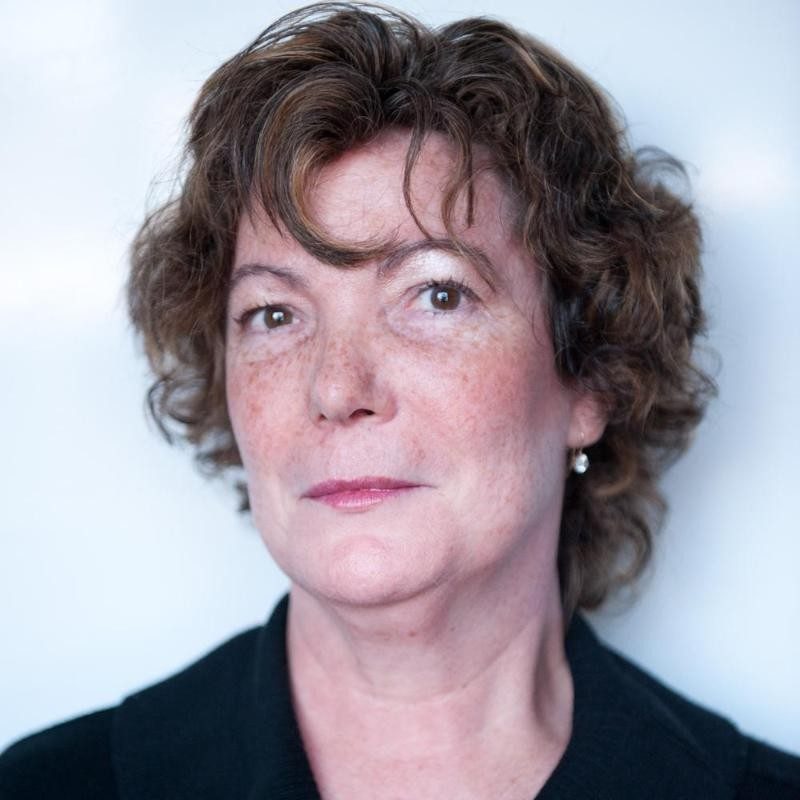
    Professor Lisa Waller

    Professor Lisa Waller

    Associate Dean, Communication

    • Location City Campus Australia
    • Department School - Media & Communication
    I am the Associate Dean of Communication in the School of Media and Communication where I lead a large team of academics who teach and research across Advertising, Digital Communication, Journalism and Public Relations. I also lead the RMIT Information Integrity Hub, which is dedicated to empowering people and communities to be critical media producers and consumers, and to advance an information ecosystem that promotes accurate, trustworthy and reliable information through education, civic engagement and research that is applied, inclusive and impactful. My research and PhD supervision practice centres on Journalism. I've been a chief investigator on 5 Australian Research Council projects, including Discovery and Linkage grants. I'm currently the leading chief investigator on the DP 'Democratic Promissory Representation: Election Promises in Australia', which has a focus on the role of political journalism in public perceptions of government performance. My previous work has contributed fresh theoretical insights on First Nations peoples and news and local journalism. IMore recently, my research has centred on fact-checking, media and crime and explored how a 'rural imaginary' shapes media representations of regional Australia. I've published many articles and chapters since 2007. My book publications include: Local Journalism in a Digital World (Palgrave) and The Dynamics of News and Indigenous Policy in Australia (Intellect). Industry experience: Prior to joining RMIT University, I worked in the School of Communication and Creative Arts at Deakin University from 2007 to 2019. I bring news industry experience to both teaching and research, having worked in various editorial roles at major news outlets including The Canberra Times, The Australian and The Australian Financial Review.
    A hand holding phone with Instagram on screen against background of skyscrapers

    Contact us

    For more information on Public Communication Research and Advisory Services contact us at: publiccommunication@rmit.edu.au

    aboriginal flag float-starttorres strait flag float-start

    Acknowledgement of Country

    RMIT University acknowledges the people of the Woi wurrung and Boon wurrung language groups of the eastern Kulin Nation on whose unceded lands we conduct the business of the University. RMIT University respectfully acknowledges their Ancestors and Elders, past and present. RMIT also acknowledges the Traditional Custodians and their Ancestors of the lands and waters across Australia where we conduct our business - Artwork 'Sentient' by Hollie Johnson, Gunaikurnai and Monero Ngarigo.

    Learn more about our commitment to Aboriginal and Torres Strait Islander peoples