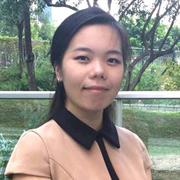
Dr. Jing Fu
Details
 College: School of Engineering
 Department: School of Engineering
 Campus: City Campus Australia
 jing.fu@rmit.edu.au
 ORCID: 0000-0003-4615-8391
Open to
- Masters Research or PhD student supervision
About
I am consistently seeking prospective PhD students interested in research in stochastic modelling, stochastic optimisation, multi-agent reinforcement learning, and resource allocation, as well as their applications to telecommunications and signal processing. Students with strong mathematical, analytical, and/or engineering backgrounds are particularly encouraged to get in touch, jing.fu@rmit.edu.au, to discuss potential research opportunities.

Academic positions
- Postdoctoral Research Associate
- The University of Melbourne
- School of Mathematics and Statistics
- Australia
- 1 Jul 2016 – 31 Dec 2019

Supervisor projects
- Neural Networks Artificial Intelligence and Machine Learning for Sensors and Telecommunications
- 11 Aug 2025
- Neural Networks Artificial Intelligence and Machine Learning for Sensors and Telecommunications
- 30 May 2025
- Cooperative Resource Allocation for Internet-of-Things (IoT) – Reinforcement-Learning-Based Algorithms
- 27 Feb 2025
- Adaptive Wireless Communication Techniques for Energy-Efficient Next-Generation Networks
- 20 Feb 2025
- Neural Networks Artificial Intelligence and Machine Learning for Sensors and Telecommunications
- 28 Nov 2024
- 6G Wireless and Mobile Communication with Artificial Intelligence
- 17 Jul 2024
- Neural Networks Artificial Intelligence and Machine Learning for Sensors and Telecommunications
- 30 Jan 2024
- Next generation mega satellite communication networks
- 1 Dec 2023
- Efficient Offloading in Multi-Access Edge Computing Systems
- 17 Jul 2023
- Aerial Terrestrial Communications using UAV Low and High Altitude Platforms (LAP/HAP)
- 22 Jun 2023

Research interests
Dr Jing Fu received the B.Eng. degree in computer science from Shanghai Jiao Tong University, Shanghai, China, in 2011, and the Ph.D. degree in electronic engineering from the City University of Hong Kong in 2016. She has been with the School of Mathematics and Statistics, the University of Melbourne as a Post-Doctoral Research Associate from 2016 to 2019. She has been a lecturer (assistant professor) in the Department of Electrical and Electronic Engineering, STEM College, RMIT University, since 2020. Her main areas of research interest are, both theoretically and numerically, stochastic optimization, restless bandits, coordinated multi-agent optimization, resource-intensive AI, and coordinated learning and control.
Tutorial presentations:
April 2026, "Restless bandit model with weakly coupled constraints: Tutorial: how to design asymptotically optimal algorithms - Fluid Approximation", [Online link]
Representative Publications/Articles:
[1] J. Fu*, B. Moran, J. Niño-Mora, “Weakly-Coupled Multi-Action Restless Bandits - Exponential Convergence in Probability”, preprint, arXiv:2604.15683, Apr. 2026.
Impact: It studies the behaviours of the general stochastic process and, most importantly, the design of policies that guarantee its convergence to an ideal trajectory as the problem size increases.
[2] J. Fu*, B. Moran, J. Niño-Mora, “Multi-Action Restless Bandits with Weakly Coupled Constraints: Simultaneous Learning and Control”, preprint, arXiv:2412.03326, Dec. 2024.
Impact: It advances the field by establishing fast convergence of key stochastic processes under simultaneous learning and control in fairly general scenarios, making notable progress on long-standing challenges in stochastic optimisation.
[3] J. Fu*, Z. Wang, J. Chen, “Coordinated Multi-Agent Patrolling with State-Dependent Cost Rates: Asymptotically Optimal Policies for Large-Scale Systems”, accepted by IEEE Transactions on Automatic Control, Dec. 2024.
[Online Available][Code for Sharing]
Impact: Annotation: For the first time, it proved fast convergence to optimality in highly dimensional spatial optimization.
[4] J. Fu*, X. Wang, Z. Wang, M. Zukerman, “A Restless Bandit Model for Energy-Efficient Job Assignments in Server Farms”, IEEE Transactions on Automatic Control, Vol. 69, Issue 9, pp. 5820 – 5835, Sep. 2024.
Impact: It advances the studies in job/traffic scheduling by approaching optimality of large, hard problems without necessitating exact intractable solutions.
[5] J. Fu*, B. Moran, P. Taylor, “A Restless Bandit Model for Resource Allocation, Competition and Reservation”, Operations Research, vol. 70, no. 1, Jan.-Feb. 2022.
Impact: It proved a non-trivial condition, which has remained open since 1990, in a range of practical scenarios.
[6] J. Fu*, B. Moran, “Energy-Efficient Job-Assignment Policy with Asymptotically Guaranteed Performance Deviation”, IEEE/ACM Transactions on Networking, vol. 28, no. 3, pp. 1325-1338, Jun. 2020.
Impact: It improves [5] by proving a significantly tighter bound over the performance degradation of proposed algorithms, enhancing the real-world impacts.



