Tackling complex sustainability problems with cross-disciplinary expertise
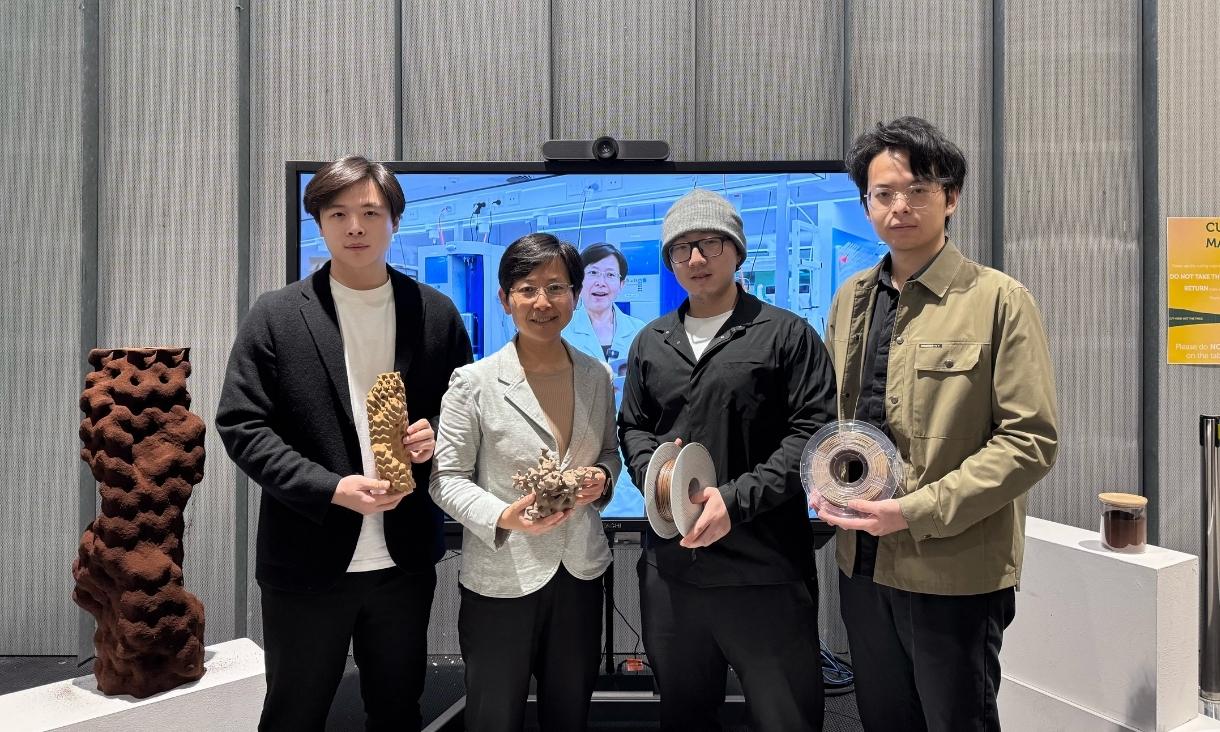
Jia said her team at the Centre for Atomaterials and Nanomanufacturing (CAN) had been looking at how they could use existing materials wisely, particularly waste materials that are used in everyday life.
"We use a lot of 3D printing in our work, and that process typically uses a lot of plastics made from cornflour or less eco-friendly materials," said Jia.
"Given Melbourne is famous for its coffee culture, we thought this could be a good material to investigate.
"Coffee is a rich biomaterial and a good fertiliser so we believed it could provide a promising base to make the new material biodegradable."
"Working with the architectural researchers has been a perfect combination because while we are looking at the smaller scale, Nic Bao's team is looking at the larger scale and bringing all the expertise in design and architecture to the project," Jia said.
Team member and HDR candidate Kang Liu said the collaboration helped to connect architectural form with material function.
"Architects are often asked why complex forms are needed, particularly when they may cost more," said Liu.
"This project helps show that complexity can be connected to function and material performance.
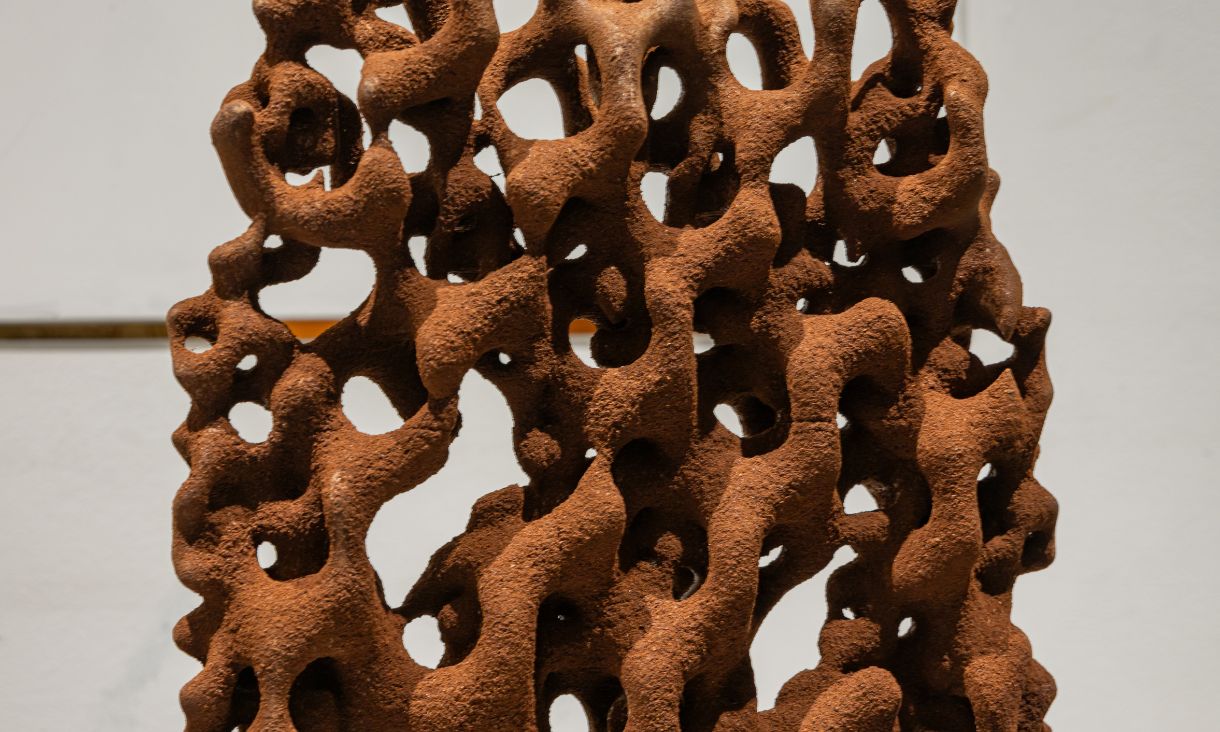
"With coffee grounds, the material can support sound absorption, insulation, scent and appearance, giving architects another layer to work with."
Dr Nic Bao, Director of the FormX Research Lab in RMIT's School of Architecture and Urban Design, said the project demonstrates how architecture can help translate emerging materials into real-world applications.
"One of the most exciting aspects of this project is the collaboration between material science and architecture," said Bao.
"The science team brings deep expertise in developing and understanding the material, while our team explores how the material properties can inform computational design, additive manufacturing and larger-scale architectural applications.
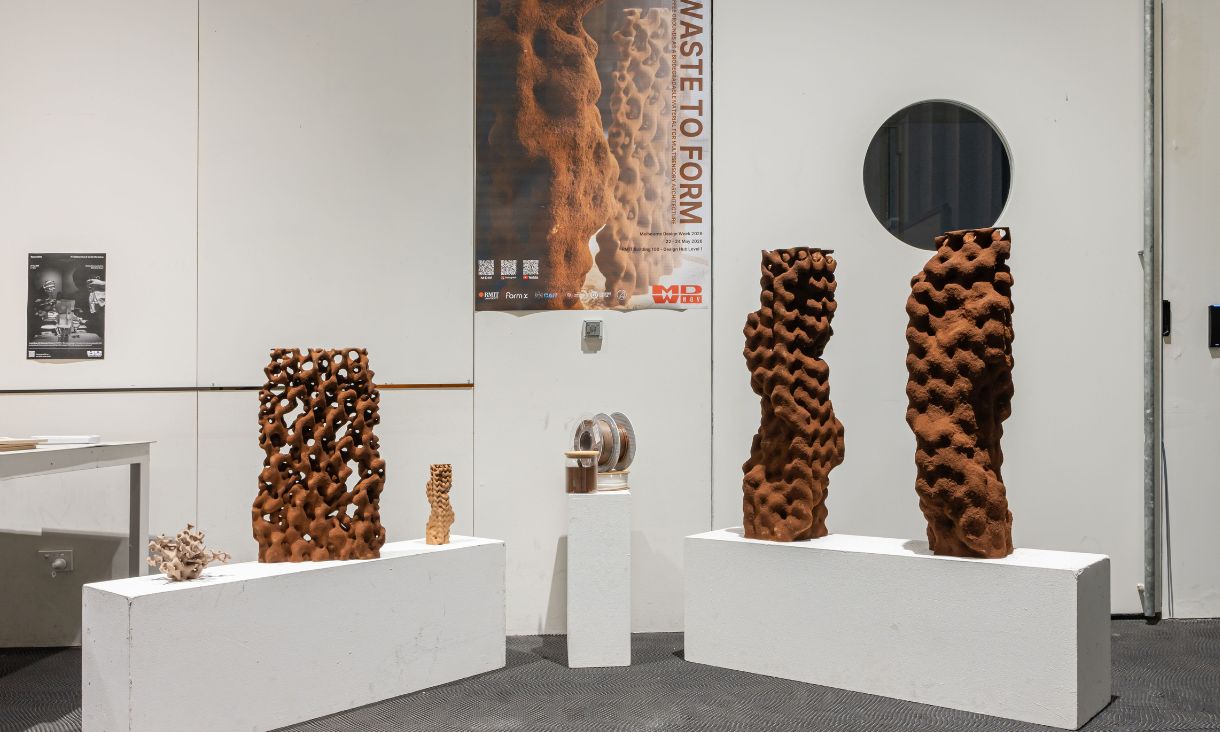
"The full-scale demonstrator is an important step in testing how a waste-derived material can move from laboratory research towards an architectural system," he said.
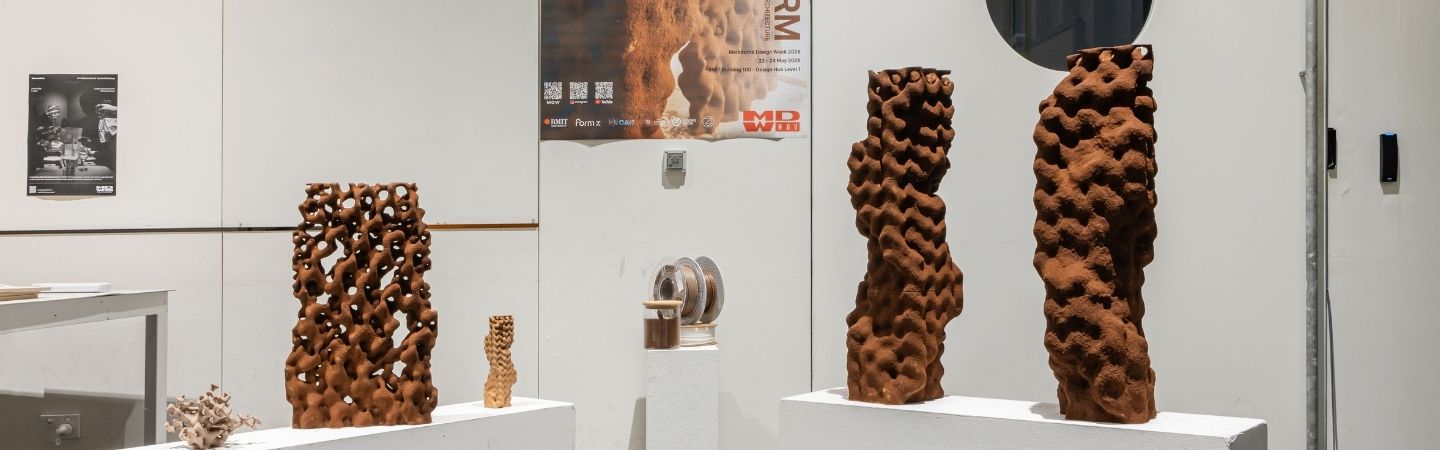
Jia said the coffee grounds had increased material strength, while also providing benefits from the rich coffee colour and smell. The project resulted in locally collected spent coffee grounds being transformed into a biodegradable 3D-printing material and then into a full spatial demonstrator presented publicly through Melbourne Design Week.
"This provides a tangible example of circular-economy research in action, showing how an everyday waste stream can be converted into a useful material for design, advanced manufacturing and potential future building applications," she said.
The project has also attracted recognition in industry publications. It was featured by Modscape + Modbotics, highlighting its potential for prefabrication, advanced manufacturing and circular design. The project was also selected to feature as a cover image by the Architectural Intelligence journal.