
The Digital Hostility and Disinformation Lab is a group of researchers who foster cross-sector partnerships to address the social and ethical implications of contemporary forms of digital hostility, online abuse and harassment, mis/disinformation, doxxing, deepfakes, dark participation and other forms of platform misuse, all of which are toxifying the contemporary digital ecology.
We conduct and lead projects, pilot studies, consultancies and independent research that builds on the lived experiences of everyday users to help provide governments, digital stakeholders, advocates and the general community with data, analyses and roadmaps for new policies and practices that help to detoxify the digital experience.
We undertake people-centric research on digital harms, and draw on comprehensive analyses to recommend regulatory, policy, personal wellbeing remedies and employer/organisational protections, and actively engage with stakeholders to participate in safety-by-design solutions.

Email: rob.cover@rmit.edu.au


Online cults and fringe groups exploit digital environments to spread disinformation and recruit members, leaving them vulnerable to scams and radicalisation. This policy brief highlights the need for increased critical literacy skills, research, infrastructure, and community support to counter these digital harms.

Current penalty frameworks for digital hostility—such as online abuse, harassment, and threats—are inconsistent, fragmented, and often ineffective in deterring harmful behaviour. Addressing these shortcomings requires clearer legal definitions, harmonised penalties, and reforms that centre victim wellbeing alongside deterrence and accountability.

Poorly designed reporting systems on social media platforms contribute to the underreporting of harmful content or online abuse. Read our recommendations for improved digital interfaces and better user education to reduce exposure to digital harms and facilitate effective reporting.
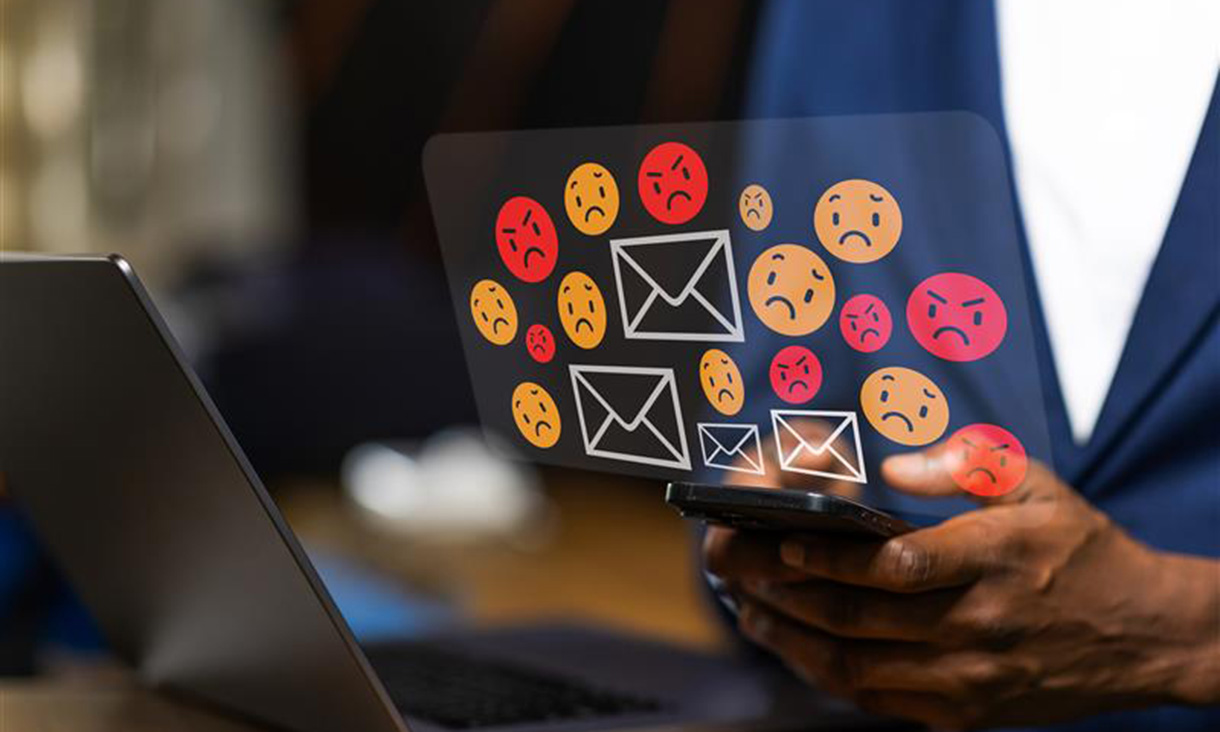
This research summary brief highlights the increased risk of digital harm faced by people who were born in Australia but speak a language other than English at home, which may be driven by extremist views and disinformation.

Mobile media practices are dynamic, diverse, and rapidly evolving in response to constant technological development across platforms, devices and infrastructure. The Mobile Media Lab builds and extends upon the globally recognised ethnographic research of Larissa Hjorth, Ingrid Richardson and others, who have collaborated for over 15 years on the development of innovative mobile media methods. The Lab explores new ways of capturing and interpreting the diversity of mobile media practices in everyday life contexts.


The Diversity, News, and AI Lab is dedicated to advancing inclusive AI futures that promote democratic values. Led by Professor Haiqing Yu and Associate Professor James Meese, the lab operates at the intersection of two critical research areas: the deployment of AI in diverse communities, and the role that AI plays in shaping public discourse and access to quality information.
The team’s research programme includes a range of interconnected projects, such as prioritising quality news in recommendation systems; understanding the experiences of linguistic and culturally diverse people who use AI applications and news recommendation systems to make informed decisions; and developing strategies to integrate diverse perspectives in AI technologies through technical innovations and qualitative research.
With a growing community of PhDs and post-docs and a network of collaborators across the Asia-Pacific and Europe, the Lab conducts impactful research and engages with communities and policymakers, sharing insights on how to enhance AI systems to foster social cohesion.


Email: haiqing.yu@rmit.edu.au

The Technocultures, Relations, Agents, Consumption, and Exchange (TRACE) lab is an interdisciplinary research initiative situated at the intersection of consumer culture, digital marketplaces, and ethnography.
TRACE Digital investigates how digital platforms, technologies, market actors, and cultures shape and transform contemporary practices of consumption, production, exchange, and cultural meaning-making.
The lab applies advanced ethnographic methodologies to explore how digital environments restructure consumer identities, community dynamics, marketplace interactions, and cultural formations. It seeks to unpack the socio-cultural implications of digital ecologies, including emerging practices around sharing economies, platform-based marketplaces, online communities, market-mediated identities, and digitally mediated relationships.
Leveraging RMIT’s expertise in understanding consumption through cultural, historical, and social lenses, alongside DERC’s strengths in qualitative, ethnographic, and digital research methodologies, TRACE Digital provides deep insights into how digital cultures and platforms influence consumer practices, marketplace experiences, and the broader socio-cultural landscape. This collaborative environment fosters cutting-edge critical research capable of informing policy, industry practice, and theoretical advancements in digital consumer culture.


RMIT University acknowledges the people of the Woi wurrung and Boon wurrung language groups of the eastern Kulin Nation on whose unceded lands we conduct the business of the University. RMIT University respectfully acknowledges their Ancestors and Elders, past and present. RMIT also acknowledges the Traditional Custodians and their Ancestors of the lands and waters across Australia where we conduct our business - Artwork 'Sentient' by Hollie Johnson, Gunaikurnai and Monero Ngarigo.
Learn more about our commitment to Aboriginal and Torres Strait Islander peoples