


Australia or the UK? 6 things to consider when choosing your university

Choosing the right destination for university studies is a big decision, and can have an impact on both your academic success and personal growth.

When making your decision, it’s important to explore locations and universities based on factors that are important to you — whether that’s academic reputation, quality of student life, or industry connectedness. It’s all about empowering you to make the best decision for your unique educational journey. And while Australia and the UK are both excellent options for tertiary study, there are some key differences between the two.  

Here are six things to consider when choosing between Australia or the UK.

RMIT students

1. Student lifestyle

Australia provides students with a relaxed and vibrant lifestyle, and Melbourne has been ranked as Australia's 'Best Student City' by QS every year since 20151. Often referred to as the cultural capital of Australia, it’s easy to see why.

Melbourne is alive with music, street art, theatre, comedy, festivals, and a culinary scene that includes cuisines from every corner of the globe.

Home to over 250,000 international students2, Melbourne is a welcoming and inclusive destination where students from all backgrounds thrive. The city’s efficient public transport, green spaces, and walkable layout allow students to explore freely and safely.

Australia is an astoundingly beautiful country, so I wished to study here and explore it at the same time. Melbourne is a city that is very easy to settle into. I was surprised by how quickly I could make friends and get used to living independently.
– Mihika, an RMIT student from India

Additionally, Melbourne weather is mild, with winter (June - August) experiencing average maximum temperatures around 12 to 14°C. Meaning there’s always things to things to do, even when it’s chilly!

In comparison, UK student life tends to revolve around university clubs, societies, and pub culture. While many UK universities offer historic charm and tradition, the social environment can feel somewhat limited during the long dark winters. In London, for example, the average winter temperatures between December and February typically range from 2°C to 9°C. 

Weather, cost of entertainment, and distance between campuses and city centres can sometimes limit exploration. 

Melbourne, on the other hand, encourages an active, outdoor lifestyle supported by an array of cultural and recreational experiences. Whether it’s visiting the coast, watching an AFL match, or grabbing a late-night meal in Chinatown, students have endless options to enjoy. 

2. Cost of living

While both Australia and the UK are often perceived as expensive places to live, Melbourne provides a strong balance between cost and quality of life. International students typically spend around $580 per month on things like groceries, transport and entertainment, depending on lifestyle choices3

With access to affordable public transport, discounted student services, and a wide range of budget-friendly entertainment and dining, students in Melbourne can enjoy a great lifestyle on a modest budget. 

In contrast, students in the UK — especially those in larger cities like London — can have higher monthly expenses, ranging from £1,300/month in London to £900–1,200/month in other regions4. 

In Melbourne, the cost of living is more manageable when balanced against the city’s livability, safety, and earning potential for students — making it an ideal location for those seeking both affordability and quality.

foundation_studies_students_melbourne_laneway_1220x732

3. Teaching style

Australia's universities offer a modern and flexible approach to higher education. Undergraduate degrees usually take three years to complete, with options for honours years, double majors, or industry placements.

Universities like RMIT emphasise hands-on learning, real-world application, and interdisciplinary learning. Many courses also offer students the flexibility to complete a major or minor (or both!) in a specific area of study. Majors can help you gain a deeper understanding of your chosen discipline, while minors allow you to tailor your learning experience to suit your goals and give you an edge in your chosen career.  

In contrast, the UK’s academic system, while rich in tradition and academic rigour, is more structured and exam-focused. Undergraduate degrees are also typically three years (four in Scotland), but they often offer fewer elective choices and are less focused on job-readiness. 

For students who prefer hands-on learning, internships, and coursework-based assessment, the UK model may feel a bit rigid or restrictive.  

4. Accommodation

Accommodation options in Australia are varied, accessible, and tailored to suit student needs. Whether you prefer to live in purpose-built student accommodation or private rentals, there are plenty of options available within walking distance, or a short tram or train ride from major universities like RMIT.

The average cost of renting a one-bedroom unit in Melbourne is $400 - 550 per week5, with some providers offering fully furnished student apartments with amenities like study areas, gyms, and community events.   

Most study destinations in the UK offer ‘university halls of residence,’ or on-campus accommodation, particularly for first-year students. These can be expensive, especially in central locations.

In London, for example, student accommodation in halls averages £727/month, while private options can exceed £1,000/month6. Outside of London, prices are slightly lower, but students may still face limitations in choice, availability, and location. 

Melbourne’s diversity of accommodation options supports a more independent student lifestyle, with greater control over living conditions and proximity to bustling city life.

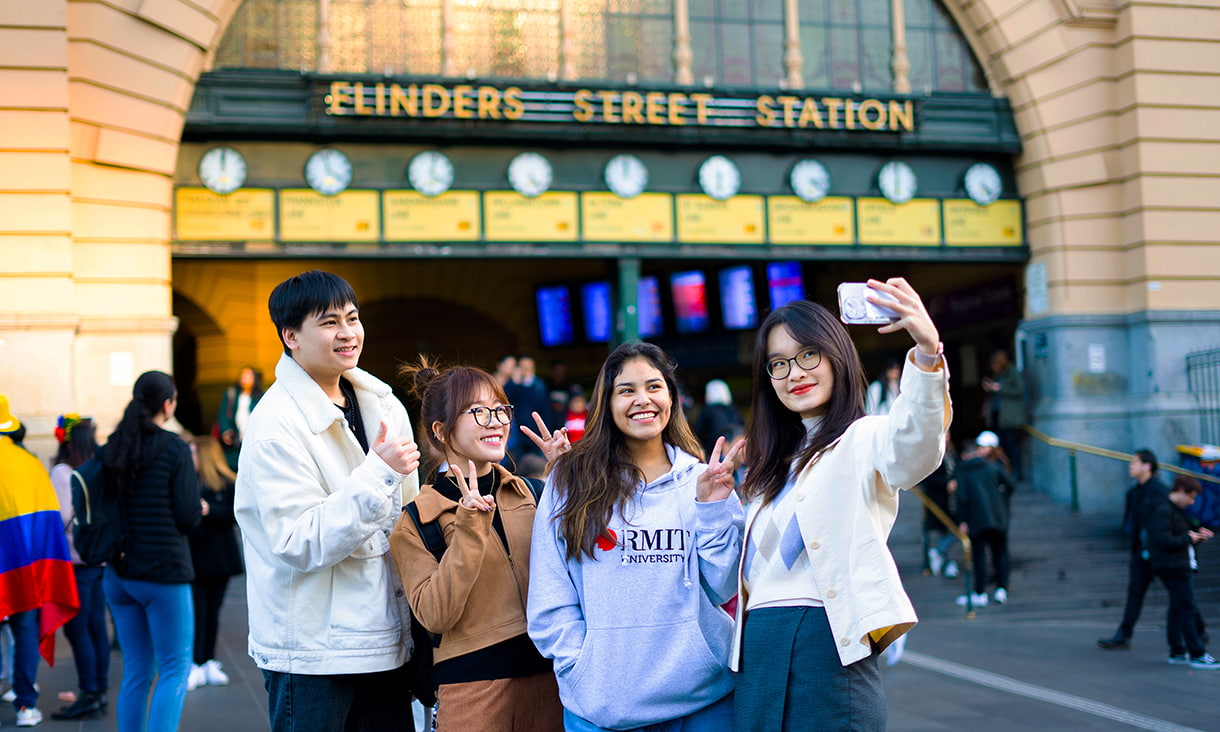
Four international students taking a selfie outside Flinders St Station.

5. Work while studying

Australia offers excellent part-time job opportunities for international students. Under current visa regulations, students can work up to 48 hours per fortnight during the semester and unlimited hours during breaks. With the minimum wage at AUD$24.95 per hour7, students can earn a good income while gaining invaluable local work experience. 

“Getting a part-time job here was pretty easy!” says Ivy, an RMIT student from Vietnam. 

“So many places I see are hiring people in the food and beverage industry or in fashion or retail, and this gives us a chance to interact with people, improve our English and improve our soft skills.” 

In the UK, international students on Tier 4 visas can work up to 20 hours per week during term time, and full-time during scheduled breaks. However, the minimum wage is significantly lower in the UK than in Australia, at £10.00 per hour as of 2025 (for 18-21 year olds)8. In addition, job availability — especially in smaller cities — can be inconsistent.

In Melbourne, industries like hospitality, retail, tutoring, and customer service regularly hire students, making it easy to balance study and employment. The higher wage and more generous working hours also offer students greater financial independence and security. 

6. Start dates and course flexibility

The flexible academic calendars of Australian universities are a major bonus.

Most universities, including RMIT, offer multiple intakes, including Semester 1 (February/March), Semester 2 (July), and for some courses, Semester 3 (September/October). This allows students to start their studies at a time that aligns with their personal schedule or visa processing timeline — ideal for students who want to avoid unnecessary delays.

By contrast, the vast majority of UK universities have a single major intake in September/October. While some postgraduate programs offer January starts, undergraduate students typically have fewer options. Missing the main intake can mean waiting another year to begin studies. 

Australian universities’ multiple intakes reflect a flexible approach to learning — one that supports convenience and accessibility from the moment you apply. 

Thinking of studying in Melbourne? 

With a relaxed student lifestyle, flexible learning opportunities, diverse living options and many opportunities for paid work, Melbourne is the perfect place to continue your learning journey.

  Australia UK
Student lifestyle Encourages an active, outdoor lifestyle supported by an array of cultural and recreational experiences. Weather is mild year-round. Student life tends to revolve around university clubs, societies, and pub culture. Weather is very cold throughout the winter months.
Cost of living International students typically spend around $580 per month on things like groceries, transport and entertainment, depending on housing and lifestyle choices. Students in the UK — especially those in larger cities like London — can have higher monthly expenses, ranging from £1,300 per month in London to £900–1,200 per month in other regions.
Teaching style Emphasis on hands-on learning, real-world application, and interdisciplinary learning. Many courses also offer students the flexibility to complete a major or minor. Academic system is more structured and exam-focused. Undergraduate degrees often offer fewer elective choices and are less focused on job-readiness. 
Accommodation The average cost of renting a one-bedroom unit in Melbourne is $400 - 550 per week, with some providers offering fully furnished student apartments with amenities like study areas, gyms, and community events. In big cities like London, student accommodation in halls averages £727 per month, while private options can exceed £1,000 per month. 
Working while studying Under current visa regulations, students can work up to 48 hours per fortnight during the semester. International students on Tier 4 visas can work up to 20 hours per week during term time.
Course flexibility Most universities, including RMIT, offer multiple intakes, including Semester 1 (February/March), Semester 2 (July), and for some courses, Semester 3 (September/October). The vast majority of UK universities have a single major intake in September/October.

Story: Sophie MacGillivray


Sources

1. QS Best Student Cities

2. Study Melbourne, ‘Australia’s Best Student City’, accessed 2025

3. Created using the Victorian Government’s Cost of Living calculator, accessed 2025

4. ‘Navigating the Cost of Living in the UK for International Students in 2025’, The Uninist, accessed 2025

5. Median rental data from realestate.com.au, accessed 2025

6. The Complete University Guide, ‘How much does uni accommodation cost?’ accessed 2025

7. Australian Fairwork Ombudsman, Minimum Wages 2025 

8. UK Government, National Living Wage Estimate 2025 


You may also be interested in...

aboriginal flag float-start torres strait flag float-start

Acknowledgement of Country

RMIT University acknowledges the people of the Woi wurrung and Boon wurrung language groups of the eastern Kulin Nation on whose unceded lands we conduct the business of the University. RMIT University respectfully acknowledges their Ancestors and Elders, past and present. RMIT also acknowledges the Traditional Custodians and their Ancestors of the lands and waters across Australia where we conduct our business - Artwork 'Sentient' by Hollie Johnson, Gunaikurnai and Monero Ngarigo.

More information