



Is a master’s degree worth it?

The short answer is yes! If you’re pursuing a means to elevate your career and gain in-demand expertise, then a master’s degree is an excellent option for you.

Postgraduate study is an investment in you and your career. A master’s degree in particular, is an excellent way for you to become an expert in your field and take greater control over your career trajectory. Whether you’re looking to secure a promotion, change industries or deepen your skills, a master's degree is your ticket to that future. 

Each person’s career path is different, so we’re here to help you discover if a master’s degree is right for you. Here are the benefits and considerations you should think about before applying.

In summary

A master's degree is an excellent option for those looking to change industries, secure a promotion or deepen their existing skillset with new expertise. They can provide you with the accreditation needed to land a specific professional role, and they can offer unexpected benefits, such as new industry connections and job opportunities.

The benefits of a master's degree

A master’s degree gives you the flexibility to change up your career

The thought of changing industries or careers may have you worried, but it is more common than you’d think. It’s also made much easier with a master’s degree. 

Stephen Carlton, an RMIT Juris Doctor student, decided to switch his career by changing from teaching to law. He wasn’t concerned about shaking up his life because he was excited and passionate about his new future. 

“What got me through study was that I enjoyed it immensely. It was interesting, challenging and had all the flavours required to keep me motivated,” Stephen said. 

It could mean a higher salary in your next role

According to the latest Graduate Outcomes Survey, postgraduate students have the highest likelihood of finding work after graduating compared to any other type of university study, with a 93.9% graduate employment rate.1  

Career flexibility and hireability aren’t the only things that make a master’s degree worthwhile.  The same survey shows that the median annual salary of postgraduate alumni is 36% higher than the median annual salary of undergraduate alumni1, proving that a master’s degree provides a wider range of opportunities for salary growth. 

You could secure an accreditation

If you're looking to stay in your industry, a master’s degree is also an excellent way to develop your skills while securing the specific qualifications needed to move into a more specialised role. 

Many master’s degrees offer formal accreditation or even membership with industry bodies, which is sometimes required for specialist roles. For example, graduates of the Master of Engineering (Electrical and Electronic Engineering) are eligible for graduate and professional membership of Engineers Australia.  

A master’s degree can open unexpected doors

This type of study can also be the key to entirely unexpected opportunities. You might discover a new interest while on a research trip overseas, or you could even find yourself making professional connections that give you entirely new career opportunities. 

Master of Data Science student Tanyya Varshney  says her course gave her the skills and theory she needed to become a data scientist while simultaneously building her practical industry experience.  

“The best thing about RMIT is its industry connections. Working on a project based on solving real-world problems led me to getting an internship at ANZ,” said Tannya.  

There are also opportunities to unlock new ways of working through master’s study. Master of Animation, Games and Interactivity student Janifer Lai described how RMIT’s practical approach to theory and research changed her approach to her process and her thinking. 

“It helped me enormously to discover and shape myself as a creative practitioner in the field."

You’ll build a network while you study

Learning from industry experts is a quintessential part of the postgraduate student experience at RMIT. You’ll not only have the chance to absorb their knowledge; you’ll also make connections with them and the other professionals in the room – your fellow students.  

The more time you’re willing to put into making connections while you study, the more benefits you’ll get out of them. This was certainly true for Stephen during his Juris Doctor. 

“I wasn’t just coming to sit in a classroom and be lectured at; there were practicing lawyers as well as academic staff, and that mix is really important. There are so many things you can do with a Juris Doctor, and my world opened up when I graduated.” 

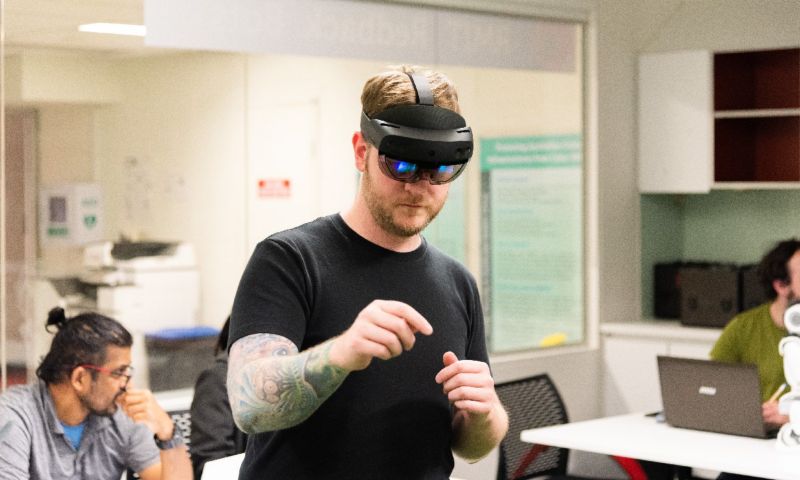
An RMIT computer science student using an augmented reality headset in a class.
RMIT business students working on a group project together.

What to consider

What about other study options?

A master’s degree isn’t the only postgraduate study option available at RMIT. As we’ve discussed, there are many benefits, but it is also the longest postgraduate option – which means that it isn’t for everyone. The question of whether a master’s is the right course for you is ultimately dependent on what you’re after.  

Graduate certificate

If a master’s is too much of a time commitment, or if you are only looking to develop a precise skillset, a graduate certificate might be right for you. Studying a graduate certificate will deepen your understanding a single topic or a specific professional skill. This study option takes six months to complete.

Graduate diploma

Graduate diplomas expand your knowledge and expertise, but not quite as much as a masters. They cover more topics in the twelve months it takes to complete than a graduate certificate. Graduate diplomas allow you to flexibly build towards a master’s degree or explore an area of study without committing to two years of full-time study.

Which master's is right for you?

There’s also the question of which kind of master’s degree is the right one for you. There are two different types: a masters by coursework and a masters by research.

Masters by coursework

A masters by coursework is similar in structure to most other university study options. It is a combination of lectures, classwork and assignments. There are still plenty of opportunities to complete research projects as part of a masters by coursework, but they will not be as large in scope as an entire masters by research.

This type of study is a great fit for those looking to gain the skillset and advanced knowledge for a specific field. For example, the Master of Cyber Security, which gives students the professional experience and skillset to work in any number of roles associated with digital security. 

While both types of master’s degrees are good for career progression, the masters by coursework will provide you with a broader set of expertise and skills. 

Masters by research

A masters by research is much more free-form and does not include classes in the traditional sense. A masters by research is a two-year (full-time) course that consists of a thesis or research project.

What this research project is about is up to the student and their supervisors. Master’s research projects vary from student to student, but they are always an original work. One student’s project may involve interviewing industry experts and exploring archival material; for another, it could be recording and interpreting first-hand experiences. It all depends on your field of study and your chosen thesis. This type of master's is perfect for those looking to expand their academic or research expertise.

Congratulations, you’re equipped with everything you need to know about a master’s degree! Now is the best time to start exploring RMIT’s postgraduate study options, if you haven’t already. 

References

Quality Indicators for Learning and Teaching. “Graduate Outcomes Survey: National report.” https://qilt.edu.au/surveys/graduate-outcomes-survey-(gos). Published May 2024.

Story: Jacob Johnston

You might also be interested in...

aboriginal flag float-start torres strait flag float-start

Acknowledgement of Country

RMIT University acknowledges the people of the Woi wurrung and Boon wurrung language groups of the eastern Kulin Nation on whose unceded lands we conduct the business of the University. RMIT University respectfully acknowledges their Ancestors and Elders, past and present. RMIT also acknowledges the Traditional Custodians and their Ancestors of the lands and waters across Australia where we conduct our business - Artwork 'Sentient' by Hollie Johnson, Gunaikurnai and Monero Ngarigo.

More information