Why jobs supporting others are more important than ever

As demand for mental health care and social support grows, so does the need for people who can improve wellbeing through healthcare and community support.

Share

More than 22% of Australians are estimated to experience difficulties with their mental health at some stage of their lives1, highlighting the ongoing need for professionals who can provide the right treatment, care and support. 

Supporting wellbeing extends beyond mental health care. Employment across Health Care and Social Assistance grew by 95,000 workers in the last year2, this is the highest employment growth of any industry over the next five years3.This is and will continue to create a wealth of opportunities for people looking to build career in supporting others. 

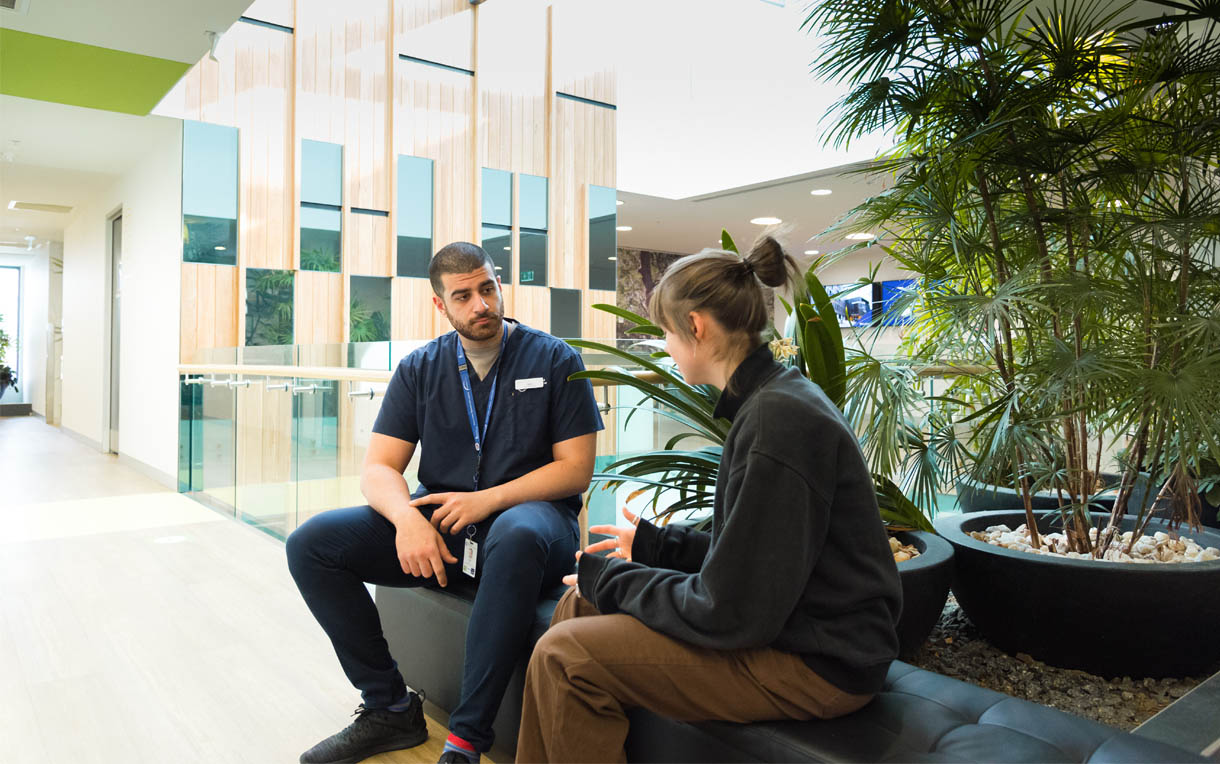
A RMIT mental health nursing student sitting with a patient

Why now is a great time to pursue a career supporting others? 

The 2026-27 Federal Budget commits $283.2 million over the next four years to strengthen Australia’s mental health and suicide prevention system4. This is to assist affordable access to primary health care and further develop digital mental health care services.   

Government investments in these services are only a part of the bigger picture. As demand continues to grow, skilled professionals are needed to deliver the care and support these services provide, by helping individuals, families and communities facing broader social challenges. 

Career insights also point towards strong opportunities in specialised areas. According to SEEK, there are more than 5,000 Mental Health Nurse jobs in Australia, with a typical salary of $100,000 a year5.

Mental health nursing is one such pathway for people looking to build or progress a career supporting the health and wellbeing of others, combining specialised healthcare with the opportunity to make an impact. 

You might be wondering what a mental health nurse role actually looks like. Beyond regular nursing duties, some of the key elements of mental health nursing roles are performing assessment and therapy, medication management, making recommendations to clients and their families, and helping clients learn to manage and understand how to work towards better health outcomes.   

Thanks to RMIT’s hands-on approach to teaching, in the Master of Mental Health Nursing you’ll gain all the experience you need during your study. This means you’ll learn in real-world environments and gain the practical skills needed to address the systemic need for mental health support and care before graduation. 
"My Master of Mental Health Nursing has been a transformative journey, both personally and professionally. The program's focus on contemporary therapeutic interventions for mental health consumers has equipped me with invaluable skills and knowledge as a clinician." - Liway Hountis, Mental Health Nurse 

RMIT mental health nursing graduates are eligible for accreditation by the Australian College of Mental Health Nurses. Graduates can also lead practice and seek promotion into clinical or management leadership roles beyond base-grade level nurse employment.   

Beyond the career opportunities, supporting people towards better health outcomes can make mental health nursing a rewarding profession.  

Creating lasting impact for people and communities 

Providing access to care is at the heart of all health professions, but a career in mental health can be particularly impactful for many groups in need. The Australian Department of Health has identified several of these key groups6, notably:  

  • Aboriginal and Torres Strait Islander communities  
  • People living in regional areas  
  • LGBTQIA+ Australians  
  • Young people aged 15–24  

The care that these groups require ranges from individual management of mental health issues to providing more mental health resources to communities so they can self-regulate equitably. While there is government and private investment in improving mental health infrastructure, there is also the need for more professionals looking to make a positive impact through a career in mental health.

 Susan Hua - RMIT Mental Health Nursing graduate
"I chose RMIT for my Graduate Diploma of Mental Health because it offered the perfect blend of clinical and research-focused courses that I could apply directly to my work. The university was incredibly supportive and provided a variety of engaging teaching and assessment methods to suit different learning styles." - Kayleigh Kerr, Mental Health Nurse

If this sounds like you, a  Master of Mental Health Nursing  or a  Graduate Diploma in Mental Health Nursing can provide the expertise to make it happen. RMIT is one of the longest-running and oldest providers of nursing education in Australia, with a history of industry partnership. 

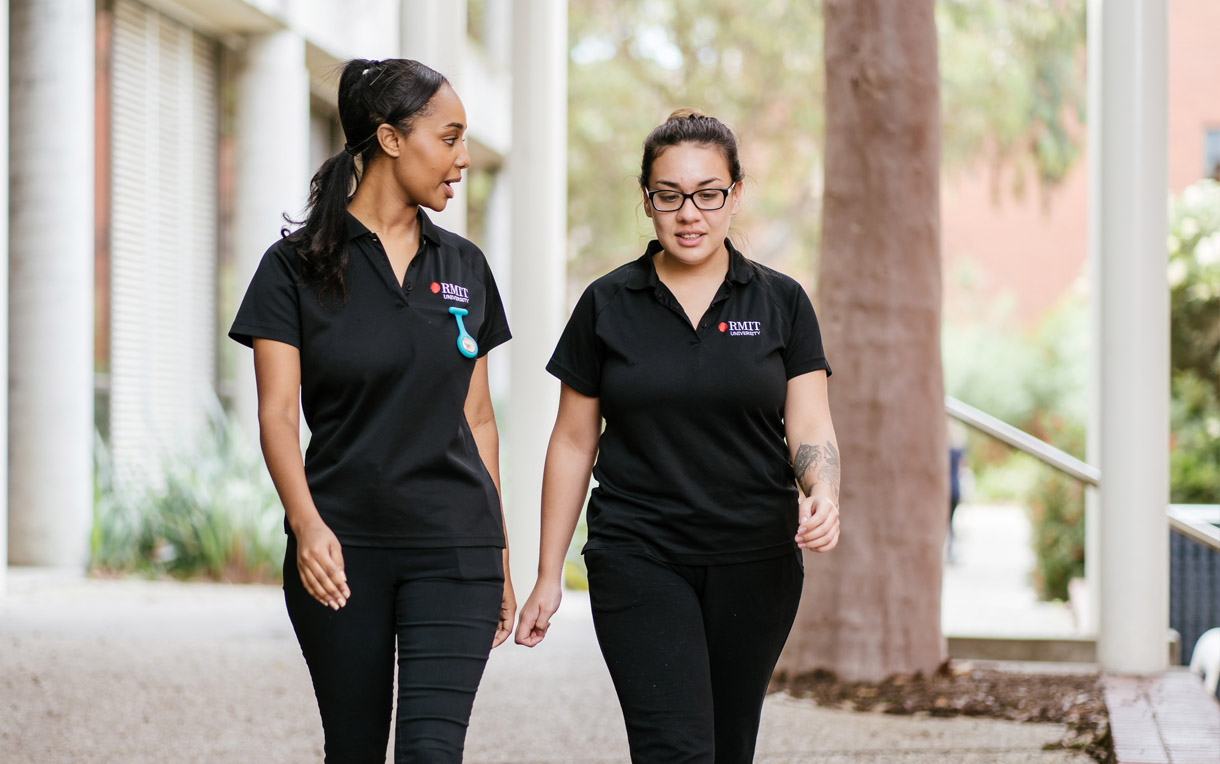
A pair of RMIT nursing students walking side-by-side

Supporting wellbeing can take many forms 

There’s no single career path for making a difference to people’s wellbeing. Depending on your interests and strengths, you could support someone directly through healthcare or work with individuals and communities to address the broader social factors affecting their lives – it all counts! 

If you’re drawn to the idea of creating social impact, advocating for change, or help shape programs that affect communities, you can explore a career in social science. Employment for counsellors is projected to grow by roughly 15.1% through 2028, adding hundreds of new roles7. RMIT’s Bachelor of Social Science can provide a pathway into work that sees wellbeing through a broader social lens. 

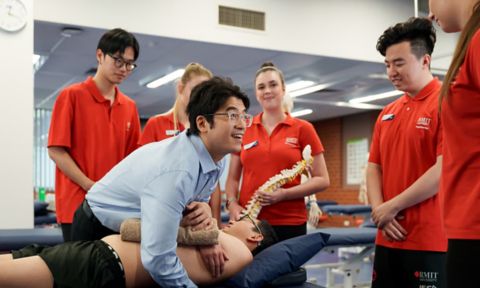
Beyond social and mental factors, wellbeing can also mean helping people manage their pain, movement and physical function. Osteopathy is one such profession, where you could work with patients to manage musculoskeletal conditions, as well as supporting rehabilitation and lifestyle management. RMIT’s Master of Clinical Osteopathy, which builds on the Bachelor of Biomedical Science, combines clinical learning with real and simulated patient experiences to prepare graduates for professional osteopathic practice. 

No matter where your interests lie, different study pathways can lead to careers with the same purpose – supporting people to live better, healthier, and fulfilling lives.


Story: Saumya Sindhu


References

1 Australian Institute of Health and Welfare. ‘Prevalence and impact of mental illness’. Published August 2026. https://www.aihw.gov.au/mental-health/overview/prevalence-and-impact-of-mental-illness. 

2Jobs and Skills Australia, ‘Health Care and Social Assistance’. Accessed 20 August 2026, https://www.jobsandskills.gov.au/data/occupation-and-industry-profiles/industries/health-care-and-social-assistance. 

3Jobs and Skills Australia,’ Employment Projections’, Accessed 20 August 2026. https://www.jobsandskills.gov.au/data/employment-projections/industry. 

4NAB,’2026 Federal Budget – what it means for health’, Accessed 20 August 2026. https://business.nab.com.au/tag/federal-budget/2026-federal-budget--what-it-means-for-health. 

5SEEK,’Career Advice Mental Health Nurse’, Accessed 20 August 2026. https://au.seek.com/career-advice/role/mental-health-nurse. 

6Australian Government, Department of Health and Aged Care. ‘Mental health in Australia’. Accessed 20 August 2026. https://www.health.gov.au/topics/mental-health-and-suicide-prevention/mental-health-in-australia.    

7Jobs and Skills Australia,’ Industry Profiles Counsellors’, Accessed 20 August 2026. https://www.jobsandskills.gov.au/data/occupation-and-industry-profiles/occupations-anzsco/2721-counsellors. 

You might also be interested in...

aboriginal flag float-starttorres strait flag float-start

Acknowledgement of Country

RMIT University acknowledges the people of the Woi wurrung and Boon wurrung language groups of the eastern Kulin Nation on whose unceded lands we conduct the business of the University. RMIT University respectfully acknowledges their Ancestors and Elders, past and present. RMIT also acknowledges the Traditional Custodians and their Ancestors of the lands and waters across Australia where we conduct our business - Artwork 'Sentient' by Hollie Johnson, Gunaikurnai and Monero Ngarigo.

Learn more about our commitment to Aboriginal and Torres Strait Islander peoples