Bachelor of Biomedical Science

Bachelor of Biomedical Science

UNDERGRADUATE

From cells to systems, discover the human body in health and disease to help create a better world.

Student type:
Learning mode:
On campus
Duration:
Full-time 3 years
Part-time 6 years
Next intake:
February, July
Location:
Bundoora
Learning mode:
On campus
Entry score:

See admissions

Duration:
Full-time 3 years
Next intake:
February, July
Location:
Bundoora

Overview

Biomedical science forms the basis of our understanding of how human bodies function, and the responses of the body to diseases, exercise, diet, internal disturbances and environmental influences.

The Bachelor of Biomedical Science has been designed to equip you with a fundamental understanding of the human body, how it works and what goes wrong in disease. The degree includes core subjects that incorporate biomedical fields such as cell biology, biochemistry, anatomy, physiology, immunology and pathology to develop your core knowledge of the cellular and molecular processes that are fundamental to human function and the origins of disease. You’ll learn how diseases develop and how they can be prevented, treated or cured.

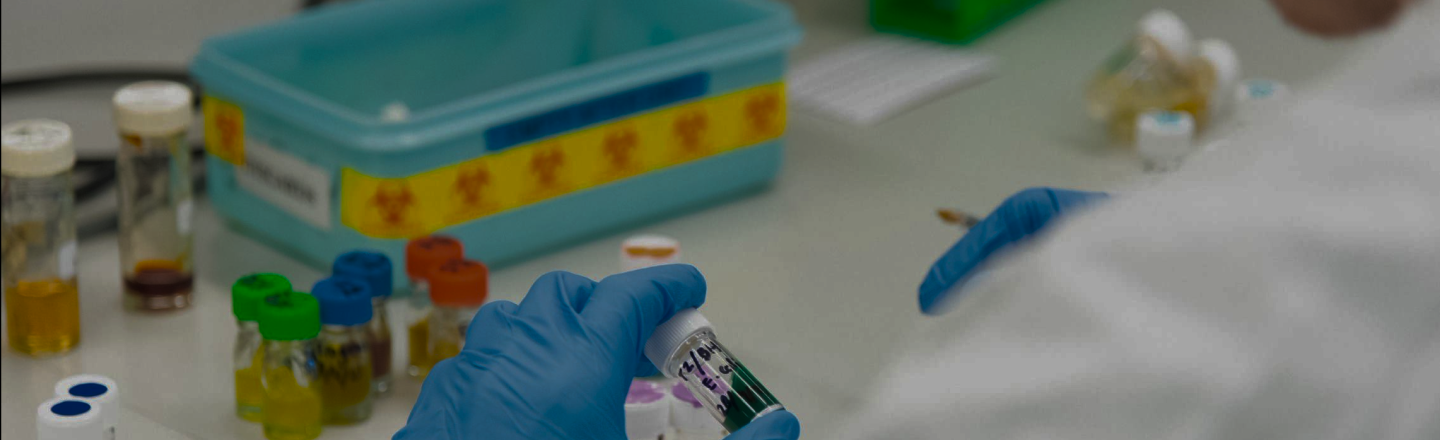
Studying in purpose-built facilities, you’ll get hands-on experience and expertise in biomedical science, including advanced medical research techniques using state-of-the-art technologies, ensuring you are job-ready when you graduate.

This biomedical science degree opens up a world of career pathways where you can contribute to creating a healthier world. Many biomedical science graduates undertake postgraduate study for careers in health sciences degrees such as medicine, physiotherapy and dentistry, or honours and higher degree research programs.

Why study biomedical science at RMIT?

Well-equipped facilities

Study in our state-of-the-art Digital Health Hub, using the latest technology to drive health innovation.

Learn from industry experts

Be taught by practising industry professionals, and benefit from their industry experience and contact networks.

Graduate job-ready

Undertake an industry placement in a university research laboratory or professional organisation, gaining practical, hands-on experience.

Details

How you will learn

The Bachelor of Biomedical Science emphasises practical skills, using the latest technology in modern, well-equipped laboratories, including state-of-the-art digital facilities for learning in-depth anatomy and physiology.

As a biomedicine student, you will learn in small classes with excellent staff-student ratios in an intimate campus setting.

Lectures, tutorials and seminars are used extensively in the degree to communicate knowledge and ideas about the role of biomedical science.

How you will be assessed

Ongoing assessment throughout this degree includes tests, essays, reports, oral presentations, group projects, research projects, laboratory projects and practical assignments.

Industry connections

Employers and industry professionals contribute to the ongoing development of this course. Their involvement ensures the degree remains relevant to your needs as a graduate and to the needs of employers.

Many of the academics within the degree are (or have been) practising industry professionals with extensive industry experience and contact networks. These connections enable RMIT to develop and deliver work-integrated learning (WIL) experiences as well as offer advice on professional careers.

The types of classes you have will depend on the course you’re studying. Classes are offered in various formats designed to provide meaningful engagement with staff, industry and peers and provide for access and use of spaces where learning can be applied and active, including an array of specialised equipment.

Most RMIT courses do not include passive large-scale classes such as lectures, instead the content traditionally provided in lectures is made available online. This may be in the form of readings, videos or other on-demand learning materials. This content will also support the basis of interactive learning that takes place in on-campus classes.

The world is constantly changing, and there are universal skills that can help you adapt to the evolving nature of work and global engagement.

As part of your study experience at RMIT, we provide 6 future-focused RMIT Capabilities:

  • Ethical Global Citizens
  • Connected
  • Adaptive
  • Digitally Adept
  • Expert
  • Critically Engaged.

RMIT Capabilities are built into your course as well as some of our extracurricular experiences. They inform the design and delivery of your learning activities and assessments, so by the time you graduate, you’ll be ready to apply these capabilities in your life and work.

Full- or part-time study is determined by how many credit points you are enrolled in during the semester. An undergraduate study load is considered part-time if you are enrolled in 24 credit points or fewer (approximately two subjects).

Once you are enrolled into this degree you can choose to switch to a part-time study load. This may impact your program duration and tuition fees. Please discuss your study options with your program manager prior to enrolment.

Important information for international students

International student visa holders can only study full-time.

Course structure and plan

Year 1

You’ll be introduced to the foundations of human health and study several general life sciences subjects to provide you with a sound scientific base. This includes cell biochemistry, microbiology, immunology, and human anatomy and physiology. You'll also begin developing skills in communication and professional practice and be introduced to factors that impact the health of individuals and communities, particularly our Indigenous peoples.

Year 2

You will then progress into the biomedical science core body of knowledge, genetics, molecular biology, pharmacology and toxicology, developing a strong understanding of the origins and mechanisms of disease at the cellular, tissue, organ and systems level in human pathophysiology. You will develop understanding of the fundamentals of biomedical science and the cellular and molecular processes that are fundamental to life. You'll also undertake the minor area subjects.

Year 3

Third year sees you study current health and disease topics in-depth with medical research academics and learn how to understand, interpret and apply research-based knowledge to the development of solutions to health and medical problems.  

Through your capstone subject, you'll have the opportunity to integrate, critically reflect on and consolidate what you have learnt in your degree. You'll work on a team-based or individual project that will develop your ability to critically analyse and use data from a variety of sources and communicate scientific information to different audiences. You'll also undertake a work-integrated learning experience in which your knowledge and skills will be applied and assessed in a real or simulated workplace context, and where feedback from industry is integral to your experience.

Work integrated learning (WIL)

Your work integrated learning subjects are designed to connect cutting-edge science with real-world health challenges and future careers.

Precision Medicine

In Precision Medicine, you’ll be introduced to how genetics and ‘omics’ technologies are changing the way we prevent, diagnose and treat disease, with a strong focus on cancer. You’ll explore tools like genome profiling, immunotherapy and CAR T cell therapy, and look at how pharmacogenomics and theranostics are reshaping modern, personalised healthcare through real-world case studies.

Research Project for Medical Sciences

In the Research Project for Medical Sciences, you’ll design and carry out a research-style project, learn to handle and interpret data, and communicate scientific findings to different audiences either individually or in a team. This subject is delivered in a real or simulated workplace context, with feedback from industry or the community, so you graduate with practical, job-ready skills for the biomedical and health sciences sector.

Depending on your future career aspirations, you’ll have the flexibility to choose your minor to compliment your area of interest.

Minor specialist areas include:

  • medical biotechnology
  • clinical health and disease.

Learning outcomes

Upon successful completion of the Bachelor of Biomedical Science, you will be able to demonstrate your broad and thorough knowledge of biomedical science, its concepts and relevance in real-world settings, using a scientific approach.

Your systematic thinking and high-level analytical skills will be complemented by digital and traditional tools and technologies, working together to address, analyse, and solve scientific and medical problems from a biomedical perspective. You will exhibit safe and ethical conduct that aligns with your in-depth knowledge of relevant regulatory frameworks.

In addition to your scientific skillset, you will also communicate and collaborate with diverse audiences on biomedical topics, applying and demonstrating integrity, inclusivity, and culturally safe practices, considering the experience and perspectives of First Nations peoples and the global community in all areas of your professional practice.

Choose a plan below to find out more about the subjects you will study and the course structure.

Bachelor of Biomedical Science
Program code: BP231

Title
Location
Duration
Plan code
CRICOS
Bachelor of Biomedical Science
Bundoora Campus
Full-time 3 Years, Part-time 6 Years
BP231P23
110985E
Location
Bundoora Campus
Duration
Full-time 3 Years, Part-time 6 Years
Plan code
BP231P23
CRICOS
110985E
Bachelor of Biomedical Science
Bundoora Campus
Full-time 3 Years
BP231P23
110985E
Location
Bundoora Campus
Duration
Full-time 3 Years
Plan code
BP231P23
CRICOS
110985E

Career

RMIT's Bachelor of Biomedical Science degree produces highly skilled graduates with advanced theoretical and practical knowledge in biomedical science.

This degree can lead you to work in a broad range of health and medical science sectors, particularly those focused on improving human health.

As a biomedical scientist, you will be able to pursue a career in sectors such as:

  • research in universities, hospitals and research institutes
  • pharmaceutical and biotechnology industries (clinical trials, quality control, data analysis, regulatory affairs, medical science liaison or medical affairs)
  • diagnostics
  • respiratory science
  • health advocacy, policy and administration
  • medical communications

You can also go on to pursue postgraduate studies in various health and medical science disciplines such as health and biomedical science (honours), physiotherapy, medicine and other health disciplines.

Professional memberships

Entry requirements and admissions

Applying for plan BP231P23 – Biomedical Science option

You must have successfully completed the Victorian Certificate of Education (VCE) (or equivalent qualification).

Prerequisites

Victorian Certificate of Education (VCE) units 3 and 4:

  • a study score of at least 25 in English other than EAL; or
  • a study score of at least 27 in English as an Additional Language (EAL)

or equivalent studies.

AND

Victorian Certificate of Education (VCE) units 3 and 4:

  • a study score of at least 20 in one of Maths: General Mathematics, Maths: Mathematical Methods, Maths: Specialist Mathematics or Physics

or equivalent studies.

AND

Victorian Certificate of Education (VCE) units 3 and 4:

  • a study score of at least 20 in one of Biology or Chemistry

or equivalent studies.

Guaranteed ATAR

For Semester 1 2027 applicants, this course has a Guaranteed ATAR (excluding adjustment factors).

This means that if you receive an ATAR equal to or above this and meet the course prerequisites, we will guarantee you an offer in this course.

If you receive an ATAR below this guarantee, you may still receive an offer, depending on the availability of places in this course and whether you are eligible to receive any adjustment factors.

Please note: For VTAC applicants to receive an offer, this course must be your highest eligible preference.

2026 ATAR*

The lowest selection rank plus any adjustment factors to receive an offer for semester 1 2026 for each stream are as follows:

Plan title Plan code 2026 ATAR* Semester 1 2026 Guaranteed ATAR
Bachelor of Biomedical Science - Generalist plan BP231P23 70.30* 70.00

*ATAR refers to the lowest selection rank to which an offer was made (including considerations of any adjustments).

Rankings and adjustment factors

Entry to this course is competitive. Eligible applicants are ranked and selected in order of merit based on their academic achievement plus any adjustment factors.

You may be eligible to receive adjustment factors which include equity access schemes and/or subject adjustments to a maximum of 28 aggregate adjustment points. For more information about what adjustment factors RMIT considers visit Admission to RMIT.

We will consider your entire academic record to determine your eligibility for entry. The highest level of education you have previously completed will usually determine how you are ranked.

Selection criteria by applicant type

Please select the highest level of education you have or will be completing in order to find out the selection criteria that applies to you, in addition to meeting the above entry requirements.

Entry to this course is competitive. Eligible applicants are ranked and selected in order of merit based on their academic achievement. You will be ranked on your ATAR plus any adjustment factors.

Adjustment factors available only to applicants currently studying Year 12

School Network Access Program (SNAP)

The SNAP access scheme is designed to increase tertiary participation by giving priority access to RMIT diploma and degree programs to eligible applicants currently studying Year 12 at a SNAP partner school.

Adjustment factors available only to applicants currently studying Year 12 or whose highest qualification is a completed Year 12.

Subject adjustments

A study score of 25 in any Information Technology, Maths: General Mathematics, Maths: Mathematical Methods, Maths: Specialist Mathematics or any Science equals 2 aggregate points per study.

Overall maximum of 8 points.

Regional adjustments

  • RMIT automatically allocates adjustment factors to applicants from a low socio-economic status area for all programs that select primarily on ATAR. 
  • Low socio-economic status areas are determined by applying the Australian Bureau of Statistics (ABS) Socio-Economic Index for Areas (SEIFA) Index of Education and Occupation.

Equity access schemes

  • Equity access schemes take into account personal information and location, difficult family and life circumstances, financial hardship and living with a disability or medical condition that may have impacted on an applicant's most recent academic performance.
  • Find out more about the eligibility requirements for each VTAC Equity schemes and scholarships and RMIT access categories.
  • If you are applying through VTAC you should apply for the Equity schemes and scholarships.
  • If you are applying directly to RMIT you should apply for RMIT Access. The system will prompt you to do this during your application.

Elite Athlete and Performer Program

The RMIT Elite Athlete and Performer Program supports eligible elite and emerging athletes and performers to achieve academic excellence while reaching high performance in sport or the performing arts, by allowing students to balance the demands of both their studies and their athletic or performing arts responsibilities.

Aboriginal and Torres Strait Islander peoples

The Indigenous Access Program supports your application to RMIT through an informal interview process where you will receive help from the Ngarara Willim Centre. Additional consideration will be given if you have relevant life, work, education or training experience.

Entry to this course is competitive. Applicants are ranked and selected in order of merit based on their academic achievement, e.g., level of TAFE qualification completed (including any adjustment factors).

We will consider your entire academic record to determine your eligibility for entry. The highest level of education you have previously completed will usually determine how you are ranked.

You will be assigned a selection rank (comparable to an ATAR) based on your highest completed qualification:

  • Advanced Diploma: 81
  • Diploma: 72
  • Certificate IV: 54

Skills for Tertiary Admissions Test (STAT)

You may satisfy the academic requirements by completing the STAT multiple choice. Your overall score will be converted to an equivalent ATAR and competitively ranked for selection.

Your STAT results are valid for 2 years prior to the commencement of your study.

If you are applying to RMIT as an applicant with vocational education and training study, you may sit the STAT multiple choice if you:

  • are 19 years of age or over as of 1 January in the year in which you will start your studies and
  • have not been enrolled in secondary studies for at least two years and
  • have no prior secondary school (Year 12), VET studies, HE studies or relevant work experience that can be considered for entry, or these do not meet the minimum academic requirements for the course.

You are still required to meet all other course prerequisites or equivalents.

Learn more about the STAT and STAT results.

You may be eligible for the following adjustment factors:

Equity access schemes

  • Equity access schemes take into account personal information and location, difficult family and life circumstances, financial hardship and living with a disability or medical condition that may have impacted on an applicant's most recent academic performance.
  • Find out more about the eligibility requirements for each VTAC Equity schemes and scholarships and RMIT access categories.
  • If you are applying through VTAC you should apply for the Equity schemes and scholarships.
  • If you are applying directly to RMIT you should apply for RMIT Access. The system will prompt you to do this during your application.

Elite Athlete and Performer Program

The RMIT Elite Athlete and Performer Program supports eligible elite and emerging athletes and performers to achieve academic excellence while reaching high performance in sport or the performing arts, by allowing students to balance the demands of both their studies and their athletic or performing arts responsibilities.

Aboriginal and Torres Strait Islander peoples

The Indigenous Access Program supports your application to RMIT through an informal interview process where you will receive help from the Ngarara Willim Centre. Additional consideration will be given if you have relevant life, work, education or training experience.

Entry to this course is competitive. Applicants are ranked and selected in order of merit based on their academic achievement, e.g., GPA (including any adjustment factors).

We will consider your entire academic record to determine your eligibility for entry. Previous fail grades in similar courses may affect your eligibility.

You must have satisfactorily completed at least four graded courses (subjects) (0.5 EFTSL) at an Australian undergraduate level (or overseas equivalent). You will be assigned a selection rank (comparable to an ATAR) based on your GPA from these studies.

Skills for Tertiary Admissions Test (STAT)

You may satisfy the academic requirements by completing the STAT multiple choice. Your overall score will be converted to an equivalent ATAR and competitively ranked for selection.

Your STAT results are valid for 2 years prior to the commencement of your study.

If you are applying to RMIT as an applicant with vocational education and training study, you may sit the STAT multiple choice if you:

  • are 19 years of age or over as of 1 January in the year in which you will start your studies and
  • have not been enrolled in secondary studies for at least two years and
  • have no prior secondary school (Year 12), VET studies, HE studies or relevant work experience that can be considered for entry, or these do not meet the minimum academic requirements for the course.

You are still required to meet all other course prerequisites or equivalents.

Learn more about the STAT and STAT results.

Personal statement

If you have been excluded from a course due to academic progress or have previous fail grades, you are required to submit a personal statement outlining the strategies you will adopt to ensure academic success.

If you are applying to RMIT through VTAC you can complete and submit the VTAC personal statement via your online VTAC account.

If you are applying direct to RMIT you can upload your completed personal statement via your online direct application.

You may be eligible for the following adjustment factors:

Equity access schemes

  • Equity access schemes take into account personal information and location, difficult family and life circumstances, financial hardship and living with a disability or medical condition that may have impacted on an applicant's most recent academic performance.
  • Find out more about the eligibility requirements for each VTAC Equity schemes and scholarships and RMIT access categories.
  • If you are applying through VTAC you should apply for the Equity schemes and scholarships.
  • If you are applying directly to RMIT you should apply for RMIT Access. The system will prompt you to do this during your application.

Elite Athlete and Performer Program

The RMIT Elite Athlete and Performer Program supports eligible elite and emerging athletes and performers to achieve academic excellence while reaching high performance in sport or the performing arts, by allowing students to balance the demands of both their studies and their athletic or performing arts responsibilities.

Aboriginal and Torres Strait Islander peoples

The Indigenous Access Program supports your application to RMIT through an informal interview process where you will receive help from the Ngarara Willim Centre. Additional consideration will be given if you have relevant life, work, education or training experience.

Entry to this course is competitive. Applicants are ranked and selected in order of merit based on their academic achievement, e.g., Skills for Tertiary Admissions Test (STAT) score (including any adjustment factors).

You must have successfully completed the Victorian Certificate of Education (VCE) (or equivalent qualification) and meet the stated prerequisites. 

Work and life experience does not provide any additional consideration for entry to this course. You may satisfy the academic requirements by completing the STAT multiple choice.

Skills for Tertiary Admissions Test (STAT)

You may satisfy the academic requirements by completing the STAT multiple choice. Your overall score will be converted to an equivalent ATAR and competitively ranked for selection.

Your STAT results are valid for 2 years prior to the commencement of your study.

If you are applying to RMIT as an applicant with vocational education and training study, you may sit the STAT multiple choice if you:

  • are 19 years of age or over as of 1 January in the year in which you will start your studies and
  • have not been enrolled in secondary studies for at least two years and
  • have no prior secondary school (Year 12), VET studies, HE studies or relevant work experience that can be considered for entry, or these do not meet the minimum academic requirements for the course.

You are still required to meet all other course prerequisites or equivalents.

Learn more about the STAT and STAT results.

You may be eligible for the following adjustment factors:

Subject adjustments

A study score of 25 in any Information Technology, Maths: General Mathematics, Maths: Mathematical Methods, Maths: Specialist Mathematics or any Science equals 2 aggregate points per study.

Overall maximum of 8 points.

Equity access schemes

  • Equity access schemes take into account personal information and location, difficult family and life circumstances, financial hardship and living with a disability or medical condition that may have impacted on an applicant's most recent academic performance.
  • Find out more about the eligibility requirements for each VTAC Equity schemes and scholarships and RMIT access categories.
  • If you are applying through VTAC you should apply for the Equity schemes and scholarships.
  • If you are applying directly to RMIT you should apply for RMIT Access. The system will prompt you to do this during your application.

Elite Athlete and Performer Program

The RMIT Elite Athlete and Performer Program supports eligible elite and emerging athletes and performers to achieve academic excellence while reaching high performance in sport or the performing arts, by allowing students to balance the demands of both their studies and their athletic or performing arts responsibilities.

Aboriginal and Torres Strait Islander peoples

The Indigenous Access Program supports your application to RMIT through an informal interview process where you will receive help from the Ngarara Willim Centre. Additional consideration will be given if you have relevant life, work, education or training experience.

Additional information

Non-academic abilities you'll need to complete this course

The following information outlines the tasks you will be required to undertake during professional experience placement and on-campus learning activities.

The non-academic abilities listed are provided for your information only and are not entry requirements.

By understanding the types of activities you'll participate in, you can:

  • understand more about the course
  • determine if you may need support during your studies
  • make an informed decision about whether the course is suitable for you.

Adjustments

If there are any activities outlined which may be difficult for you to undertake, there is a range of adjustments to your study conditions available to enable and support you to demonstrate these abilities.

Please contact the Equitable Learning Services (ELS) team to discuss any adjustments you may require. To receive learning adjustments, you need to register with ELS.

If you are living with disability, long-term illness and/or a mental health condition, we can support you by making adjustments to activities in your course so that you can participate fully in your studies.

The University considers the wellbeing and safety of all students, staff and the community to be a priority in academic and professional experience placement settings.

View the ATAR profile and selection rank from students offered a place into this course wholly or partly on the basis of ATAR in the most relevant recent intake period.

The student profile provides insight into the likely peer group for this course.

You need to satisfy all of the following requirements to be considered for entry into this course.

You must have successfully completed a qualification recognised by RMIT as equivalent to the Victorian Certificate of Education (VCE) with a minimum average of 65% (see calculator below).

Equivalent qualifications may also include completion of the RMIT Foundation Studies program or a recognised post secondary diploma in the relevant discipline with the required grades.

Meeting the minimum academic requirements does not guarantee entry. Your application will still need to be assessed and accepted.

Entry score calculator
Minimum Score Required

Don’t meet the requirements?

ATAR information for international students studying year 12 in Australia

If you are an international student studying year 12 in Australia, you may be able to apply via VTAC with your ATAR.

Find information about the ATAR selection rank* for this course in our ATAR for International students course finder.

*ATAR refers to the lowest selection rank to which an offer was made (including consideration of any adjustments) for current and recent Year 12 applicants.

RMIT is committed to providing transparency to the admissions process. In line with this commitment, we provide you with information that will help in making informed choices about your undergraduate study options. Find out more about admission to RMIT.

Applying for plan BP231P23 – Biomedical Science option

Victorian Certificate of Education (VCE) units 3 and 4:

  • a study score of at least 20 in one of Biology or Chemistry

or equivalent studies.

AND

Victorian Certificate of Education (VCE) units 3 and 4:

  • a study score of at least 20 in one of Maths: General Mathematics, Maths: Mathematical Methods, Maths: Specialist Mathematics or Physics

or equivalent studies.

A selection task is not required for entry into this qualification.

Applying for plan BP231P23 – Biomedical Science option

To study this course you will need to complete one of the following English proficiency tests:

  • IELTS (Academic): minimum overall band of 6.5 (with no individual band below 6.0)
  • TOEFL (Internet Based Test - IBT) for Australia: minimum overall score of 79 (with minimum of 13 in Reading, 12 in Listening, 18 in Speaking and 21 in Writing)
  • Pearson Test of English (Academic) (PTE (A)): minimum score of 58 (with no communication band less than 50)
  • Cambridge English: Advanced (CAE): minimum of 176 with no less than 169 in any component.

Note: RMIT does not accept scores from 'at-home' or 'online' testing.

For detailed information on English language requirements and other proficiency tests recognised by RMIT, visit English language requirements and equivalency information.

Don't meet the English language test scores? Complete an English Language Pathways (Academic English) Advanced at RMIT University Pathways (RMIT UP).

For detailed information on English language requirements and other proficiency tests recognised by RMIT, visit English language requirements and equivalency information.

Additional information

Non-academic abilities you'll need to complete this course

The following information outlines the tasks you will be required to undertake during professional experience placement and on-campus learning activities.

The non-academic abilities listed are provided for your information only and are not entry requirements.

By understanding the types of activities you'll participate in, you can:

  • understand more about the course
  • determine if you may need support during your studies
  • make an informed decision about whether the course is suitable for you.

Adjustments

If there are any activities outlined which may be difficult for you to undertake, there is a range of adjustments to your study conditions available to enable and support you to demonstrate these abilities.

Please contact the Equitable Learning Services (ELS) team to discuss any adjustments you may require. To receive learning adjustments, you need to register with ELS.

If you are living with disability, long-term illness and/or a mental health condition, we can support you by making adjustments to activities in your course so that you can participate fully in your studies.

The University considers the wellbeing and safety of all students, staff and the community to be a priority in academic and professional experience placement settings.

Pathways and further study

A pathway is an alternative way to get into a course. RMIT's pathways can help you move through different levels of study to reach the qualification you're aiming for, even if you don't meet the requirements for your destination course.

Pathways into the Bachelor of Biomedical Science

This plan has pathways available. 

Further study

Graduates of the Bachelor of Biomedical Science will be equipped to undertake postgraduate studies in biomedical science.

You are guaranteed entry to the Bachelor of Biomedical Science (General plan) – Biomedical science generalist option when you successfully complete one of the following RMIT programs:

Alternatively, you can gain entry from RMIT Foundation Studies or a range of vocational study courses.

*Based on full-time study load of 96 credit points per year. Individual circumstances may vary and please be aware that not all courses are offered each semester. These circumstances may affect the total duration of a program.

When you successfully complete this program you may be eligible for entry to the Bachelor of Health and Biomedical Sciences (Honours).

Alternatively, you may be eligible for entry into other RMIT honours or postgraduate degrees.

Credit and recognition of prior learning

Credit, recognition of prior learning, professional experience and accreditation from a professional body can reduce the duration of your study by acknowledging your earlier, relevant experience.

Credit and exemptions will be assessed consistent with the principles of the RMIT Credit Policy.

Credit may reduce the duration of your study by acknowledging your earlier, relevant study experience.

When you are submitting an application, please indicate that you want to be considered for credit and provide detailed course syllabus (also known as course outline), outlining volume of learning, course content and weekly topics, learning objectives/outcomes, assessment types and their weightings, and reference to the learning resources such as prescribed textbooks and recommended readings.

Fees

2027 indicative fees

In 2027, the annual student contribution amount (tuition fee) you will pay for a standard year of full-time study is between AU$4,908 to AU$18,025.

In addition to your tuition fees, you will be expected to pay for additional expenses including:

  • Student services and amenities fee (SSAF): AU$386 maximum fee for 2027*.
  • Other items related to your program, including field trips, textbooks and equipment.

Annual fee adjustment

Amounts quoted are indicative fees per annum, and are based on a standard year of full-time study (96 credit points). A proportionate fee applies for more or less than the full-time study load.

Fees are adjusted on an annual basis and these fees should only be used as a guide.

Defer your payment

You may be eligible to apply for a HECS-HELP loan, which can be used to defer payment of up to the full amount of your student contribution fees. You may also be eligible to apply to defer payment of your SSAF through the SA-HELP loan scheme.

Learn more about fees for undergraduate study.

Paying your fees and applying for refunds

For information on how to pay your fees or how to apply for a refund, please see Paying your fees and applying for refunds.

If you are offered a Commonwealth supported place, your tuition fees are subsidised by the Australian Government.

Your share of the fee (student contribution) is set on an annual basis by the government and is determined by the discipline areas (bands) of your individual enrolled courses, not the overall program.

How much can I expect to pay for my Commonwealth supported place?

The Australian Government has introduced changes to university funding and student contribution fees under its Job-ready Graduates Package. 

The fees in the table below apply to students who commence their degree in 2027. Fees for continuing students are available at fees for Commonwealth supported students.

Each subject (course) falls into a band. The band determines the student contribution amount for the subject.

Amounts listed in the table below are based on a standard, full-time study load (96 credit points per year) with all subjects in the same band. A proportionate fee applies for more or less than the full-time study load or for enrolment in subjects from a combination of bands.

You can learn how to calculate your exact tuition fees for units from different bands at Fees for Commonwealth supported students.

Maximum student contribution amount for Commonwealth supported places in 2027 for commencing students

Student contribution band by subject

Maximum annual student contribution amount (per EFTSL) in 2027

Education, Postgraduate Clinical Psychology, English, Mathematics, Statistics, Nursing, Indigenous and Foreign Languages, Agriculture $4,908 per standard year
$613 per standard (12 credit point) course
Allied Health, Other Health, Built Environment, Computing, Visual and Performing Arts, Professional Pathway Psychology, Professional Pathway Social Work, Engineering, Surveying, Environmental Studies, Science, Pathology $9,880 per standard year
$1,235 per standard (12 credit point) course
Dentistry, Medicine, Veterinary Science $14,046 per standard year
$1,755 per standard (12 credit point) course
Law, Accounting, Administration, Economics, Commerce, Communications, Society and Culture $18,025 per standard year
$2,253 per standard (12 credit point) course

Student Learning Entitlement

On 1 January 2022, the Government implemented the Student Learning Entitlement (SLE).

  • The SLE allows students 7 years of full-time subsidised study in Commonwealth Supported Places (CSP).
  • Your total SLE amount will be reduced in accordance with your overall study load in a CSP. 
  • Once you have utilised all your SLE, you can no longer study in a CSP.

HECS-HELP Loans

The Australian Government provides financial assistance via the HECS-HELP loan scheme, which allows eligible students (such as Australian citizens or holders of an Australian permanent humanitarian visa) to defer payment of up to the full amount of their student contribution.

SA-HELP Loans

You may be eligible to apply to defer payment of the Student services and amenities fee (SSAF) through the SA-HELP loan scheme. If you use SA-HELP, the amount will be added to your accumulated HELP debt.

How does a HELP loan work?

If your FEE-HELP and/or SA-HELP loan application is successful, the Australian Government will pay RMIT, on your behalf, up to 100% of your fees. This amount will become part of your accumulated HELP debt.

You only start repaying your accumulated HELP debt to the Australian Government once you earn above the minimum income threshold for repayment, which is set each year by the Australian Government (this also applies if you are still studying). The Australian Taxation Office (ATO) will calculate your compulsory repayment for the year and include this on your income tax notice.

For more information about loan repayment options see Commonwealth assistance (HELP loans) or Study Assist.

In addition to tuition fees, you will be charged an annual student services and amenities fee (SSAF), which is used to maintain and enhance services and amenities that improve your experience as an RMIT student.

The SSAF is calculated based on your enrolment load and the maximum fee for 2027 is $386.

You may also be required to purchase other items related to your course, including field trips, textbooks and equipment. These additional fees and expenses vary from course to course.

Additional costs

In addition to tuition fees you also need to pay for:

You also need to account for your living expenses. Estimate the cost of living in Melbourne.

Student Services and Amenities Fee (SSAF)

In addition to tuition fees, you will be charged an annual student services and amenities fee (SSAF), which is used to maintain and enhance services and amenities that improve your experience as an RMIT student. The SSAF is calculated based on your enrolment load and the maximum fee for 2027 is $386. 

How your fees are calculated

Find out more details about how fees are calculated and the expected annual increase.

Applying for refunds

Find information on how to apply for a refund as a continuing international student.

Scholarships

Check your eligibility for a scholarship

RMIT awards more than 2000 scholarships every year to recognise academic achievement and assist students from a variety of backgrounds.

Check your eligibility for a scholarship

RMIT awards more than 2000 scholarships every year to recognise academic achievement and assist students from a variety of backgrounds.

Frequently Asked Questions (FAQs)

Looking for answers or more general information?

Use our Frequently Asked Questions to learn about the application process and its equity access schemes, find out how to accept or defer your offer or request a leave of absence, discover information about your fees, refunds and scholarships, and explore the various student support and advocacy services, as well as how to find out more about your preferred program, and more.

aboriginal flag float-starttorres strait flag float-start

Acknowledgement of Country

RMIT University acknowledges the people of the Woi wurrung and Boon wurrung language groups of the eastern Kulin Nation on whose unceded lands we conduct the business of the University. RMIT University respectfully acknowledges their Ancestors and Elders, past and present. RMIT also acknowledges the Traditional Custodians and their Ancestors of the lands and waters across Australia where we conduct our business - Artwork 'Sentient' by Hollie Johnson, Gunaikurnai and Monero Ngarigo.

Learn more about our commitment to Aboriginal and Torres Strait Islander peoples