Industry workshops in Victoria and Queensland help researchers and construction health and safety professionals co-develop practical ways to monitor and maintain the effectiveness of critical risk controls.
The current SHINe research project is exploring how risks associated with high-energy hazards can be more reliably controlled in dynamic construction environments, where worksites, work activities, and workforce configurations are constantly changing.
As part of the project, workshops have now been completed in Victoria and Queensland, bringing together health and safety professionals from SHINe member organisations and other key construction industry stakeholder groups.
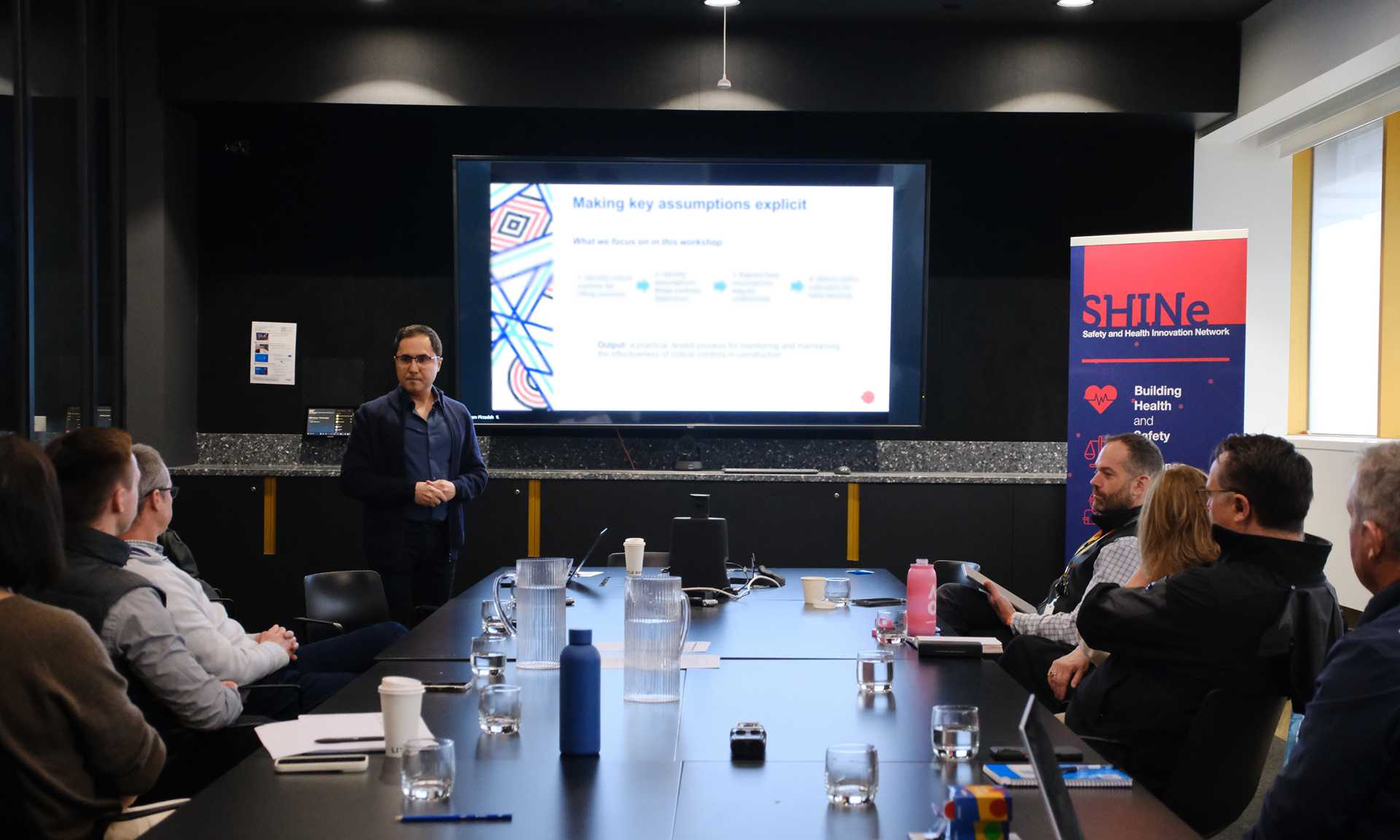
The workshops focused on the assumptions underpinning the controls used to manage high-energy hazards. Through structured activities and facilitated discussion, workshop participants unpacked these assumptions in the context of specific construction scenarios and identified practical indicators that could provide early warning of control degradation.
The workshops have generated strong engagement and practical insights from industry participants. The depth of discussion reflects the importance of developing approaches that are grounded in real project conditions and that support more proactive management of critical health and safety risks.
It is expected that the workshops will contribute to the development of a practical process for monitoring and maintaining the effectiveness of critical risk controls in changing construction project environments.



