Centre for Opto-Electronic Materials and Sensors (COMAS)
Centre for Opto-Electronic Materials and Sensors (COMAS)

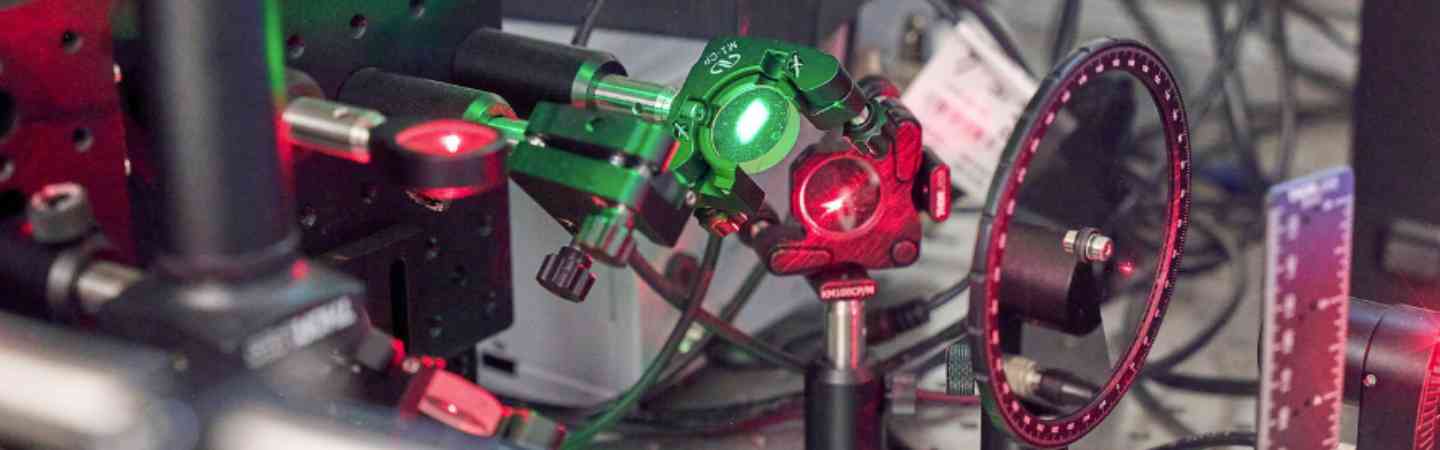
Photograph of a piece of mechanical machinery. It has red and green lighting.

The RMIT Centre for Opto-Electronic Materials and Sensors (COMAS), is globally recognised for its expertise in fundamental and applied research on opto-electronic materials and sensors for smart devices and functional surfaces.

COMAS’ mission is to engineer new technologies and materials that are extremely thin and can be electrically and/or optically manipulated to drive smart sensors, devices and surfaces in energy, electronics, environmental, health, space and agricultural sectors.

Opto-electronics represents a foundational technology of the information age. Based on the quantum mechanical effects of light on electronic materials (e.g., semiconductors), it bridges the gap between electronics and light to drive innovations in data transmission, sensors, displays, and future quantum information systems.

COMAS aims to become a global leader in creating novel materials and sensors that transform fundamental research knowledge into real-world applications.

Driven by innovations at the nanoscale and responding to industry needs, it aims to address critical challenges relating to information processing, medical technologies, precision sensing, energy generation and storage, optics and photonics, electronics and computing, and biomaterials for healthcare and biotechnology.

Ultimately, COMAS’s breakthroughs are expected to create fundamental advances that will form a pipeline for translation in the deployment of smart sensors and surface product innovations.
 

Key research areas

COMAS’ focus on optoelectronic materials and sensors will be driven by the following three interconnected research themes. There will be specific areas within the themes, led by key Centre leaders for non-biological and biological applications.
Materials design and fabrication

Engineering atomically thin materials and their heterostructures using versatile synthesis techniques such as chemical vapor deposition, liquid metal synthesis, and laser processing techniques for advanced optoelectronic applications.

Devices and sensors platforms

Developing smart sensors and functional surfaces for environmental monitoring, healthcare diagnostics, antimicrobial surfaces, chemical/contaminant detection, and neuromorphic processing using novel material architectures and device integration strategies.

Artificial intelligence (AI) and machine learning (ML) for designer materials and sensors

Applying computational chemistry and machine learning algorithms to predict material properties, smart sensor signal processing, and accelerate discovery of new optoelectronic materials for targeted applications.
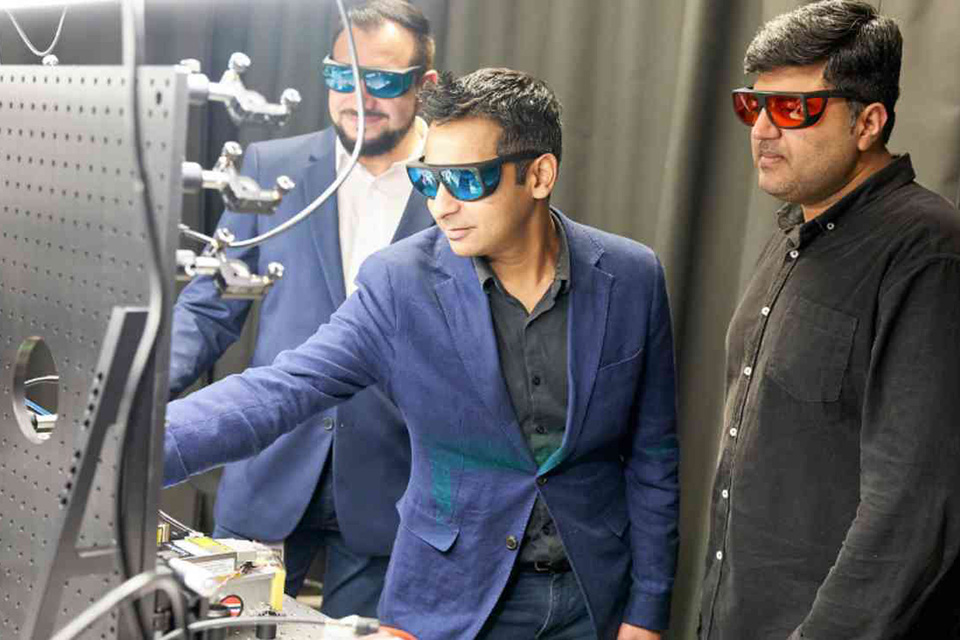
Photograph of three men standing in a workshop. The man in the middle is fiddling with a piece of equipment. All three men wear protective glasses.

About our projects

COMAS possesses an outstanding fundamental and translational track record and is positioned to attract long-term investments in research and infrastructure.

Some notable examples of its breakthroughs for industry include its engineered solutions for smart coatings used on windows, light-activated antimicrobials, neuromorphic vision sensors, water quality sensors, chemical sensors.
People

Centre leadership

Centre Director: Professor Sumeet Walia

Professor Sumeet Walia is a research and translation leader in ultra-thin materials and sensors. He has 170+ peer-reviewed journal articles including authoritative reviews, h-index of 53 and 11000+ citations.

Deputy Director: Professor Akram Hourani

Professor Akram Hourani brings extensive expertise in AI and signal processing, particularly in interfacing with novel sensors. With a robust background in machine learning, radar systems, and telecommunications, he has published over 120 peer-reviewed articles and is recognised among the top 2% of scientists worldwide according to Stanford University's latest rankings.


Key leaders

Professor Torben Daeneke

Previously an ARC DECRA fellow, Prof. Daeneke is an expert in chemical synthesis of new materials particularly liquid metals. He has led high-impact studies in prestigious journals and is working with industry to translate findings into new solutions for catalysis and CO2 reduction.

Professor Jian Zhen Ou

Previously an ARC DECRA Fellow, Assoc. Prof. Jian Zhen Ou is an expert in materials for gas sensors. With an h-index of 69 and a founding member of the Atmo Biosciences technology, he contributes a vast level of knowledge in fundamental and translational research innovation.

Associate Professor Aaron Elbourne

A current ARC DECRA Fellow, Assoc. Prof. Elbourne specialises in characterising interfaces of materials and deploying novel materials into antimicrobial coatings and pathogen sensors. He has a strong research track record in this area and is recognised as an emerging leader, having only completed his PhD within the past seven years.

Associate Professor Dr. Saffron Bryant

Dr. Bryant is an emerging leader in cryoprotectants, eutectogels and deep eutectic solvents. These technologies will create carrier technologies for the delivery of antimicrobial materials, particularly wound dressings. She will also bring strong industry partnerships to COMAS.

Dr. Tu Le

Dr. Le is an emerging leader in machine learning and computational chemistry for optoelectronic materials. Her research will underpin the identification and design of new optoelectronic materials and their hybrids for advanced applications.

Dr. Irfan H. Abidi

Dr. Abidi is currently a Research Fellow, specialises in synthesis of atomically thin 2D materials especially laser and thermal CVD processes for monolayer graphene, hBN, TMDs (MoS2, WS2 etc), and their heterostructures for electronic and optoelctronic devices. His research profile showcases four US patents, 40+ peer-reviewed high impact journal articles, h-index of 20 and 1800+ citations.

Dr. Taimur Ahmed

Dr. Ahmed is recipient of the prestigious 2020 Victoria Fellowship, working on exploiting advanced materials technology to develop hardware for novel brain-inspired processors. He specialises in functional materials and electronic/opto-electronic devices, with applications spanning from sensors to neuromorphic computation, paving the way for innovations in the post-Moore's era.

Research centre consultancy services

At COMAS, we leverage our cutting-edge expertise and state-of-the-art facilities to provide comprehensive consultancy services across a range of industries and sectors. Our team of experienced researchers and professionals offers tailored solutions to meet your specific needs in:
  • smart materials and sensors innovation and manufacturing solutions
  • equity, Diversity, Inclusion and Access strategies in STEM
  • navigating the academia-industry interface, career strategies and advice for early career researchers
  • competitive grant writing.
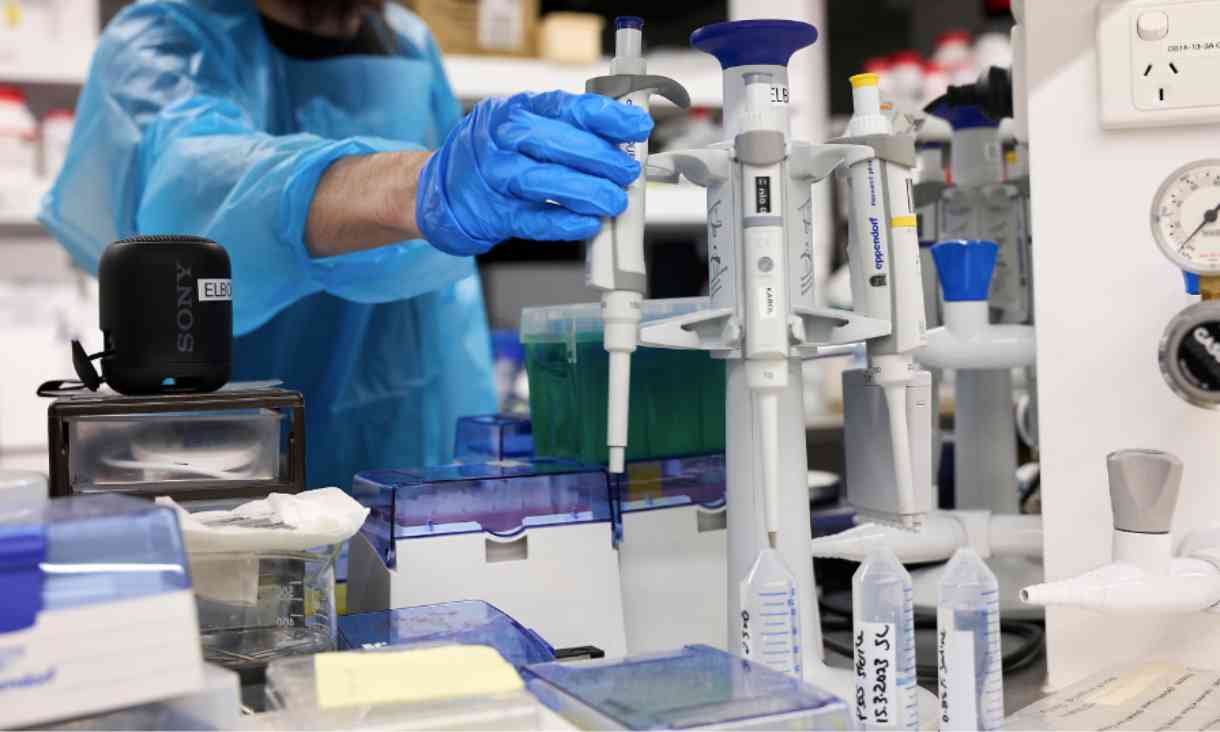
Photograph of various laboratory materials and tools on a desk. In the middle of the photograph a man wearing protective, blue clothing and gloves is reaching for one of the tools.

Contact us

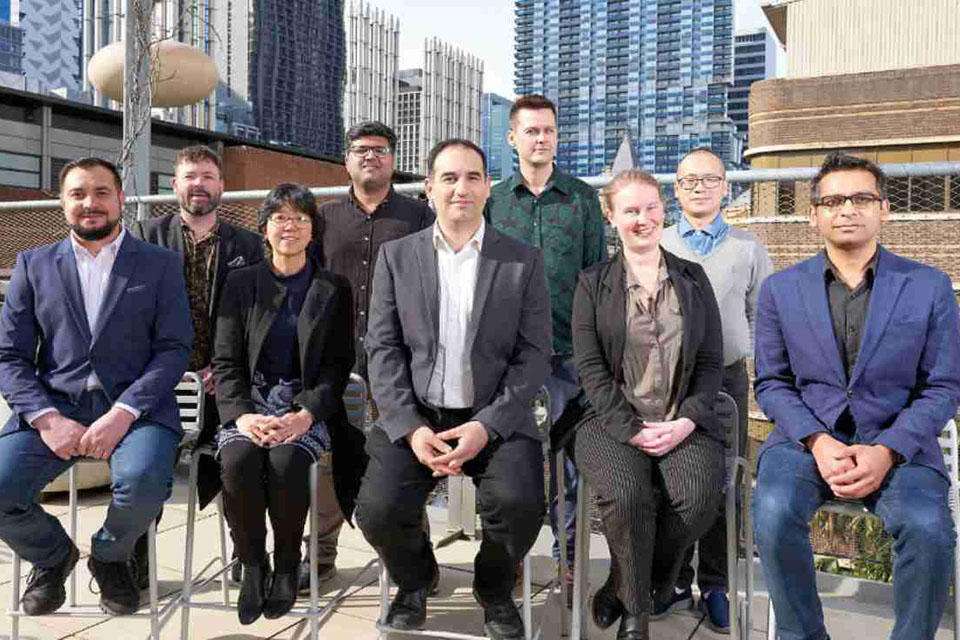
Photograph of the comas team. There are people people featured. Five sit at the front and four stand in the back. In the background there are various tall buildings.

Interested in collaborating or partnering with COMAS?

Please reach out to the centre by and someone will be in touch with you respond.

aboriginal flag float-start torres strait flag float-start

Acknowledgement of Country

RMIT University acknowledges the people of the Woi wurrung and Boon wurrung language groups of the eastern Kulin Nation on whose unceded lands we conduct the business of the University. RMIT University respectfully acknowledges their Ancestors and Elders, past and present. RMIT also acknowledges the Traditional Custodians and their Ancestors of the lands and waters across Australia where we conduct our business - Artwork 'Sentient' by Hollie Johnson, Gunaikurnai and Monero Ngarigo.

More information