The Best Films You’ve Never Seen: La Dolce Vita (1960) by Federico Fellini

The Best Films You’ve Never Seen: La Dolce Vita (1960) by Federico Fellini

  • 22 Jul 2025
  • 06:00pm - 09:15pm
  • $10
  • The Capitol RMIT, 113 Swanston Street, Melbourne
event header image

Escape Melbourne’s winter into the glamourous excesses of 1960s Rome with Federico Fellini’s masterpiece La Dolce Vita.

This landmark work of Italian cinema follows disillusioned journalist and failing novelist Marcello Rubini (Marcello Mastroianni) for seven days and nights as he drifts through the Eternal City in search of the “good life”. Amidst the decadence of high society during Italy’s post-war economic boom, Marcello encounters religious spectacle, hedonistic aristocrats, fading movie stars and disaffected intelligentsia, all swept up in a milieu characterised by celebrity-obsession, spiritual emptiness, and really great parties.  

In a career-defining performance, Mastroianni leverages his legendary charm to deliver a character who yearns for a sense of meaning and purpose while he submits to the temptations of a glamourous and empty life. Infused with this tension of beautiful excess, the film’s most iconic images --a giant statue of Christ being flown over the city and actress Anita Ekberg’s audacious midnight romp in the Trevi Fountain-- are as dazzling and provocative as ever.   

Condemned by the Vatican and subjected to widespread censorship at the time of its release, La Dolce Vita was nevertheless nominated for four Academy Awards and won the Palme d’Or at Cannes in 1960. Today it is hailed as one of the greatest films of all time and is ranked #60 in Sight and Sound’s 2022 Greatest Films of All Time poll.  

Don’t miss your chance to experience Fellini’s visionary epic on the big screen at The Capitol.

You can read more about the film on the Senses of Cinema web page.


Presented by RMIT Culture in partnership with RMIT Cinema Studies

La Dolce Vita

Country: Italy

Year: 1960

Duration: 174 minutes

Language: Italian language, English subtitles

Format: DCP


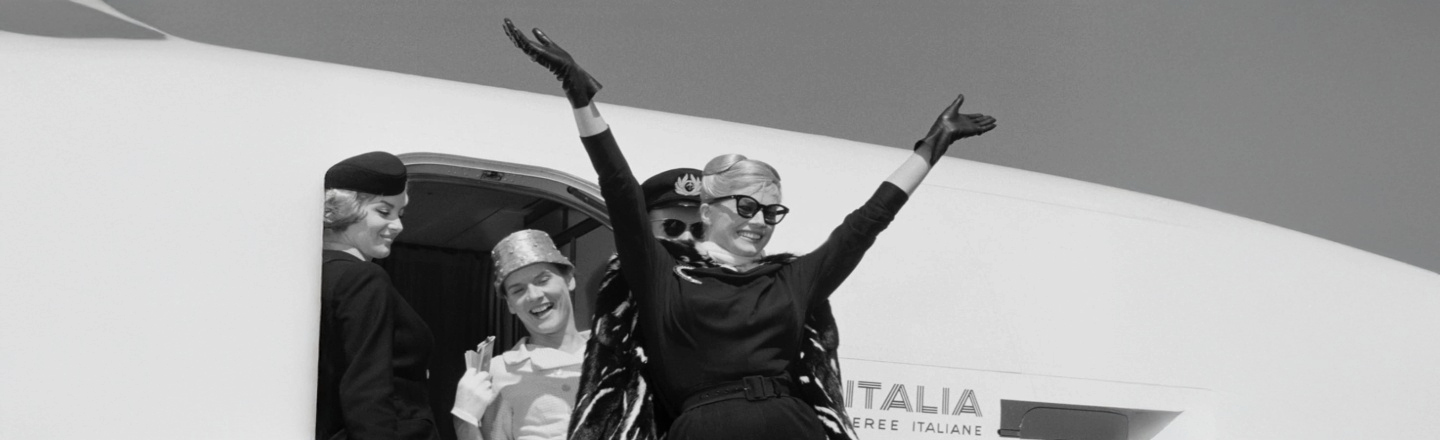
Image credit: Film still, La Dolce Vita (1960), Courtesy Janus Films.

Book tickets

Share

Related events

1220x732-ko-jou-chen.jpg

'Portable Stillness' by Ko Jou Chen

Icon / Small / CalendarCreated with Sketch. 19 May 2026 - 12 Jun 2026

'Portable Stillness' (2025), is an ongoing spatial installation that explores how the making of miniature objects and floating altar-like displays can express memory, collection, and the domestic in transition. Motivated by the instability of diasporic living and continual relocation, Ko Jou Chen constructs handmade structures that carry memory and presence across her shifting environments.

1220x732-noah-bridger-first-site.jpg

'Slip' by Noah Bridger

Icon / Small / CalendarCreated with Sketch. 19 May 2026 - 12 Jun 2026

'Slip' is a practice-led research project that explores the poetic qualities of the bluestones that have been discarded in recent construction works around RMIT University. Through the process of moulding and casting these stones into beeswax, Noah Bridger hopes to reimagine Melbourne’s urban landscape.

1220x732-chloe-rose-thomas.jpg

'Can I Hold You?' by Chloe Rose Thomas

Icon / Small / CalendarCreated with Sketch. 19 May 2026 - 12 Jun 2026

Chloe Rose Thomas’ exhibition, 'Can I Hold You?' centres on queer community and embodied practices of care, exploring what it means to take traditional photographic portraits of non-normative bodies and the histories they represent.

aboriginal flag float-starttorres strait flag float-start

Acknowledgement of Country

RMIT University acknowledges the people of the Woi wurrung and Boon wurrung language groups of the eastern Kulin Nation on whose unceded lands we conduct the business of the University. RMIT University respectfully acknowledges their Ancestors and Elders, past and present. RMIT also acknowledges the Traditional Custodians and their Ancestors of the lands and waters across Australia where we conduct our business - Artwork 'Sentient' by Hollie Johnson, Gunaikurnai and Monero Ngarigo.

Learn more about our commitment to Indigenous cultures