RMIT Galleries Professional Learning Day for Teachers
27 Nov 2026
RMIT Galleries invites you to join us for a FREE Professional Learning Day for Teachers!
Supported by the Helen Frankenthaler Foundation
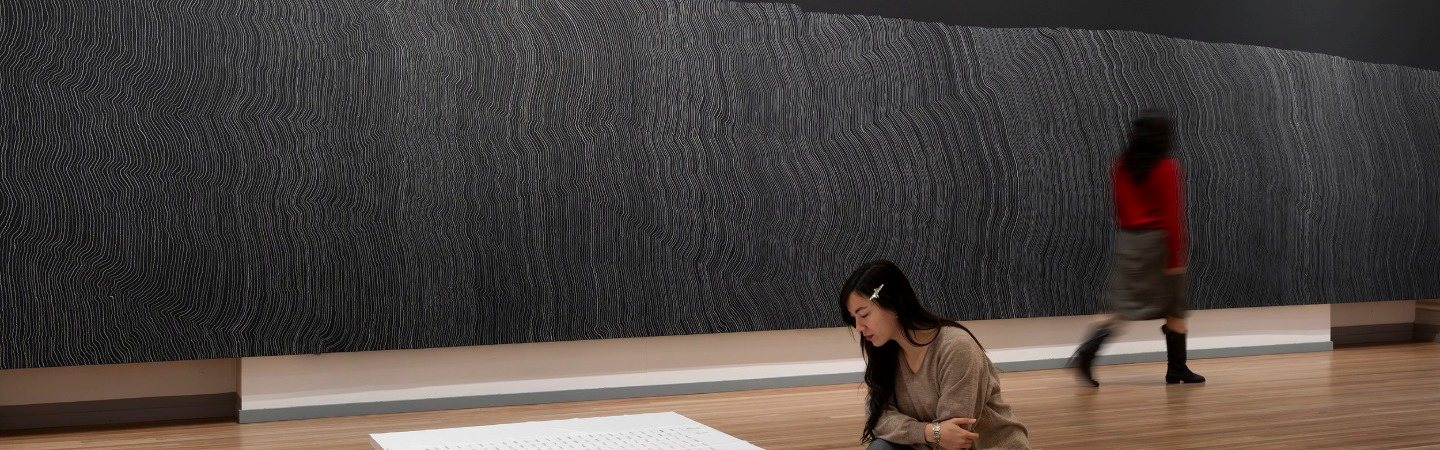
Sol LeWitt introduced the “not-straight line” into his drawing practice in 1970. It is, perhaps, easiest to describe this line through a series of qualifications: the not-straight line waves, but it never squiggles; it curves, but it does not arc. It never bounces, bends or loops. Most importantly, it is neither direct nor indirect. This talk takes the qualities of LeWitt’s not-straight line as emblematic of his broader practice—one that invites us to consider the question of interpretation in his drawings and wall drawings, especially as his work continued to foster an expanding network of relations.
Erica DiBenedetto is a curator at the Chazen Museum of Art at the University of Wisconsin–Madison, USA and a specialist in modern and contemporary art. She earned her Ph.D. from Princeton University, where she wrote her dissertation on Sol LeWitt. She is beginning to develop a book project based on that research, which focused on how LeWitt redefined the relationship between artist and audience in his work by treating architecture and language as complementary, rules-based systems. Her published essays on the artist can be found in edited volumes such as Locating Sol LeWitt (New Haven: Yale University Press, 2021) and Sol LeWitt: The Well-Tempered Grid (Williams College Museum of Art, distributed by D.A.P., 2012). At the Chazen, she organises exhibitions and helps care for a collection that includes objects dating from antiquity to today from around the world.
This public program is presented by The Concentric Influences of Sol LeWitt project in partnership with Metasenta and RMIT Gallery.
The Sol LeWitt Wall Drawing is generously loaned by the LeWitt Family and Estate.
Image (banner): Installation view of Sol LeWitt, Wall Drawing #123A, 2026, in the exhibition, The Concentric Influences of Sol LeWitt: Foundations, Pivots and Place, at RMIT Gallery. Photo by Christian Capurro.
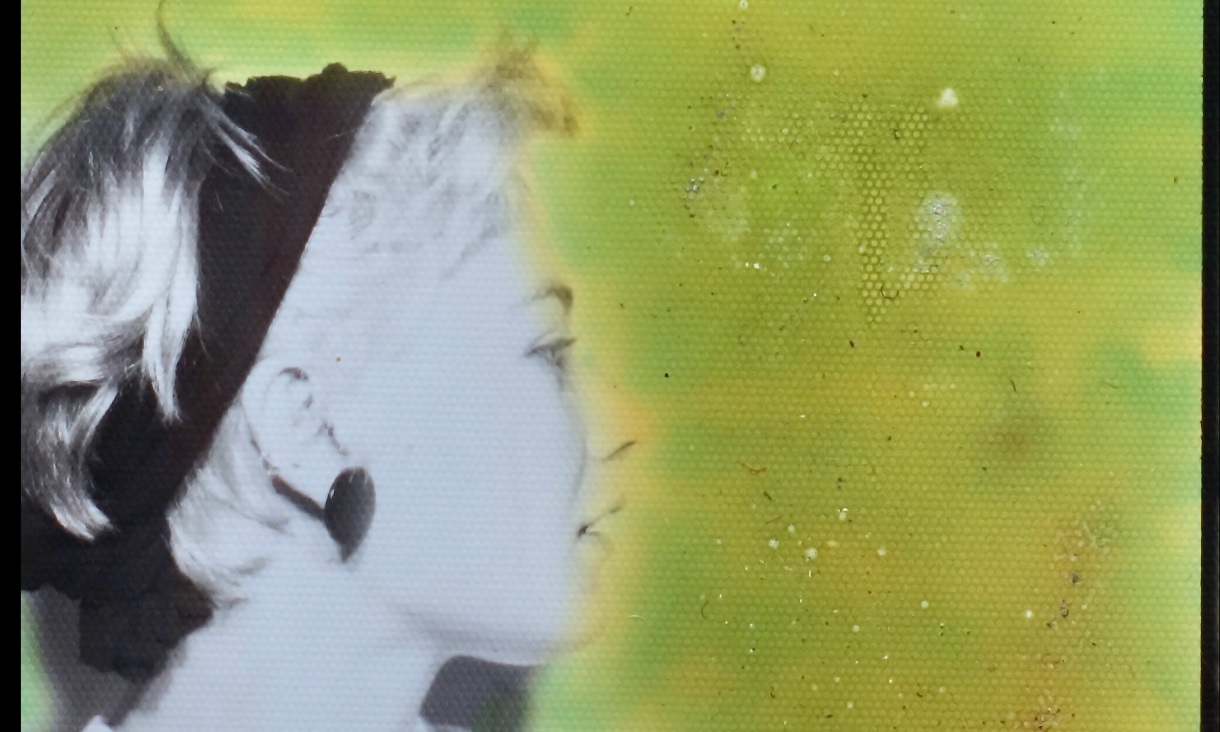
 Image: Erica DiBenedetto, Curator, Chazen Museum of Art, University of Wisconsin-Madison, USA. Photo by Marcin J. Muchalski / Diamond Shot Studio.
RMIT Galleries invites you to join us for a FREE Professional Learning Day for Teachers!


RMIT University acknowledges the people of the Woi wurrung and Boon wurrung language groups of the eastern Kulin Nation on whose unceded lands we conduct the business of the University. RMIT University respectfully acknowledges their Ancestors and Elders, past and present. RMIT also acknowledges the Traditional Custodians and their Ancestors of the lands and waters across Australia where we conduct our business - Artwork 'Sentient' by Hollie Johnson, Gunaikurnai and Monero Ngarigo.
Learn more about our commitment to Aboriginal and Torres Strait Islander peoples
