How studying at RMIT launched my career in China

From Melbourne to Shenzhen to Istanbul: How RMIT helped grow Leo Li’s global career in the green economy

When Leo Li (黎浩程) reflects on his current job as Senior International HR Specialist at BYD, he laughs at how busy life has become. 

“I’m covering Turkey, Belgium, the Netherlands and Luxembourg at the moment; you can imagine how busy I am managing four markets at the same time!” he says. 

His role at one of the world’s leading zero-emission energy solution companies is diverse, global and ever-changing; exactly the kind of business career he spent years planning for.

And much of that preparation, he says, traces back to his time studying a Bachelor of Business (majoring in international business) at RMIT in Melbourne.

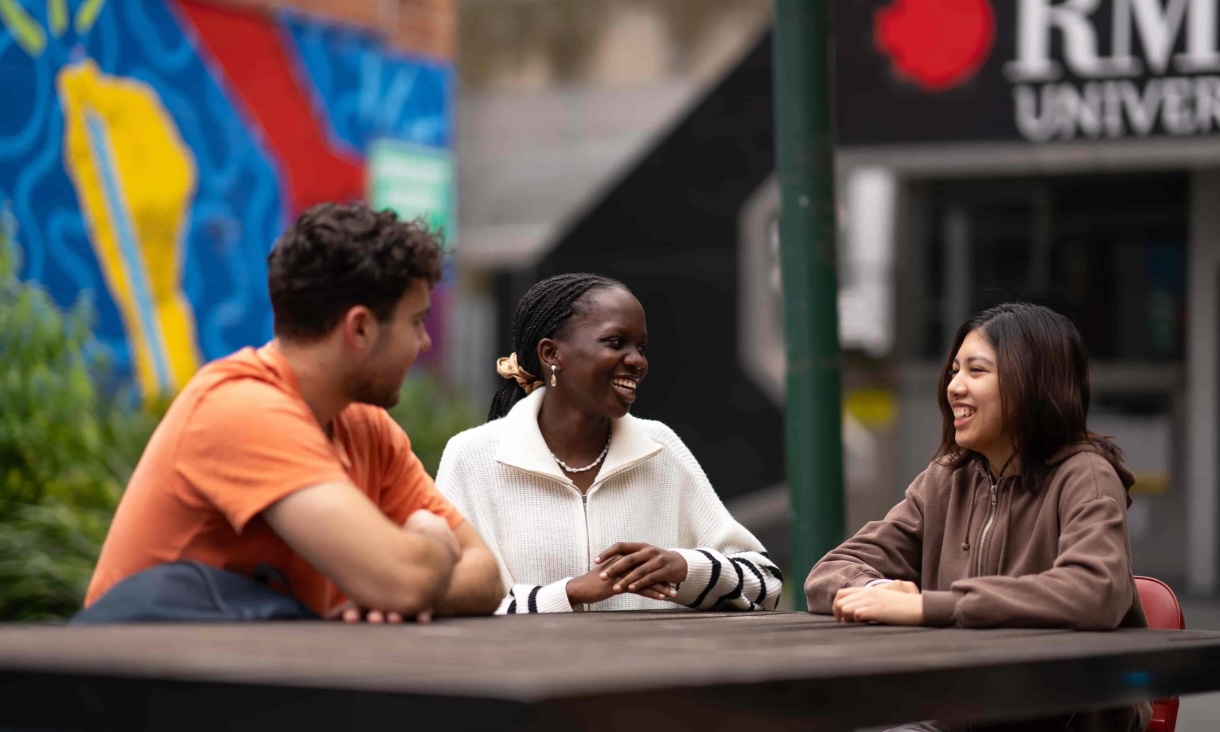
RMIT students

Cultivating a global mindset with a hands-on education

Leo’s decision to study at RMIT was informed by his belief that education should be practical. He still remembers a poster he saw outside RMIT's Swanston Library that captured his attention: “Why study problems when you can solve them?” it said.

Unlike many institutions that he thought leaned too heavily on theory, Leo felt RMIT offered practical, industry-connected learning.

“RMIT is one of the few universities that shows you the reality of work, but in a safe place for practice and trials. You can work on projects that have happened to a real company before, you can design a program that a real company will actually implement, you can exchange opinions with well-known figures in the corporate world.

“RMIT provided me with the practical knowledge and skills to adapt to the business world. It helped me define where I should go in my profession. The knowledge, the skills, the attitude – those were the most essential things I took with me into my career.”

Throughout his studies, Leo says certain lessons lodged themselves firmly in his mind. Concepts from his finance, computing, and cultural intelligence classes continue to guide how he approaches risk, learning, and global teamwork today. Even an early team assignment – developing a proposal to reduce cultural misunderstandings in multicultural student teams – later resurfaced in his professional life when he designed expat development programs and cross-cultural training programs for BYD.

Turns out, a great portion of my perspectives nowadays come from the learnings and inspirations I obtained while studying at RMIT.
– Leo Li, Bachelor of Business graduate

Becoming a global citizen

Though he’s now living and working in Istanbul, Leo’s ability to adapt to international environments has been shaped over many years. 

Born and raised in Guangzhou, in 2014, Leo decided to make the move from China to Australia. As he was only a teenager, the transition was a big one, and Leo felt “excited, scared and overwhelmed” when he arrived. But the process was transformative. 

“I was a pure introvert before then, but since I had to handle everything by myself, the new environment forced me to become someone new.”

Living in Australia taught him independence, resilience and the value of multiculturalism. Acknowledging the Traditional Owners of the land, something deeply embedded in Australian culture, opened his eyes to respect, responsibility and the importance of understanding the histories that shape a place. 

“Cultural intelligence became not just a concept but a skill,” he says. 

“It helped me accept different norms and mindsets, even if they were different from my own.”

And the diverse friendships he formed at RMIT remain some of the strongest in his life. Classmates from Melbourne are now scattered across Guangzhou, Ningbo, Zhaoqing and Istanbul, but they continue to share life updates across time zones – something Leo considers one of the most valuable outcomes of his years at RMIT.

Launching a career in China’s green-tech future

After graduating from RMIT’s Bachelor of Business in 2019, Leo began building a career that combined international thinking with his growing interest in sustainability. 

He returned to China to undertake an internship in talent development at a French investment bank in Beijing, which showed him how global companies operate in China. He then returned to Melbourne and studied a Master’s in Human Resource Management, which deepened his understanding of people, development and organisational strategy. 

After finishing his postgraduate studies, Leo took his first step into the green-energy sector, first working for a construction machinery manufacturer focused on sustainable technologies, then later taking on the position of Senior Training Specialist at the HQ of BYD in Shenzhen. 

This was a life-changing moment for Leo, as BYD’s mission of creating ‘technological innovation for a better life’ aligned closely with his own values. Leo became responsible for global training management, designing programs and policies across multiple countries and supporting the company’s global expansion.

This global mindset eventually led him to Turkey.

“When I submitted my expression of interest for expat opportunities at BYD, I was actually hoping to come back to Australia,” Leo says. 

“Instead, they assigned me to Istanbul to lead HR there. A surprise!”

Before moving, he says he knew little about Turkey beyond, “Turkish delight, Turkish coffee, the occasional news of an earthquake, and my microeconomics professor who used to work for the Türkiye Central Bank!” 

But arriving in a completely unfamiliar environment didn’t intimidate him. His years in Australia had already taught him how to thrive in multicultural spaces.

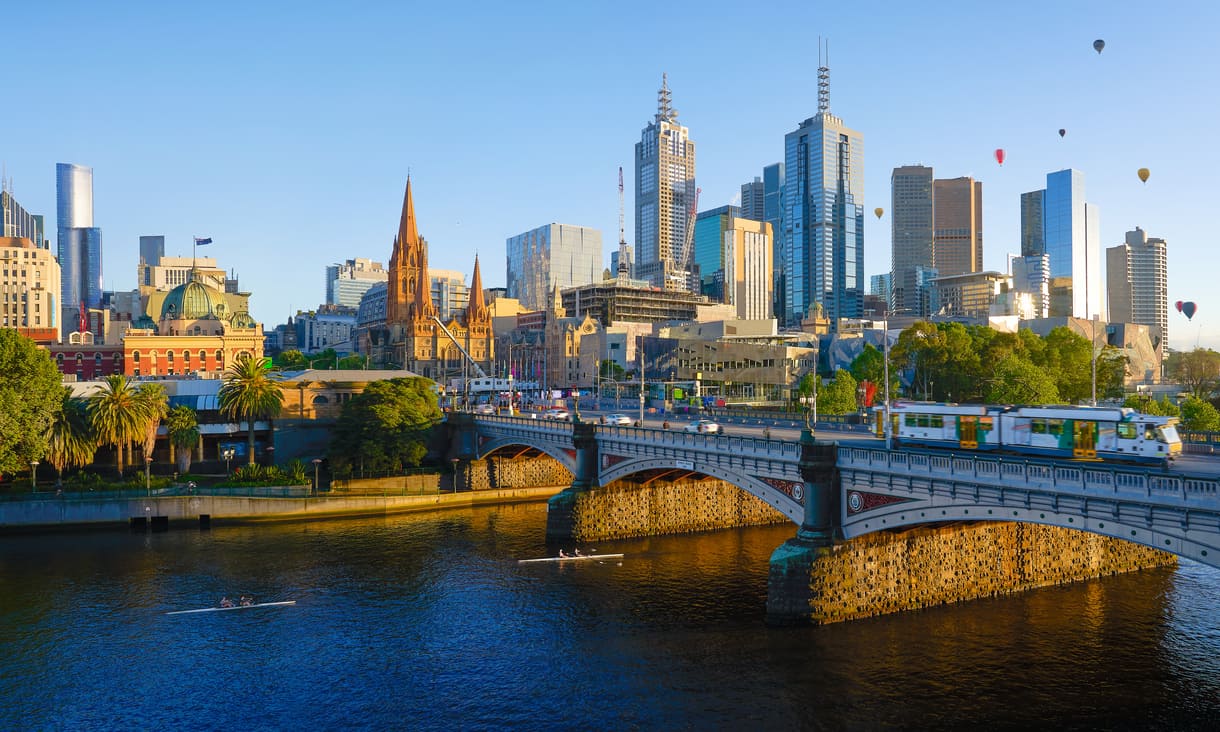
Image of Melbourne City over Princes Bridge

Taking a piece of home with him, wherever he goes

When asked if he ever gets home-sick while travelling the world, Leo is thoughtful.

“To be honest, I didn’t get that homesick [while studying], simply because the whole vibe of Australia really matches my taste and my personality.”

But when he did feel like a taste of home, he would revisit a Cantonese tradition: yum cha.

“When I first moved to Australia, I only got a small allowance per quarter to cover all my expenses, so whenever I got a spare dollar, I would save it for a group yum cha with my friends in Melbourne’s Chinatown. Even when I didn’t have the time to go out, I would always have frozen dim sum packs, like shrimp dumplings and pork buns in my fridge, then make a cup of tea and enjoy it while doing my assessments.”

And after years of living in Australia, Leo has a whole new set of traditions. 

“The very first thing I do now whenever I travel to another country is to see if there is an Aussie-theme place in the local area. For instance, I woke up at 7am and went to a place call Coco’s Outback when I was in Amsterdam, just to watch the Blues and Bombers game while enjoying a morning beer and chicken parmi!”

What's next for Leo

Looking forward, Leo sees himself staying in the HR field, ideally in more strategic leadership roles. And he has no doubt his future will see him travel the world. But one place still holds a special place in his memories.

“Melbourne feels like home to me,” he says. 

“That’s a line from a Qantas ad—but it’s true!”

Leo’s journey shows how the right learning environment can shape not just a student’s skills, but their worldview. Through practical learning, multicultural experiences and real-world assessments, RMIT helped Leo to become the globally minded professional he is today—someone who is equally at home in Melbourne, Shenzhen or Istanbul.

“Ninety percent of my perspectives in work and future development come from what I learned at RMIT,” he says. 

“It didn’t just prepare me for a career. It prepared me for the world.”

Story: Sophie MacGillivray


*QS Best Student Cities Rankings 2026 

You may also be interested in...

aboriginal flag float-start torres strait flag float-start

Acknowledgement of Country

RMIT University acknowledges the people of the Woi wurrung and Boon wurrung language groups of the eastern Kulin Nation on whose unceded lands we conduct the business of the University. RMIT University respectfully acknowledges their Ancestors and Elders, past and present. RMIT also acknowledges the Traditional Custodians and their Ancestors of the lands and waters across Australia where we conduct our business - Artwork 'Sentient' by Hollie Johnson, Gunaikurnai and Monero Ngarigo.

Learn more about our commitment to Indigenous cultures