Goal 15 - Life on Land

RMIT is dedicated to advancing Sustainable Development Goal 15, focusing on the sustainable use of terrestrial ecosystems, forest management, desertification combat, and biodiversity preservation.

Our research projects and teaching initiatives align with these aims, fostering environmental stewardship and sustainability.

On our campuses, we emphasise native planting and canopy cover management to support biodiversity and ecological health. These efforts demonstrate RMIT's commitment to contributing positively to global sustainability and biodiversity conservation through research, education, and sustainable campus practices.

Highlights of recent SDG 15 aligned activity are included below, with more information available in our 2024 Sustainability Annual Report (PDF 23 MB), with our 10 years of reporting progress outlined on the Sustainability Annual Report webpage.

Broader sustainability contributions are also highlighted in our organisational Annual Report, which are tabled in the Victorian Parliament.

2024 Case Studies

The Interdisciplinary Conservation Science Research Group (ICON Science) at RMIT University leads efforts to understand and manage the interactions between society and the natural environment. Emphasizing a multidisciplinary approach, ICON Science integrates ecological, social, and economic dimensions to enhance biodiversity conservation.

Focusing on urban and semi-rural environments, ICON Science addresses the gap between conservation theory and practical application. By examining the drivers of change in these complex settings, the group contributes valuable insights into sustainable ecosystem management.

Operating within RMIT's Centre of Urban Research (CUR) and Centre for Environmental Sustainability and Remediation (EnSuRe), ICON Science also collaborates with the Threatened Species Recovery Hub and Clean Air and Urban Landscape Hub of the Australian Government’s National Environmental Science Program. These partnerships enhance conservation efforts and promote sustainable land use practices.

ICON Science's work not only advances academic understanding but also informs practical conservation strategies that benefit ecosystems and communities, exemplifying RMIT's commitment to impactful research and sustainable development.

A study published in Nature Communications by the RMIT Centre for Urban Research highlighted insufficient urban tree canopy cover in eight cities.

Despite many trees, only 3 per cent of buildings in central Melbourne and 17 per cent in Sydney have adequate canopy cover. The study, which included Melbourne and Sydney, found that while most buildings have views of at least three trees, few meet the 30 per cent canopy cover standard. This impacts urban cooling, flood risk, and biodiversity.

The research uses the ‘3-30-300’ rule, recommending a view of three trees, 30 per cent canopy cover, and 300 metres proximity to a park. impacting urban cooling, flood risk, and biodiversity.

Dr Thami Croeser from RMIT emphasises the need for better urban tree management, as local councils often lack the resources for proper care.

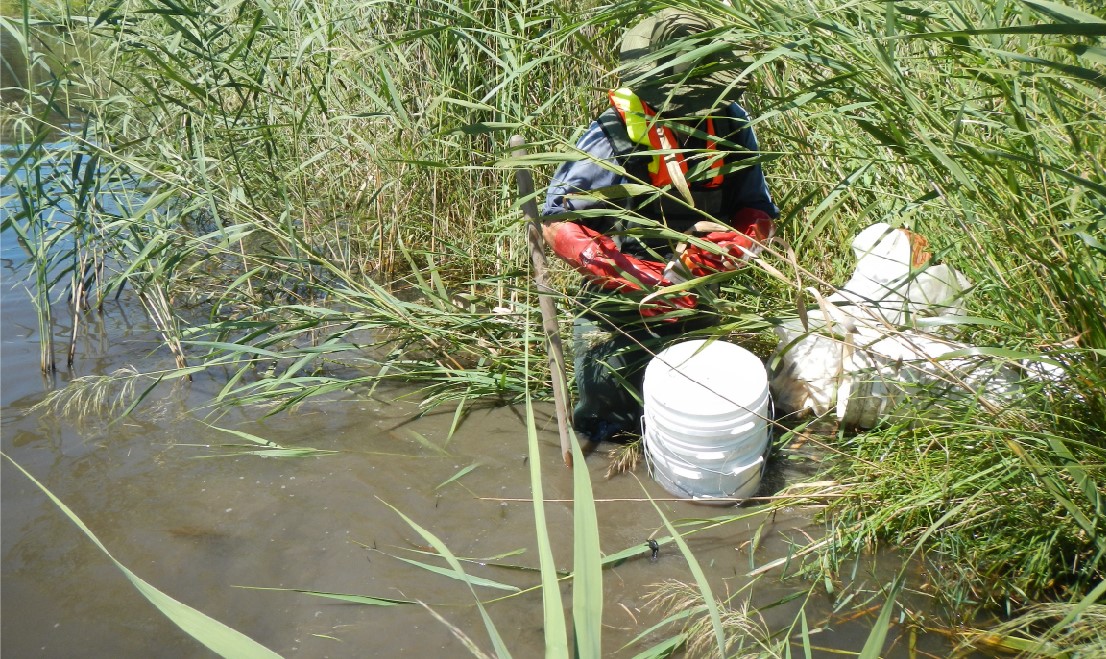
RMIT University is advancing global understanding of how climate change affects wetland ecosystems, which are vital to ocean health and biodiversity. Led by Dr Stacey Trevathan-Tackett, an international team buried 19,000 teabags across 180 wetlands in 28 countries to measure how temperature influences wetland carbon storage.

The study found that rising temperatures accelerate organic matter decay, reducing carbon preservation in wetland soils. Since wetlands play a critical role in filtering water, protecting coastlines, and storing carbon that would otherwise enter marine environments, these findings have direct implications for SDG 14: Life Below Water.

By identifying which wetlands store the most carbon, RMIT’s research supports efforts to conserve blue carbon ecosystems, such as mangroves and seagrasses, that mitigate climate impacts, enhance water quality, and sustain marine biodiversity.

SDG Alignment Mapping Overview

As reported in the 2024 Sustainability Annual Report, there were 56 course units and 172 research projects aligned with SDG 15 in 2024, representing a wide range of initiatives related to life on land.

Other research insights are captured in the data below.

  • Course Units (Total): 56
  • Research Projects (Total): 172
  • International Research Partnerships (Total): 11
  • Publications (Total): 89
  • Publications in Top 25% Journal Percentiles by SJR (%): RMIT - 79.5 vs. Global Average - 63.4
  • Citations per Publication: RMIT - 1.7 vs. Global Average - 1.7
  • Field-Weighted Citation Impact (FWCI): RMIT - 1.0 vs. Global Average - 1.1
  • National Publication Contribution (%): 3.0%
  • International Collaboration (%): RMIT - 48.3 vs. Global Average - 29.9
  • Developing Country Collaboration (%): 39%
  • Low to Lower-Middle Income Country Collaboration (%): 13%

Research Projects and Initiatives Over the Years


aboriginal flag float-start torres strait flag float-start

Acknowledgement of Country

RMIT University acknowledges the people of the Woi wurrung and Boon wurrung language groups of the eastern Kulin Nation on whose unceded lands we conduct the business of the University. RMIT University respectfully acknowledges their Ancestors and Elders, past and present. RMIT also acknowledges the Traditional Custodians and their Ancestors of the lands and waters across Australia where we conduct our business - Artwork 'Sentient' by Hollie Johnson, Gunaikurnai and Monero Ngarigo.

More information