
The School of Computing Technologies partnership portfolio is strengthened though identifying industry opportunities, activating strategic relationships and establishing new pathways across education, research, WIL and workforce development.
Our Engagement Plan guides partnership development and activation across SCT. The plan established clear engagement pathways spanning WIL, research collaboration, talent pipelines and capability development, creating a foundation for scalable engagement models that connect education, research and industry.
The School of Computing Technologies engages with Accenture, a global professional services organisation working across technology, consulting and digital transformation. Accenture contributed to industry discussions associated with the RAIsE Hub and the co-design of RMIT’s AI in Practice Minor.
Exposure to Accenture’s industry perspectives helps students understand how emerging technologies are applied to solve complex organisational challenges, while building awareness of the skills required in contemporary technology careers.
Connections with Amazon Web Services support students’ understanding of cloud computing, data storage, artificial intelligence and scalable digital infrastructure. AWS technologies are widely used across industry, and engagement with the organisation helps students connect their studies with practical cloud-based applications and current approaches to digital service delivery.
Engagement with ANZ provides insight into the role of technology in banking, financial services and business transformation. Students can explore how organisations use data, cybersecurity, software development and digital platforms to improve customer experiences, manage risk and support secure, innovative services.
RMIT’s Apple Foundation Program is a free, four-week, hands-on experience where participants learn design thinking and use Swift and Xcode to develop an app prototype, with no prior coding experience required. It is delivered in partnership with Apple and supported by RMIT’s School of Computing Technologies (SCT), which contributes expertise in teaching and Apple-platform development.
SCT partnered with Astral to support an Earn & Learn model, providing students with paid employment opportunities while they study. Initiatives such as this help students build practical experience, strengthen their professional networks and develop capabilities aligned with employment in the technology sector.
The Australian Computer Society is the professional association for Australia’s technology sector. Engagement with ACS helps students understand professional standards, ethical practice and the capabilities expected of computing and information technology practitioners. It also supports students as they build professional networks and prepare for careers in the digital economy.
SCT’s partnership with the Australian Grand Prix Corporation supports student capstone projects and live innovation showcases during Formula 1 and MotoGP events. These opportunities allow students to apply their knowledge to authentic industry challenges and demonstrate SCT’s applied innovation capabilities. The partnership is also expected to support high-profile showcases including activities associated with the AGPC Formula 1 events.
Connections with Avanade give students insight into digital innovation, cloud solutions, data and business technology. As an organisation focused on Microsoft technologies and digital transformation, Avanade offers an industry perspective on how technical expertise can be applied to improve organisational performance and create more effective experiences for customers and communities.
SCT is progressing an agreement with Avanade to support the Women into Tech Academy. The proposed collaboration includes scholarships, mentoring and pathways for female students entering technology careers. The partnership is expected to expand industry engagement and contribute to improved employability outcomes.
CenITex provides an important connection to technology services in the Victorian public sector. Engagement with CenITex helps students understand the delivery of secure, reliable and accessible digital services, as well as the role of technology professionals in supporting government organisations and the wider community.
In partnership with SCT, AWS co-developed a Professional Certificate in Cloud Architecture for CenITex, the Victorian Government’s shared ICT services provider. The program strengthens public-sector cloud and digital capability while showcasing SCT’s applied education model.
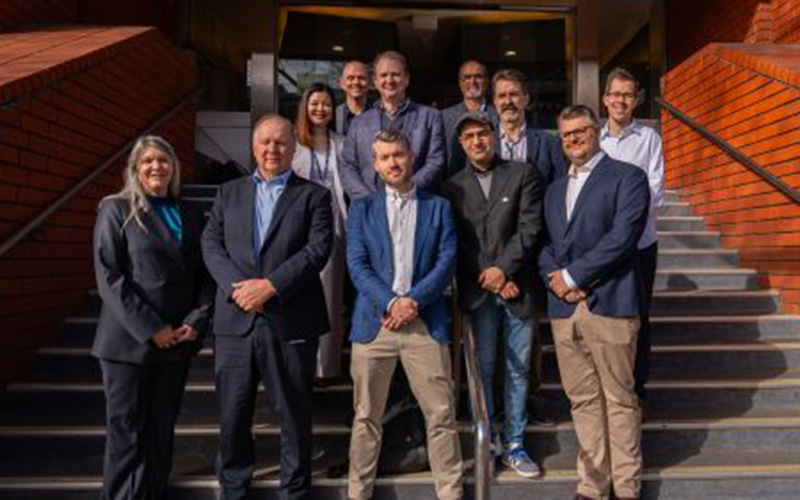
Connections with Cisco support students’ understanding of networking, cybersecurity, collaboration technologies and digital infrastructure. Cisco’s industry perspective helps students explore how connected systems are designed, secured and managed, and how networking technologies underpin modern organisations and communities.
Engagement with Deloitte exposes students to the use of technology across consulting, audit, risk, data and digital transformation. Students can develop an understanding of how computing and business capabilities come together to address complex challenges, support evidence-based decision-making and deliver responsible innovation.
GitHub connects students with widely used tools and practices for software development, collaboration and open-source contribution. Through exposure to GitHub, students can strengthen their understanding of version control, project workflows, code sharing and professional development practices used by technology teams around the world. The School has been leveraging a GitHub Enterprise organisation to support teaching and learning in a range of UG and PG courses since 2019.
Connections with IBM provide insight into enterprise technology, artificial intelligence, cloud computing, data and cybersecurity. Students can explore how large-scale technology solutions are developed and applied across industries, while considering the importance of responsible innovation, governance and the changing nature of digital work.
Engagement with Microsoft supports students’ understanding of cloud platforms, software development, artificial intelligence, cybersecurity and productivity technologies. Microsoft’s broad technology ecosystem provides an industry context for applying computing knowledge to organisational, community and commercial challenges.
Microsoft is a three-year strategic partner of the School of Computing Technologies, supporting WIL, the RAIsE Hub, AI curriculum development, research and applied innovation projects.
Microsoft also contributed to the co-design and promotion of RMIT’s AI in Practice Minor. The partnership has supported industry engagement activities, including an industry case study showcasing the collaboration’s impact on students and the value of authentic industry experiences.

See how Microsoft and the RMIT School of Computing Technologies are joining forces to develop future-ready tech talent and foster innovation through hands-on education, research, and industry collaboration.
Connections with NAB help students explore the role of technology in banking and financial services. Areas such as software engineering, data analytics, cybersecurity, digital experience and responsible use of artificial intelligence demonstrate how technology can support secure, accessible and customer-focused services.
Engagement with the National Broadband Network provides insight into the infrastructure that supports Australia’s digital connectivity. Students can consider the technical, operational and social dimensions of broadband networks, including how reliable internet access enables communication, education, business and participation in the digital economy. The School is currently involved in one of the major projects in a university wide R&D agreement, ASTRID, focusing on computer vision and image classification.
Connections with Salesforce introduce students to customer relationship management, cloud platforms, data and business applications. Students can explore how organisations use technology to understand customer needs, improve service delivery and connect information across different parts of an organisation.
Engagement with Telstra provides an industry perspective on telecommunications, connectivity, networks, cybersecurity and digital services. Telstra has supported SCT WIL and capstone activity, with their digital innovation, product incubation, and startup hub, muru-D.
Students can learn how large-scale communications infrastructure is designed and managed, and how emerging technologies are helping connect people, organisations and communities across Australia.
For more information, please contact SCT’s Deputy Dean, Engagement - Fabio Zambetta at fabio.zambetta@rmit.edu.au


RMIT University acknowledges the people of the Woi wurrung and Boon wurrung language groups of the eastern Kulin Nation on whose unceded lands we conduct the business of the University. RMIT University respectfully acknowledges their Ancestors and Elders, past and present. RMIT also acknowledges the Traditional Custodians and their Ancestors of the lands and waters across Australia where we conduct our business - Artwork 'Sentient' by Hollie Johnson, Gunaikurnai and Monero Ngarigo.
Learn more about our commitment to Aboriginal and Torres Strait Islander peoples