The mobile app iComply was developed to enhance builders' and plumbers' understanding of compliance risks.
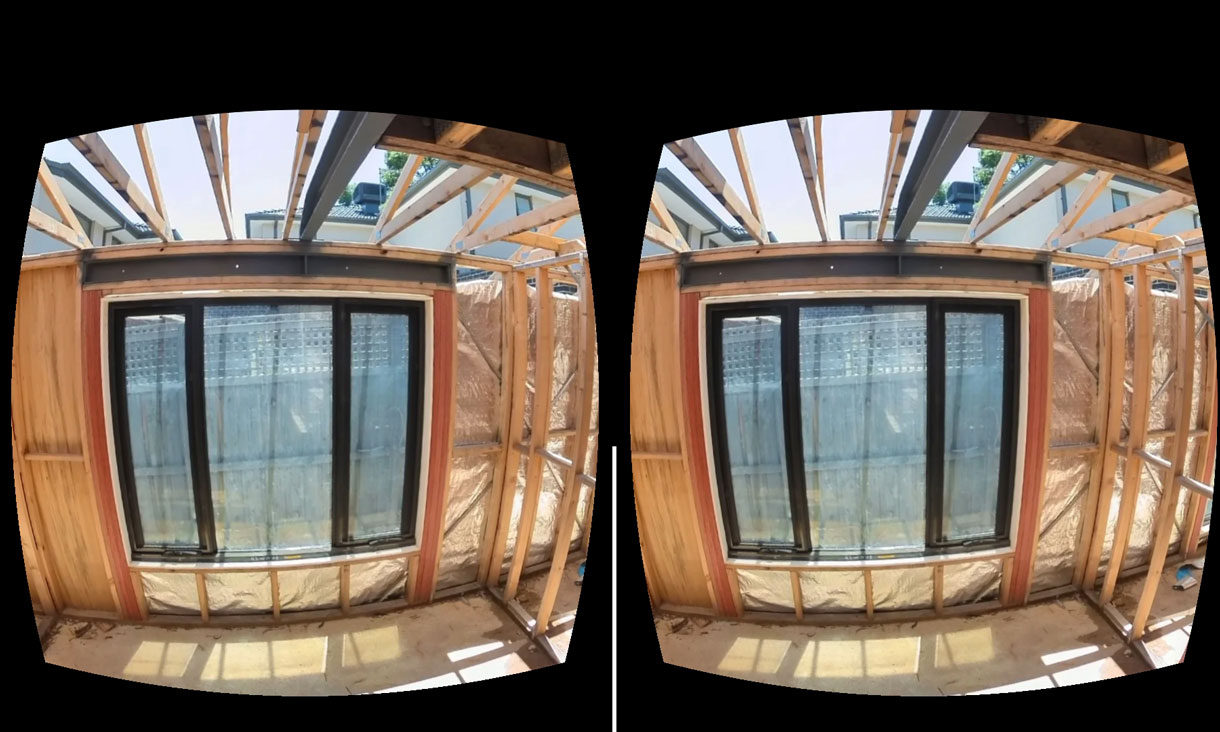
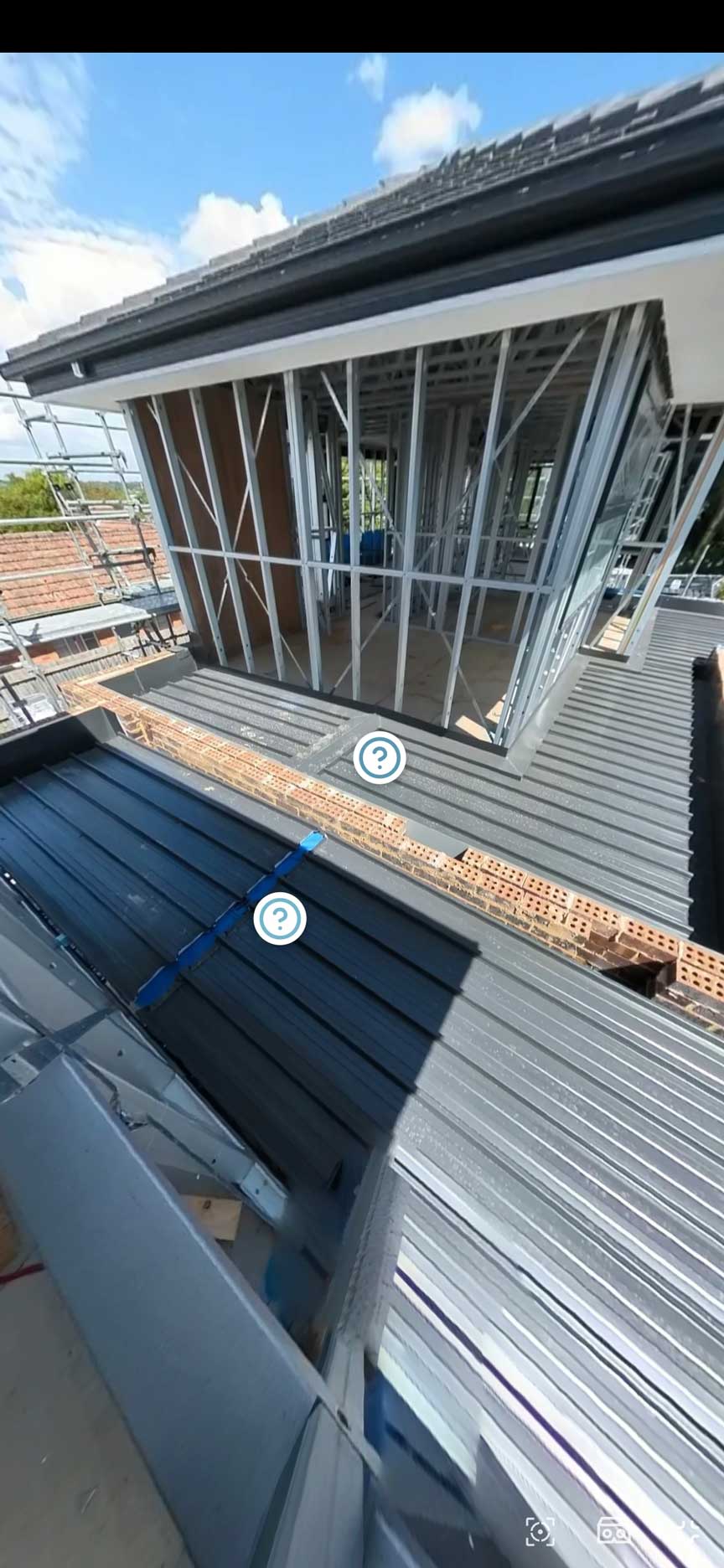
To read the full image descriptions, please click on the individual image above.
The School of PCPM is committed to training future construction professionals and helping the industry improve skills. To support this goal, the mobile app iComply was developed to enhance builders' and plumbers' understanding of compliance risks. iComply is a mobile VR app trial developed by Professor Peter SP Wong, Professor Ron Wakefield and Ben Koder with the support of the Victorian Building Authority Research Grant. The app was coded in TypeScript using the React framework to provide a more lightweight solution for the VR app to run on any iOS and Android devices via its built-in web browser.
The app allows users to immerse themselves in real-site inspection scenarios, learn and self-evaluate the non-compliance risks of their own projects anytime and anywhere.
The app does not aim to replace formal compliance inspections conducted by the registered building surveyors and the registered building inspectors. Instead, it complements each other. iComply introduces an intervention for builders and plumbers to learn, experience, and self-evaluate their workmanship standards.

Key Features
- The mobile VR app can run on any Android and Apple devices via their built-in web browsers.
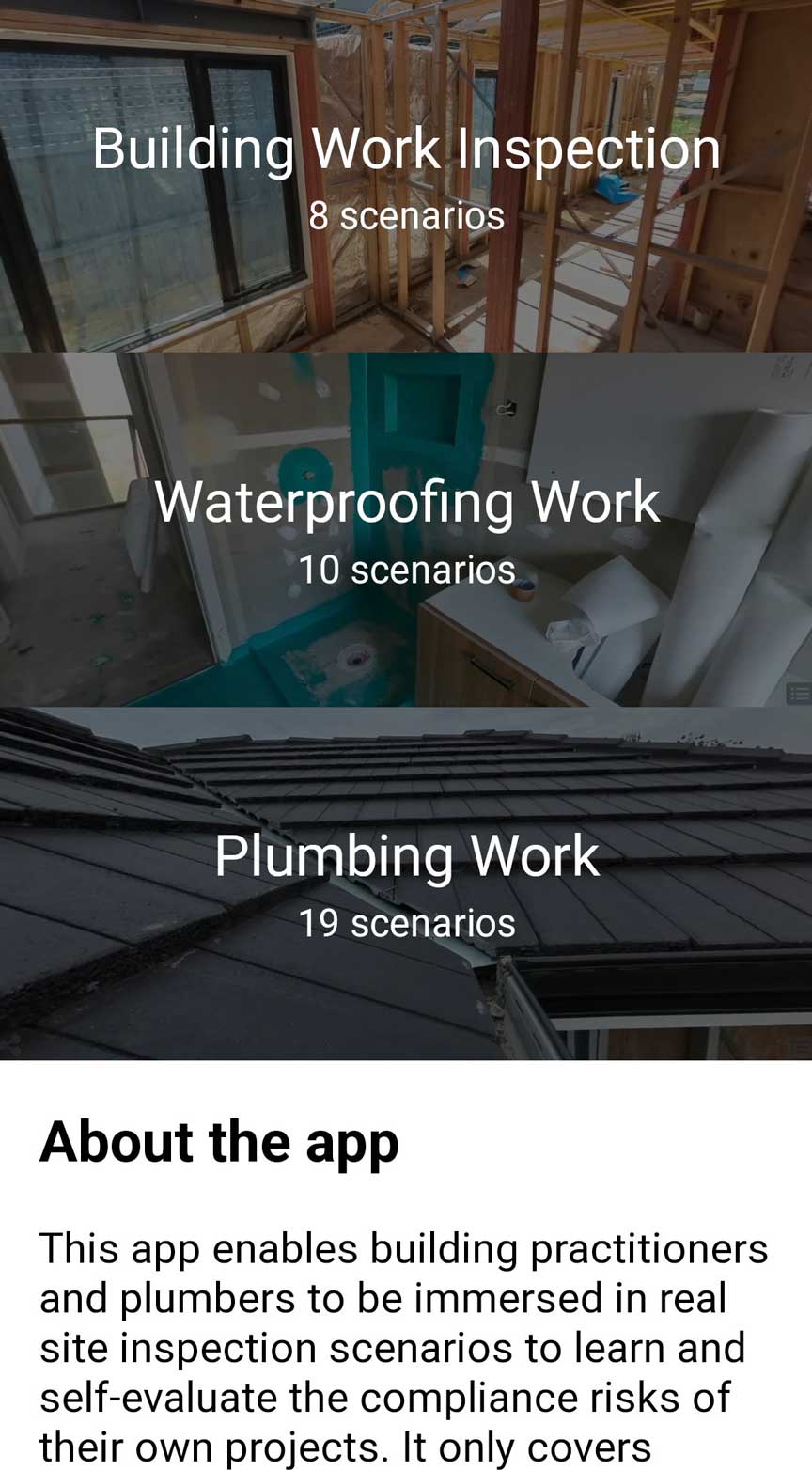
- The app comprises three sections and users can access any section of the scenarios via the landing page and then the category page
- Section A: 8 scenarios for inspecting building work (including balconies)
- Section B: 10 scenarios for inspecting waterproofing work (including balconies)
- Section C: 19 scenarios for inspecting plumbing work (including roofing work)
- Users can choose the Google function (VR mode) to simulate a real construction site visit specifically designed for the inspection scenario. They can also choose the touch-gesture function (tablet mode) to enable discussions among users while accessing the inspection scenarios.
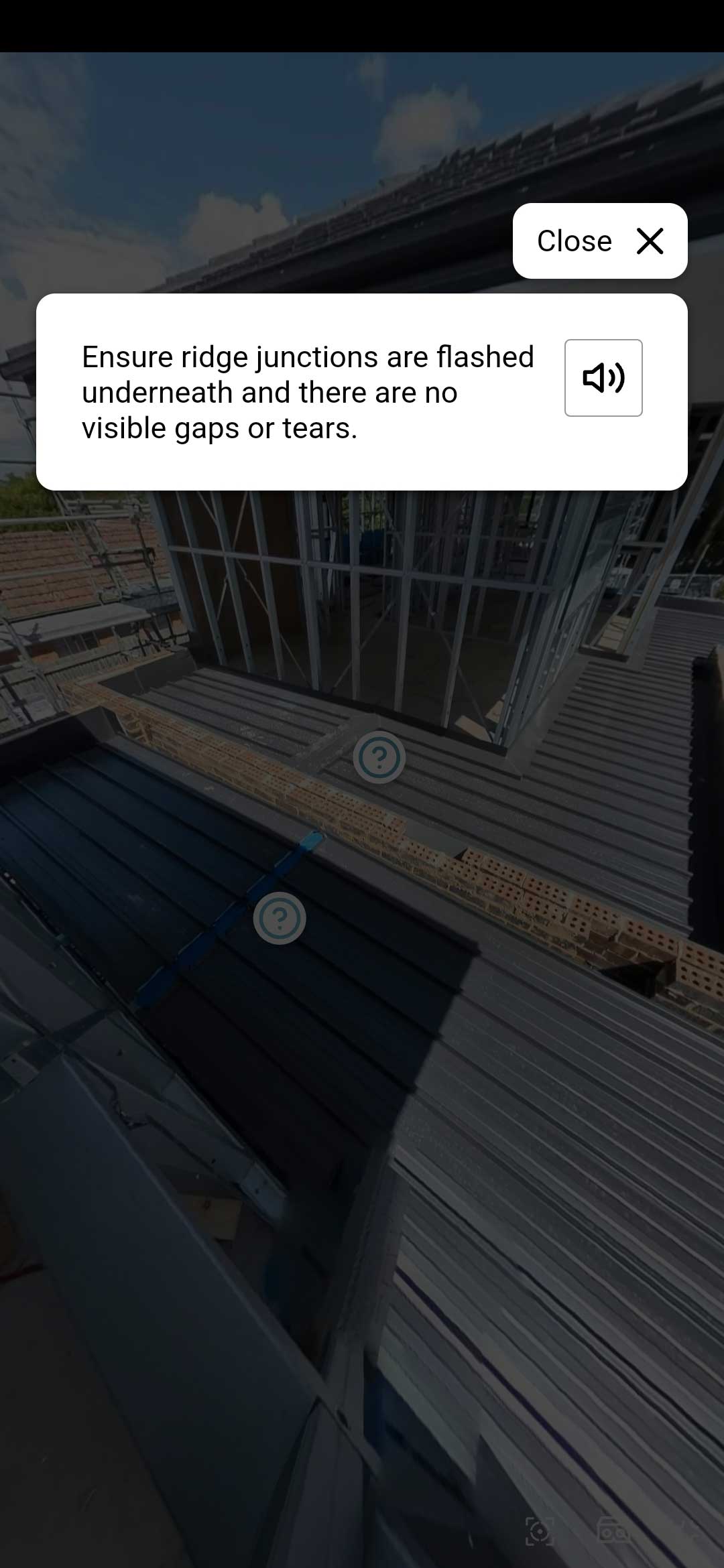
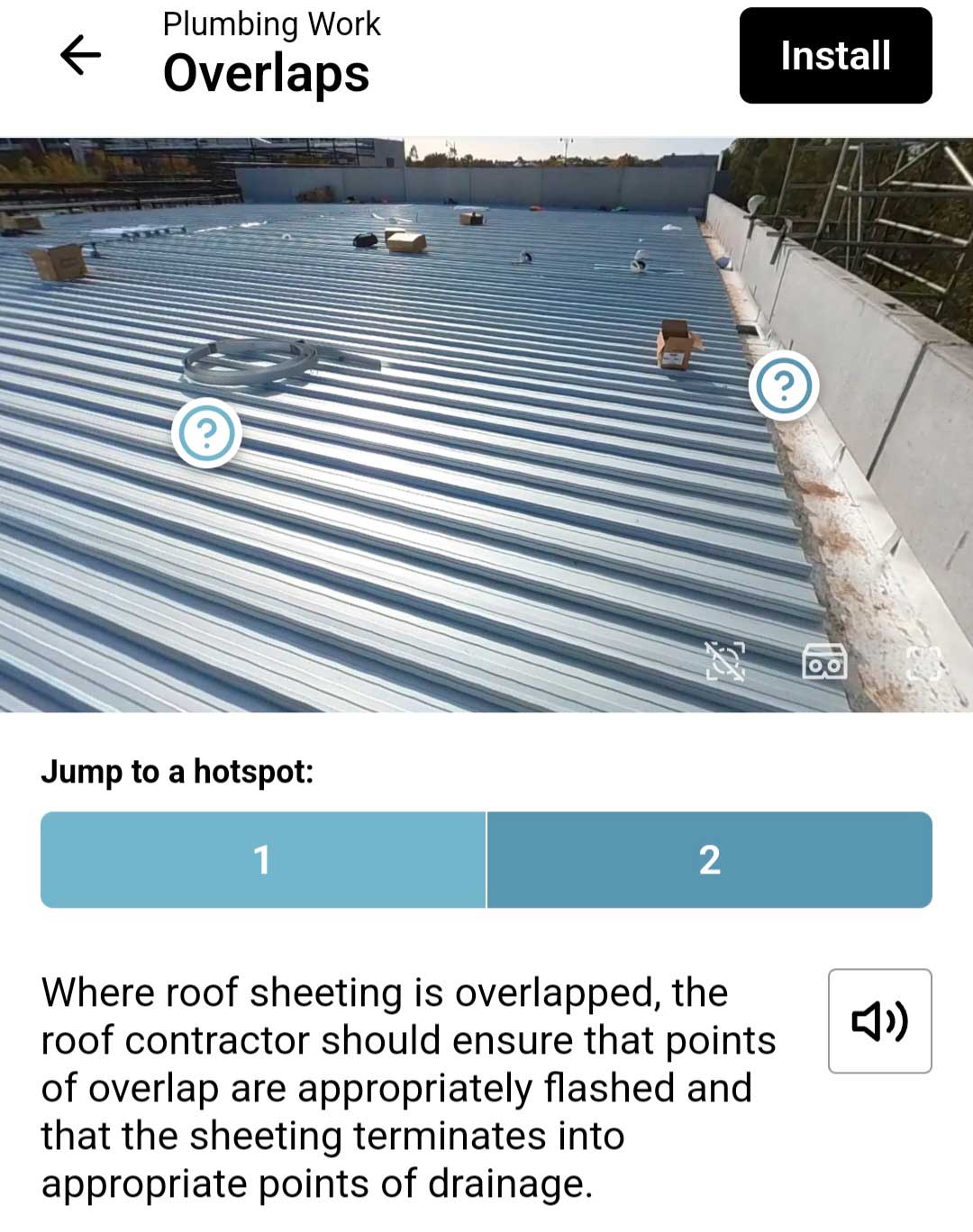
- Interactive hotspots are displayed in each scenario to inform the users further about the necessary work to be done for compliance. The audio function provides voice-over guidance to the users to focus on the compliance risks identified in the hotspot.



