Following the successful delivery of the RMIT Immersion Day in Semester 1 2025 for postgraduate students, the Project Management discipline at School of Property, Construction and Project Management (PCPM) ran another successful Immersion Day in partnership with Seeker Agency and Solution Entertainment (SE Group).
Date: 25/09/2025
Story by: Salman Shooshtarian, Thuy Nguyen and Guinevere Gilbert
This event was organised to give undergraduate project management students exposure to the event management and entertainment industry in Australia. Students were selected to attend the SE Group office for a day, observing the process of planning and implementing upcoming major sporting and commercial events as well as participating in project-based workshops.
What is the event industry and why it is an important industry in Australia?
Following the global disruptions caused by COVID-19, Australia’s events industry has entered a period of strong renewal, emerging more resilient than before. Demand for high-quality events has risen sharply, driven by the desire for face-to-face connection and shared experiences after years of restrictions. According to the latest report from the Australian Trade and Investment Commission[1], business events delivered in 2024 generated an estimated $19.6 billion in expenditure within Australia. These figures highlight the industry’s critical role in supporting the national economy.
Melbourne is well known as a major centre for national and international events. The city hosts a wide range of activities, from big sporting events like the Australian Open and the Formula 1 Grand Prix to conferences, exhibitions, and cultural festivals. It is also a key city for the event industry, supported by world-class venues, a vibrant cultural life, and strong service sectors. Beyond entertainment, these activities make a significant contribution to the economy by attracting tourism, creating jobs, and drawing local and international investment. With its good transport and thriving hospitality sector, Melbourne plays an important role in bringing people together, sharing ideas, and celebrating culture on both local and global levels.
[1] Australian Trade and Investment Commission (2025) Business events data.
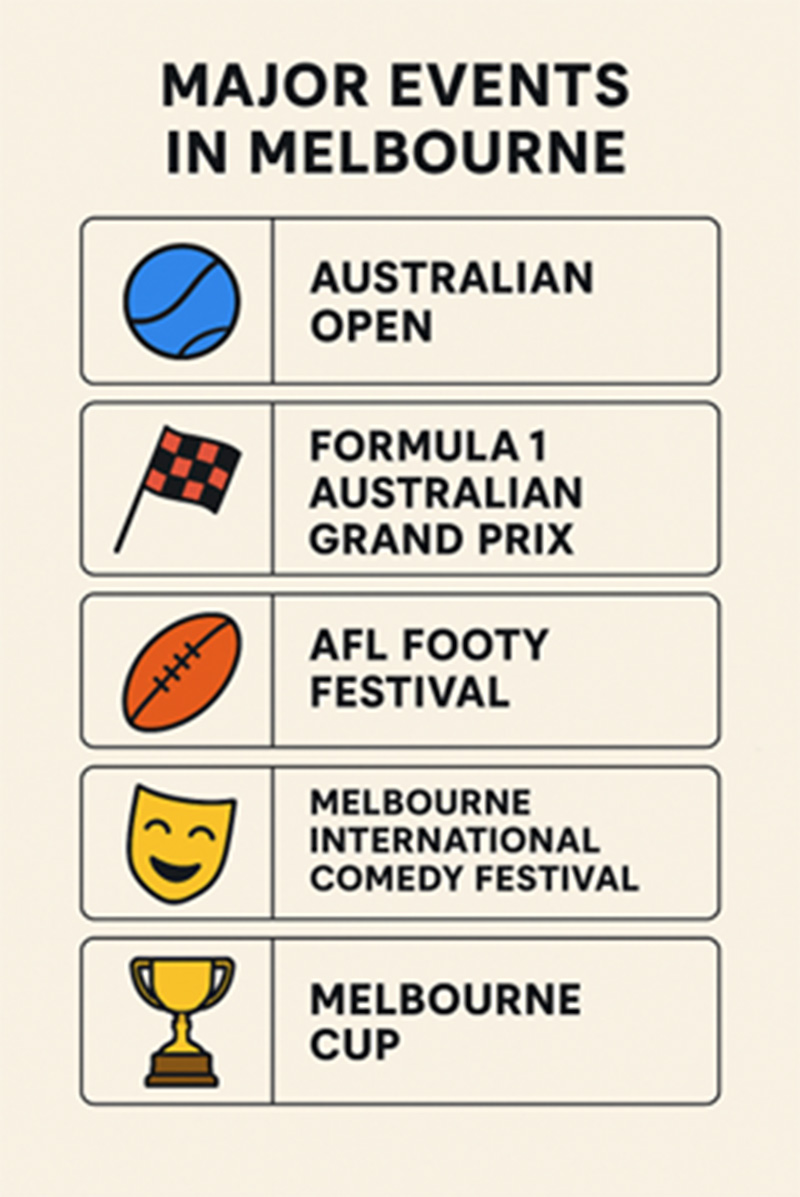 Melbourne is the host to several major national and international sport and cultural events
What is the event minor offered at PCPM?
In 2024, PCPM Project Management discipline established a minor specifically focusing on event management. The event management minor has been designed to give students exposure to different types of events, including corporate, music, sports and arts. Alongside the Bachelor of Project Management (Honours), graduates develop the skills to plan, implement and review events. RMIT project management students also undertake two construction courses which provide an understanding of construction regulations and safety of temporary event structures.
Who is our industry partner
SE Group is a Melbourne-based company with additional office in Sydney. The group specialises in major events, corporate events, incentives and brand experiences, delivering high-impact experiences for clients across a wide range of industries.
SE Group has an impressive track record of managing some of Australia’s most iconic events, including the Australian Open, Formula 1 Australian Grand Prix, Samsung Galaxy AI Showcase, FIFA Celebration Dinner, AFL Footy Festival, NIKE’s Melbourne Marathon. The Group also organises the RMIT Graduation Ceremony.
SE Group represents “great people, creating great experiences for great brands,” and are “powered by a passion for brand experience and the thrill of human connection” These features position the organisation as a suitable industry partner for RMIT students’ learning experiences.
Planning for the Day
Two months prior to the Immersion Day, PCPM’s Project Management team commenced planning in collaboration with SE Group through a series of meetings. These discussions centred on designing a program structure that was both engaging and informative. To support this process, the PCPM team shared insights from the Immersion Day event delivered in Semester 1, 2025, enabling SE Group to build on prior experience and refine the planning.
To ensure all aspiring event managers had a fair opportunity, the organiser adopted a balanced and inclusive process to recruit attendees from the undergraduate project management program. Recruitment was promoted widely through multiple channels, including Canvas announcements across undergraduate courses, distribution of flyers, and targeted outreach to highly engaged students undertaking the Event Management minor. Each promotional effort was complemented with a link to a dedicated event webpage, providing an overview of the day and further details for interested students.
A total of ten project management students were selected to participate in the event through a structured selection process. The criteria considered students’ prior experiences, interests, and their articulated goals for attending. Efforts were also made to ensure diversity within the cohort, including representation across different stages of study and gender balance. The chosen students were invited to an online briefing, led jointly by RMIT staff and a representative from SE Group, to help them get ready to take part in the event activities.
What happened on the day
The immersion day was full of learning activities, and the entire day was divided into three blocks of fun and educational activities each focus on one aspect of planning for an event. These activities are described below.
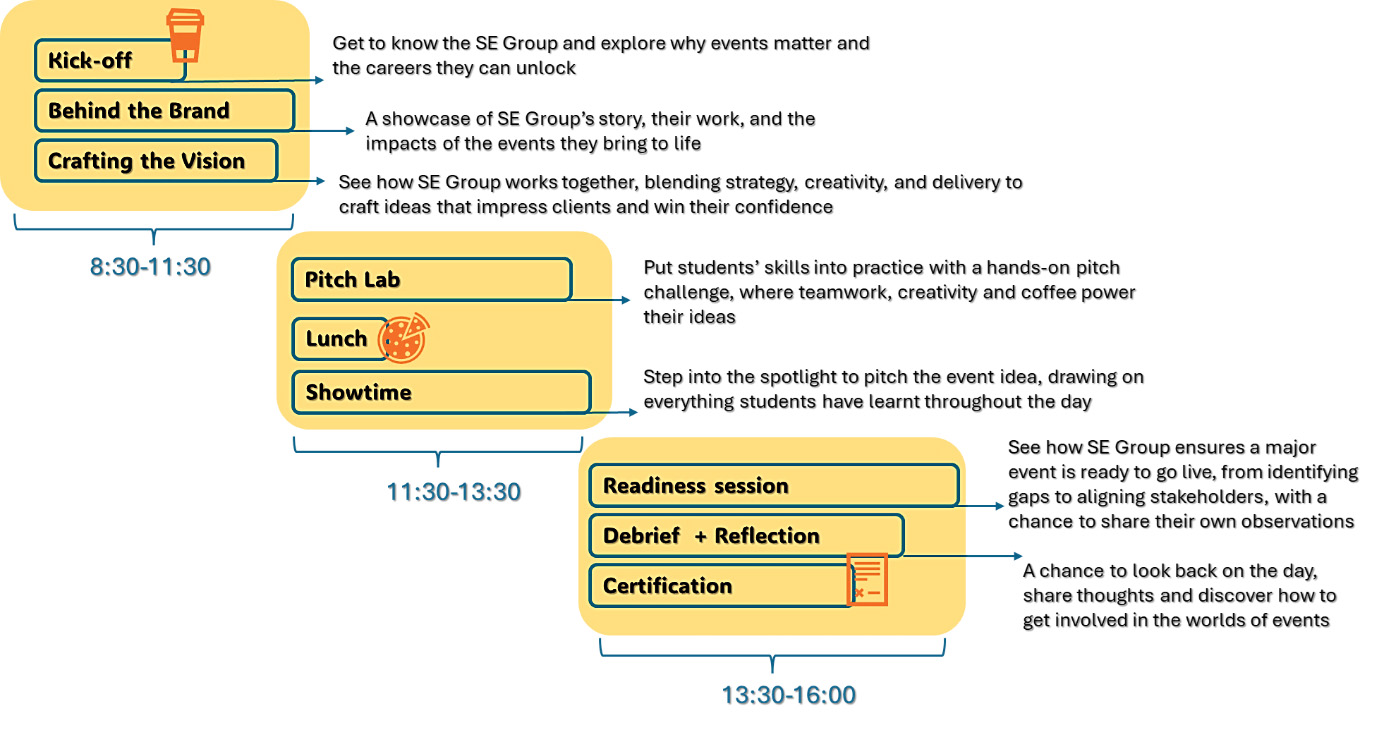 Schematic overview of Immersion Day 2 agenda, including various learning activities planned for the day. Source: Salman Shooshtarian (RMIT) and Ella Ciardulli (SE Group)
Session 1 - 8:30 – 11:30 am
The session began with an overview of the event management industry, followed by an introduction to the range of career pathways available to students interested in building a future in this field. Speakers from SE Group then outlined their core business activities, showcasing their track record of successful projects and diverse portfolio. The session concluded with insights into the internal dynamics of SE Group, highlighting how staff from different divisions collaborate. This gave students a clearer picture of how event projects are conceived, planned, and executed with the goal of impressing clients and earning their trust.
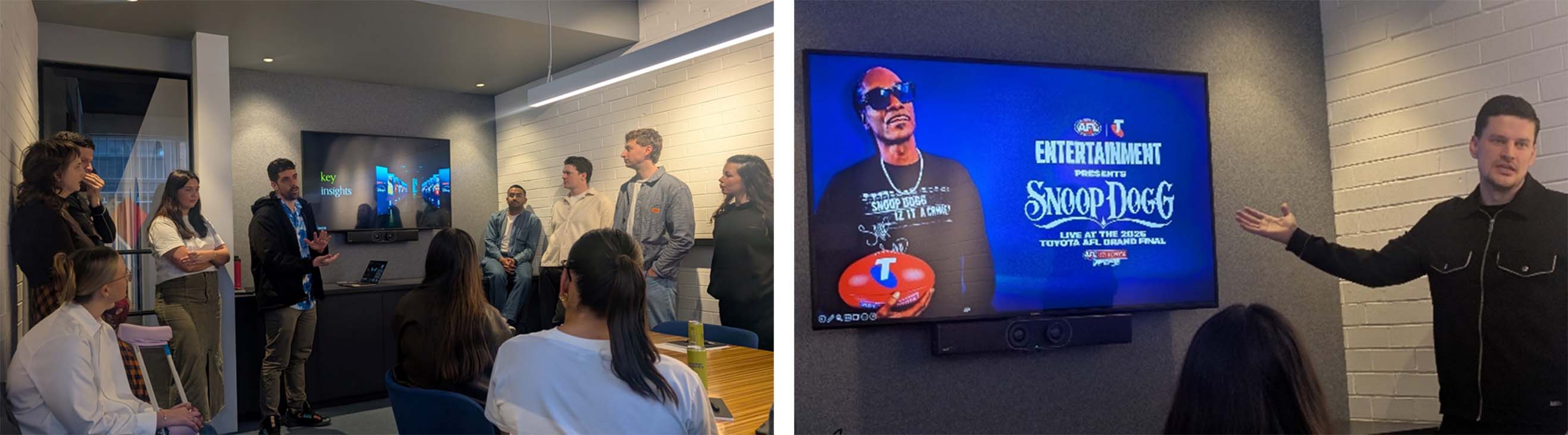 SE Group’s presentations
Session 2 - 11:30 – 13:30 pm
After the lunch break, students were split into four groups to take part in a hands-on pitch challenge based on a real-world project—the RMIT Orientation event. Working collaboratively, each group was tasked with developing innovative ideas to improve the delivery of a university event for both new and returning students. The groups then presented their concepts to a panel of expert judges, who offered constructive feedback on the proposed events.
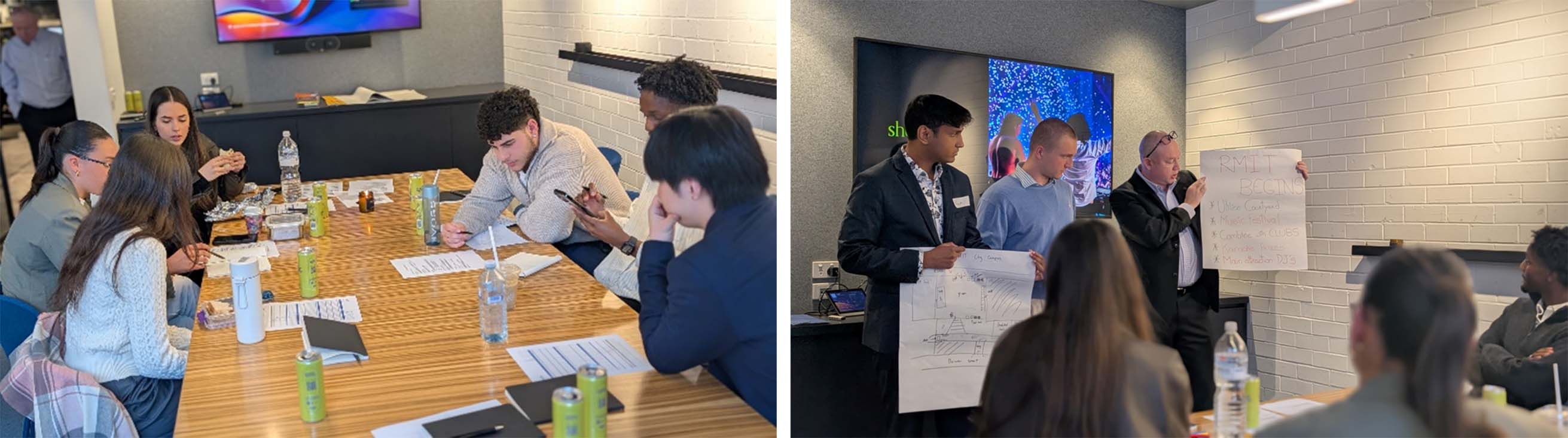 Each group of students discussed their ideas and delivered a presentation to the judges.
Session 3 - 13:30 – 16:00 pm
The final session of the day consisted of three components: readiness, debrief and reflection, and the presentation of certificates. In the readiness activity, students took part in a planning session for a real-world project—the 2025 Toyota AFL Grand Final Parade. This gave them the chance to observe, learn from, and engage with the planning processes used by SE Group to ensure the smooth delivery of large-scale events. Following this, students joined a debrief and reflection session, where they heard from presenters and SE Group staff, and took part in an interactive Q&A. The Immersion Day concluded with the presentation of certificates of completion, co-signed by the Associate Dean of Project Management, Prof. Tayyab Maqsood, and a representative from SE Group.
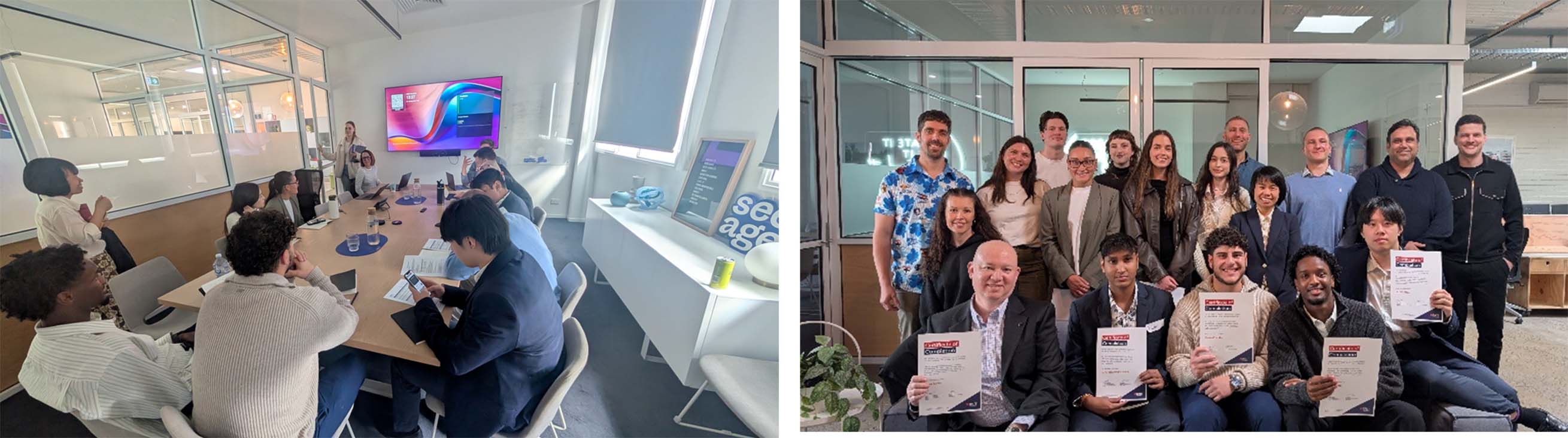 Planning session for the 2025 Toyota AFL Grand Final Parade (left) and group photo with students, RMIT staff, and SE Group representatives at the close of the event (right).
Findings from post event survey
The findings from the post-event survey, illustrated in the figures below, demonstrate that the Immersion Day successfully met its objectives by delivering a positive overall student experience and strengthening students’ understanding of the event management industry. In addition, over 70 per cent of students indicated that the activities offered during the event were likely to moderately to significantly enhance their employability after graduation.
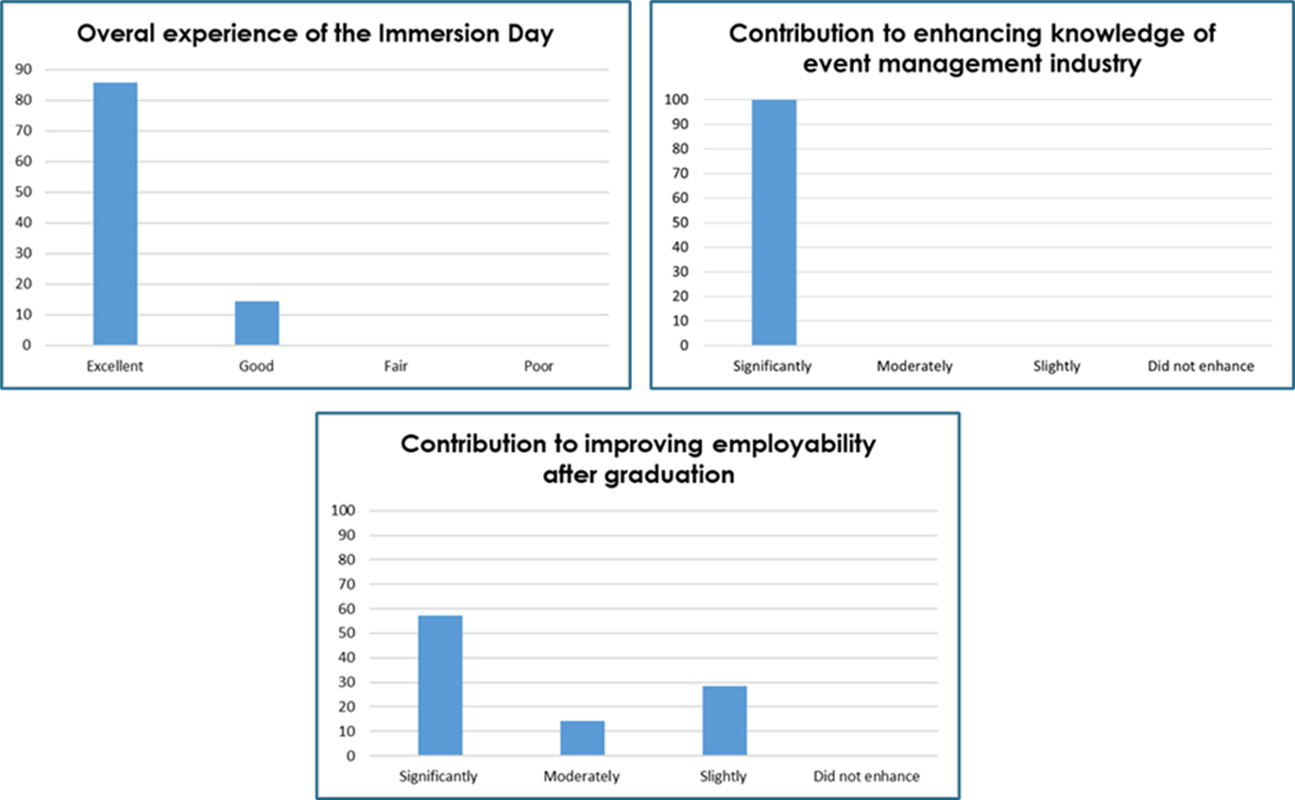 The frequency distribution of students’ post-event survey responses on the effectiveness of the Immersion Day event in terms of overall experience, knowledge enhancement and employability improvements. Source: Authors
Conclusion
Industry partnered learning activities such as immersion days benefit all parties: the host can plan and manage the day according to their capacity, and they are able to observe potential recruits therefore selecting future employees with more confidence. Students benefit from exposure to the industry, listening to the language and observing application of processes that have been introduced in class; they are able to make informed choices about future career directions. Academic staff can inform their future classes with industry context cases.
Immersion days also align with RMIT’s Strategy to 2031 Goal 1: Build a coherent, connected lifelong learning system, through industry led application of theory to the workplace and supporting educators to create innovative and relevant course content.
PCPM would like to thank Christian Marchand, Ella Ciardulli and the team at SE Group and look forward to a long and mutually beneficial relationship.



