Always self-propelled by my own belief: Meet award-winning architect Steven Chu

Talent, determination and a steely belief in his design visions have earned RMIT alum Steven Chu an acclaimed career in architecture.

The social injustices Chu saw throughout his childhood in war-torn Myanmar drove him to seek out a career helping others. 

“I considered becoming a soldier and I considered becoming a doctor, and all of those options were driven by this desire to, I think, improve the lives of people around me that I saw were living lives that probably were not of their own choosing,” he said. 

“I needed to draw,” he said. “I needed a bit of culture and art in my life, but I also knew that I didn't just want to be an artist. Naively or not, as a teenager, I arrived at the conclusion that it might be architecture.”

Drawing up a design for life

Chu arrived in Australia in 2006 at the age of 19 with no family to support him. 

“My goal was to become an architect,” he recalled. “I was quite ambitious and quite driven.”

He had researched architecture degrees at Melbourne universities, looking for an institution that focused on creativity and design concepts. RMIT was the perfect fit. 

Chu also felt assured by the fact students needed to pass some of the selection criteria based on their portfolio. 

He spent five years at RMIT completing the Bachelor of Architectural Design and the Master of Architecture.

The late Professor Peter Corrigan, who taught architecture students at RMIT for more than three decades, became a mentor. After Chu’s graduation, Corrigan wrote letters of recommendation that helped Chu enter the competitive industry. 

“I credit all the jobs I got because of his letter because he's quite well known and every employer who I showed the letter to, they always end up being quite surprised that Peter wrote me such a good letter because he's well known to be quite prickly,” he said.

Chu’s first job was at McBride Charles Ryan where he worked on the Victorian Comprehensive Cancer Centre on Grattan Street, Melbourne. The centre’s unique design was recognised with two awards from the Australian Institute of Architects (Victorian Chapter) in 2017: the Victorian Architecture Medal and the William Wardell Award for Public Architecture. It also won two GOV Design Awards golds in the interior design and hospitality and commercial categories.  

“I thought that was a good indicator of what they valued,” he said.

Making it on his own

Chu set up his own studio, Artefact Architects, in 2014 and since then, has continuously been on the lookout for design competitions to enter.

He spotted an ad for the Not A Hotel competition just one day before the official briefing and decided to go for it. 

The competition was founded in 2020 and is exclusively for architects aged under 40. Chu was 39 when he entered his design, Sound of Rain, last year.

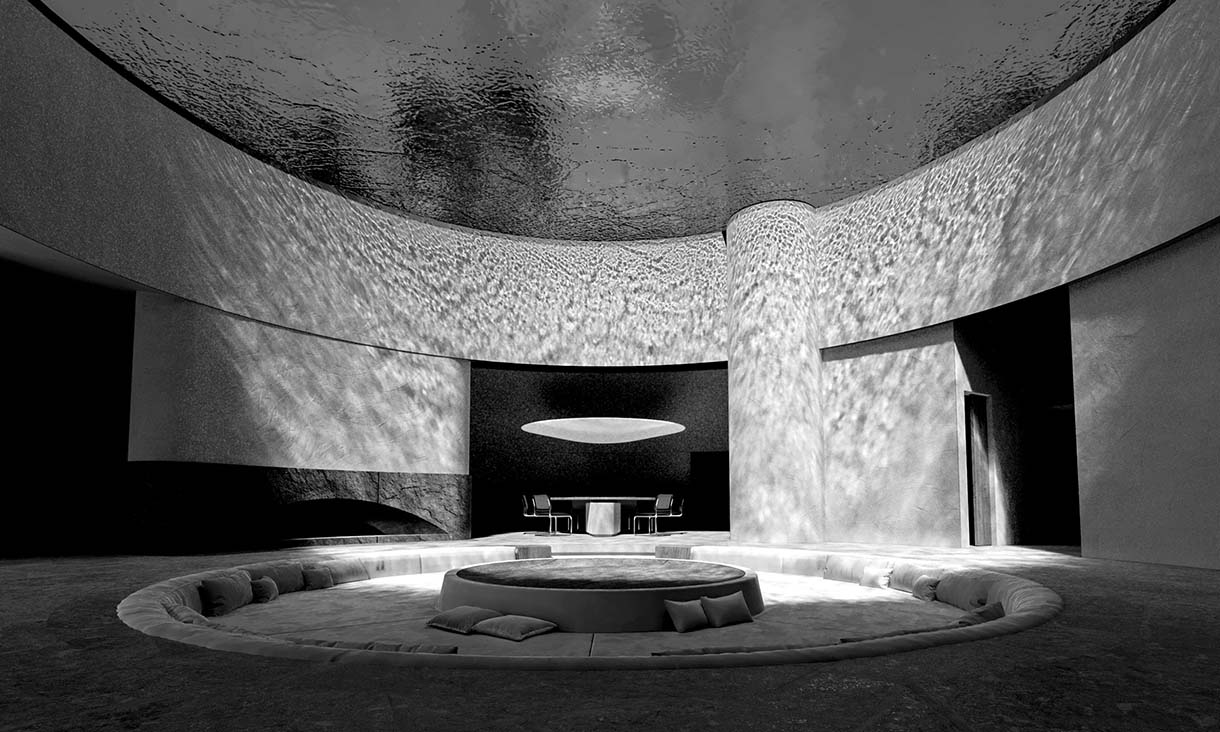
His entry was inspired by the site where the 2026 winning design will be built, on Japan’s Yakushima – a UNESCO World Heritage island famed for its dense cedar forests.

“It's like this ancient magical site where it rains every day and there's 3000-year-old trees everywhere,” Chu said.

“I thought, ‘I have to do this’. So I just cleared up my schedule and I thought, ‘Okay, what the hell? If I have one shot, I'll take it’.”

Using a literary methodology, where he writes before drawing, Chu began researching the island and always kept coming back to the theme of rain.  

“So, when I asked ‘What is rain?’, the poetics that came to me was that rain is gravity made invisible, rain is time made audible and rain is the moment the sky meets the earth,” he said.

“Obviously, there's a bit of poetic licence there to define rain and such, but I knew I could work with these three lines to generate a kind of architecture that was ancient, but also futuristic at the same time. Gravitational, but also sort of suspended.”

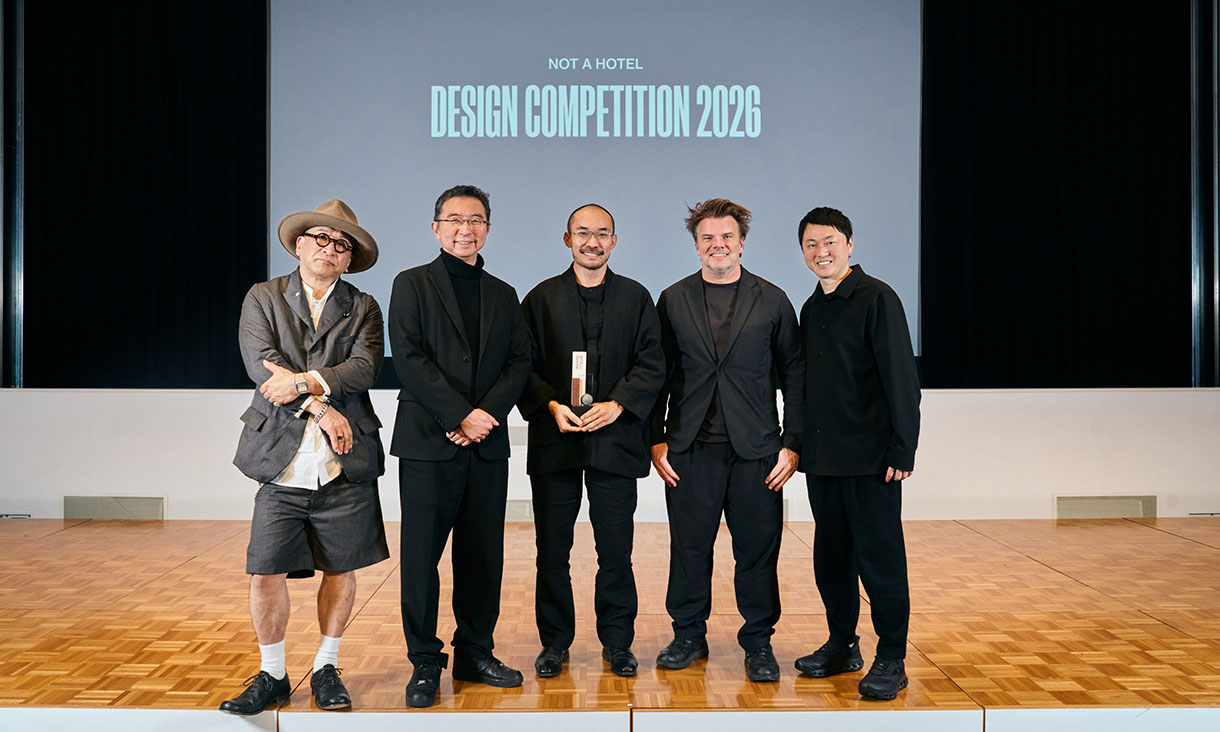
Chu won the 2026 prize, earning himself $80,000 (AUD) and oversight of the construction of his design. Judges, including acclaimed Danish architect Bjarke Ingels, praised Chu’s integration of architecture with nature and the building’s bowl-like rooftop to capture rain. 

“In my heart, deeply, I believed in Sound of Rain,” he said.

“I've worked for 20 years for this moment and there's been no recognition at times, and no hope as well. I’ve basically just worked quietly without any kind of reward or recognition, always self-propelled by my own belief.”
Planning for design sustainability

Sustainability is increasingly prioritised in urban design and for architects, it’s a fine balance of meeting standards and integrating creativity. 

Chu said his take on sustainability is tied to longevity of a building and how it will be used by future generations. 

“In many ways, I believe a 3000-year-old cathedral with no insulation, no heating, no cooling, is more sustainable than an 8-star sustainable building that we end up demolishing in 10 years' time to replace it with a more sustainable building,” he said.

“So, I think what's sustainable is if the building can sustain us and if we can sustain the building and if our culture can be sustained, it's not this box-ticking exercise.”

Chu is mindful of future generations when creating designs and also when passing on his knowledge.

He has been working at RMIT as a design tutor leader in the Master of Architecture since 2018 and he is also a PhD candidate. His words of advice to aspiring architects is to be bold and brave.

“Stay curious. Stay ambitious. Don't be afraid to thread your own path. The drive to move forward needs to come from within, not from external praise and rewards. Don't be afraid to continue believing in yourself, especially when it seems no one else does." 

Story: Kate Jones

You may also be interested in

aboriginal flag float-starttorres strait flag float-start

Acknowledgement of Country

RMIT University acknowledges the people of the Woi wurrung and Boon wurrung language groups of the eastern Kulin Nation on whose unceded lands we conduct the business of the University. RMIT University respectfully acknowledges their Ancestors and Elders, past and present. RMIT also acknowledges the Traditional Custodians and their Ancestors of the lands and waters across Australia where we conduct our business - Artwork 'Sentient' by Hollie Johnson, Gunaikurnai and Monero Ngarigo.

Learn more about our commitment to Indigenous cultures