Stories told through colour, texture and style

Pivoting from advertising to interior design was less of a career shift than it was a career elevation for RMIT alum Ruby Shields.

When she left her career in advertising for a future in interior design, Ruby knew she was on to a good thing. Creativity was a common feature of both professions and Ruby’s natural talent for colour, materials and styles made for a winning combination. 

“Advertising taught me how to tell stories and communicate ideas, while interior design taught me how to tell those stories through space, materiality and experience,” she said.

“Looking back, the two disciplines are more connected than they first appear.”

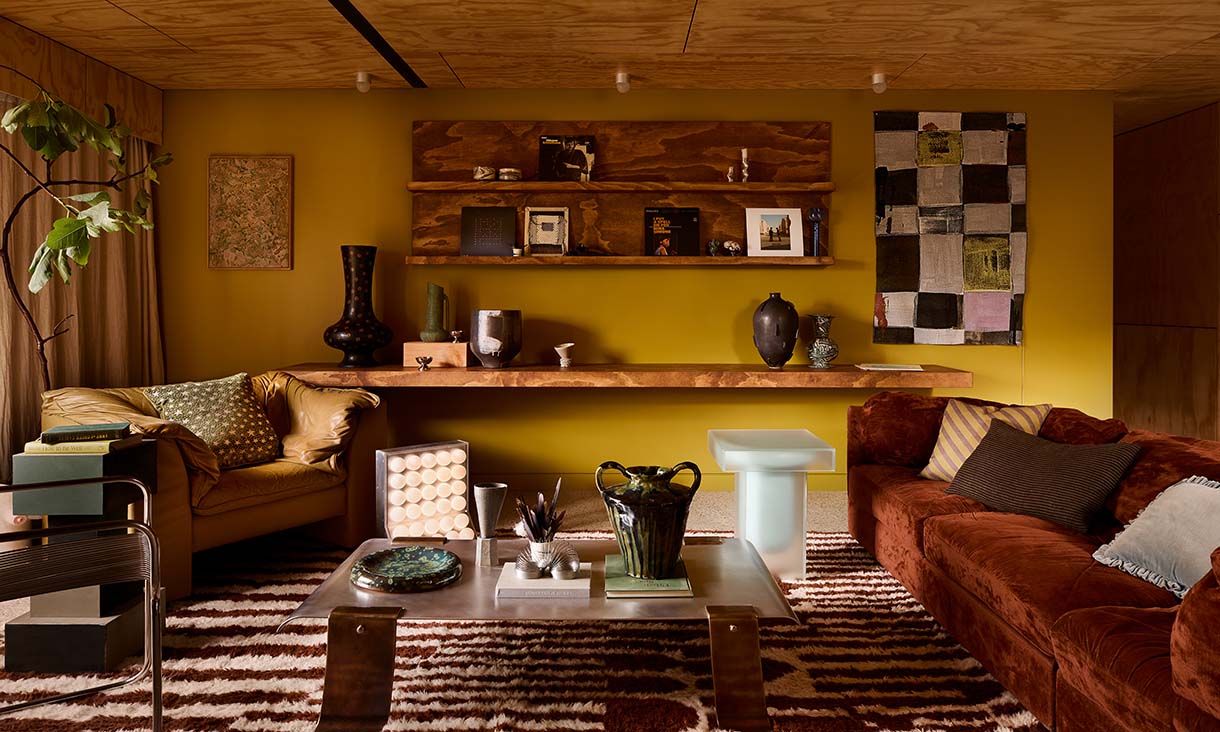
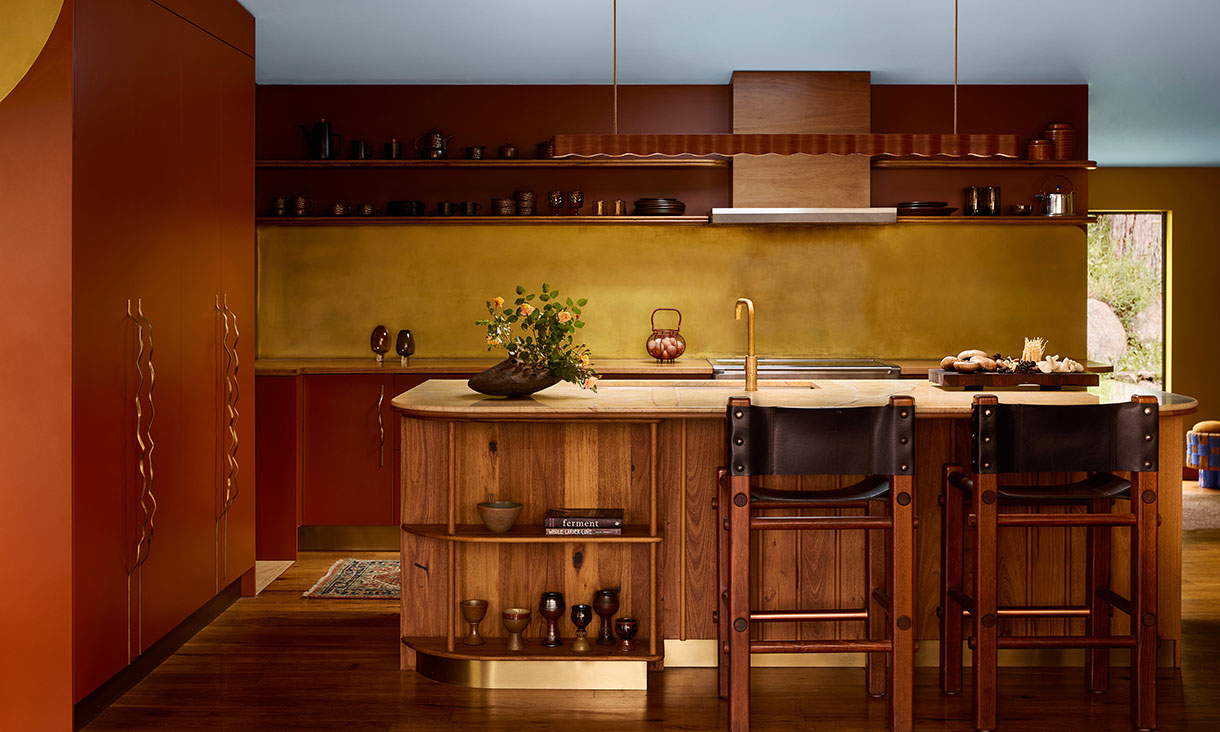
So, when Ruby set up her own interior design business, Studio Shields, the industry sat up and paid attention. Vogue Living featured her work, and it was the first of many design publications that put Ruby’s designs on show.

Photo by Sean FennessyPhoto by Sean Fennessy

Renovating sparks creative ambitions

Advertising was never an instinctive career path for Ruby, but as a child she was always busy drawing and telling stories. 

Later in life, it became a profession that appealed to Ruby for its dynamism, and partially for the aesthetics on show in the hit TV show Mad Men.

“It (advertising) combined visual thinking with storytelling and allowed me to explore how ideas could be communicated in a compelling way,” she explained. 

“I was drawn to the pace of it, the collaboration, and the way it demanded both clarity and imagination.

“I was also watching a lot of Mad Men when I applied, I think I was more swept up in the fashion and interiors over the male-dominated environment.”

Ruby graduated from RMIT with a Bachelor of Communication (Advertising) in 2016 and began working with advertising firm J Walter Thompson (now Wunderman Thompson), collaborating with big organisations such as Jetstar, Ford and Beyond Blue.

“It was fast-paced and demanding in the best way,” she said. 

“I learned how to think quickly, how to communicate ideas clearly, and how to collaborate under pressure. It gave me a strong foundation in discipline and creative rigour, which I still carry into my work today.”

Then in 2018, Ruby and her partner, Patrick, purchased a half-renovated home in Melbourne’s outer-east. Their restoration of the home brought her creativity to the fore and ultimately, it became a catalyst for a career rethink.

“I found myself completely immersed, reading about interiors constantly, experimenting with colour and materials, and naturally becoming the person friends and colleagues came to for advice,” she said.

“It stopped being a passive interest and became something I was actively living and thinking about every day.”

Three years later, just as Ruby was about to step into a more senior role in advertising, she decided to make a move. 

“That year was a turning point in many ways; I got married, cut my hair, changed my name, and stepped fully into a new chapter,” she said. 

“By July I was studying interior design full-time, and I haven’t looked back since.”
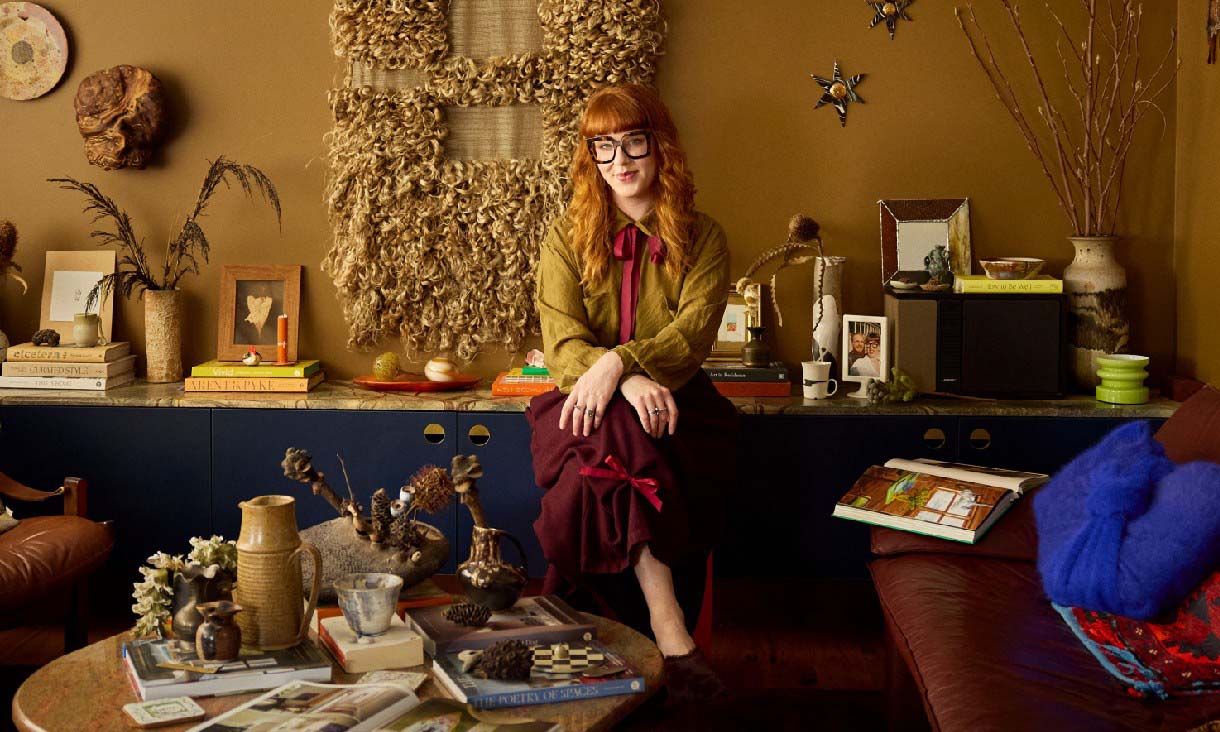
Photo by Martina GemmolaPhoto by Martina Gemmola

Smoothing the transition

Making the move to interior design was a simple decision for Ruby, who enrolled in an Associate Degree in Interior Decoration and Design.

“RMIT has a strong reputation for being both conceptual and grounded in real-world application,” she said.

“It encourages you to think critically but also to make, test and refine. That balance really appealed to me, especially also doing my Communications degree at RMIT. 

“I knew the systems, the campus and knew that RMIT was prestigious in its courses.”

After graduating in 2023, Ruby worked at WOWOWA Architecture and interior design firm Nickolas Gurtler before deciding to set up her solo practice, Studio Shields. The business had a soft launch in 2025 before Shields eased into full-time work in 2026.

“I've always had a clear perspective on how I wanted to work and what I wanted to create,” she said.

“I wanted to build something that felt deeply personal and reflective of my values, where I could explore colour, material and narrative in a way that represented me and what I wanted to bring to people's homes.”

Taking the leap to self-employment was a big step, but Ruby said it was one she just knew she had to take.

“I don’t think you ever feel completely ready,” she said. 

“It was more about trusting the instinct that it was time. I had built up enough experience, and I felt a strong pull to do things on my own terms. 

“At a certain point, not doing it felt like a bigger risk than trying.”

Photo by Martina GemmolaPhoto by Martina Gemmola

Revelling in her own space

Shortly after Studio Shields was up and running, the iconic design publication Vogue Living featured Ruby’s interior design work as part of her wider home renovation.

“As a designer, having your debut project featured by Vogue Living is pretty hard to top,” she said. 

“It was an incredibly proud moment and a huge vote of confidence at a time when Studio Shields was still finding its feet.”

Her work has since been featured in EST Living, The Local Project and The Design Files. All have showcased her connection to each individual space she has designed.

“I think the thing that sets my work apart is that I approach interiors through the lens of storytelling rather than trends,” she said.

“Every project starts with understanding the people who live there — how they collect, entertain, travel, work and spend time together. From there, I build spaces that feel deeply personal rather than stylistically prescribed.

“Ultimately, I want every project to feel impossible to replicate because it belongs so completely to the people who live there.”

For those considering a future in interior design, Ruby’s words of advice are simple: take it slow. 

“Take your time and don’t rush the process,” she said. 

“The most interesting work comes from experience, observation and living in spaces, not just designing them. Be curious, ask questions, and stay open to learning from everyone around you, especially makers and builders.”


Story: Kate Jones

You may also be interested in

aboriginal flag float-starttorres strait flag float-start

Acknowledgement of Country

RMIT University acknowledges the people of the Woi wurrung and Boon wurrung language groups of the eastern Kulin Nation on whose unceded lands we conduct the business of the University. RMIT University respectfully acknowledges their Ancestors and Elders, past and present. RMIT also acknowledges the Traditional Custodians and their Ancestors of the lands and waters across Australia where we conduct our business - Artwork 'Sentient' by Hollie Johnson, Gunaikurnai and Monero Ngarigo.

Learn more about our commitment to Indigenous cultures