

A career that followed curiosity: Syed Mosawi and his STEM journey

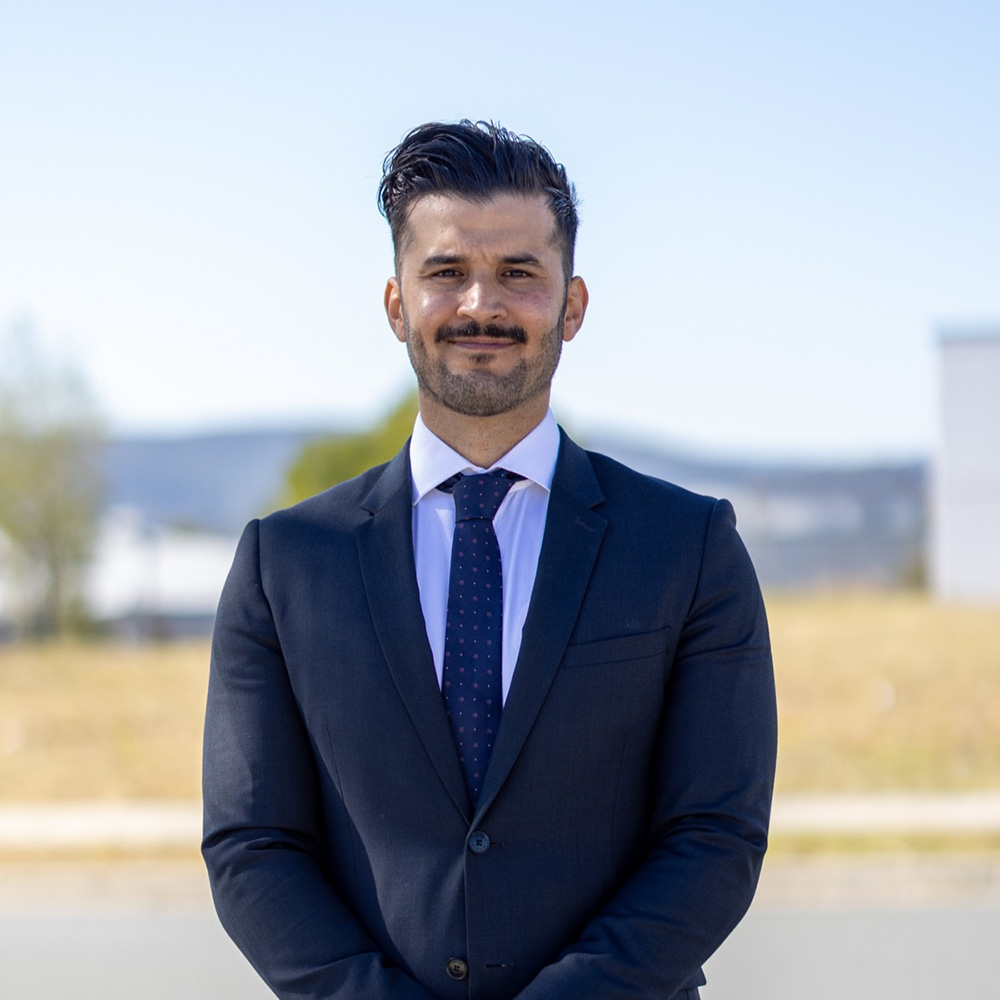
It’s difficult to trace just how this RMIT alum arrived at AI from a starting point in physics and nanotechnology, but Syed is an expert in pulling a lot of seemingly unrelated specialties together.

“My background is genuinely multidisciplinary, spanning science, IP law, and now AI policy, and I'm at my best when I'm connecting fields that don't usually sit at the same table,” he said.

“I also speak four languages, which probably says something about how I like to move between worlds.”

Making the quantum leap from physics to AI

As a child, Syed loved science-fiction stories and TV shows, especially about black holes and time machines. As he grew up, his love of science never waned, and he took a firm aim at studying physics. 

“Physics allows you to understand the most basic workings of of the universe and you're pretty much aware of [how] everything that you interact with functions - from the smallest particle that exists to the vastness of space,” he said.

Syed chose RMIT and graduated in 2018 with a Bachelor of Science (Applied Sciences) (Honours) and a Bachelor of Science (Nanotechnology). 

In Syed’s honours year, his physics professor Gary Byrant suggested Syed apply for the Nicholas Baudin Internship, organised by the French Embassy. Syed was successful and studied at the University of Lorraine in Nancy, northeast of Paris, for 10 months.

When he returned home to Australia, Syed took his first career sidestep with a Master’s course in intellectual property law. 

Between 2021 and 2023, Syed worked accross boutique and publicly listed IP firm and as in-house counsel at Tritium, the electric vehicle fast-charging company, on patents, trade marks, designs and copyrights. It was during this time that AI first piqued his interest. 

“I was working as a senior in-house counsel and I didn't have any tools to manage the expanding intellectual property assets of that company,” he said.

“I did ask around from other people in the industry, and there was pretty much nothing that would suit in-house IP counsel, so I ended up building my own custom tool for the company and it had some elements of AI as well, and AI was relatively new back then.”

AI learnings lead to business invention

For Syed, the attraction of AI was its practical functions and constantly evolving nature. 

“As a life-long learner with a science background, I'm always someone who's very curious and as I ended up moving towards solving real world problems, the best tool I realised even then was AI. 

But Syed also saw how AI could be used unethically. When he heard about a 2024 scandal involving high school students who used AI to create and circulate explicit fake nude images of other students, he decided to put his expertise in science and IP to good work.

“I was very much inspired by that and I realised that those kids didn’t build the tool they used. Someone did and shaped it and no one was accountable for what it was always going to be used for” he said. 

“So, I thought, ‘What if Australian businesses could be assessed on how they actually use and develop AI, and then carry an earned mark or a symbol that proves it? Something Australians can look for, the way they look for the Heart Foundation Tick or the Australian Made logo’.”

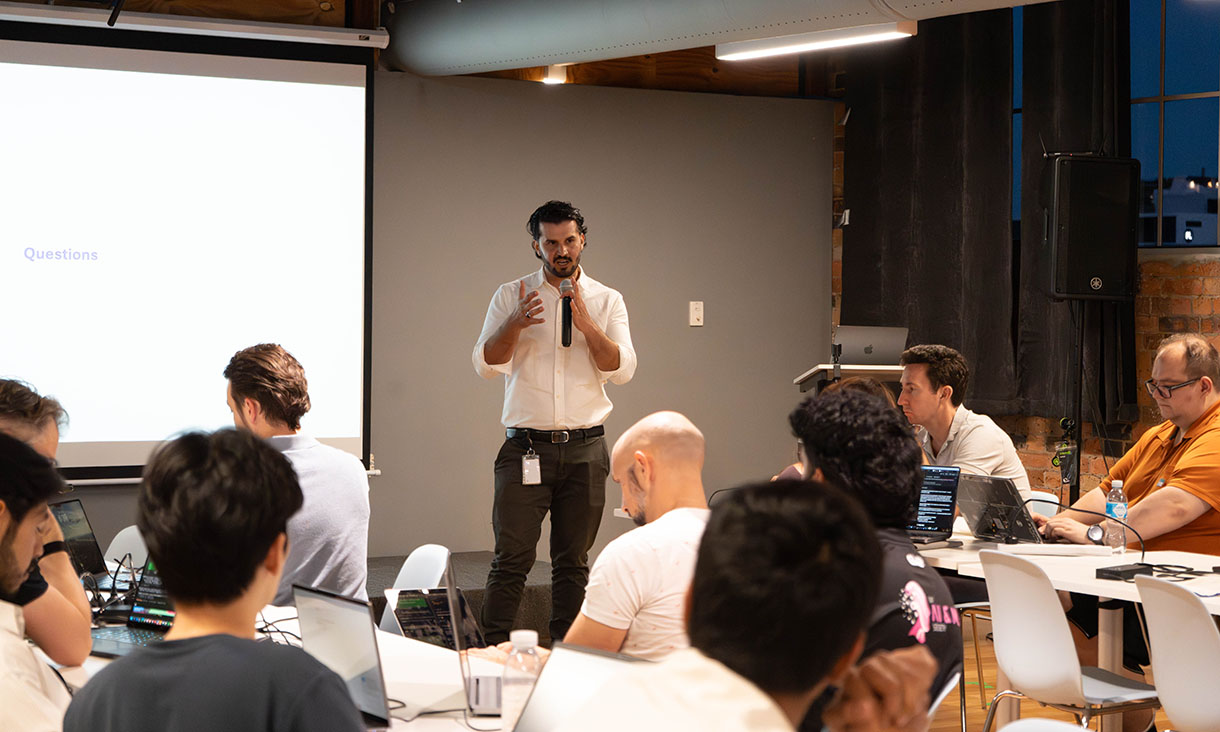
This lightbulb moment led Syed to investigate creating his own AI business that would assess Australian businesses against an evolving framework and issues a trust badge to those who meet the requirements. In 2024, he founded Responsible AI Australia, an independent organisation that certifies and supports Australian businesses in the ethical and responsible use of artificial intelligence.

Using AI ethically

The rapid evolution of AI has left many policymakers struggling to keep pace. In July this year, Prime Minister Anthony Albanese announced a new Office of AI to meet standards due to be finalised in 2027.  
For businesses, Syed said the race to keep on top of the safe and ethical use of AI can seem overwhelming. “I think we're constantly dealing with problems and like many other tools that humanity has invented, it's got a lot of benefits, but it has a potential to be misused,” he said. 

“It’s almost impossible to mitigate risks without hindsight. The best way is to run short experiments and see how the output is impacting the social and ethical norms. Based on that outcome, you can always circle back and keep improving.”

Responsible AI Australia works with a diverse range of clients from small to large enterprises, including businesses building custom AI software. Some are still at the beginning of their AI journey and may be using legacy software, while others are at an advanced stage of finding ways to integrate and benefit from AI.

Syed’s advice for users is to be vigilant and always maintain oversight of how the technology is operating.

“If you use AI regularly, particularly in professional setting, the best tip is [keep a] human in the loop,” he said.

“Ensuring you, or another reliable human, always review and approve every plate before the dish is served out to your guest.

“Best thing we can do is to educate and empower everyone around us including our minors, elders and people in the regional communities.
We’ve all had people sharing harmful AI videos on social media believing it’s real. 

“I think ongoing learning and education about AI is one of the best way to mitigate the risks and benefit from it.”

Responsible AI Australia is a business in the RMIT Business Directory.

Story by Kate Jones. 

You might also be interested in

aboriginal flag float-starttorres strait flag float-start

Acknowledgement of Country

RMIT University acknowledges the people of the Woi wurrung and Boon wurrung language groups of the eastern Kulin Nation on whose unceded lands we conduct the business of the University. RMIT University respectfully acknowledges their Ancestors and Elders, past and present. RMIT also acknowledges the Traditional Custodians and their Ancestors of the lands and waters across Australia where we conduct our business - Artwork 'Sentient' by Hollie Johnson, Gunaikurnai and Monero Ngarigo.

Learn more about our commitment to Aboriginal and Torres Strait Islander peoples