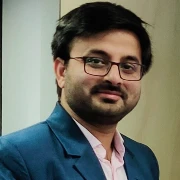
Dr. Sourav Ghosh
Details
 College: School of Science
 Department: School of Science
 Campus: City Campus Australia
 sourav.ghosh@rmit.edu.au
 ORCID: 0000-0003-1766-4340
Open to
- Masters Research or PhD student supervision
- Industry Projects
About
Sourav Ghosh is a Computational Materials Scientist and Research Fellow at RMIT University specializing in multiscale modeling of materials microstructures, defects, and processing–structure–property relationships. His research combines physics-based simulations, machine learning, and high-performance computing to understand material behavior across atomistic, mesoscale, and continuum length scales.
Prior to joining RMIT, Sourav completed a joint PhD at the Indian Institute of Technology Kanpur and the University of Melbourne, followed by a postdoctoral appointment at Arizona State University. His research experience spans computational metallurgy, phase transformations, interface science, thin-film growth, precipitation strengthening, and sustainable materials processing. He has developed advanced computational frameworks using phase-field modeling, phase-field crystal methods, molecular dynamics, density functional theory, CALPHAD, and integrated computational materials engineering approaches.
Currently, Sourav is working on the evolution of microstructures and defect populations in quantum devices through multiscale modeling. His research aims to uncover the mechanisms governing defect formation, migration, and annihilation during processing, providing fundamental insights that can improve the reliability, performance, and scalability of next-generation quantum technologies.

Research fields
- 401607 Metals and alloy materials
- 400101 Aerospace materials
- 400912 Quantum engineering systems (incl. computing and communications)
- 401102 Environmentally sustainable engineering

Academic positions
- Postdoctoral Research Scholar
- Arizona State University
- Materials Science and Engineering
- Tempe, United States
- 4 Aug 2025 – 7 Jun 2026
- Tutor
- Indian Institute of Technology Kanpur
- Materials Science and Engineering
- Kanpur, India
- 1 Jan 2020 – 31 Dec 2021

Degrees
- Ph.D, Mechanical and Industrial Eng and Techn.
- University of Melbourne
- Australia
- 2020 – Present

Research interests
Research Interests
Sourav's research focuses on computational materials science and multiscale modeling of microstructure evolution, defects, and phase transformations in advanced materials systems. He develops physics-based and data-driven computational frameworks to understand how processing conditions influence material structure and performance across atomistic, mesoscale, and continuum length scales. His expertise spans phase-field modeling, phase-field crystal methods, molecular dynamics, CALPHAD, machine learning, and high-performance computing.
His current interests include defect engineering in quantum devices, computational metallurgy, thin-film growth, interface science, solidification phenomena, and sustainable materials processing. Through close collaboration with experimental researchers and industry partners, he aims to accelerate materials discovery and optimization for next-generation manufacturing, energy, and quantum technologies.




