Rapid assessment of the impact of COVID-19 on wet market reforms

The goal of this rapid assessment project is to understand how the COVID-19 pandemic has impacted wet markets in Vietnam, Kenya and the Philippines, specifically on biosecurity reforms and policies.

Project date: 2021

Background

This research forms part of a suite of work funded by Australian Centre for International Agricultural Research’s (ACIAR) three-stage ‘Rapid Assessment’ initiative, aimed at increasing our understanding of the impacts of COVID-19 on food systems in the Indo-Pacific region.

Previous ACIAR research identified that COVID-19 impacts are not evenly distributed across social and economic strata, and that dramatic impacts to food security and livelihoods have already occurred as a result of emergency responses enacted by state and nonstate actors to tackle the public health imperative, including the closure of many local markets that threaten to increase food prices and drive social unrest. This project will contribute to knowledge and understanding of the impact of the pandemic on wet markets and the communities reliant on them.

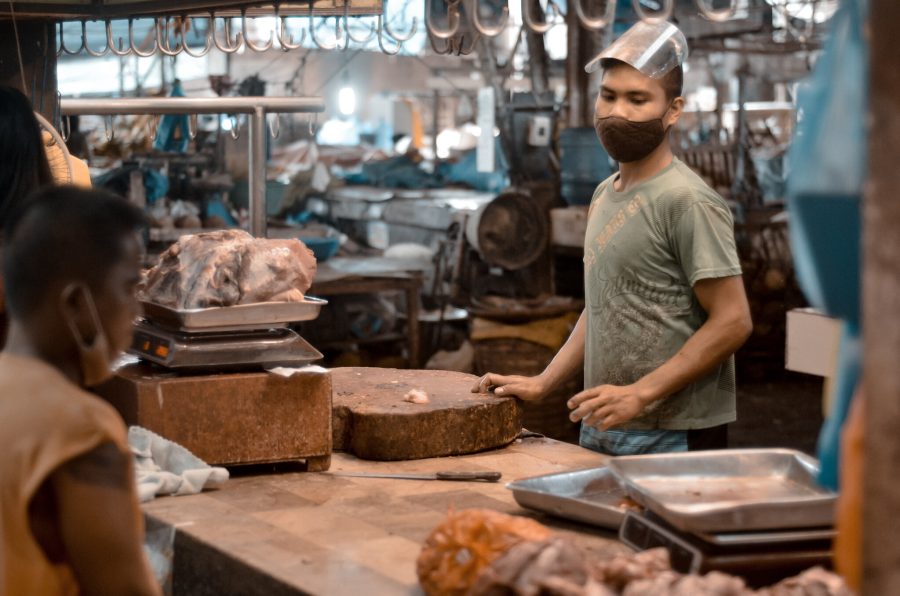
A man in a mask selling meat at a wet market A meat vendor tends to a buyer at the wet section of the Burgos Public Market in Bacolod City, Philippines on Monday, 12 October 2020. Photo by Rodney A. Jarder, via Flickr. CC BY-SA 2.0

Research and scope

The goal of this rapid assessment project is to understand how the COVID-19 pandemic has impacted wet markets in Vietnam, Kenya and the Philippines, specifically on biosecurity reforms and policies.

The project uses a rapid ethnographic assessment approach. This is a team-based, multi-method, relatively low-cost approach to data collection that relies on methods like interviews, focus groups, mapping, observations and brief surveys. This methodology produces rich understandings of social, economic and policy factors that contribute to the root causes of emerging situations in a variety of contexts, such as the COVID-19 pandemic.

The project involves a series of phases, drawing on the local networks and knowledge of three research co-investigators based in Vietnam, the Philippines, and Kenya:

  1. Rapid scoping literature review of public health, animal health, and social science literature related to wet markets in Asia and Africa
  2. Inventory and analysis of relevant national policy documents and local online media articles related to wet markets in Vietnam, the Philippines, and Kenya
  3. Semi-structured interviews with 15-20 key informants in each country, including experts and representatives from the veterinary, medical, conservation, government, business, civil society, development, and legal sectors
  4. Where COVID-19 restrictions allow, visits to 2-3 wet markets in each country to conduct rapid ethnographic assessments including observations, informal conversations, and semi-structured but informal interviews, with between 10-15 market managers and stallholders per country
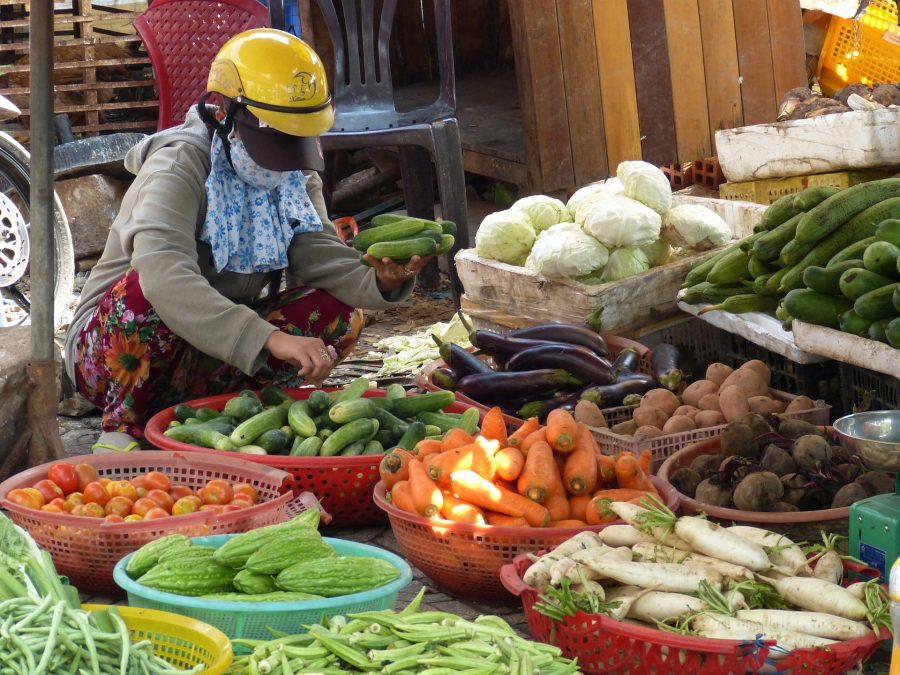
a street vendor squatting next to a number of baskets holding colourful vegetables at a market in Vietnam.

Outcomes and impact

The aims and outcomes of the project include:

  • Developing a framework to understand change at wet markets that will include policy, legal, biosecurity, infrastructural, socio-cultural, and management dimensions.
  • Mapping the policy and social networks that influence the functioning and reform of wet markets, including different narratives, interests, values, power dynamics, and contextual forces.
  • Understanding how markets were impacted by and responded to COVID-19 restrictions and how the pandemic has influenced the perception and framing of wet markets as foci for disease risk.
  • Generating lessons and evidence on the impact of the COVID-19 pandemic on wet market reforms, including on system vulnerabilities and resilience, that could inform future ACIAR investments in the area of food safety and One Health.

Funding

Collaborating partners

  • Associate Professor Ramon Lorenzo Luis “Renzo” Rosa Guinto, St Lukes Medical Centre, College of Medicine, The Philippines
  • Associate Professor Salome Bukcachi, Institute of Anthropology, Gender and African Studies, University of Nairobi, Kenya
  • Associate Professor Tran Minh Hang  (Hang Tran), Vietnam Academy of Social Sciences, Vietnam

Further information

If you want to know more about this project or have any questions, please contact Associate Professor Cecily Maller

Key people

Related content

aboriginal flag float-start torres strait flag float-start

Acknowledgement of Country

RMIT University acknowledges the people of the Woi wurrung and Boon wurrung language groups of the eastern Kulin Nation on whose unceded lands we conduct the business of the University. RMIT University respectfully acknowledges their Ancestors and Elders, past and present. RMIT also acknowledges the Traditional Custodians and their Ancestors of the lands and waters across Australia where we conduct our business - Artwork 'Sentient' by Hollie Johnson, Gunaikurnai and Monero Ngarigo.

More information