Upper Stony Creek transformation: Impact on health, liveability, and connection to nature

This project will collect qualitative data after the transformation of the Upper Stony Creek, to better understand how urban greening projects impact resident perceptions of wellbeing, especially in disadvantaged areas with a lack of greenspace.

Project dates: 2021–2023

Project summary

This project builds on our previous research to understand the impact and benefits of naturalisation and transformation of the Upper Stony Creek (2017-2020) in Sunshine North, a socio-economically disadvantaged and culturally diverse area in Melbourne’s west.

Access and proximity to nature and surrounding environments are critical determinants of health and wellbeing in contemporary cities adapting to climate change and recovering from the COVID-19 pandemic. 

Greater amounts and functionality of urban green spaces mitigate climate change effects and provide a wide range of environmental benefits that reduce urban heating and enhance human health and wellbeing. However, inequity, disadvantage and diversity are rarely considered in urban greening research and policy. 

This project will interview residents near Upper Stony Creek in Sunshine North to better understand their perspectives and experiences of the benefits provided by urban greening, and the impact of greening on their physical and mental health, wellbeing and connection to nature. The project will provide post-transformation evidence about the impact of efforts to improve and create quality of greenspace in culturally diverse neighbourhoods with inequitable access to greenspace.

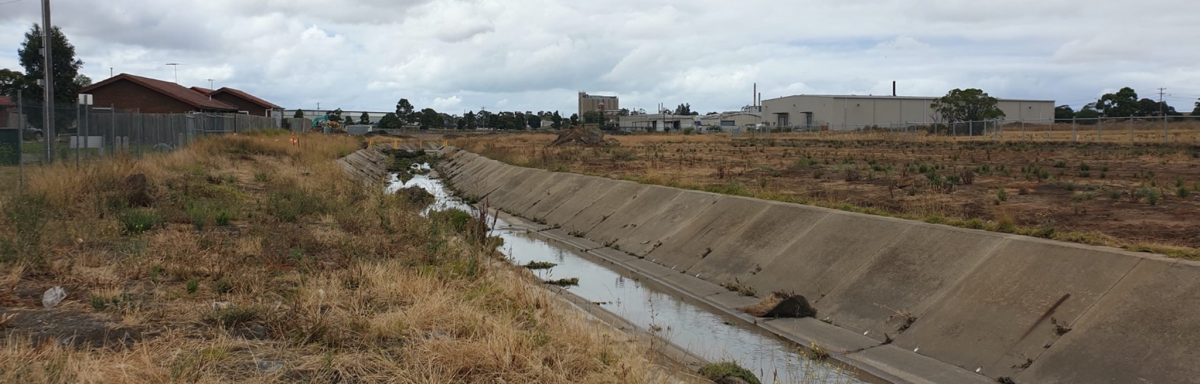
Upper Stony Creek before transformation showing the sgream running through a concrete culvert. Upper Stony Creek before transformation (Image supplied by Dr David Kelly)

Background

Proximity to natural environments is an important determinant of long-term health outcomes but knowledge is currently lacking on the influence of urban greening on the health and wellbeing of diverse residents. Residents living in areas of disadvantage face deprivation amplification due to a lack of access to health promoting environments which further compound social and economic disadvantage and poorer health outcomes. The negative outcomes from a reduced access to healthy environments has been exacerbated by the COVID-19 pandemic and the resulting restrictions confining residents to their homes and local neighbourhoods.

Although it is widely understood that the western suburbs of Melbourne lack access to green and natural environments, there is a critical need for new knowledge about areas of socio-economic disadvantage, especially those such as Sunshine North that have limited green infrastructure, existing heat vulnerability, environmental injustice and exposure to contaminated land. 

This knowledge can be used to support advocacy, influence policy development and action, and increased understanding about the benefits of urban greening initiatives and how it can address inequity in health and access to greenspaces and build the capacity of residents to adapt to climate change and any future pandemics.
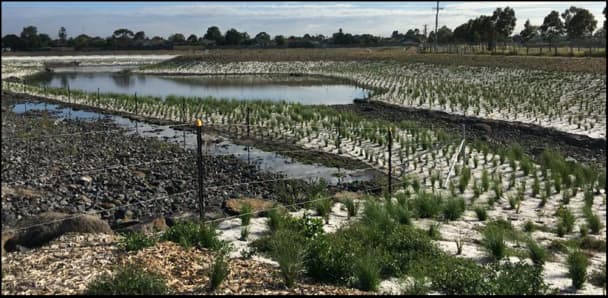
Upper Stony Creek after transformation showing many small plants Upper Stony Creek after transformation (Image supplied by Dr David Kelly)

Research and scope

This study will revisit residents of Upper Stony Creek to collect post-transformation data on their self-evaluated health and wellbeing. Approximately 20 residents who participated in the pre-transformation phase of this research will be interviewed to establish whether the transformation has had any marked effect on their perceptions of personal and community wellbeing.

Another 20 interviews will be sought to gather the perspectives of culturally and linguistically diverse communities, who were under-represented in the first phase of the research.  

Outcomes and impact

Continuing to partner with Greening the West, the findings will be used to maximise future greening initiatives for disadvantaged communities, and the evidence distributed to link urban greening to health and liveability. It will also aim to support government and non-government actors in climate change adaptation and public health planning across Victoria.

Funding

This project is funded by the Lord Mayor’s Charitable Foundation.

Collaborating Organisations and Partners

If you want to know more about this project or have any questions, please contact Dr David Kelly

Key people

  • David Kelly – Deputy Associate Director, Geographies of Land, Home and Place
  • Cecily Maller – Professor
  • Melanie Davern – Director, Australian Urban Observatory

Related content

aboriginal flag float-start torres strait flag float-start

Acknowledgement of Country

RMIT University acknowledges the people of the Woi wurrung and Boon wurrung language groups of the eastern Kulin Nation on whose unceded lands we conduct the business of the University. RMIT University respectfully acknowledges their Ancestors and Elders, past and present. RMIT also acknowledges the Traditional Custodians and their Ancestors of the lands and waters across Australia where we conduct our business - Artwork 'Sentient' by Hollie Johnson, Gunaikurnai and Monero Ngarigo.

More information