Key summary
With opportunities across early childhood, primary, secondary, vocational and higher education, teaching offers a rewarding career where your impact can last a lifetime. Becoming a teacher starts with an accredited Bachelor of Education or, if you already have a bachelor’s degree, a Master of Teaching Practice. You can also combine another discipline with teaching through an RMIT graduate degree package.
Inspire and nurture the next generation, shaping minds and fostering a lifelong love of learning.
As a teacher, you have the unique opportunity to shape young minds, inspire curiosity, and foster a love of learning. Whether you're passionate about early childhood education, primary, or secondary teaching, your impact can last a lifetime.
As Dr. Jonathan Leo Ng, a Lecturer of Health and Physical Education at RMIT, puts it, “A teacher is a life coach, facilitator of learning and initiator of curiosity.”
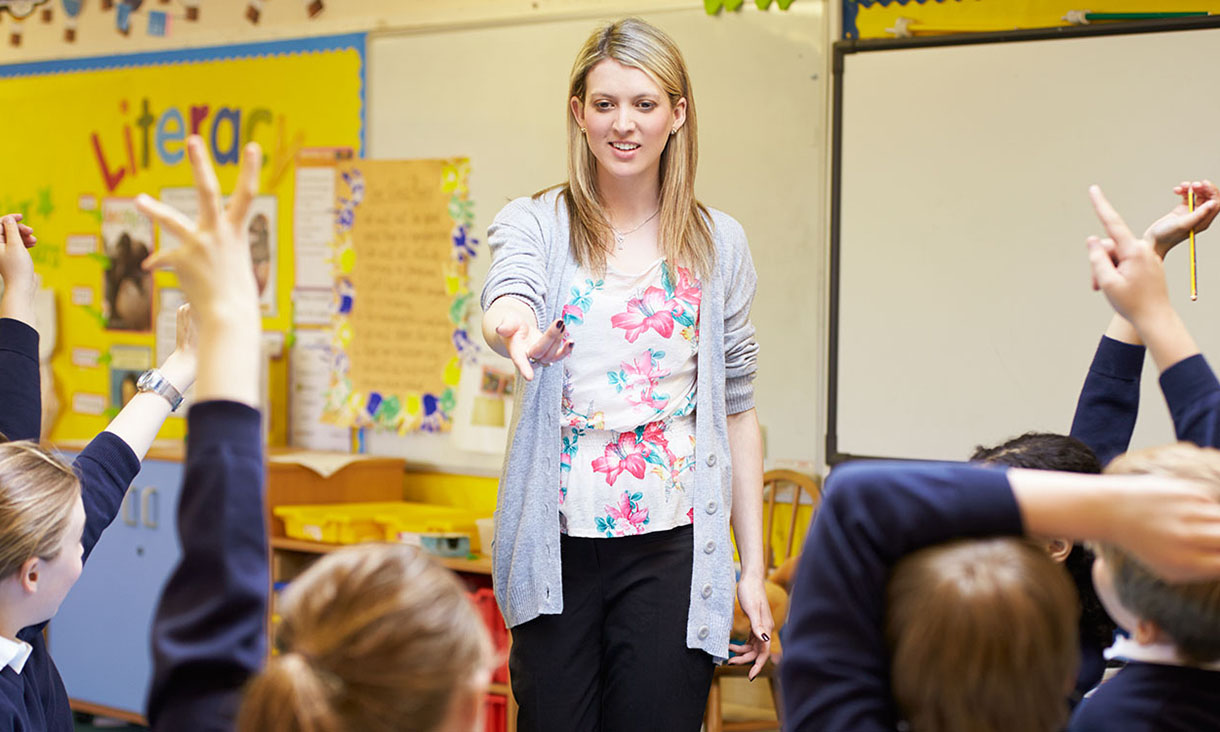
Becoming a teacher
There are two main ways to become a teacher in Australia, but both involve studying an accredited teaching course.
The most straightforward path is to study a Bachelor of Education. However, if you already have a Bachelors degree in another discipline, you can study a Master of Teaching Practice (Early Childhood), a Master of Teaching Practice (Primary Education) or a Master of Teaching Practice (Secondary Education).
“Before you study, it’s good to have an idea of the age group you’d like to teach. At the primary level young children are very curious, but they’re still in the early stages of developing social skills so a little bit more empathy is needed at that level. At the high school level, teenagers are also going through significant life changes, but the interactions you have are quite different.”Advises Dr. Ng.

Teaching graduate degree packages
A teaching package allows you to apply for your undergraduate and postgraduate study in one application, giving you the flexibility to pursue a career in industry, teaching or both. RMIT offers teaching packages in science, industrial design, graphic design, game design and digital design. Each package combines study in your chosen discipline with a Master of Teaching Practice (Secondary Education).
Upon successful completion of a Teaching Graduate Degree Package, you will be qualified to work and teach in your chosen area of practice.
Apply to an education course
No courses match your current filters
Try adjusting them or reset all filters to see more options

Bachelor of Education
 February, July
 On campus
 Bundoora
 Full-time 4 years, Part-time 8 years
Master of Teaching Practice (Early Childhood)
- February
- On campus
- Melbourne City
- Full-time 2 years
Master of Teaching Practice (Primary Education)
- February
- On campus
- Melbourne City
- Full-time 2 years or 1.5 years accelerated, Part-time 4 years
Master of Teaching Practice (Secondary Education)
- February
- On campus
- Melbourne City
- Full-time 2 years or 1.5 years accelerated, Part-time 4 years
“If you’re thinking of studying an education degree, you need to take charge of your learning. This doesn’t just mean attending classes, but also seeking support if you need it. If you’re open to learning and open to feedback, then you’ll flourish as a teacher.” Says Dr. Ng.
What does a teacher do?
A teacher's role is multifaceted and goes beyond just delivering lessons. Teachers plan and prepare educational content, create a positive learning environment, and assess students' progress. They support and guide students, helping them develop critical thinking and problem-solving skills. Teachers also collaborate with colleagues, communicate with parents, and continuously update their own knowledge and teaching methods. At the core, teachers inspire and motivate students, fostering a love of learning and encouraging them to reach their full potential.
What are the daily tasks and duties of a teacher?
Teachers perform a variety of tasks to ensure effective learning and student development such as:
- Planning and preparing lesson plans and educational materials
- Delivering engaging and interactive lessons
- Assessing and evaluating students' progress and performance
- Providing feedback and support to students
- Managing classroom behaviour and maintaining discipline
- Communicating with parents and guardians about students' progress
- Adapting teaching methods to meet diverse student needs.

What skills does a successful teacher need?
“Being a teacher isn’t just about knowledge. A good teacher needs to have heart and passion. You develop your relationships with your students, you get to know each and every individual and what they’re going through, which means you need to show concern for their life outside of school. In doing so, you’re better able to support them and facilitate their learning.” Explains Dr. Ng.
Where do teachers work?
Teachers work in a variety of educational settings, including primary and secondary schools (both public and private), early childhood education centres, vocational (TAFE) education and training institutions, and universities. They may also work in specialised schools, online learning environments, and educational support services.
Dr. Ng adds, “After a few years of teaching, those with a finesse for curriculum development can consider working with the Department of Education. But there are also possible pathways within the school system to take on leadership positions within school settings such as level coordinators, principals and so on.”
How much do teachers earn?

The average salary for a teacher in Australia is $105,000 per year*.
*Source: Seek.com.au 2026
Learn more about your education study options
Whether you're a Year 12 student weighing up your options or thinking about switching careers, RMIT's education courses provide a comprehensive and industry-focused education that can help you succeed as a teacher in Australia.