From improving vaccine storage in remote areas to monitoring the safety of water sources, RMIT’s engineering students are solving real-world challenges and creating a more sustainable future.
Sustainability is at the heart of RMIT's engineering programs, and our students are busy developing innovative solutions to some of the world’s most pressing environmental and societal issues.
At RMIT, all students studying a Bachelor of Engineering (Honours) complete a year-long capstone project, and Engenius is our annual showcase of their work. Industry partners are invited to judge sponsored categories, reinforcing collaboration and graduate outcomes.
We sat down with two engineering students to find out how their capstone projects are contributing to a better world.
Using AI to improve water safety
Sahas, an international student from Galle, Sri Lanka, is studying a Bachelor of Engineering (Environmental Engineering) (Honours). His group’s capstone project is about using AI to help improve water access and security in developing regions, focusing on Timor-Leste.
“The country relies heavily on groundwater, but there’s almost no monitoring of tritium (a radioactive hydrogen isotope) in rainfall, which leaves local populations vulnerable. So we’re building a machine-learning model that takes data from global monitoring sites, and links it with climate and environmental drivers, to predict what tritium levels should look like.”
Sahas says one of the most important lessons he learnt throughout the project is that engineering is as much about people as it is about designing systems.
“[As engineers], we learned that we weren't just building a model because someone asked us to, we were working on something that connects to fundamental human rights, like access to water. Good design isn't always about proving technical feasibility, it's about understanding the real-world problem you're contributing to solving.”
He also learnt that, when working in a group, understanding each other's strengths and working styles is crucial for success.
“At the beginning, we kind of assumed we'd all contribute equally to every task, but that's not realistic. Some of us are naturally better at problem-solving, others are better at communication and organisation, and some are natural leaders, so it’s crucial to optimise the actual work around those strengths.”
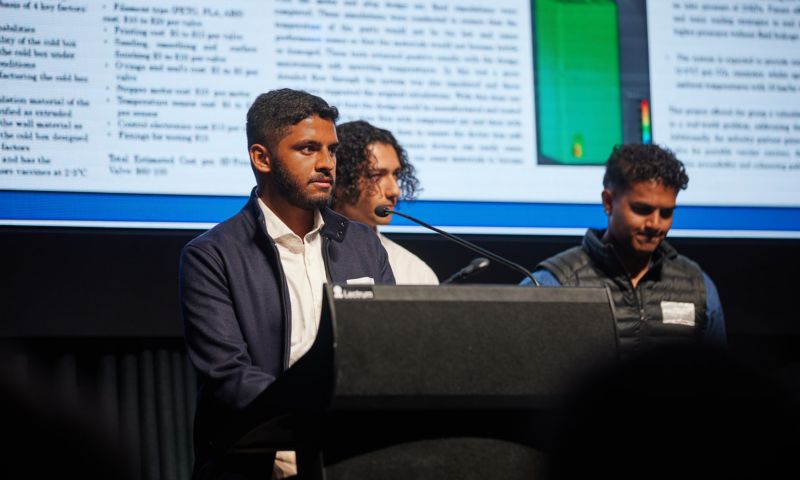
 Sahas and his capstone group presenting at an engineering conference
Sahas believes one of the most rewarding aspects of his group’s project was the diverse network of mentors they had the opportunity to learn from and work with. From engineering to hydrogeology to cloud computing, industry professionals from many different areas worked together to help the group create something meaningful.
“We've had the chance to get direct feedback from the Geoscience Institute of Timor-Leste, which has been invaluable for making sure our approach makes sense from a local perspective.
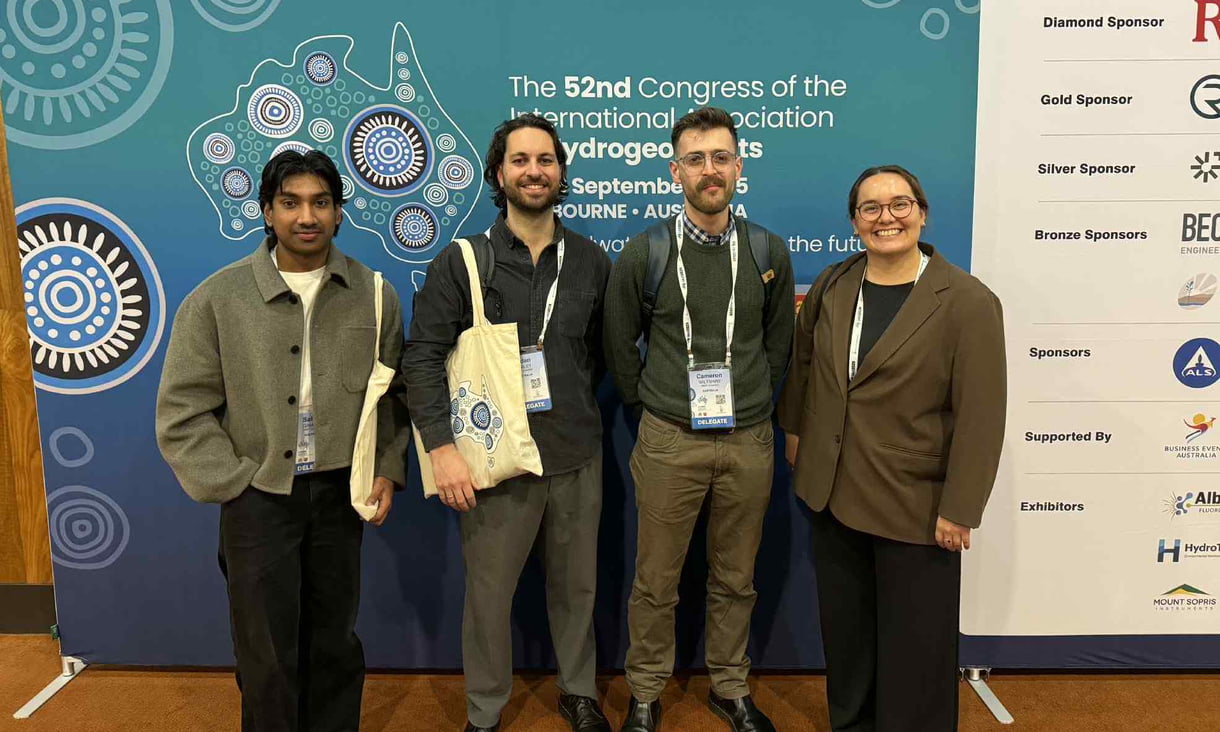
“We've also connected with professional hydrogeologists who've been really supportive of what we're doing. In fact, we're presenting our model at the 52nd Congress of the International Association of Hydrogeologists in Melbourne this September!
“On the technical side, RMIT's cloud supercomputing hub, RACE, has been amazing in helping us move from having a working model to actually deploying it on the cloud with a proper interface that users can interact with.”
In addition to his capstone project, Sahas completed a placement as an undergraduate engineer with CAMS Assethub, an infrastructure technology company that grew out of RMIT's own research initiatives.
“I got to work in a professional environment and learn new processes and tech. Most of my work was focused on solar energy systems and emissions reduction modelling. I had to figure out how to make the technical work function within business timelines and meet professional standards, while learning how to explain complex processes to people who weren't engineers. I’ve actually stayed on with CAMS and work with them part time as a research assistant!”
When asked what he’d like to be doing in five years, Sahas says his focus is on working in sustainability and climate resilience.
“Whether it's through engineering projects, data, or urban design, the goal is a role where I'm contributing to making cities and communities more sustainable and better prepared for climate change.”
Vaccine storage in developing countries
Hashim is a Bachelor of Engineering (Mechanical Engineering) (Honours) student from India. His group’s project aims to address a critical issue in global vaccine distribution.
“Many rural and remote areas face challenges in storing vaccines due to limited access to refrigeration, leading to compromised vaccine potency and preventable deaths. We developed a valve to efficiently regulate refrigerant flow within a cold box, maintaining vaccines at their optimal temperature without the need for a constant power supply.”
He says that one of the most important lessons he learnt from working on the project with his team was that ‘failing to plan is planning to fail’.
“It taught me the importance of planning from the very beginning. We broke the work into clear stages: defining requirements, brainstorming, sketching, CAD modelling, simulation, prototyping, producing engineering drawings, and so on, and tied each stage to a realistic timeframe. That structure gave us a roadmap when things got tough.”
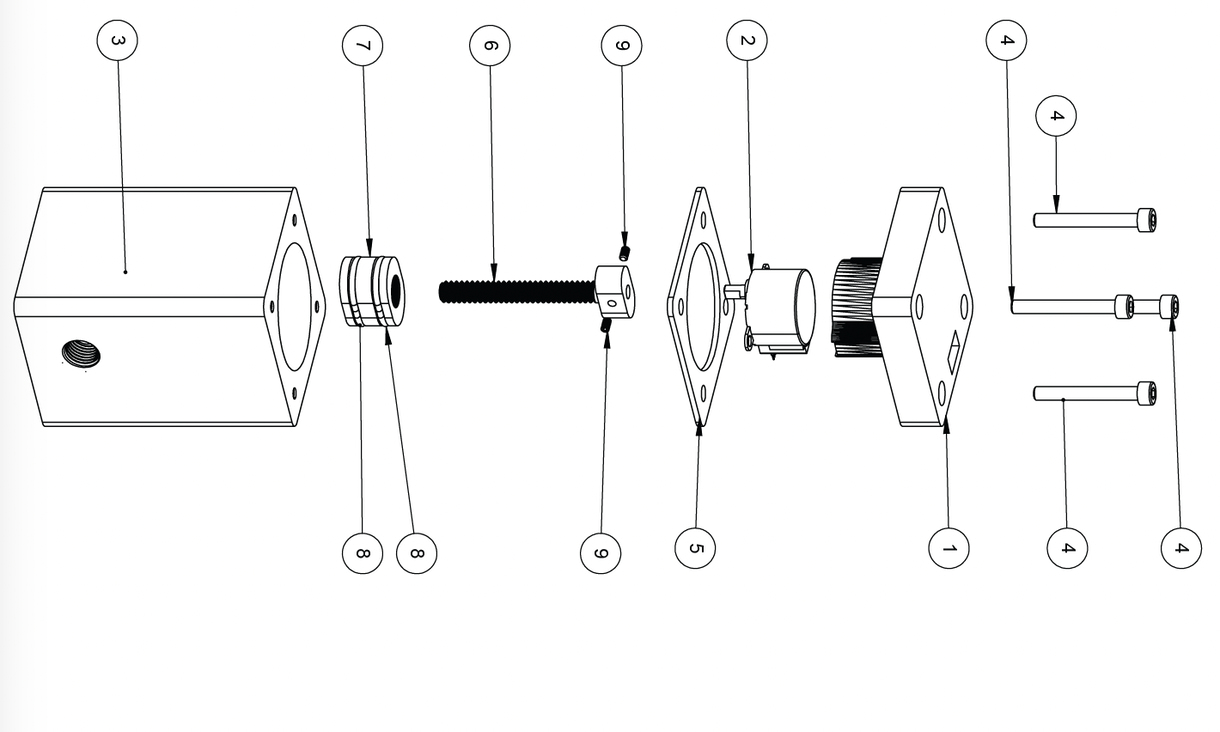 Drawing of Hashim's group's valve mechanism
Hashim also believes that you need to stay adaptable and ready for challenges along the way.
“No matter how much you prepare, there will always be unexpected challenges, whether it’s an absurd ANSYS simulation result, or a prototype that doesn’t behave as expected. We learned to stay flexible, adapt quickly and iterate the design.”
Before starting his capstone project, Hashim was already applying his engineering knowledge to real-world applications during an eight-month internship with Yarra Trams. And he credits this experience with kick-starting his career.
“Following my internship, I was brought on to the Next Generation Tram Project early this year, where I am currently working full-time while completing my studies part-time.
“[During the internship], I learned how to prepare professional engineering drawings, conduct analyses of component failures, write reports, perform hand calculations, and much more. At the same time, I improved my communication skills. Whether it was collaborating with multi-disciplinary teams, engaging with suppliers, or presenting solutions to senior engineers, learning how to explain technical ideas clearly and professionally was an extremely valuable skill I picked up.
“Over the next five years, I hope to keep growing my career in the rail industry, working on exciting projects that make a real difference for millions of passengers every year. I’d also love to give back by mentoring interns and sharing the tips, lessons and guidance I’ve received along the way from mentors who helped me early in my career.”
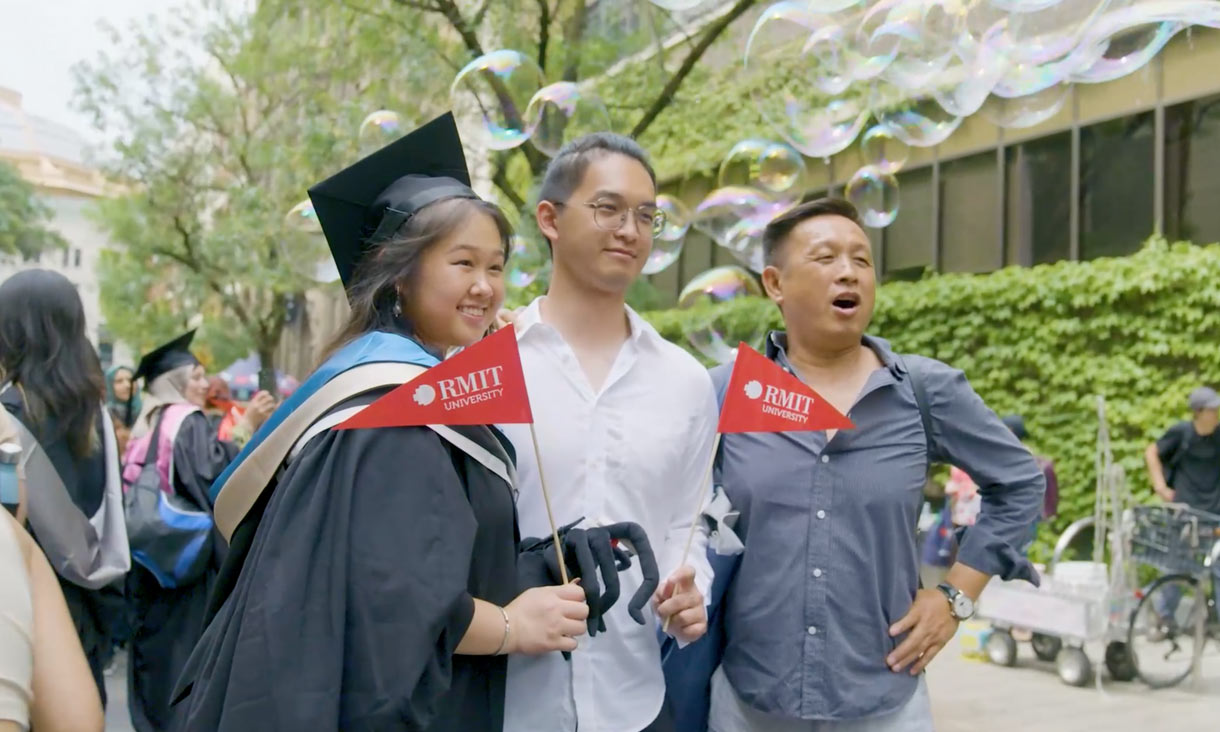
RMIT 2023 graduate Winnie
Winnie moved from Shenzhen, China to study in Melbourne and made lifelong friendships, discovered a love of the outdoors and experienced enriching global study tours before graduating with a Bachelor of Environmental Science/Bachelor of Engineering (Environmental Engineering) (Honours).
Story: Sophie MacGillivray
You may also be interested in...
Engineering skills to take you into the future

Art on wheels: Deadly Alumni brightening Melbourne’s tram lines