Key takeaways
To become an occupational therapist in Australia, you’ll need to complete an approved qualification and meet the registration requirements of the Occupational Therapy Board of Australia.
You can qualify through an undergraduate occupational therapy degree, typically completed over 4 years, or through an approved postgraduate entry-level qualification if you’ve already completed a suitable bachelor’s degree.
OTs work across areas including physical rehabilitation, mental health, disability, paediatrics and aged care.
It’s a growing profession. Jobs and Skills Australia currently reports around 35,600 occupational therapists employed nationally, with annual employment growth of around 3000.
Our deep dive into the healthcare career that’s about helping people live more independently and find practical ways around the barriers life throws up.
Occupational therapists (or OTs) work with people of all ages whose ability to participate in everyday activities has been affected by illness, injury, disability or other circumstances.
The ‘occupation’ in the title doesn’t just mean someone’s job. For OTs, it can mean pretty much anything people need or want to do as part of everyday life, from getting dressed or preparing a meal to going to school, working, socialising or participating in the community.
What does an occupational therapist do?
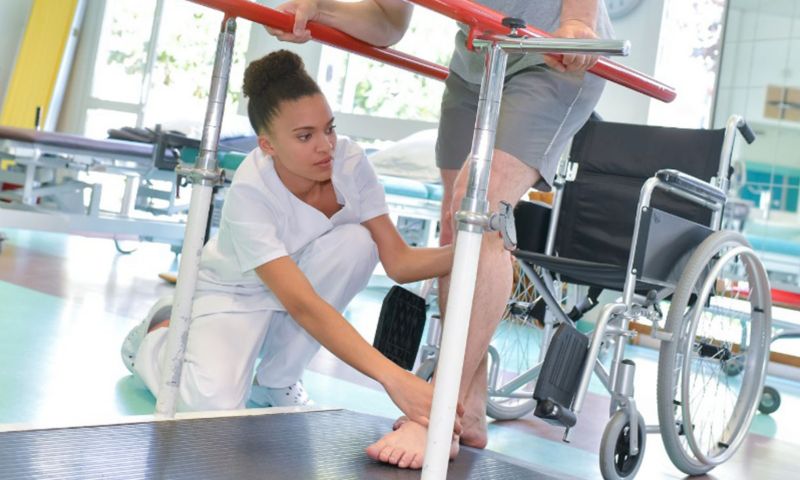
Occupational therapy starts with a deceptively simple question: What does this person need or want to be able to do? The answer could be returning to work after an injury. Living independently at home. Participating at school. Managing everyday activities after a stroke. Using assistive equipment. Or finding ways to participate more fully in family and community life.
"We’re building skills, we’re thinking about the activity and then we’re also modifying the environment. We might be teaching someone how to put their shirt on if one of their arms isn’t functioning properly. Or you can imagine a child being overstimulated in a school setting. We might reduce the noise and distractions or move where they sit in the classroom to support their learning." - Kylee Lockwood, Discipline Lead in Occupational Therapy at RMIT
This process might also involve:
- assessing a person’s physical, psychological, developmental or functional abilities
- developing strategies to help someone participate more independently in everyday activities
- assessing home, school or workplace environments and recommending modifications
- recommending assistive equipment and technologies
- developing individual or group programs
- working with families, carers, teachers, employers and other health professionals
- monitoring progress and adjusting interventions as a person’s needs change.
"Usually it consists of things like talking to the person, doing assessments, understanding the issues, the challenges and the strengths, and then building therapy plans. We actually work with the person to develop their skills and enable them, or we liaise with other people such as allied health professionals, councils, builders, school teachers and family members to find strategies and build capability to help the person reach their goals." - RMIT Associate Professor Eli Chu
Is occupational therapy is right for you?
Occupational therapy could be a good fit if you’re interested in health and human behaviour, but also like solving practical problems. It’s a profession that asks you to understand what’s getting in someone’s way physically, psychologically, socially or environmentally, then work with them to do something about it.
Sometimes that might mean helping someone regain a skill. Sometimes it means adapting the environment around them. Sometimes the best solution is a piece of technology, a different routine or an entirely new way of approaching an everyday task. The common thread is helping people participate more fully in their own lives.
As Associate Professor Chu states, “You need to value the person’s values and what they want, rather than just applying a theory, a formula or a pathway into what we do.”
“There’s no one type of person that’s going to make an excellent occupational therapist, but you would want someone who is curious and likes to problem-solve and think about alternative ways of doing things. That deep connection to somebody is incredibly important because you need to understand their story and what’s important to them in order to be able to support them.” - Kylee Lockwood
How do you become an occupational therapist in Australia?

Step 1: Complete an approved occupational therapy qualification
To become an occupational therapist, you first need to complete a qualification that provides an approved pathway to registration.
Starting university for the first time? This will commonly be an undergraduate degree such as the Bachelor of Occupational Therapy (Honours) at RMIT.
Already have a bachelor’s degree? Depending on your previous studies and the entry requirements of the university, an approved entry-level master’s qualification may provide another pathway into the profession.
If your goal is to practice as an occupational therapist in Australia, check that the qualification you’re considering is recognised for registration before you enrol.
No courses match your current filters
Try adjusting them or reset all filters to see more options

Bachelor of Occupational Therapy (Honours)
 February
 Bundoora
 Full-time 4 years, Part-time 8 years

Step 2: Complete your professional practice
Occupational therapy isn’t something you learn entirely from a lecture theatre. Professional practice education gives you the opportunity to apply what you’ve learned with people and communities in real settings, under appropriate supervision.
Depending on your course, experiences can take place across different occupational therapy practice settings and give you exposure to different client groups and ways of working. Use your placements to explore which areas you’re drawn to.

Step 3: Apply for registration
Occupational therapists are regulated health practitioners in Australia. After completing an approved qualification, you’ll need to meet the requirements for registration with the Occupational Therapy Board of Australia before practising as an occupational therapist. Registration is managed through the Australian Health Practitioner Regulation Agency (AHPRA).

Step 4: Choose an area to specialise and work
One of the advantages of occupational therapy is the range of people, environments and challenges you can work with.
“Students might come in and say, ‘I only really want to work with children.’ Then through their placements sometimes they’ll go, ‘Actually, I’ve decided I don’t want to work with children anymore.’ The amazing thing about OT is that you can move across those settings, and then often people will specialise.” - Kylee Lockwood
Explore your specialisation and workplace options:
Children and young people: You might help children participate at school, develop everyday skills or find strategies that support their ability to participate in activities at home and in the community.
Mental health: OTs can work with people experiencing mental health and psychosocial challenges, supporting participation in daily routines, work, education, relationships and community life.
Rehabilitation: In rehabilitation settings, you might help someone regain or adapt everyday skills following an injury, illness or neurological condition.
Disability: Occupational therapists work with people with disability to identify barriers to participation and develop practical solutions. This can include environmental modifications, assistive technologies and strategies for everyday activities.
Aged care: Working with older people can involve helping them maintain independence, participate safely in everyday activities and adapt their home or routines as their needs change.
And those are only some of the possibilities.
"Sometimes students know what they want to do when they start, but as they go through their studies and career there can be things they haven’t thought about at all. One of my students eventually got to a placement where they used equine therapy. She was really interested in horses, and eventually got to a position where she’s an OT but also works with horses and people. These are amazing things that people don’t even think about." - Associate Professor Chu
Where do occupational therapists work?
"Given the growth in occupational therapy, there are a lot of job opportunities available. At this point in time, we can’t fill all the vacancies for occupational therapists that are out there." - Kylee Lockwood
As an OT you can work almost anywhere people need support to participate in everyday life. That can include:
- hospitals and rehabilitation services
- community health organisations
- mental health services
- schools and education settings
- aged care
- disability services
- private occupational therapy practices
- workplace rehabilitation and injury management
- government and community organisations.
And you don’t have to stay on our shores, Associate Professor Chu explains: “In many countries, OT courses follow similar accreditation standards, so it’s common that occupational therapists who get their qualification here can be recognised in other countries – usually with some additional registration requirements. Some therapists might graduate, work a couple of years, then go to another country to seek some experience. I think it really opens up wide career opportunities.”
How much do occupational therapists earn?

Although your wage can vary depending on your specialisation, experience, and location the average salary for an occupational therapist in Australia is $98,000*.
*Source: Seek.com.au 2026
Occupational therapy, osteopathy, and physiotherapy: What's the difference?
Occupational therapists, osteopaths, and physiotherapists are all registered healthcare professionals who support people’s health, movement and wellbeing. There can be some overlap between the professions, so the most suitable practitioner depends on a person’s needs, goals and condition.

Occupational therapy
Occupational therapists help people take part in everyday activities, such as self-care, work, study and leisure, by addressing physical, cognitive or sensory challenges and adapting tasks or environments.

Osteopathy
Osteopaths often take a whole-body approach, considering how the muscles, bones, joints and connective tissues work together.

Physiotherapy
Physiotherapists focus on restoring movement and physical function through assessment, exercise, rehabilitation and physical therapies.
Study occupational therapy at RMIT
RMIT’s Bachelor of Occupational Therapy (Honours) provides an undergraduate pathway into occupational therapy, combining study in occupation and participation with areas including physical, cognitive, neurological and psychosocial participation, children and young people, adults and older adults, technology and innovation, professional practice and research.
“It’s a very practical, hands-on course. There are hands-on workshops, simulation and case studies, and then there are 1000 hours of practice education or placements throughout the program. So it’s always active, always developing skills and reflecting on those skills.” - Associate Professor Chu
“It’s a very holistic course. Students learn a wide range of knowledge about the body and mind of human beings, and we also need to understand the environment. Students learn how to utilise information – not only to search for the right information, but to critically appraise it and apply it.” - Associate Professor Chu