Combine science and creativity to ensure the safety, quality, and innovation of the food we eat.
Do you love experimenting in the kitchen and have a keen interest in science? Food technologists combine science and creativity to develop new food products, improve existing ones, and find innovative ways to process and package food.
As Dr. Arianna Dick, a Lecturer of Food Technology at RMIT, puts it, “Food technologists apply scientific and technical principles to the development, improvement, production, and distribution of food products while ensuring their quality, safety, and nutrition.”
Dr. Penny Brotja, a Lecturer in Sensory Evaluation and Nutrition at RMIT, adds, “They work to understand food and its various components, often specialising in ingredients, processing, chemical composition, consumer perception, or food safety.”
Becoming a food technologist
To become a food technologist in Australia you will need a relevant bachelor’s degree relating to food science, food technology, nutrition or another related field.
Dr. Brotja says, “Only a relevant bachelor’s degree is required to work within the industry, but working in academia or at some research companies will likely require a postgraduate qualification within the specific field within that area of food science as well.”
Apply to a food science course
No courses match your current filters
Try adjusting them or reset all filters to see more options

Bachelor of Food Technology and Nutrition/Bachelor of Business
 February, July
 On campus
 Melbourne City, Bundoora
 Full-time 4 years

Bachelor of Science
- February, July
- On campus
- Melbourne City
- Full-time 3 years, Part-time 6 years
Graduate Certificate in Food Science and Technology
- No upcoming intakes
- On campus
- Bundoora, Melbourne City
- Full-time 6 months, Part-time 1 year
Master of Food Science and Technology
- February, July
- On campus
- Melbourne City, Bundoora
- Full-time 2 years
Master of Science (Food Science)
- Continuous (scholarship application closing dates apply)
- On campus
- Bundoora, Melbourne City
- Full-time 2 years, Part-time 4 years
PhD (Food Science)
- Continuous (scholarship application closing dates apply)
- On campus
- Bundoora, Melbourne City
- Full-time 3-4 years, Part-time 6-8 years
So, what’s it like to study at RMIT?
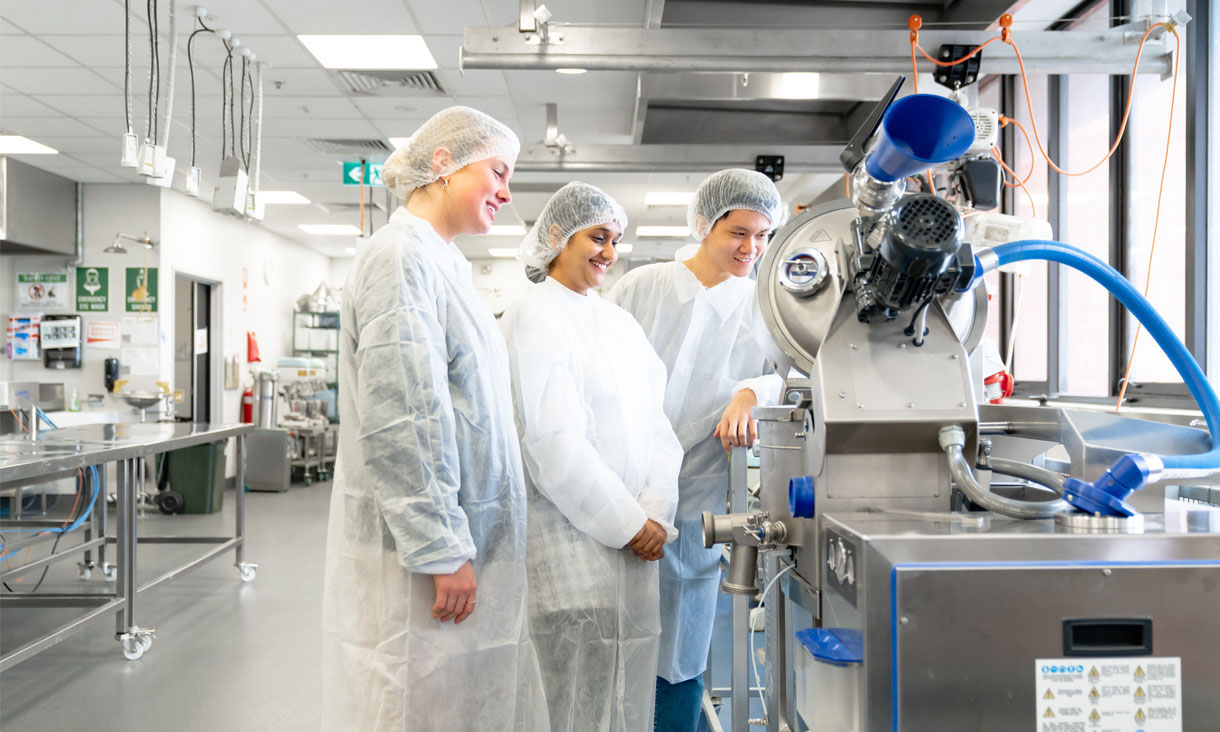
According to Dr. Brotja,“A typical day includes online classes, workshops, and practical sessions in kitchens and labs. Students will also have the opportunity for an industry placement, either within the food industry or an academic setting to prepare them for their future careers.”
What does a food technologist do?
A food technologist plays a crucial role in the food industry by applying science to create, improve, and maintain food products. They develop new recipes, ensure quality control, and focus on food safety by developing safe handling and storage procedures. They also conduct research to find innovative methods of preservation, packaging, and processing, and analyse the nutritional content of foods to enhance their health benefits. When production issues arise, they troubleshoot and develop solutions. Essentially, food technologists combine a love for food with scientific expertise to improve how we produce, process, and consume food.
Common tasks, duties and responsibilities
The specific tasks, duties and responsibilities of a food technologist vary depending on your specialisation. However, in general this may include:
- Creating new food products and recipes
- Conducting safety and quality tests, ensuring proper labelling and consistency
- Implementing procedures to prevent foodborne illnesses
- Developing new methods for food preservation and packaging
- Evaluating nutritional content and improving health benefits
- Resolving production issues to ensure safety and quality.

Where do food technologists work?
Food technologists work in diverse settings within the food industry. They are commonly found in food manufacturing companies, research institutions, quality assurance labs, and retail chains, where they develop new products, ensure safety and quality, and conduct research. Some work for food regulatory agencies, consulting firms, ingredient suppliers, and packaging companies, focusing on compliance, innovation, and technical support. Dr. Dick highlights the current shortage of food technologists in Australia, making it a great career choice.
Graduates of RMIT have had successful careers with major food companies such as:
- Nestlé
- Cadbury
- Simplot
- Heinz
- Mondelez.
What skills does a successful food technologist need?
To succeed as a food technologist, you need a combination of soft and hard skills. Among the soft skills, problem-solving is key, as Dr. Brotja states: “A successful food technologist should have problem-solving skills to be able to solve challenges and create new products. They should also have good organisation and communication skills and be able to collaborate and communicate with people in different roles.”
On the technical side, Dr. Dick points out, “You’ll learn all the technical skills from your degree, but it’s often useful to also earn quality control and full food safety certifications. These certifications can greatly enhance job prospects, especially for those just entering the industry.”
How much do food technologists earn?

The average salary for a food technologist in Australia is $85,000 per year*.
*Source: Seek.com.au 2026
Related careers
Learn more about your food science study options
Whether you're a Year 12 student weighing up your options or thinking about switching careers, RMIT's food science courses provide a comprehensive and industry-focused education that can help you succeed as a food technologist in Australia.