Goal 14 - Life Below Water

RMIT University is committed to making a measurable impact on sustainable management of our oceans and seas.

RMIT University contributes impact-orientated partnered research and practical solutions into marine-monitoring technologies and management of marine environments and species. In addition, RMIT is reducing marine pollution through robust waste management, water use intensity, water-sensitive urban design and other efforts across all campuses.

Highlights of recent SDG 14 aligned activity are included below, with more information available in our 2024 Sustainability Annual Report (PDF 23 MB), with our 10 years of reporting progress outlined on the Sustainability Annual Report webpage.

Broader sustainability contributions are also highlighted in our organisational Annual Report, which are tabled in the Victorian Parliament.

2024 Case Studies

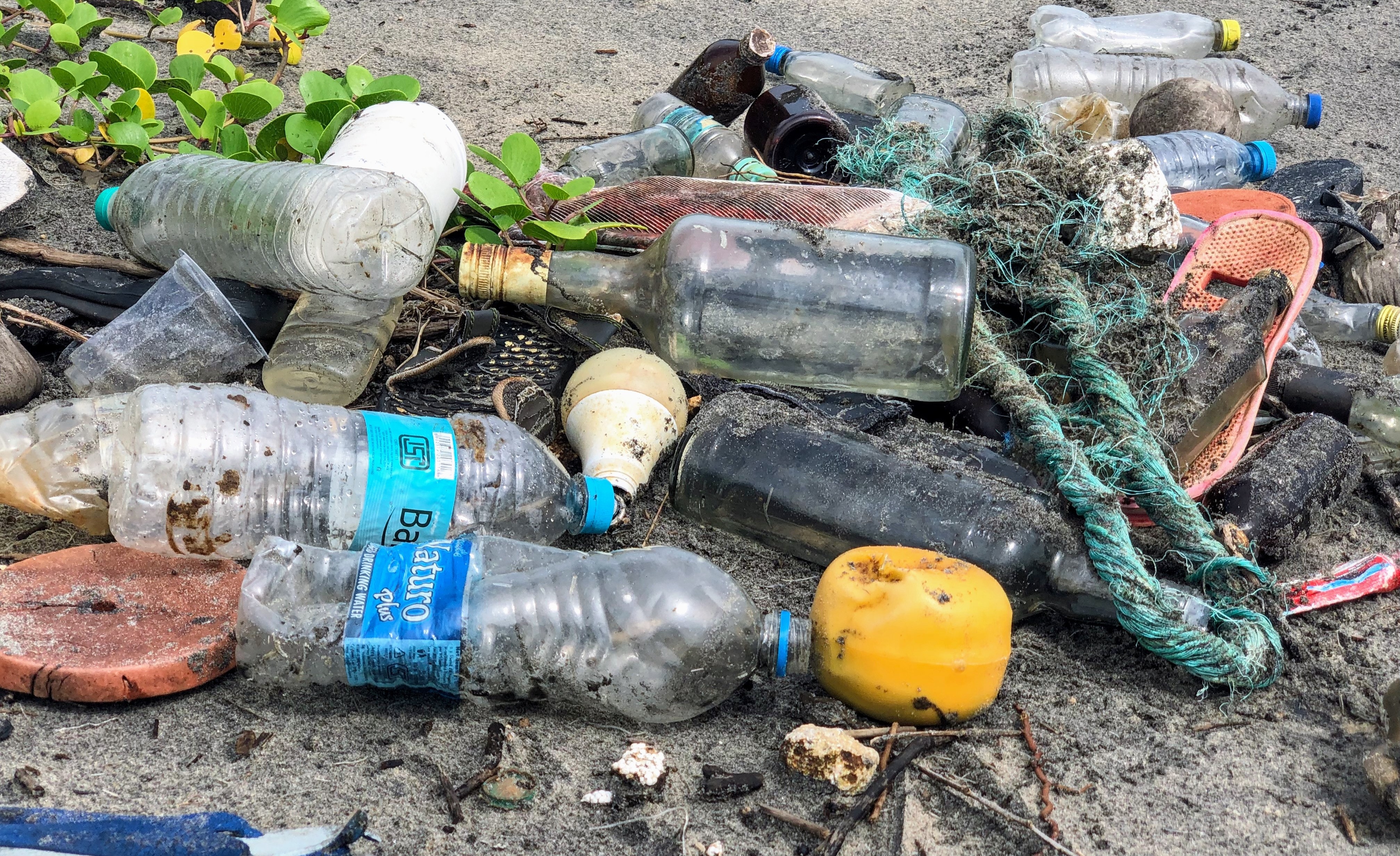
Aussie researchers have developed a method to identify plastic on beaches, successfully tested on a remote coastline. RMIT University scientists created a satellite imagery tool that distinguishes light reflection differences between sand, water, and plastics, enabling detection from over 600 km above. Previously, satellite technology struggled to identify beach plastics due to their blending with sand. This advancement, published in the Marine Pollution Bulletin, facilitates easier clean-up operations.

The Beached Plastic Debris Index (BPDI) uses a spectral index to analyse light patterns captured by the WorldView-3 satellite, specifically mapping beach plastics. This aids in directing clean-up efforts on remote shores.

Dr Jenna Guffogg, the study’s lead author, highlights the severe impact of beach plastic on wildlife and habitats. Her research, conducted at RMIT and the University of Twente, was supported by an Australian Government Research Training Program scholarship, with satellite imagery accessed through DigitalGlobe.

November 2023, the A3P Partnership between RMIT University and Melbourne Water was formally renewed for a further five years (2023-2028), following a highly positive external review in 2022.

The renewal reinforces a research-practice model that blends applied investigations into pollutants in urban and rural waterways with real-time knowledge exchange, secondments and student involvement. RMIT University Focus areas include stormwater wetlands' performance, litter and microplastics, industrial catchment pollutants and the health of estuaries and bays.

Crucially, the renewed Partnership aligns with SDG 14 targets by helping to prevent and reduce aquatic pollution and by increasing scientific knowledge, building research capacity and transferring marine-related technology and methods. The design ensures the findings feed directly into Melbourne Water’s policy and practice, supporting long-term waterway health.

RMIT University researchers at our Water: Effective Technologies and Tools (WETT) Research Centre have uncovered alarming levels of toxic PFAS chemicals in Victoria’s critically endangered Burrunan dolphins, revealing the highest concentrations ever recorded in dolphins worldwide.

Conducted in partnership with the Marine Mammal Foundation and the University of Melbourne, the study found PFAS levels up to 19,500 nanograms per gram in liver tissue, more than ten times the threshold for liver toxicity. These “forever chemicals,” commonly used in household and industrial products, accumulate in marine food webs, threatening dolphin health and ecosystem stability.

The research underscores the urgent need to identify pollution sources and strengthen chemical management and conservation policies. By illuminating the impact of human-made pollutants on marine species, RMIT’s work directly supports SDG 14: Life Below Water, helping to safeguard biodiversity, reduce ocean contamination, and protect vulnerable marine populations from extinction.

SDG Alignment Mapping Overview

As reported in the 2024 Sustainability Annual Report, there were 43 course units and 126 research projects aligned with SDG 14 in 2024, representing a wide range of initiatives related to life below water.

Other research insights are captured in the data below.

  • Course Units (Total): 43
  • Research Projects (Total): 126
  • International Research Partnerships (Total): 15
  • Publications (Total): 39
  • Publications in Top 25% Journal Percentiles by SJR (%): RMIT - vs. Global Average -
  • Citations per Publication: RMIT - vs. Global Average -
  • Field-Weighted Citation Impact (FWCI): RMIT - vs. Global Average -
  • National Publication Contribution (%): 2.1%
  • International Collaboration (%): RMIT - vs. Global Average -
  • Developing Country Collaboration (%): 28%
  • Low to Lower-Middle Income Country Collaboration (%): 13%

Research Projects and Initiatives Over the Years

The following research projects have been specifically aligned to Sustainable Development Goal 14 and the aim to conserve and sustainably use the oceans, seas and marine resources for sustainable development. These projects and initiatives are examples of the University’s contribution to the SDGs over the years.


aboriginal flag float-start torres strait flag float-start

Acknowledgement of Country

RMIT University acknowledges the people of the Woi wurrung and Boon wurrung language groups of the eastern Kulin Nation on whose unceded lands we conduct the business of the University. RMIT University respectfully acknowledges their Ancestors and Elders, past and present. RMIT also acknowledges the Traditional Custodians and their Ancestors of the lands and waters across Australia where we conduct our business - Artwork 'Sentient' by Hollie Johnson, Gunaikurnai and Monero Ngarigo.

More information